
How to Read a Crane Quotation: 10 Critical Configuration Details You Must Verify
A Buyer’s Guide from DONGQI CRANE for Comparing Proposals and Avoiding Costly Oversights
You have requested quotations for an overhead crane. Three suppliers have responded. The prices vary by 40%, and the technical descriptions look similar—but are they? One proposal is three pages of dense specifications. Another is a single paragraph with a price. How do you know what you are actually buying?
Reading a crane quotation is not like comparing prices on a standard commodity. A crane is an engineered system. Two “10-ton overhead cranes” can differ in ways that affect performance, safety, maintenance costs, and total service life. The quotation document is your only window into what the supplier intends to build and deliver. Missing a critical detail at this stage can lock in a decade of operational headaches.
At DONGQI CRANE, a Sino-New Zealand joint venture with over 40 years of manufacturing experience and products operating in 96 countries, we have seen buyers accept quotes that looked complete but concealed costly omissions. This guide identifies the 10 configuration details you must verify before comparing prices or signing a contract. Use it as a checklist when reviewing any crane quotation.
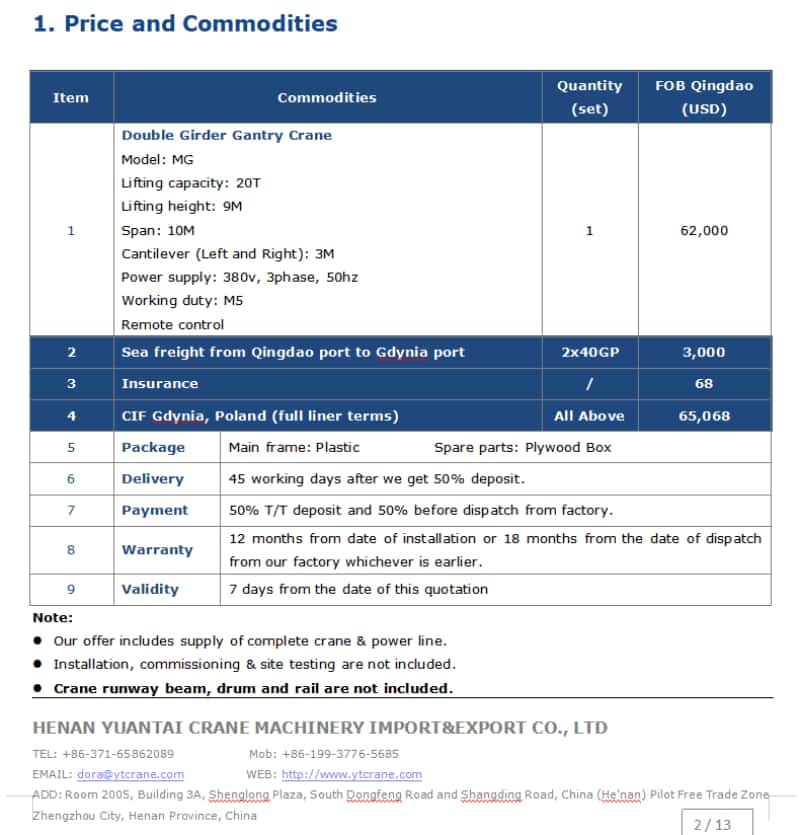
Why Crane Quotations Are Difficult to Compare
Crane suppliers structure quotations differently. Some provide a single lump-sum price. Others break out equipment, freight, installation, and certification as separate line items. Some list every component by brand and model number. Others use generic descriptions like “quality gearmotor” or “standard electrical panel.”
The most common tactics that create misleading price comparisons:
- Omitting critical components: The quote includes the crane structure but excludes the hoist, runway conductors, or control system—items you must purchase separately.
- Under-specifying work duty: Quoting an A3 light-duty crane for an application that requires A5 medium duty, creating an artificially low price.
- Using unbranded components: Substituting no-name motors, gearboxes, and electrical parts that will be difficult to service or replace.
- Excluding installation and commissioning: The equipment price looks attractive, but the missing installation cost will appear later as a surprise.
- Ignoring local certification requirements: The crane meets Chinese standards but lacks documentation for SNI, TISI, CR, DOSH, or other destination-country certifications.
The solution: Do not compare prices until you have verified that the configurations are identical. The following 10-point checklist ensures you are comparing apples to apples.
The 10 Critical Configuration Details You Must Verify
Detail #1: Work Duty Classification (FEM/ISO/CMAA Rating)
Why this matters more than any other specification:
Work duty classification determines how hard and how often the crane can work without premature failure. It is the single most important variable affecting both price and lifespan. An A3 crane costs 30–46% less than an A7 crane of the same capacity—but will fail within months if operated in a continuous production environment.
What to look for in the quotation:
- Explicit FEM/ISO class: The quote should state A3, A4, A5, A6, or A7 (or equivalent M3–M7 hoist classification).
- Load spectrum description: Light, moderate, heavy, or severe.
- Operating time assumptions: Hours per day or cycles per year the crane is designed for.
Red flags:
- The work duty classification is not stated anywhere in the quotation.
- The quote says “standard duty” without defining what that means.
- The supplier cannot explain why they selected a particular classification.
How DONGQI CRANE addresses this: Every DONGQI CRANE quotation includes an explicit FEM/ISO work duty classification based on our engineering analysis of your application. We document the load spectrum, daily operating hours, and design life assumptions so you understand exactly what you are purchasing.
Detail #2: Span and Lift Height Measurements (Verified, Not Assumed)
Why this matters:
A discrepancy of even 100mm in span measurement can cause wheel flange wear, derailment risk, or the crane simply not fitting on the runway. Lift height miscalculations can mean the hook cannot reach the floor—or cannot achieve the clearance required for your tallest loads.
What to look for in the quotation:
- Span definition: Center-to-center of runway rails. The quote should specify whether the span dimension is based on your provided measurement or an assumed standard.
- Lift height definition: Clear distance from floor to the highest hook position. The quote should account for hook approach dimensions and safety clearances.
- Building clearance verification: Has the supplier asked for your building drawings or confirmed available headroom?
Red flags:
- The supplier quotes based on “standard span” without requesting your actual measurements.
- Lift height is stated without accounting for trolley and hoist depth.
- No mention of required clearance above the crane for installation and maintenance.
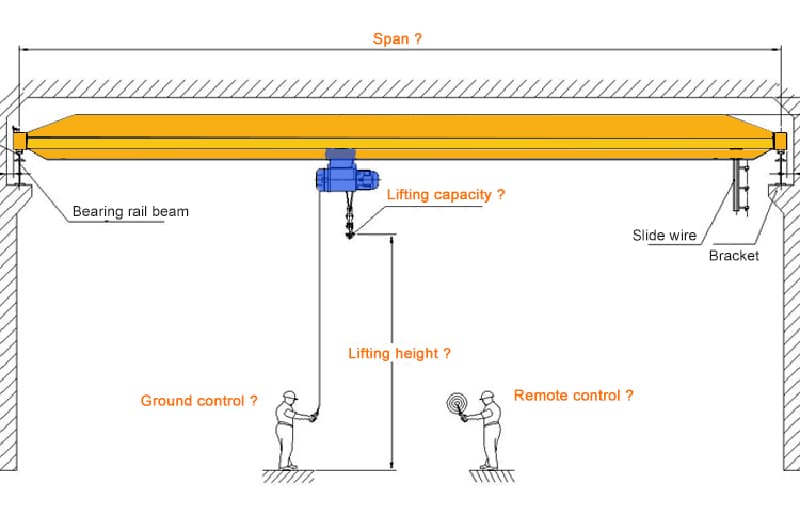
How DONGQI CRANE addresses this: Our quotation process requires confirmed span and lift height measurements. If you cannot provide them, we will guide you through measuring correctly. For complex installations, we review building drawings and provide a clearance verification drawing before finalizing the proposal.
Detail #3: Hoist Type and Brand (The Heart of the Crane)
Why this matters:
The electric hoist generates the lifting force. Its quality determines reliability, maintenance frequency, and spare parts availability. A quotation that says only “wire rope hoist” without specifying brand and model conceals one of the largest cost and quality variables in the entire system.
What to look for in the quotation:
- Hoist manufacturer and model: CD type, MD type, European-style, or specific brand name.
- Motor brand and specifications: SEW-EURODRIVE, NORD, ABB, Siemens, or generic Chinese motor.
- Lifting speed(s): Single-speed, dual-speed (ratio), or variable frequency drive (VVVF).
- Work duty of hoist: Should match the crane’s overall classification.
Red flags:
- The hoist is described only as “standard” or “included.”
- No motor brand is specified.
- The hoist work duty is lower than the crane work duty.
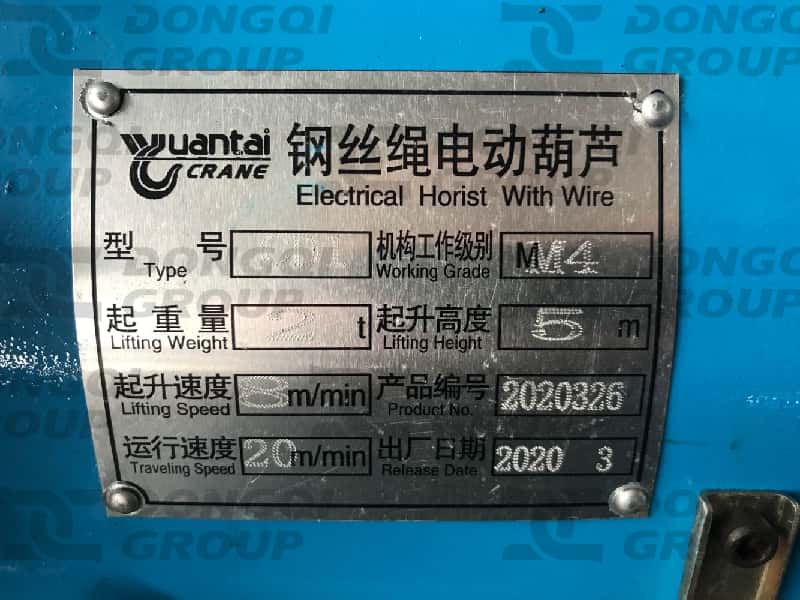
How DONGQI CRANE addresses this: Every DONGQI CRANE quotation specifies the exact hoist model, motor brand, lifting speeds, and work duty classification. We offer CD type (single-speed), MD type (dual-speed), and European-style hoists with premium SEW/NORD components. You know exactly what you are paying for.
Detail #4: Electrical Control System Components
Why this matters:
The electrical panel is the brain of the crane. The quality of contactors, relays, VFDs, and circuit protection determines operational reliability and safety. Generic electrical components fail more frequently, are harder to troubleshoot, and may not meet local electrical code requirements.
What to look for in the quotation:
- Main component brands: Schneider Electric, Siemens, ABB, or generic alternatives.
- Control method: Pendant control, radio remote control, or cabin control.
- Variable Frequency Drives (VFDs): Are VFDs included for hoist, cross travel, and long travel motions?
- Protection ratings: IP54, IP55, or IP65 for electrical enclosures.
Red flags:
- The quote says “standard electrical panel” without component specifications.
- No mention of VFDs when variable speed control was requested.
- Enclosure protection rating is missing or inadequate for your environment (e.g., IP44 for a dusty foundry).
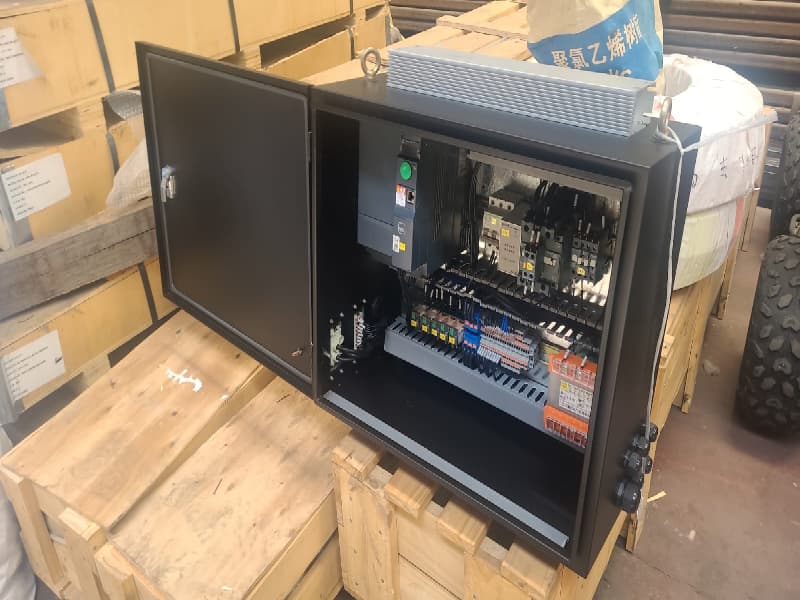
How DONGQI CRANE addresses this: Our quotations list the brand and model of major electrical components. We partner with Schneider Electric, Siemens, and ABB to ensure global availability of replacement parts and consistent quality. Every quote includes enclosure protection ratings appropriate for your operating environment.
Detail #5: Structural Materials and Corrosion Protection
Why this matters:
The crane’s steel structure must withstand years of cyclic loading without fatigue failure. The quality of steel plate, welding procedures, and surface treatment directly affects structural integrity and corrosion resistance—especially in coastal, high-humidity, or chemical environments.
What to look for in the quotation:
- Steel grade: Q235B (standard structural steel), Q355B (higher strength), or equivalent international grades.
- Welding standards: AWS D14.1, EN 1090, or equivalent certification of welding procedures.
- Surface preparation: Shot blasting to Sa 2.5 standard before painting.
- Paint system: Standard industrial enamel or C5-M marine-grade coating for corrosive environments.
Red flags:
- No mention of steel grade or welding standards.
- “Painted finish” without specification of surface preparation or coating system.
- No option for upgraded corrosion protection in coastal or chemical plant applications.
How DONGQI CRANE addresses this: Our quotations specify steel grades, welding procedure qualifications, and surface treatment standards. We offer standard industrial paint systems and optional C5-M marine-grade coatings for demanding environments. Material test certificates and weld documentation are included in every shipment.
Detail #6: Safety Features and Compliance Equipment
Why this matters:
Safety features are not optional extras—they are essential systems that protect operators, equipment, and your facility. Some suppliers quote bare-minimum configurations and treat safety devices as “add-ons” that increase the final price after you are committed.
What to look for in the quotation:
- Overload protection: Electronic load cell or mechanical overload clutch. Should be listed as standard, not optional.
- Limit switches: Upper and lower hook limit switches, cross travel limits, long travel limits.
- Emergency stop: Accessible at operator control station.
- Anti-collision systems: Required for multiple cranes on the same runway.
- Warning devices: Horn, siren, or flashing light for motion indication.
Red flags:
- Safety devices are listed as “optional” or priced separately.
- The quote does not mention overload protection at all.
- No compliance with OSHA, CE, or local safety standards is referenced.
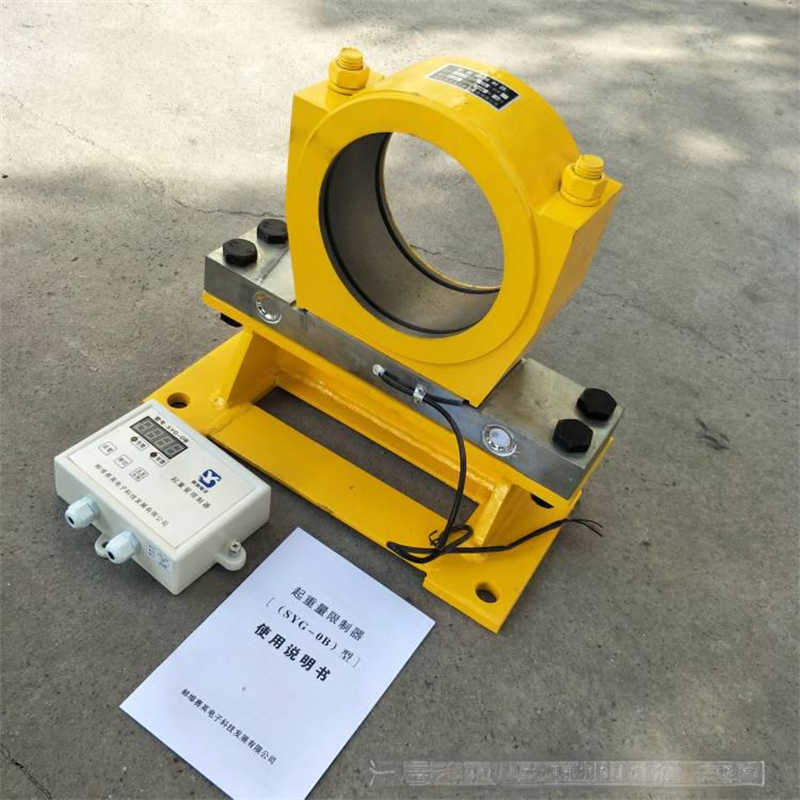
How DONGQI CRANE addresses this: Every DONGQI CRANE quotation includes a complete safety system as standard: overload protection, limit switches on all motions, emergency stop, and audible/visual warnings. We do not treat safety as an optional upgrade.
Detail #7: Installation, Commissioning, and Load Testing
Why this matters:
A crane sitting on your factory floor in parts is not an operational asset. Installation, commissioning, and load testing represent 25–50% of the total project cost. Some quotations exclude these items entirely, creating an artificially low equipment price while leaving you responsible for a complex, safety-critical installation.
What to look for in the quotation:
- Installation scope: Is installation included? If not, what is the estimated cost?
- Commissioning services: Who will align the crane, program the VFDs, and verify proper operation?
- Load testing: Will the crane be tested at 100% SWL or 125% SWL? Who provides test weights and certification?
- Operator training: Is training included, and what does it cover?
Red flags:
- The quote is for “equipment only” without any mention of installation requirements.
- No load test certification is offered.
- The supplier assumes you have local installation capability without verifying.
How DONGQI CRANE addresses this: We provide clear options for installation support. DONGQI CRANE dispatches experienced engineers directly from our China headquarters to your facility anywhere in the world. Our engineers supervise installation, oversee commissioning, and conduct certified load testing. You receive support from the engineers who designed and built your crane—not third-party contractors.
Detail #8: Freight, Logistics, and Delivery Timeline
Why this matters:
Freight costs for heavy, oversized crane components can equal 5–20% of the equipment price. Delivery timelines affect your project schedule. A quotation that omits freight costs or provides unrealistic delivery promises creates budget and schedule risk.
What to look for in the quotation:
- Incoterms: FOB (Free on Board), CIF (Cost, Insurance, Freight), or DAP (Delivered at Place). Understand what is included.
- Estimated freight cost: If not included, request an estimate based on your destination port.
- Production lead time: Number of weeks from order confirmation to ex-factory delivery.
- Shipping transit time: Estimated days from factory to destination port.
Red flags:
- The quote provides a delivery date without production lead time or shipping transit time.
- No Incoterm is specified.
- Freight costs are not addressed, leaving you to discover them later.
How DONGQI CRANE addresses this: Every quotation specifies the Incoterm, estimated production lead time, and shipping transit expectations. For CIF or DAP quotations, freight and insurance are included. Our export logistics team manages documentation and coordinates with freight forwarders to ensure smooth customs clearance.
Detail #9: Warranty Terms and After-Sales Support
Why this matters:
Warranty terms define your recourse if the crane fails prematurely. After-sales support determines how quickly you can recover from downtime. Vague warranty language and unclear support processes are red flags that can leave you stranded when problems arise.
What to look for in the quotation:
- Warranty duration: Standard is 12–24 months from commissioning or 18 months from shipment.
- Warranty coverage: Which components are covered? What is excluded (e.g., wear parts, operator error)?
- Spare parts availability: How quickly can replacement parts be obtained?
- Technical support: What remote or on-site support is available after commissioning?
Red flags:
- The warranty is not stated in writing.
- No process is defined for making a warranty claim.
- The supplier cannot explain how spare parts will be delivered to your location.
How DONGQI CRANE addresses this: Our quotations include clear warranty terms and a defined claims process. DONGQI CRANE does not maintain local agencies or spare parts warehouses in destination countries. Instead, we provide direct-from-factory support: spare parts ship within 24–48 hours via international express courier, reaching most global destinations within 3–7 business days. Remote technical support is available via WeChat, WhatsApp, or Zoom. For complex issues, we dispatch engineers directly from our China headquarters.
Detail #10: Certification and Documentation Package
Why this matters:
A crane cannot be legally operated without proper certification. Customs clearance, local regulatory approval, and insurance coverage all depend on complete, accurate documentation. A quotation that does not address certification requirements may leave you with a crane you cannot use.
What to look for in the quotation:
- ISO certifications: ISO 9001 (quality), ISO 14001 (environmental), ISO 45001 (safety).
- CE marking: Required for many markets; confirm scope of CE certification.
- Country-specific certifications: SNI (Indonesia), TISI (Thailand), CR (Vietnam), DOSH (Malaysia), etc. Does the supplier have experience with your destination country?
- Documentation deliverables: Material test certificates, weld procedure specifications, load test reports, operation manuals.
Red flags:
- The supplier cannot provide evidence of ISO or CE certification.
- They claim “certification is no problem” but cannot name the specific requirements for your country.
- Documentation deliverables are not listed in the quotation.
How DONGQI CRANE addresses this: DONGQI CRANE holds ISO 9001, ISO 14001, ISO 45001, and CE certifications. Our technical documentation team ensures every shipment includes complete certification packages that satisfy local regulatory authorities. With exports to 96+ countries, we have extensive experience navigating country-specific requirements.
The DONGQI CRANE Quotation Difference
When you receive a quotation from DONGQI CRANE, you receive a comprehensive technical and commercial proposal that addresses all 10 critical details. Our quotations include:
| Element | What You Receive |
|---|---|
| Technical Specification | Complete crane configuration with FEM/ISO work duty class, span, lift height, and all critical dimensions |
| Component Schedule | Brand and model of hoist, motors, gearboxes, electrical components, and structural materials |
| Safety System | Full list of standard safety features included in the base price |
| Installation Support | Clear options for engineer dispatch, supervision, commissioning, and load testing |
| Logistics | Incoterm, estimated production lead time, and freight coordination |
| Warranty and Support | Written warranty terms and defined processes for spare parts and technical support |
| Certification | ISO certificates, CE documentation, and country-specific compliance support |
| Total Price Transparency | Equipment cost, options, and estimated freight/installation costs clearly presented |
We do not use vague language, hidden exclusions, or low-ball specifications to create an artificially low price. Our goal is to provide a quotation you can compare accurately and a crane that performs reliably for decades.
The 10-Point Quotation Review Checklist
Use this checklist when reviewing any crane quotation:
| # | Detail to Verify | ✓ |
|---|---|---|
| 1 | Work duty classification (A3, A5, A7, etc.) explicitly stated | ☐ |
| 2 | Span and lift height confirmed based on your actual measurements | ☐ |
| 3 | Hoist type, brand, motor specifications, and lifting speeds listed | ☐ |
| 4 | Electrical components (VFDs, contactors, protection ratings) specified | ☐ |
| 5 | Steel grade, welding standards, and corrosion protection documented | ☐ |
| 6 | Safety features (overload, limits, e-stop) included as standard | ☐ |
| 7 | Installation, commissioning, and load testing scope defined | ☐ |
| 8 | Incoterm, lead time, and freight coordination addressed | ☐ |
| 9 | Written warranty terms and after-sales support process defined | ☐ |
| 10 | Certification and documentation package listed | ☐ |
Conclusion: Read the Fine Print Before You Compare the Bottom Line
A crane quotation is more than a price. It is a promise about what will be delivered, how it will perform, and how you will be supported over the equipment‘s 15–25 year service life. The lowest price is rarely the best value—especially when critical configuration details are missing or under-specified.
At DONGQI CRANE, we encourage every buyer to scrutinize our quotations against this 10-point checklist. Ask hard questions. Verify certifications. Demand clarity. A well-informed buyer is our best client, because a crane correctly specified today delivers decades of reliable, safe, and efficient service.
Ready to receive a transparent, comprehensive quotation for your crane project?
[Contact DONGQI CRANE’s engineering team today. Provide your application requirements, and we will prepare a detailed technical and commercial proposal you can evaluate with confidence.]
DONGQI CRANE: Your Direct-from-Factory Partner for Overhead Cranes, Gantry Cranes, and Custom Lifting Solutions Since 1985.
Transparent Quotations • Complete Documentation • Direct Engineer Dispatch Worldwide
ISO 9001 • ISO 14001 • ISO 45001 • CE Certified
240,000m² Manufacturing Facility • 10,000+ Annual Capacity • Exports to 96+ Countries
Express Spare Parts Delivery • Remote Technical Support • Factory-Direct Pricing
