
From Bangkok to Lahore: The Practical Playbook for Chinese High-End Crane Exports — Equipment Commissioning, Overseas Delivery, and Service Network Building
Introduction: Beyond the Factory Gate
In the first quarter of 2026, China’s construction machinery industry achieved export revenues of USD 16.066 billion, a year-on-year increase of 24.3%, continuing a high-growth trajectory that has seen annual export volumes surge past the USD 60 billion mark. Within this broad advance, crane products are exhibiting particularly strong momentum: tracked crane exports in January–February grew 56.6% year-on-year, while truck crane exports in January alone surged by as much as 128%. Henan Province—home to Dongqi Crane’s manufacturing base—recorded crane exports of RMB 1.244 billion in 2025, up 44% year-on-year across 149 countries and regions.
Headline figures, however, tell only part of the story. For any crane manufacturer, the real work begins the moment a signed contract leaves the commercial desk. A crane is not a consumer product that ships in a standard box. It is heavy, dimensionally complex, electrically sensitive, and mechanically precise. Transporting a 30-meter girder across the Indian Ocean, commissioning a 50-ton gantry crane in a Pakistani cement plant, or synchronizing electrical standards between a Chinese factory and a Thai port facility—these are not abstract logistical challenges. They are the daily operational realities of crane export, and they separate companies that genuinely serve international markets from those that merely ship products abroad.
At Dongqi Crane, we have spent years building the systems, teams, and infrastructure to manage these challenges at scale. With a 240,000-square-meter manufacturing facility in Changyuan, Henan Province, over 3,600 employees including more than 70 senior engineers, a dedicated 36-person multilingual overseas service team, a permanent office in Pakistan, and export coverage across 96 countries, our international delivery capability is not an afterthought—it is woven into the fabric of how we operate.
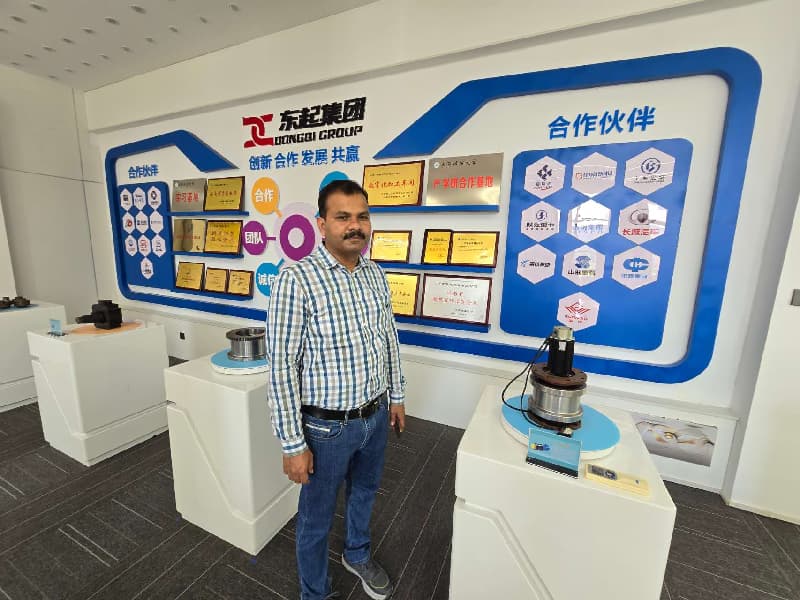
This article draws on real project experience—from Thailand to Pakistan, from Southeast Asia to the Middle East—to provide a candid, technically grounded account of what Chinese high-end crane export actually involves. It covers equipment commissioning, overseas logistics and delivery, and service network building, illustrated with Dongqi Crane project cases that demonstrate how theory meets practice on the ground.
Part 1: The New Geography of Chinese Crane Exports
1.1 A Market Transformed
The export landscape for Chinese cranes has undergone a structural transformation. What was once a market dominated by price-driven competition in commodity product categories has evolved into a sophisticated global trade in which Chinese manufacturers compete on technical merit, reliability, and service quality. Chinese construction machinery now covers 230 countries and regions worldwide, with market share in Belt and Road Initiative countries exceeding 25%. Industry observers note three fundamental shifts: from price competition to value competition, from single-product export to integrated solution delivery, and from passive standards adaptation to active participation in shaping international technical rules.
For crane manufacturers specifically, these shifts carry practical implications. A crane exported today is expected to meet FEM, ISO, CMAA, or ATEX standards; to be supported by comprehensive engineering documentation in the client’s language; to be installed and commissioned by trained personnel; and to be backed by a service commitment measured in decades, not months.
1.2 The Belt and Road Demand Engine
Infrastructure investment across Belt and Road Initiative markets continues to drive crane demand. In Pakistan, the China-Pakistan Economic Corridor (CPEC) has catalyzed a wave of energy, transport, and industrial projects. Tunnel construction, hydropower installations, cement plant expansions, and prefabricated beam factories all require specialized lifting equipment. In Southeast Asia, Thailand, Vietnam, and Indonesia are executing major industrial expansion programs—from port modernization to manufacturing facility construction—that depend heavily on overhead cranes, gantry cranes, and specialized handling systems.
Dongqi Crane has been present in these markets for years, building project references, local relationships, and logistical capabilities that enable us to serve clients from initial inquiry through installation and long-term maintenance. The route from our Changyuan factory to Bangkok and Lahore is not theoretical—it is a well-established corridor along which we have delivered dozens of crane systems.
Part 2: Equipment Commissioning—Precision Across Continents
2.1 The Commissioning Imperative
Equipment commissioning is the process by which a manufactured crane is transformed from a collection of components into a fully operational, tested, and certified lifting system at the client’s facility. It encompasses mechanical assembly, electrical integration, parameter configuration, load testing, safety verification, and operator training. Done well, it ensures the crane performs to specification from day one. Done poorly, it leads to premature wear, safety incidents, and a damaged manufacturer-client relationship that can take years to rebuild.
In the context of international export, commissioning presents additional layers of complexity: the manufacturer’s technical team may be thousands of kilometers from the factory; local power supplies, environmental conditions, and regulatory requirements differ from those in China; and language barriers can impede communication at critical technical junctures. Managing commissioning effectively requires meticulous planning, experienced personnel, and a structured approach that anticipates challenges before they arise.
2.2 Pre-Commissioning Preparation: The Foundation of Success
At Dongqi Crane, commissioning does not begin on the client’s site. It begins during the design phase, when our engineers document every technical parameter relevant to the installation environment—power supply voltage, frequency, and phase configuration; ambient temperature range; humidity and corrosive exposure; runway alignment tolerances; and regulatory inspection requirements. This information shapes component selection, control system configuration, and test procedures.
Before any equipment leaves our Changyuan factory, every crane undergoes full assembly and load testing. Static load testing is performed at 125% of rated capacity; dynamic testing at 110% of rated capacity. Functional verification covers all mechanisms—hoist, cross-travel, and long-travel—across the full range of speeds and control modes. Safety devices—overload limiters, limit switches, emergency stops, brake systems—are tested individually and as an integrated system. This factory testing serves two purposes: it verifies that the crane meets its design specification, and it identifies any issues that can be resolved in Changyuan rather than on a construction site thousands of kilometers away.
For export projects, factory testing also includes verification of electrical compatibility with the destination country’s power standards. A crane destined for Thailand, where industrial power is typically 400V/50Hz 3-phase, must have its motors, drives, and control systems configured accordingly. A crane destined for Pakistan may require different voltage tolerances and protection coordination. These are not generic adjustments—they require component-by-component verification.
2.3 On-Site Commissioning: Dongqi Crane in Thailand
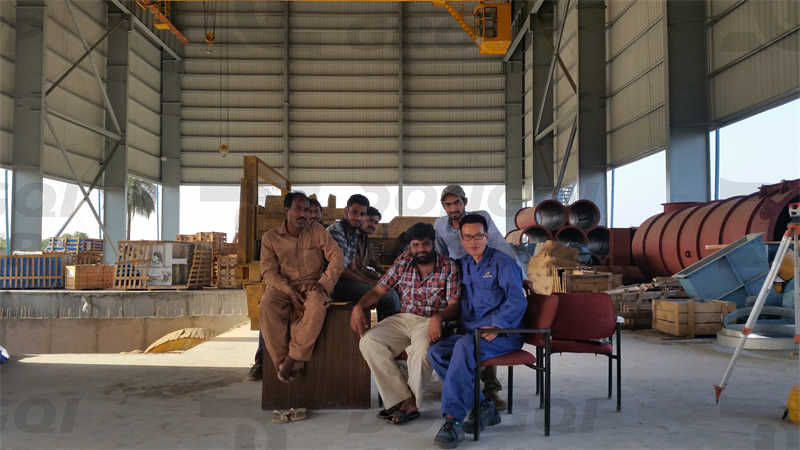
A representative example of Dongqi Crane’s commissioning capability is our 2020 delivery of four QDX-type European double girder overhead cranes to a port machinery maintenance and manufacturing factory in Thailand. The project specifications were demanding: 5-ton capacity, 24-meter span, 10-meter lifting height, operating on a 415V 50Hz 3-phase power supply—parameters that required careful engineering to ensure the cranes would integrate seamlessly with the client’s existing electrical infrastructure and building structure.
This project illustrates an important variation in export delivery models. Rather than shipping complete cranes, the client leveraged their local fabrication expertise to produce the main girders themselves. Dongqi Crane’s responsibility focused on the high-precision components: the end carriages, electric hoists, and trolleys. This collaborative approach—combining Dongqi’s manufactured precision components with local structural fabrication—reduces freight costs, shortens delivery timelines, and builds local industrial capability. It also requires that the manufacturer provide comprehensive fabrication drawings, welding specifications, and quality inspection criteria, which our engineering team delivered as part of the project documentation package.
The end carriages were built to the 24-meter span configuration, with precise wheel alignment to ensure smooth, stable travel along the runway rails. The robust box-section design reflects the European-style technology that Dongqi has integrated into its manufacturing processes, achieving reduced dead weight while maintaining high structural strength. The European-standard electric hoists were manufactured with careful attention to the 415V 50Hz 3P electrical components, matching Thailand’s industrial power standards exactly.
Once the components arrived at the client’s facility—protected by heavy-duty waterproof tarpaulin wrapping and custom plywood crating that prevented transit damage even under humid marine conditions—our technical team provided remote commissioning support, guiding the client’s installation personnel through mechanical integration, electrical connection, parameter setting, and load testing. The four cranes were commissioned successfully and have operated reliably in the years since, supporting the client’s port machinery maintenance and manufacturing operations. The project validated an export model that Dongqi Crane has since applied across multiple markets: combining high-precision, factory-tested core components with local structural fabrication, supported by comprehensive engineering documentation and responsive technical guidance.
2.4 Commissioning Heavy Equipment: Dongqi Crane in Pakistan
Commissioning larger equipment introduces additional challenges. Dongqi Crane’s delivery of a 50-ton rubber tire gantry crane (RTG) to a cement factory in Pakistan demonstrates the complexity involved with heavy-capacity, mobile lifting equipment.
The crane was equipped with advanced PLC control systems and wireless remote operation capability, enabling precise load positioning and flexible control. The rubber tire design allowed the gantry crane to move quickly and smoothly within the factory, greatly improving operating efficiency compared to rail-mounted alternatives. Commissioning this equipment required verification of all mechanical, hydraulic, electrical, and control systems; calibration of the wireless remote control range and response; load testing at the full 50-ton rated capacity; and integration of safety devices including overload limiters, height limiters, and anti-wind devices.
The cement plant’s management expressed high appreciation not only for the equipment’s performance—which improved cement production efficiency and reduced worker labor intensity—but also for Dongqi Crane’s professional services and after-sales support. This pattern of satisfaction with both the equipment and the service experience is characteristic of Dongqi Crane’s approach to overseas projects: the crane and the support are treated as an integrated product.
Part 3: Overseas Delivery—Logistics, Packaging, and the Art of Arriving Intact
3.1 The Logistics Challenge
A 24-meter crane girder cannot be shipped by standard courier. Crane export logistics involve specialized freight forwarding, heavy-lift vessel booking, customs documentation for complex industrial equipment, import duty classification, and final-mile delivery to sites that may lack the handling equipment to unload oversized cargo. Every shipment is unique, and every destination country presents its own regulatory and logistical profile.
Dongqi Crane has developed export logistics expertise across multiple trade corridors. Our shipping documentation is tailored to each destination’s customs requirements, reducing clearance delays. Our freight partnerships span major shipping lines serving ports from Karachi to Laem Chabang. And our packaging standards are designed to protect precision equipment through the full journey—from factory floor to client facility, via road transport, port handling, ocean freight, and final delivery.
3.2 Packaging as Engineering
The Thailand QDX crane project illustrates our packaging philosophy. The end carriages—heavy structural components that could sustain cosmetic damage or corrosion if exposed—were wrapped in heavy-duty waterproof tarpaulin and secured with industrial strapping. This level of protection ensures that even if the equipment encounters humid marine conditions or unexpected rain during transit, it arrives in pristine condition, ready for integration with locally fabricated main girders.
The more sensitive hoist mechanisms received even greater protection: custom plywood crates with internal bracing to prevent shifting during container transit. This “crate-proofing” standard reflects our commitment to ensuring that equipment arrives looking exactly as it did when it left our factory floor. Damaged packaging is not just a cosmetic concern—moisture ingress can cause electrical faults, and impact damage can compromise bearing alignment and gear mesh tolerances. The cost of proper packaging is trivial compared to the cost of replacing a damaged hoist or troubleshooting an intermittent electrical fault on a construction site.
3.3 Collaborative Delivery Models
One of Dongqi Crane’s distinctive capabilities is our flexibility in delivery models. Not every project requires a complete, factory-assembled crane shipment. In many cases, the optimal approach combines Dongqi’s manufactured precision components with locally produced structural elements. This model offers multiple advantages:
- Reduced freight costs: Shipping hoists, end carriages, and electrical systems without the main girders can reduce container volume by 40–60%, dramatically lowering ocean freight charges.
- Faster delivery: Local fabrication of main girders can proceed in parallel with Dongqi’s manufacturing of precision components, compressing overall project timelines.
- Local content benefits: Some markets offer tariff advantages or regulatory preference for projects with local manufacturing content. The collaborative model satisfies these requirements while maintaining Dongqi’s quality standards for the performance-critical components.
- Aftermarket accessibility: Local fabrication of structural elements means that future modifications or repairs to the girder structure can be handled by local workshops with access to Dongqi’s engineering drawings.
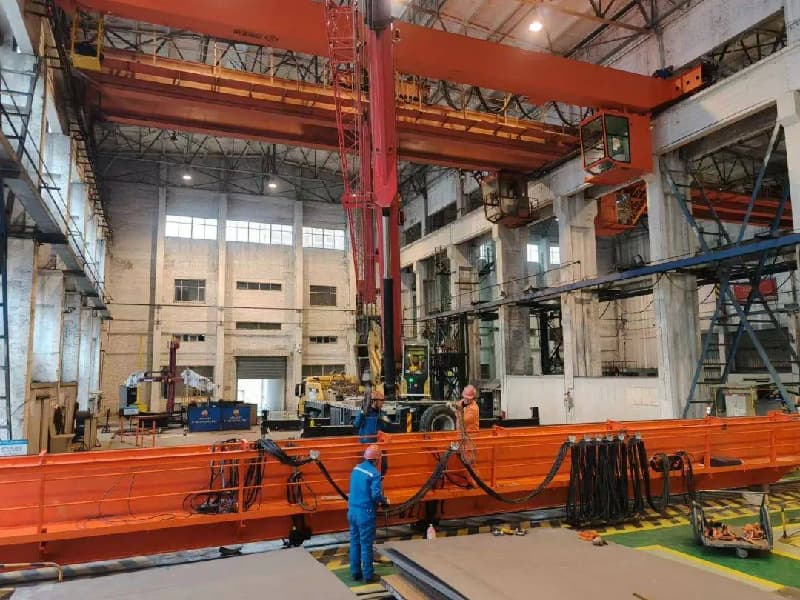
Dongqi Crane has applied this model successfully in Thailand, where the port machinery client fabricated main girders locally; in Pakistan, where structural components have been produced to Dongqi’s engineering specifications; and in other markets where clients seek to optimize total project cost while maintaining precision in the lifting mechanisms and controls.
Part 4: Service Network Building—The Long Game
4.1 Why Service Infrastructure Matters
A crane is a 15-to-25-year asset. During those decades, it will require preventive maintenance, periodic inspections, component replacements, and occasional repairs. It may need to be recertified following regulatory changes. Its operators will need training and refresher courses. When production depends on the crane, the availability of spare parts and technical support directly determines the facility’s operational uptime.
For international buyers, the service question is existential: if the crane breaks down, who responds, and how quickly? A manufacturer with no local presence, no spare parts inventory within thousands of kilometers, and no trained technicians in the region is not a partner—it is a vendor. And for critical production equipment, a vendor relationship is insufficient.
Dongqi Crane has invested systematically in building international service infrastructure. Our approach is pragmatic and market-specific: rather than attempting to blanket the globe with a uniform service model, we concentrate resources where our clients are concentrated, developing deep local capability that translates into responsive, effective support.
4.2 The Pakistan Office: A Case Study in Local Commitment
Pakistan represents one of Dongqi Crane’s most significant international markets, and our service infrastructure there illustrates our philosophy of sustained market commitment. We have established a permanent overseas office in Pakistan, staffed by personnel who understand both Dongqi’s technical standards and the local business environment, regulatory framework, and language. This is not a distributor relationship—it is a direct Dongqi Crane presence, ensuring that the quality of service matches the quality of the equipment.
The Pakistan office provides the full spectrum of crane services: project consultation at the inquiry stage, production coordination, delivery management, installation supervision, operator training, routine inspection and preventive maintenance, and emergency repair response. For Pakistani clients, this means they have access to Dongqi Crane’s technical resources without the delays and communication barriers that can arise when support must be coordinated from China.
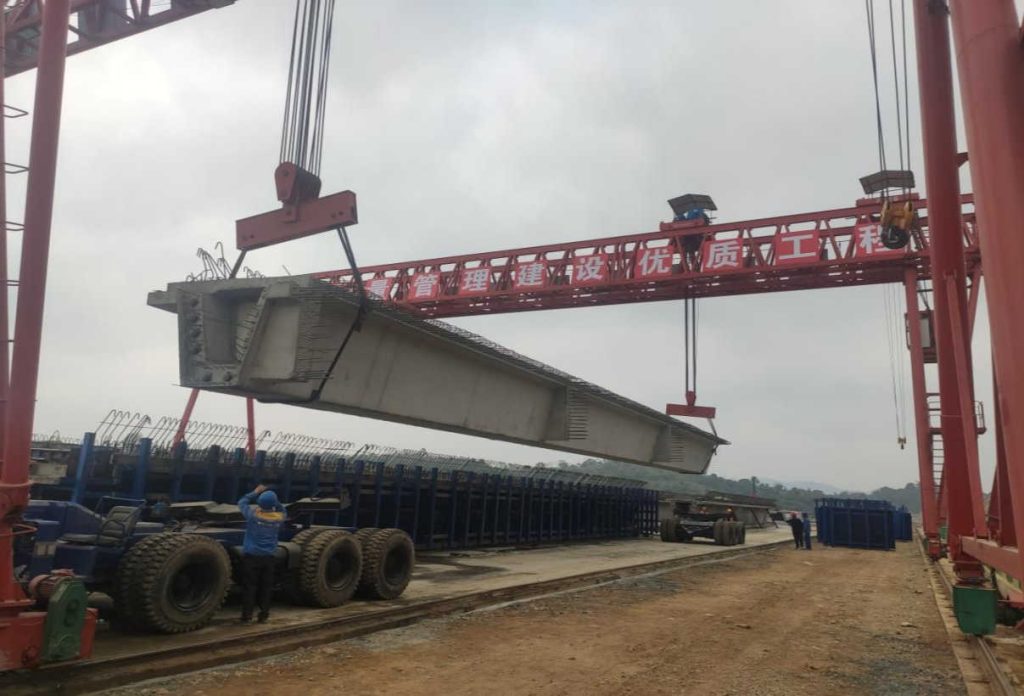
Project evidence demonstrates the effectiveness of this approach. In a tunnel project in Pakistan, Dongqi Crane provided a full range of technical support and after-sales services, ensuring stable crane operation and timely resolution of any issues that arose. In a precast beam factory project, we supplied two high-performance RTG cranes with complete after-sales service and technical support to ensure stable long-term operation. Across multiple cement plant deliveries, clients have expressed satisfaction with Dongqi Crane’s professional services and after-sales support, and have indicated their intention to continue cooperation.
4.3 The Multilingual Overseas Service Team
Beyond country-specific offices, Dongqi Crane maintains a dedicated 36-person multilingual overseas service team operating in English, Arabic, Spanish, Russian, and Korean. This team serves as a responsive resource for clients worldwide, providing remote technical support, coordinating on-site service visits, and managing spare parts logistics. The multilingual capability is not a marginal benefit—for clients whose primary language is not English or Chinese, the ability to communicate technical requirements in their native language eliminates a significant source of misunderstanding and delay.
The overseas service team works closely with our Changyuan-based engineering department of more than 70 senior engineers. When a complex technical question arises on a client site, the overseas team can consult directly with the engineers who designed the specific crane, accessing the complete design history, analysis files, and manufacturing records to support rapid diagnosis and resolution.
4.4 Spare Parts Strategy
A service network is only as effective as its spare parts supply chain. Dongqi Crane maintains spare parts availability for all crane models supplied internationally, with critical components stocked for rapid dispatch. Our standard recommendation for international clients includes an initial spare parts package covering high-wear items—brake linings, contactors, limit switches, rope guides—and a recommended inventory list for the client’s own maintenance stores.
For Pakistan specifically, the permanent office maintains local parts inventory and has the capability to expedite shipments from our Changyuan factory for non-stocked items. This dual-layer approach—local inventory for routine needs, factory backup for exceptional requirements—balances responsiveness with cost efficiency.
4.5 Building Local Capability: Training and Knowledge Transfer
Effective service goes beyond responding to breakdowns. It includes building the client’s own capability to operate and maintain the crane safely and efficiently. Dongqi Crane provides operator training as a standard component of every international project delivery, covering normal operation, emergency procedures, daily inspection routines, and basic troubleshooting.
In Pakistan, we have gone further—working to educate local crane operators about newer crane technologies and products, helping them stay current with the latest lifting equipment advances. This investment in local knowledge transfer builds long-term relationships, improves equipment utilization, and contributes to the development of the local industrial workforce.
Part 5: Regional Deep Dives
5.1 Thailand: Precision Manufacturing for a Sophisticated Market
Thailand represents one of Southeast Asia’s most dynamic crane markets, driven by rapid industrialization in the Eastern Economic Corridor (EEC), port modernization, and advanced manufacturing investment. Chinese customs data reveals the scale of opportunity: Thailand’s imports of Chinese bridge cranes grew by over 82% in volume in 2025, while gantry crane imports surged nearly 57%. These figures signify more than a shift in procurement patterns—they reflect a deeper alignment of value, reliability, and strategic vision between Thai industries and advanced Chinese engineering.
Dongqi Crane’s engagement with the Thai market is built on understanding the specific operational conditions that Thai industries face: high humidity and salt-laden coastal air demanding corrosion-resistant coatings and sealed electrical systems; premium on factory space requiring cranes engineered to maximize lifting height within constrained building envelopes; a strong safety culture requiring intuitive protective features; and an increasingly skilled workforce requiring equipment designed for ease of use and maintenance.
Our delivery to the Thai port machinery maintenance facility exemplifies this market-specific approach: European-standard design, electrical compatibility with local power standards, a collaborative delivery model that leveraged local fabrication capability, and packaging engineered for the humid marine transit environment.
5.2 Pakistan: Infrastructure-Driven Growth and Deep Local Commitment
Pakistan’s crane market is propelled by infrastructure construction under the China-Pakistan Economic Corridor framework, with projects spanning energy, transport, and industrial development. The scale of activity is evident in major project procurement: the Tarbela 5 hydropower project has installed 650-ton capacity bridge cranes for powerhouse construction, with main girders 24.5 meters in length and weighing 75 tons each. The Balakot hydropower project has procured 160-ton electric double-girder bridge cranes for its powerhouse. Meanwhile, the Lahore Orange Line metro—an early-harvest CPEC project—required 32 cranes for operational maintenance, supporting Pakistan’s formal entry into the “metro era”.
Dongqi Crane has been active across multiple sectors of Pakistan’s industrial economy. Our installations include bridge cranes for tunnel construction projects, RTG cranes for precast beam factories, rubber tire gantry cranes for cement plants, and overhead crane systems for heavy equipment manufacturing facilities. Each installation has been supported by our Pakistan office, ensuring rapid response to technical inquiries, on-site support for installation and commissioning, and ongoing after-sales service.
The cement plant RTG delivery illustrates the comprehensive nature of our support. Beyond the equipment itself—a 50-ton capacity crane with 30-meter main beam, advanced PLC control, wireless remote operation, and energy-optimized engine control—the client received full installation supervision, operator training, safety system verification, and a commitment to ongoing service. The client’s management linked the crane’s performance directly to improved production efficiency and reduced labor intensity, while expressing satisfaction with Dongqi Crane’s professional services.
5.3 The Broader Horizon: 96 Countries and Counting
While Thailand and Pakistan represent major nodes in Dongqi Crane’s international network, our export footprint extends far further. Equipment has been delivered to manufacturing facilities in Indonesia, steel plants in Bangladesh, industrial facilities in Nigeria, and clients across Africa, the Middle East, Southeast Asia, and Oceania. Each market presents its own requirements, and each project contributes to our accumulated expertise in international delivery.
The diversity of our export markets requires flexibility in how we serve clients. In some cases, we deliver complete turnkey crane systems with full on-site installation and commissioning. In others, we supply precision component kits that integrate with locally fabricated structures. In all cases, we provide the engineering documentation, technical support, and after-sales commitment that ensures the client receives a reliable, safe, and productive lifting system.
Part 6: What Makes International Crane Export Succeed—The Dongqi Crane Model
6.1 Design for Export
Cranes destined for international markets must be designed differently from those manufactured for domestic Chinese use. This begins with design standards—Dongqi Crane’s European-standard product line is engineered to FEM and ISO standards, with CE certification available for European-market equipment—and extends to electrical compatibility, environmental adaptation, and documentation.
Export design considerations include:
- Power supply compatibility with destination country standards (voltage, frequency, phase, protection requirements)
- Environmental resilience for the specific climate (humidity, temperature extremes, corrosive exposure)
- Regulatory compliance with local inspection and certification requirements
- Documentation in the client’s language and format
- Packaging engineered for the specific transport route and conditions
6.2 Manufacturing Quality and Testing
Quality control for export cranes cannot rely on site-level correction. Issues that could be addressed in a domestic installation—a misaligned component, an incorrect parameter setting—become far more costly and disruptive when the crane is on another continent. Dongqi Crane’s 240,000-square-meter manufacturing facility is equipped with over 2,000 sets of manufacturing and detection devices, and every crane undergoes full factory assembly and load testing before shipment. Our ISO 9001 quality management system, certified alongside ISO 14001 (environmental) and ISO 45001 (occupational health and safety), provides the process discipline that delivers consistent quality across thousands of crane sets annually.
6.3 Logistics and Documentation Excellence
Successful international delivery depends on meticulous logistics management. Dongqi Crane’s export documentation package includes commercial invoices, packing lists, bills of lading, certificates of origin, and any destination-specific documentation required for customs clearance. Our packaging standards are engineered for each shipment’s specific route and cargo characteristics. And our logistics partnerships provide reliable freight capacity across major international trade lanes.
6.4 Service: The Multi-Decade Commitment
The most important element of successful crane export—and the one that distinguishes committed international manufacturers from opportunistic exporters—is the service commitment. A crane sold without service infrastructure is a liability waiting to materialize. A crane sold with a permanent local presence, spare parts availability, trained technicians, and a track record of responsive support is a genuine partnership.
Dongqi Crane’s service commitment is backed by tangible investments: a permanent Pakistan office, a 36-person multilingual service team, spare parts inventory positioned for rapid dispatch, and a policy of providing full after-sales support as a standard component of every international delivery.
Conclusion: From Export Volume to Export Value
The narrative of Chinese crane exports in 2026 is no longer about price advantage alone—it is about the full value proposition that Chinese manufacturers bring to international markets. The industry has evolved from exporting products to exporting solutions, and the most successful exporters are those that have built the commissioning capability, logistical expertise, and service infrastructure to support their equipment throughout its operational life.
Dongqi Crane’s experience from Bangkok to Lahore illustrates what this looks like in practice: cranes designed to international standards and configured for local conditions; factory testing that catches issues before they travel; packaging that protects precision equipment across oceans; flexible delivery models that combine manufactured components with local fabrication; on-site commissioning by experienced personnel; and service networks that provide long-term, locally accessible support.
For international crane buyers—whether in Thailand, Pakistan, Indonesia, Nigeria, or any of the 96 countries we serve—the implications are clear. The equipment matters, but the manufacturer’s capability to deliver, commission, and support that equipment over its full service life matters equally. At Dongqi Crane, we have built our international operations around both dimensions, because we understand that a crane is not just a product—it is a commitment that extends years into the future.
Contact Dongqi Crane:
- Website: pk.craneyt.com
- International Inquiry: Submit your project requirements for a customized proposal with delivery timeline and service plan—response within 24 hours
- Pakistan Office: Direct access to our local team for on-the-ground support
- Factory Visit: Inspect our manufacturing, testing, and export packaging capabilities at our 240,000-square-meter Changyuan facility
- Multilingual Support: Our 36-person overseas team is available in English, Arabic, Spanish, Russian, and Korean
When you choose Dongqi Crane, you gain more than lifting equipment. You gain a partner with proven international delivery capability, deep local service commitment, and the engineering depth to ensure your crane investment performs reliably for decades—from Bangkok to Lahore, and everywhere in between.
© 2026 Dongqi Crane. All rights reserved. Project cases described are based on actual Dongqi Crane international deliveries. Market data sourced from publicly available industry statistics as cited.
