
Extreme Operating Conditions: Long-Life Anti-Corrosion Configurations for Cranes in High-Temperature, High-Humidity, and High-Salt-Spray Environments
Introduction: When the Environment Is the Enemy
A crane installed in a coastal steel mill faces a triple assault. From above, salt-laden sea mist settles on every exposed surface, initiating electrochemical corrosion that eats through paint film and into the steel substrate. From within, the heat of molten metal radiates upward, raising the crane’s structural temperature to levels that accelerate chemical reactions and degrade protective coatings. From the surrounding air, humidity hovers near saturation point, providing the electrolyte that enables corrosion to proceed even when visible moisture is absent.
This is not a hypothetical scenario. It is the daily operating reality for thousands of cranes serving ports, offshore platforms, chemical plants, steel mills, fertilizer factories, and coastal power stations across the world. In these environments, a crane with a standard industrial paint system—adequate for a dry inland warehouse—can show visible corrosion within 18 months and require major structural rehabilitation within 5 to 7 years.
At Dongqi Crane, we have designed, manufactured, and commissioned cranes for some of the most corrosive environments on earth. Our installations include cranes operating on tropical coastlines in Southeast Asia, in the salt-heavy atmosphere of Middle Eastern desalination plants, in the chemical-laden air of fertilizer factories, in the extreme heat of steel mill melt shops, and on offshore platforms where the combination of salt, humidity, and temperature cycling creates near-perfect conditions for corrosion.
This guide distills our engineering experience into a practical framework for specifying corrosion protection systems that deliver full 15- to 25-year design life even under severe environmental exposure. It explains the corrosion mechanisms at work, maps international standards to real-world environments, details the protective coating and material strategies appropriate to each exposure level, and provides procurement teams with a structured approach to evaluating corrosion protection specifications.
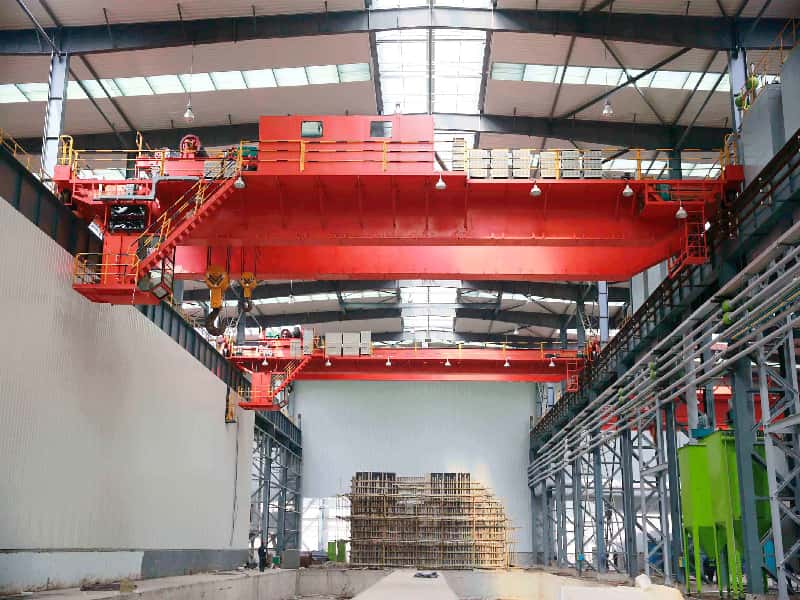
About Dongqi Crane: Dongqi Crane is a Sino-New Zealand joint venture headquartered in Changyuan, Henan Province—China’s renowned “Cradleland of Cranes.” We operate a 240,000-square-meter manufacturing facility with over 3,600 employees including more than 70 senior engineers, and produce over 10,000 crane sets annually. Every Dongqi crane undergoes factory assembly and testing before shipment, with protective coating systems applied to standards verified through documented quality processes. We are certified to ISO 9001, ISO 14001, ISO 45001, and CE standards, with products exported to 96 countries.
Part 1: The Science of Corrosion—Why Some Environments Eat Steel
1.1 The Electrochemical Mechanism
Corrosion of structural steel is fundamentally an electrochemical process requiring four elements: an anode (the steel surface where oxidation occurs), a cathode (an adjacent area where reduction occurs), an electrolyte (a conductive liquid, typically water with dissolved salts), and a metallic pathway (the steel itself, connecting anode and cathode). Remove any one of these four elements, and corrosion stops. Protective coating systems work primarily by breaking the electrolyte pathway—preventing water and dissolved salts from reaching the steel surface.
This explains why the most corrosive environments are those where the electrolyte is continuously present or frequently replenished. A coastal crane washed by salt spray every tide cycle never has the opportunity to dry completely. A chemical plant crane exposed to acidic mists operates with an electrolyte that is not merely conductive but chemically aggressive. A steel mill crane subjected to thermal cycling experiences repeated condensation as hot surfaces cool, creating a fresh electrolyte with each cycle.
1.2 Environmental Aggressors Beyond Salt
While salt is the most commonly discussed corrosive agent, crane structures in industrial environments face a wider array of chemical challenges. In fertilizer plants, ammonium compounds and phosphates create acidic conditions that attack protective coatings and accelerate steel oxidation. In chemical processing plants, exposure to acids, alkalis, and organic solvents can degrade paint films directly, even in the absence of electrochemical corrosion. In steel mills, sulfur compounds in the atmosphere combine with moisture to form sulfurous and sulfuric acids, while high temperatures accelerate all chemical reactions by approximately a factor of two for every 10°C increase.
Understanding the specific corrosive agents in an environment is essential to selecting the appropriate protective system. A coating that performs excellently in a neutral salt spray test may degrade rapidly when exposed to the acidic conditions of a particular industrial atmosphere.
1.3 Temperature and Thermal Cycling
High temperatures affect corrosion protection through multiple mechanisms. Elevated temperatures accelerate the chemical reactions involved in both corrosion and coating degradation—the “Arrhenius effect,” which approximately doubles reaction rates for every 10°C temperature increase. Temperature cycling causes differential thermal expansion between the steel substrate and the protective coating, creating mechanical stress at the coating-steel interface that can lead to cracking, delamination, and loss of adhesion. In extreme cases, such as in foundry or steel mill environments, radiant heat can raise surface temperatures beyond the service limits of standard organic coatings, causing blistering, charring, or complete coating failure.
For cranes operating in high-temperature environments, corrosion protection must address both the direct effect of elevated temperature on coating integrity and the indirect effect of thermal cycling on coating adhesion and continuity.
Part 2: The ISO 12944 Framework—Classifying Environments for Protection Specification
2.1 Understanding Corrosivity Categories
The international standard ISO 12944 provides the most widely accepted framework for classifying atmospheric corrosivity and specifying protective paint systems. The standard defines six corrosivity categories, from C1 (very low) to CX (extreme), based on the mass loss and thickness loss of standard steel and zinc specimens after one year of exposure.
| Corrosivity Category | Typical Outdoor Environment | Steel Thickness Loss (Year 1) | Example Locations and Applications |
|---|---|---|---|
| C1 (Very Low) | Clean atmospheres, heated buildings | ≤ 1.3 µm | Offices, heated warehouses, inland data centers |
| C2 (Low) | Rural areas, low pollution | 1.3–25 µm | Unheated warehouses, rural workshops, agricultural buildings |
| C3 (Medium) | Urban and industrial atmospheres, moderate SO₂ pollution | 25–50 µm | General manufacturing, urban factories, food processing |
| C4 (High) | Industrial and coastal areas, moderate salinity | 50–80 µm | Coastal factories, chemical plants, shipyards, ports |
| C5-I (Very High – Industrial) | Industrial areas with high humidity and aggressive atmosphere | 80–200 µm | Heavy industry, pulp and paper mills, smelters |
| C5-M (Very High – Marine) | Coastal and offshore areas with high salinity | 80–200 µm | Offshore platforms, coastal power plants, marine terminals |
| CX (Extreme) | Extreme offshore, industrial, and tropical high-humidity environments | 200–700 µm | Tropical offshore, extreme chemical exposure, submerged structures |
2.2 Applying Corrosivity Categories to Crane Procurement
For crane procurement teams, the critical step is correctly identifying the corrosivity category for the intended operating environment. A common error is to assume that a crane will operate in a C3 environment because the general geographic area is not coastal, when in fact the specific industrial process—such as a fertilizer granulation plant or a metal pickling line—creates localized conditions that push the environment into C4 or C5 territory.
Dongqi Crane’s standard indoor overhead crane paint specification is designed to meet C3 requirements, which is appropriate for most general manufacturing environments. For C4 and C5 environments—coastal installations, chemical plants, fertilizer factories, offshore applications, and facilities with aggressive internal atmospheres—upgraded paint systems and additional protective measures are specified.
The relationship between corrosivity category and expected coating durability is defined by ISO 12944 in terms of durability ranges:
- Low durability: 2–5 years
- Medium durability: 5–15 years
- High durability: >15 years
For crane structures with a design life of 15–25 years, the specified paint system should be capable of achieving “high” durability in the target corrosivity category. This means that a crane destined for a C4 environment requires a significantly more robust coating system than a crane in a C2 or C3 environment if both are expected to achieve the same service life.
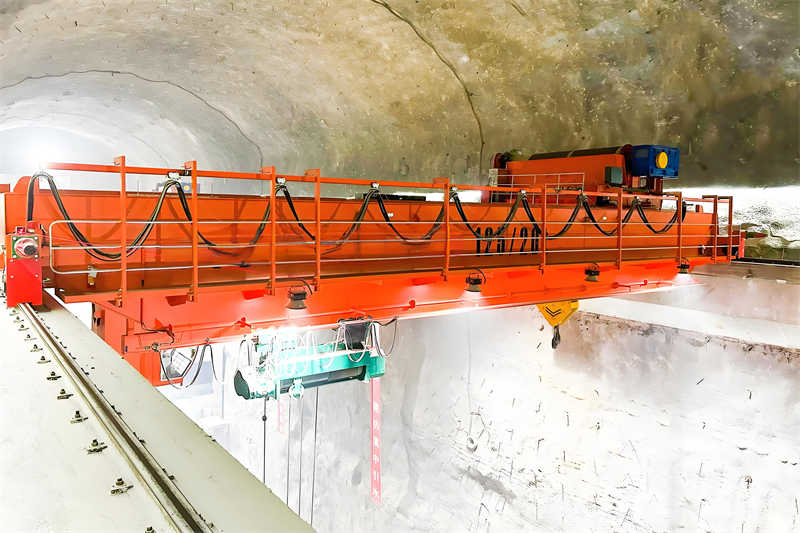
Part 3: Surface Preparation—The Foundation of Coating Performance
3.1 Why Surface Preparation Dominates Coating Life
No paint system, however advanced, can compensate for inadequate surface preparation. The coating industry has long held that surface preparation accounts for approximately 60–70% of coating performance, with the paint material itself accounting for the remaining 30–40%. Contaminants left on the steel surface—mill scale, rust, salts, oil, grease, dust—create weak points where the coating cannot bond properly, and where corrosion can initiate beneath an apparently intact paint film.
3.2 Blast Cleaning Standards
The standard method for preparing structural steel for protective coating is abrasive blast cleaning, with specified cleanliness levels defined by ISO 8501-1:
| Blast Standard | Description | Application |
|---|---|---|
| Sa 1 (Light Blast) | Loose mill scale, rust, and foreign matter removed | Not recommended for corrosion protection of crane structures |
| Sa 2 (Thorough Blast) | Most mill scale, rust, and foreign matter removed; remaining material firmly adhering | Minimum for C2–C3 environments |
| Sa 2½ (Very Thorough Blast) | Mill scale, rust, and foreign matter removed; only light stains remain | Standard for Dongqi Crane C3–C4 specifications |
| Sa 3 (Blast to Visually Clean Steel) | All mill scale, rust, and foreign matter removed; uniform metallic surface | Specified for C5 and CX environments, immersion service |
Dongqi Crane’s standard surface preparation for overhead cranes is Sa 2½ blast cleaning, achieved through impeller blasting descaling equipment in our Changyuan manufacturing facility. This achieves near-white metal cleanliness with a surface profile of 30–75 µm Rz, providing an optimal anchor pattern for coating adhesion.
For cranes destined for C5 and CX environments, we specify Sa 3 blast cleaning to visually clean steel, ensuring that no contaminants remain to initiate under-film corrosion.
3.3 Soluble Salt Contamination
An often-overlooked aspect of surface preparation is the removal of soluble salts—particularly chlorides and sulfates—from the steel surface. These salts, if left in place, create osmotic blistering: water permeates the coating film, dissolves the salt at the coating-steel interface, and creates an osmotic pressure that lifts the coating from the surface.
For C4 and higher corrosivity categories, Dongqi Crane performs soluble salt testing on blast-cleaned surfaces, with a maximum acceptable contamination level of 50 mg/m² of sodium chloride equivalent. In environments where salt contamination is expected to be high—coastal installations, offshore platforms, marine terminals—we may specify additional washing steps before blast cleaning to reduce salt levels on the raw steel surface.
Part 4: Protective Coating Systems for Crane Structures
4.1 Coating System Architecture
A protective coating system is not simply “paint.” It is an engineered multi-layer system in which each layer serves a specific function:
- Primer: Provides adhesion to the steel substrate and contains corrosion-inhibiting pigments (typically zinc, zinc phosphate, or similar) that provide active corrosion protection.
- Intermediate coat (build coat): Builds film thickness and provides the primary barrier to moisture and oxygen penetration. Multiple intermediate coats may be specified for severe environments.
- Topcoat: Provides the final appearance, UV resistance, chemical resistance, and the first line of defense against environmental exposure.
The total dry film thickness (DFT) of the coating system determines how long it takes for corrosive agents to penetrate to the steel surface. As a general principle, thicker coating systems provide longer protection, but only if all layers are properly applied and compatible.
4.2 Standard Coating Specifications by Corrosivity Category
Based on ISO 12944-5 and Dongqi Crane’s engineering practice, the following coating systems are specified for crane structures in different corrosivity categories:
| Corrosivity Category | Primer | Intermediate | Topcoat | Total DFT | Expected Durability |
|---|---|---|---|---|---|
| C3 (Medium) | Epoxy zinc-rich, 60 µm | Epoxy micaceous iron oxide (MIO), 80 µm | Polyurethane, 60 µm | 200 µm | >15 years |
| C4 (High) | Epoxy zinc-rich, 60–80 µm | Epoxy MIO, 100–150 µm | Polyurethane or polysiloxane, 60–80 µm | 260–320 µm | >15 years |
| C5-I (Very High – Industrial) | Epoxy zinc-rich, 80 µm | Epoxy MIO, 150 µm (2 coats) | Polysiloxane, 80 µm | 310 µm | >15 years |
| C5-M (Very High – Marine) | Epoxy zinc-rich, 80 µm | Epoxy MIO, 150–200 µm (2–3 coats) | Polysiloxane, 80–100 µm | 310–380 µm | >15 years |
| CX (Extreme) | Thermal spray metal (TSM) or epoxy zinc-rich, 100 µm + sealed | Epoxy, 200 µm (2–3 coats) | Polysiloxane or polyurethane, 100 µm | 350–450+ µm (excluding TSM) | >15 years |
Key Paint Chemistries for Crane Applications:
- Epoxy Zinc-Rich Primer: The workhorse of heavy-duty corrosion protection. The high zinc content (typically >80% in the dry film) provides cathodic protection—the zinc corrodes sacrificially to protect the steel, similar to galvanizing. Essential for C4 and above.
- Epoxy MIO (Micaceous Iron Oxide) Intermediate Coat: MIO particles are flat, plate-like pigments that orient parallel to the steel surface, creating a labyrinth effect that dramatically slows water and oxygen penetration. This is the primary barrier layer in most heavy-duty coating systems.
- Polyurethane Topcoat: Provides good UV resistance, color retention, and chemical resistance. Suitable for C3, C4, and some C5 environments.
- Polysiloxane Topcoat: A higher-performance alternative to polyurethane, offering superior UV stability, chemical resistance, and gloss retention. Increasingly specified for C5 and CX environments where long maintenance intervals are required.
4.3 Thermal Spray Metal (TSM) Systems for Extreme Environments
For CX environments and applications where maximum service life is essential, thermal spray metal (TSM) systems provide a step-change in corrosion protection. In a TSM system, molten zinc, aluminum, or zinc-aluminum alloy is sprayed onto the blast-cleaned steel surface, forming a dense metallic coating that provides both barrier protection and galvanic (sacrificial) protection. The TSM layer is then sealed with a penetrating sealer and overcoated with epoxy and polyurethane or polysiloxane topcoats.
The advantages of TSM systems include significantly extended service life (20–30+ years before first major maintenance), resistance to mechanical damage superior to organic coatings, and performance in cyclic wet-dry conditions such as splash zones. The tradeoff is that TSM systems require specialized application equipment and skilled applicators, and initial cost is higher than organic coating systems.
Dongqi Crane offers TSM coating systems for cranes destined for the most severe environments, with the TSM layer applied in our controlled manufacturing environment to ensure consistent quality.
4.4 Quality Control in Coating Application
A coating specification is only as good as its application. Dongqi Crane’s quality control procedures for coating application include environmental condition monitoring during application—surface temperature, air temperature, relative humidity, and dew point are measured and recorded before and during coating application. Coatings are not applied when conditions are outside the manufacturer’s specified ranges. Dry film thickness (DFT) is measured at multiple points on every coated surface to verify that specified thicknesses are achieved, and DFT is recorded in the coating inspection report. Adhesion testing using pull-off or cross-hatch methods is performed on test panels or witness areas to verify coating adhesion. Cure testing using solvent rub or hardness methods verifies that the coating has achieved full cure before the crane is shipped. Visual inspection of the completed coating system verifies continuity, color, gloss, and the absence of defects such as runs, sags, orange peel, or overspray.
These quality control steps are documented and provided to the client as part of the crane’s technical documentation package.
Part 5: Environmental Protection Beyond Coatings
5.1 Stainless Steel and Corrosion-Resistant Alloys
For components where organic coatings are impractical—fasteners, small brackets, nameplates, and components subject to mechanical wear—stainless steel or other corrosion-resistant alloys are specified. Dongqi Crane’s standard practice for C4 and higher environments includes:
- Stainless steel fasteners: All external bolts, nuts, washers, and screws are specified in 304 or 316 stainless steel, with 316 specified for marine and chemical environments where chloride resistance is required.
- Stainless steel nameplates and tags: Corrosion-resistant identification plates ensure that critical information remains legible throughout the crane’s service life.
- Corrosion-resistant small components: Cable trays, junction boxes, limit switch housings, and similar small components are specified in stainless steel or high-grade coated steel for corrosive environments.
- Stainless steel or brass for instrument components: Pressure gauges, temperature sensors, and other instruments exposed to the environment use corrosion-resistant cases and connections.
5.2 Sealed and Protected Electrical Systems
Electrical and control system components are particularly vulnerable to corrosion because they contain dissimilar metals, small clearances, and sensitive contacts. For C4 and higher environments, Dongqi Crane specifies electrical enclosures with minimum IP65 protection rating, providing complete protection against dust ingress and low-pressure water jets from any direction. Cable entries use corrosion-resistant glands with appropriate sealing. Connectors are gold-plated or otherwise protected against corrosion. Control panels installed in corrosive environments are protected with enclosure heaters to prevent condensation, and critical electrical compartments are purged with dry air or inert gas where required.
5.3 Component-Specific Protection
Beyond the main structure, critical crane components require specific corrosion protection measures:
| Component | Corrosion Risk | Protection Measures for C4+ Environments |
|---|---|---|
| Wire Rope | Corrosion accelerates fatigue failure | Hot-dip galvanized or stainless steel ropes; marine-grade internal and external lubrication; regular inspection and replacement schedule |
| Bearings | Corrosion causes seizure and premature failure | Sealed bearings with corrosion-resistant seals; stainless steel bearing housings for C5; lithium complex grease with corrosion inhibitors |
| Brake Components | Corrosion causes sticking, reduced torque, and failure | Enclosed brake housings; stainless steel springs and hardware; corrosion-resistant friction materials |
| Gearboxes | External corrosion degrades seals and housing integrity | Epoxy or polyurethane coating on gearbox exterior; stainless steel breather vents and fill/drain plugs; synthetic lubricants with corrosion inhibitors |
| Wheels and Rails | Corrosion causes pitting, increased wear, and noise | Alloy steel wheels with appropriate hardness; stainless steel or coated rail clips and fasteners; regular lubrication |
Part 6: Corrosion Protection for Specific Extreme Environments
6.1 Coastal and Offshore Installations (C5-M / CX)
Coastal and offshore cranes face the most aggressive corrosion conditions of any application. The combination of high humidity, airborne salt, and frequent temperature cycling creates conditions where standard industrial coatings can fail within 2–3 years.
Dongqi Crane’s coastal/offshore corrosion protection package includes Sa 3 blast cleaning to visually clean steel for immersion and severe marine applications; thermal spray metal (TSM) zinc-aluminum alloy, 100–150 µm, sealed and overcoated with epoxy and polysiloxane to a total DFT of 350–450 µm; 316 stainless steel for all external fasteners, small components, and electrical enclosures; IP66 electrical enclosures with enclosure heaters and corrosion-resistant connectors; and marine-grade wire ropes with enhanced lubrication and galvanized or stainless steel construction. Maintenance access for inspection and recoating is designed into the crane structure, with bolted connections and access platforms provided where required.
6.2 High-Temperature Operations: Steel Mills and Foundries
Cranes in steel mills and foundries face a unique combination of challenges: radiant heat from molten metal and hot slabs, thermal cycling as cranes move between hot and cool zones, and sulfur-containing atmospheres that form acids when combined with moisture.
For high-temperature applications, Dongqi Crane specifies high-temperature-resistant paint systems capable of withstanding sustained surface temperatures appropriate to the specific installation—typically 200°C to 400°C for general steel mill applications, with specialized coatings available for higher-temperature areas. Heat shields or reflective barriers are installed below main girders to protect the crane structure from direct radiant heat exposure. Solid forged wheels rather than pressed-tire wheels eliminate the risk of tire loosening during thermal cycling. High-temperature-rated electrical cables and components (Class H insulation where required) maintain electrical integrity at elevated ambient temperatures.
The paint chemistry for high-temperature applications differs fundamentally from standard industrial coatings. Inorganic zinc silicate coatings provide corrosion protection and temperature resistance up to 400°C. Aluminum-pigmented silicone coatings provide heat resistance and moderate corrosion protection. Modified epoxy phenolic or epoxy novolac systems are used for intermediate temperature ranges where standard epoxies degrade.
6.3 Chemical Processing and Fertilizer Plants (C5-I)
Chemical plant environments combine high humidity with chemically aggressive atmospheres—acids, alkalis, solvents, and reactive gases—that attack protective coatings through chemical mechanisms as well as electrochemical corrosion.
Dongqi Crane’s chemical environment protection strategy begins with coating system selection based on the specific chemical exposure. Epoxy novolac coatings provide superior acid resistance compared to standard epoxy. Vinyl ester or polyester coatings are specified for strong acid environments. Zinc-rich primers may be unsuitable for strong acid or alkali environments, requiring zinc phosphate or other inhibitive primers instead. Additional DFT is specified to allow for higher erosion rates in chemically aggressive environments. Enclosed and purged electrical systems prevent corrosive gases from reaching sensitive components. The specific chemical species present must be identified during the project inquiry phase to enable proper coating system selection.
Part 7: Procurement and Specification Guide
7.1 Key Questions for Corrosion Protection Specification
Procurement teams evaluating crane corrosion protection should address the following questions:
- What is the ISO 12944 corrosivity category for the operating environment? (If uncertain, consult Dongqi Crane’s engineering team with details of the installation location and processes.)
- What is the expected design life of the crane, and what coating durability is required to achieve that life?
- Are there specific chemical agents present in the atmosphere that require tailored coating chemistry?
- Will the crane be exposed to high temperatures, either ambient or radiant?
- What are the maintenance access provisions for future coating inspection and recoating?
- Does the supplier provide documented coating quality control records, including surface preparation verification, DFT measurements, and adhesion testing?
7.2 Dongqi Crane’s Corrosion Protection Documentation
For every crane we deliver, Dongqi Crane provides a comprehensive coating documentation package that includes surface preparation records, including blast cleaning standard achieved, surface profile measurements, and salt contamination test results where applicable; coating application records, including environmental conditions during application, coating materials and batch numbers, and DFT measurements at multiple locations on all major structural components; adhesion test results and cure verification; and paint system datasheets for all materials used, including manufacturer, product name, and batch numbers.
This documentation provides the client with full traceability for the corrosion protection system and serves as the baseline for future maintenance planning.
Conclusion: Corrosion Protection as a Design Discipline
Corrosion protection for cranes in extreme environments is not an afterthought—it is a design discipline that begins with the first engineering calculations and extends through manufacturing, installation, and decades of operation. The decisions made during specification and procurement directly determine whether a crane will require major structural rehabilitation after 5 to 7 years or operate with minimal corrosion maintenance for its full 15- to 25-year design life.
At Dongqi Crane, we treat corrosion protection as an integral part of crane engineering, not an optional add-on. Our surface preparation processes, coating application procedures, and quality control systems are designed to deliver coating performance that matches the structural life of the crane. For extreme environments, our engineering team works with clients to identify the specific corrosive agents, temperature conditions, and operational factors that influence coating system selection, ensuring that the specified protection system is tailored to the actual operating conditions.
For procurement professionals, the message is clear: when evaluating crane suppliers for extreme environments, examine the corrosion protection specification as carefully as you examine the structural design. Request documented evidence of surface preparation quality, coating application procedures, and quality control records. A crane that is structurally adequate but inadequately protected against corrosion is a crane that will fail prematurely—not because the steel was not strong enough, but because the environment was not taken seriously enough.
Contact Dongqi Crane:
- Website: pk.craneyt.com
- Engineering Inquiry: Submit your project’s environmental conditions for a customized corrosion protection specification—response within 24 hours
- Factory Visit: Inspect our surface preparation and coating application facilities at our 240,000-square-meter Changyuan manufacturing facility
- Technical Support: Reach our materials and coatings engineering team for guidance on environmental classification and coating system selection
Choose Dongqi Crane—where protection against the environment is built in, not added on.
© 2026 Dongqi Crane. All rights reserved. Corrosion protection specifications in this guide are based on ISO 12944 and Dongqi Crane’s engineering standards. Specific coating system selection should be based on a detailed environmental assessment for each individual project.
