
Critical Crane Components Pitfall-Proof Guide: How to Identify High-Quality Wire Ropes, Sheaves, and Brakes
Introduction: Why Components Matter More Than You Think
When a crane lifts a 50-ton load and holds it suspended 12 meters above the factory floor, every ounce of trust placed in that machine ultimately rests on three components: the wire rope that carries the load, the sheaves that guide and support the rope, and the brakes that hold everything steady. These are not accessories. They are the fundamental safety chain between the hoist motor and the load—and when any one of them fails, the consequences are immediate, unforgiving, and often catastrophic.
Despite their critical importance, wire ropes, sheaves, and brakes are also the crane components most vulnerable to counterfeit substitution, specification mismatching, and deferred maintenance. A maintenance manager under budget pressure may source “equivalent” wire rope from a non-certified supplier. A procurement team may accept brake linings that match the part number but not the friction coefficient. A workshop may continue using a sheave with groove wear beyond discard limits, reasoning that “it still turns.” In each case, the decision seems economical in the moment—and proves devastating in hindsight.
According to a 2024 industry safety report, nearly 26% of crane-related accidents were caused by faulty or worn-out brake systems. Wire rope failures and sheave-related incidents add to this toll. The financial cost of a single major crane failure—equipment damage, production downtime, regulatory investigation, potential liability—can exceed the lifetime procurement budget for high-quality components many times over.
At Dongqi Crane, we have spent decades specifying, sourcing, testing, and maintaining critical crane components for installations across 96 countries. This guide distills that experience into practical knowledge: what distinguishes a high-quality wire rope, sheave, or brake from a substandard one; which international standards govern each component; how to inspect components for signs of deterioration; and how to build a procurement strategy that prioritizes total lifecycle value over short-term cost savings.
About Dongqi Crane: As a Sino-New Zealand joint venture headquartered in Changyuan, Henan Province—China’s renowned “Cradleland of Cranes”—Dongqi Crane operates a 240,000-square-meter manufacturing facility with over 3,600 employees including more than 70 senior engineers. Certified to ISO 9001, ISO 14001, ISO 45001, and CE standards, we deliver over 10,000 crane sets annually. Every crane we manufacture is equipped with components that meet or exceed the international standards described in this guide, and our after-sales support includes genuine Dongqi spare parts, technical guidance on component inspection and replacement, and a 36-person multilingual service team operating across 96 countries.
Part 1: Wire Ropes—The Lifeline You Cannot Afford to Get Wrong
1.1 The Anatomy of Quality in Steel Wire Rope
A wire rope is deceptively simple in appearance: strands of steel wire twisted around a core. But the engineering behind a high-quality crane wire rope involves precise control over steel chemistry, wire drawing processes, strand construction, lay configuration, core material, lubrication, and surface treatment. Each of these variables affects the rope’s strength, fatigue life, flexibility, corrosion resistance, and wear characteristics.
Steel Grade and Wire Quality: High-performance crane ropes use high-carbon steel wire with tensile strengths typically in the range of 1,770 to 1,960 N/mm². The wire drawing process must produce consistent diameter and surface finish, as variations create stress concentrations that accelerate fatigue. Galvanized coatings provide corrosion protection through a zinc layer, making the rope suitable for outdoor use and humid operating conditions. For severe saltwater or chemical environments, dual-protection systems combining galvanized wire with plastic-coated cores can extend service life by over 40%.
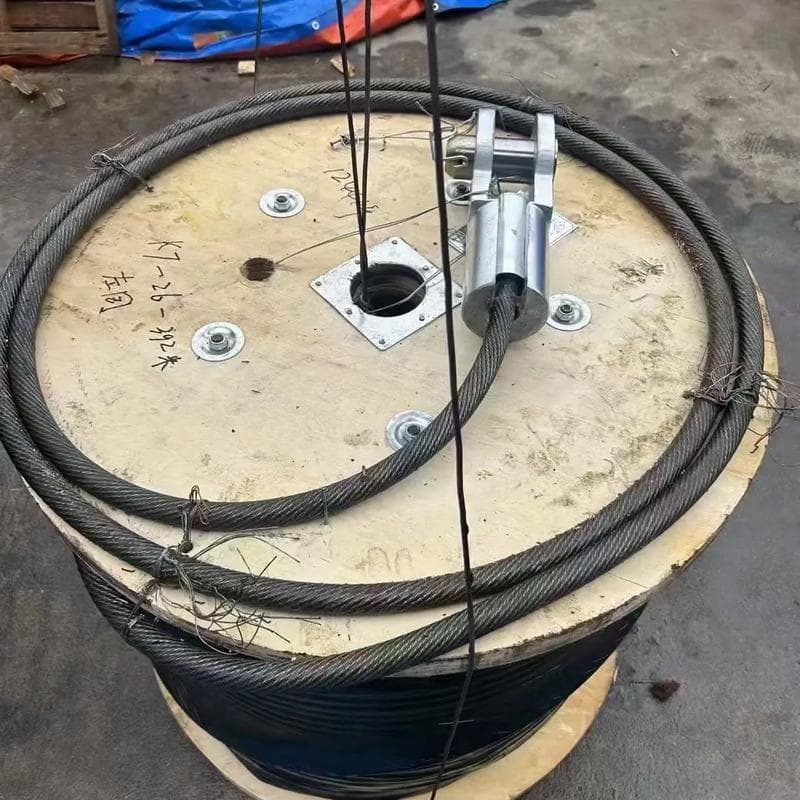
Rope Construction and Lay: The construction of a rope—expressed as strands × wires per strand—determines its balance of strength, flexibility, and abrasion resistance. Common crane rope constructions include 6×19 (good abrasion resistance, moderate flexibility), 6×36 (greater flexibility, better fatigue performance), and 8×19 (improved spooling characteristics). For multi-layer spooling applications, rotation-resistant constructions such as 35W×7 are essential to prevent load spinning during lifts.
Core Type: The core supports the outer strands and maintains the rope’s structural integrity. Fiber cores (FC) provide good lubrication retention but less structural support. Independent wire rope cores (IWRC) provide higher strength, better crush resistance, and greater stability under load—essential for heavy-duty crane applications.
Plastic Impregnation: High-performance ropes increasingly use plastic-impregnated cores and strands. This technology improves the rope’s behavior under heavy-duty conditions by reducing internal friction, improving load distribution between strands, and providing additional corrosion protection for the internal wires. For applications involving repetitive lifting cycles and adverse fleet angles, plastic-impregnated ropes offer substantially longer service life than conventional constructions.
Lubrication: Proper lubrication reduces internal friction between wires and strands during bending, extending fatigue life. Quality ropes are lubricated during the stranding and closing processes, with the lubricant penetrating to the core. Some high-performance ropes use specialized synthetic lubricants compatible with specific operating environments.
1.2 Wire Rope Inspection: What to Look For
ISO 4309:2017 establishes the general principles for the care, maintenance, inspection, and discard of steel wire ropes used on cranes and hoists. This standard—which has been adopted in China as GB/T 5972-2023—provides the internationally recognized framework for determining when a wire rope has reached the end of its safe service life.
Wire rope inspection should be performed at regular intervals by a competent person. Steel wire rope shall be inspected at least every 12 months, or more frequently according to local legislation. Each rope shall be inspected along its entire length, with particular attention paid to sections that experience has shown to be liable to deterioration—typically the crossover zones on drums, areas passing over sheaves, and rope end terminations.
Key Inspection Criteria:
| Inspection Point | What to Check | Discard Criteria |
|---|---|---|
| Broken Wires | Count visible wire breaks per lay length | ≥10% of total wires in one lay length (≤5% for ropes handling molten metal or hazardous loads) |
| Diameter Reduction | Measure rope diameter at multiple points along its length | ≥7% reduction from nominal diameter |
| Corrosion | Surface pitting, rust bleeding from internal wires | Surface pit depth >1 mm requires treatment; severe internal corrosion warrants discard |
| Wear | Outer wire flattening, reduction in wire diameter | Outer wire wear exceeding 1/3 of original outer wire diameter |
| Deformation | Kinks, birdcaging, core protrusion, knotting, crushing | Any visible structural deformation—immediate discard |
| Lubrication | Surface dryness, visible internal rust | Relubricate when surface appears dry; internal corrosion may require rope discard |
Most standards require that rope is to be removed if the outer wire wear exceeds one-third of the original outer wire diameter. This is not easy to determine visually and requires measurement by a competent inspector using appropriate tools such as rope diameter gauges and wire diameter micrometers.
1.3 The Counterfeit Wire Rope Problem
Counterfeit crane components represent a serious and growing safety threat. The industry is “absolutely infested with fakes,” with parts marketed as OEM replacements but not fulfilling the original requirements. Counterfeiters copy the dimensions of crane parts and manufacture them to a low standard with poor quality steel. Wire rope is particularly susceptible to counterfeiting because the finished product can appear identical to genuine OEM rope while using inferior steel, inadequate lubrication, or substandard core material.
How to Identify Genuine High-Quality Wire Rope:
- Manufacturer Identification: Quality wire ropes carry a manufacturer’s marking on the reel, the packaging, or a tracer wire within the rope. Verify that the manufacturer is traceable and holds relevant certifications.
- Mill Test Certificates: Request the mill test report showing steel grade, tensile strength, breaking force, and compliance with applicable standards (ISO 2408, EN 12385, or national equivalents). Genuine manufacturers provide this documentation without hesitation.
- Classification Society Certification: For critical applications (marine, offshore, nuclear), wire ropes should carry certification from recognized classification societies such as ABS, DNV, BV, LR, or RMRS.
- Packaging Quality: Genuine OEM components are packaged to professional standards. Poor printing, misspellings, or outdated company logos on packaging can indicate counterfeit products.
- Diameter Consistency: Measure the rope diameter at multiple points along a sample length. High-quality ropes maintain consistent diameter within tight tolerances. Variations suggest poor manufacturing control.
- Surface Finish: Examine the wire surface under magnification. Quality ropes show uniform surface finish without excessive drawing marks, rust spots, or visible inclusions.
1.4 Dongqi Crane Wire Rope Specifications
Dongqi Crane equips all our cranes with wire ropes that meet or exceed ISO and FEM standards. For standard overhead crane applications, we specify wire ropes with the following characteristics:
- Minimum safety factor of 5:1 for standard applications (ISO A3–A5)
- Minimum safety factor of 6:1 for heavy-duty applications (ISO A6 and above)
- Steel grade 1960 N/mm² tensile strength for standard ropes
- Galvanized finish for outdoor or humid environment applications
- Rotation-resistant construction for multi-fall reeving systems
- Factory-fitted terminations with certification documentation
For specialized applications—ladle cranes, offshore cranes, explosion-proof cranes—we specify enhanced rope configurations with higher safety factors, specialized coatings, and additional certification requirements.
Part 2: Sheaves and Pulleys—Silent Partners in Safe Lifting
2.1 Why Sheave Quality Matters
The sheave is the wheel over which the wire rope passes. It seems like a simple component—and that perception of simplicity is precisely why it is so often overlooked during inspection and procurement. In reality, the sheave has a profound influence on both wire rope life and lifting safety. An incorrectly profiled, worn, or seized sheave can destroy a new wire rope within weeks, cause dangerous load instability, or jam during a critical lift.
The sheave groove profile must match the rope diameter precisely. A groove that is too narrow pinches the rope, causing accelerated wear and internal wire damage. A groove that is too wide allows the rope to flatten, reducing fatigue life and increasing the risk of the rope jumping the groove. The groove radius should be approximately 5–7.5% larger than the nominal rope radius to provide proper support while allowing the rope to seat correctly under load. The groove bottom and side clearance should not exceed 0.5 mm, the groove centerline deviation from the sheave centerline should not exceed 0.2 mm, and the rope groove center deviation from the contour end face should not exceed 1 mm.
The sheave material matters too. Cast iron sheaves are common in general industrial applications but have limited wear resistance and are susceptible to cracking. Forged or cast steel sheaves provide higher strength and better wear characteristics for heavy-duty applications. Specialized sheaves with hardened rope grooves can extend both rope and sheave life in high-cycle operations. Note that the exclusive use of synthetic sheaves or metal sheaves incorporating synthetic linings is not recommended for single-layer spooling applications due to the inevitability of internal wire breaks occurring before visible evidence appears.

2.2 Sheave Inspection Standards
Inspection of sheaves should follow the guidelines established in ISO 4309 and national standards. The key inspection points and discard criteria are:
| Inspection Point | What to Check | Discard Criteria |
|---|---|---|
| Cracks | Visual inspection, dye penetrant testing for critical applications | Any visible crack—immediate discard. Cracks cannot be repaired. |
| Groove Wear (Uneven) | Measure groove depth at multiple points around circumference | Uneven wear reaching 3 mm—discard |
| Wall Thickness Reduction | Measure remaining wall thickness at groove bottom | ≥20% reduction from original wall thickness—discard |
| Groove Bottom Diameter Reduction | Measure groove bottom diameter; compare to rope diameter | Reduction reaches 50% of wire rope diameter—discard |
| Bearing Condition | Rotate sheave by hand; check for roughness, play, noise | Any bearing roughness, excessive radial play, or noise—replace bearing |
| Flange Condition | Check for chips, cracks, or missing sections | Any damage that could contact or abrade the wire rope—repair or replace |
| Rotation | Verify sheave rotates freely under hand pressure | Any seizure, binding, or intermittent rotation—remove and service |
For critical applications, some standards specify additional requirements: brake performance testing requires braking torque ≥1.5 times rated torque (GB/T 5972-2023), with response time ≤0.3 seconds. Wire rope condition assessment requires broken wires ≤10% of total wires, with diameter wear ≤7% of nominal diameter.
2.3 Selecting Quality Sheaves
When procuring replacement sheaves, evaluate the following:
- Material certification: Request material test certificates confirming the sheave material grade. For cast components, verify that ultrasonic or radiographic testing has been performed to confirm absence of internal defects.
- Groove machining: Quality sheaves have precisely machined grooves with surface finish that minimizes rope wear. The groove profile should be verified against the rope manufacturer’s recommended dimensions.
- Bearing specification: The bearing type and rating should match the application’s load and speed requirements. Sealed bearings are preferred for environments where contamination is a concern.
- Hardness testing: For sheaves used in high-cycle applications, groove surface hardness should be specified and verified. Hardened grooves significantly extend service life.
- Documentation: Genuine OEM sheaves come with complete documentation including material certificates, dimensional inspection reports, and installation guidance.
Part 3: Brakes—The Last Line of Defense
3.1 The Braking System’s Dual Role
Brakes in overhead cranes serve two essential functions: holding the load steady during suspension, and stopping the crane’s movement during operation or emergencies. Improper braking can lead to swinging loads, crane derailment, structural damage, and worker injuries. Safety standards in crane operations mandate that each hoisting unit must be equipped with at least one holding brake that automatically engages when power is lost—a critical feature for preventing accidents during power failures.
The braking system is the component that operators trust most implicitly: when a load is suspended, everyone on the factory floor assumes the brake will hold it. When that trust is violated—when a brake fails to hold, when brake torque degrades below safe limits, when brake linings wear through without detection—the consequences are immediate and often irreversible.
3.2 Brake Types and Their Applications
Crane braking systems fall into two primary categories, each with distinct characteristics:
Hydraulic Brakes (Electro-Hydraulic Thruster Brakes):
These use hydraulic fluid to generate pressure that engages the braking mechanism. Hydraulic brakes are known for their ability to handle high braking forces and dissipate heat effectively, making them ideal for heavy-duty applications. They operate smoothly, suitable for prolonged intensive use, with excellent heat dissipation and long service life when properly maintained.
Electro-hydraulic thruster brakes dominate approximately 42% of the Indian crane brake market due to their durability, and brakes with fail-safe technology are now mandatory in IS 3177-compliant cranes. They are the preferred choice for heavy-duty EOT cranes, especially in steel plants, cement manufacturing, and mining operations.
Electromagnetic Brakes:
These operate using electromagnetic forces to engage the brake. They offer quick response times due to the instantaneous action of electromagnetic forces, making them ideal for applications requiring precise control over load movements. Electromagnetic brakes are compact in size, have low maintenance requirements, and provide immediate engagement upon power loss due to electromagnetic forces, offering reliable safety during emergencies.
Electromagnetic disc brakes are preferred for hoists, cranes, and conveyor systems with frequent stop-start motion, where their quick response and compact design provide operational advantages.
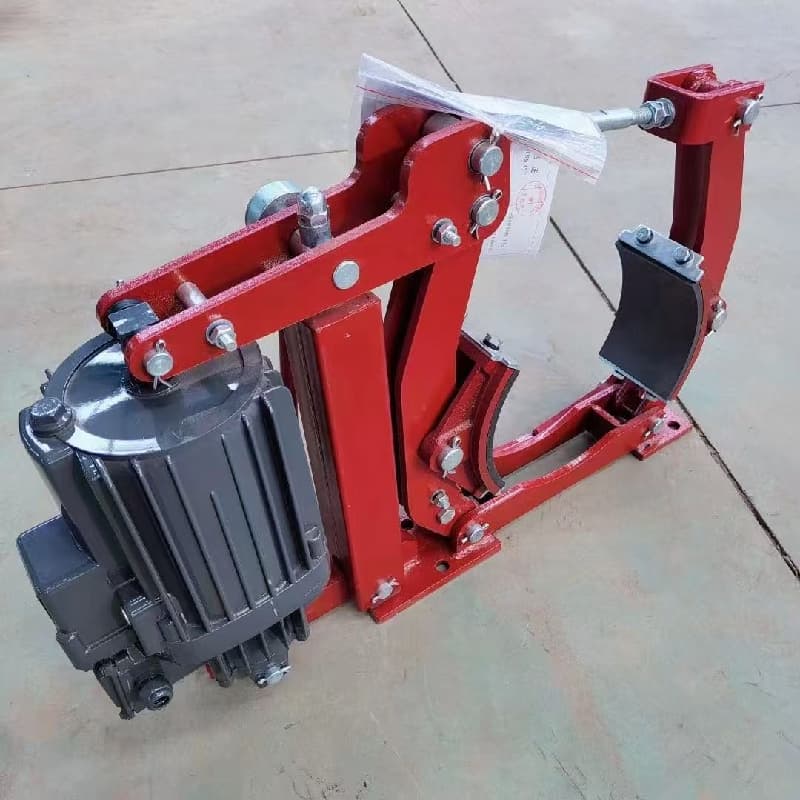
The Comparison:
| Feature | Hydraulic Brake | Electromagnetic Brake |
|---|---|---|
| Response Time | Moderate | Fast |
| Braking Force | High (heavy-duty) | Moderate |
| Heat Dissipation | Excellent | Limited |
| Maintenance | Requires hydraulic system checks | Periodic electrical inspection |
| Noise Level | Quiet operation | May produce noise during engagement |
| Durability | Long-lasting with maintenance | Shorter lifespan under intensive use |
| Best Application | Heavy-duty continuous operation | Precision positioning, frequent cycles |
For cranes handling molten metal, flammable materials, or hazardous loads—where a brake failure could cause catastrophic consequences—the hoisting mechanism must be equipped with two independent braking systems. This dual-brake configuration ensures that even if one brake fails completely, the second brake holds the load securely.
3.3 Brake Inspection and Maintenance
Regular inspection of braking systems is essential for safe operation. The inspection should cover both mechanical condition and functional performance:
Mechanical Inspection:
| Inspection Point | What to Check | Discard/Service Criteria |
|---|---|---|
| Brake Lining Thickness | Measure remaining friction material | Wear reaches 50% of original thickness—replace |
| Brake Drum/Disc Surface | Check for scoring, cracking, glazing | Any crack—immediate discard; scoring or glazing—machine or replace |
| Brake Drum Wear (Lifting) | Measure rim thickness | ≥40% reduction from original—discard |
| Brake Drum Wear (Other Motions) | Measure rim thickness | ≥50% reduction—discard |
| Surface Unevenness | Check drum/disc runout | ≥1.5 mm—machine or replace |
| Spring Condition | Check for cracks, permanent set, corrosion | Any visible crack or plastic deformation—replace |
| Pin and Bushing Wear | Measure clearance | ≥5% of original diameter—replace |
| Brake Release Gap | Measure gap with brake released | Gap should be uniform; maximum single-side opening ≤1 mm |
Functional Testing:
Functional brake testing should verify that the braking system performs as required under load conditions. Key tests include:
- Braking torque verification: Braking torque must be ≥1.5 times the rated torque.
- Response time: Brake engagement time should not exceed 0.3 seconds.
- Brake holding test: With rated load suspended, the brake should hold the load without detectable movement for a specified period.
- Brake slip test under load: The load should not slip more than 80 mm after the brake engages at rated load.
- Temperature monitoring: After 10 consecutive braking operations, brake drum/disc temperature should not exceed 150°C.
- Hydraulic system integrity: For hydraulic brakes, check for leaks; drip rate must not exceed 5 drops per minute.
3.4 The Counterfeit Brake Component Threat
Brake linings are among the most commonly counterfeited crane components. Non-genuine linings may match the OEM part dimensions while using friction material with completely different characteristics—lower friction coefficient, different temperature behavior, faster wear rate, or unpredictable performance when wet or contaminated. Using such linings can invalidate the equipment warranty and expose the owner to liability in the event of an accident.
When non-genuine parts cause an expensive rebuild, the warranty may not be valid and the owner of the equipment is left to pay for a significant repair bill—making a mockery of any price advantage gained from buying a cheaper part. There have been documented cases in the lifting industry where the use of counterfeit structural components has led to cranes collapsing on construction sites.
Part 4: The OEM vs. Aftermarket Component Decision
4.1 Understanding the Component Quality Hierarchy
When purchasing replacement components for crane applications, buyers encounter three categories of parts, each with distinct quality implications:
Genuine OEM Parts: These are manufactured by the original equipment manufacturer to the same specifications as the components originally installed on the crane. They carry full manufacturer warranty, have documented material properties and performance characteristics, and are backed by the OEM’s engineering support. OEM parts are guaranteed to fit and function as intended. The primary disadvantage is higher initial cost.
Quality Aftermarket Parts (Equivalent to OEM): These are produced by third-party manufacturers to specifications that match or, in some cases, exceed the OEM component. Reputable aftermarket manufacturers provide material certifications, performance data, and warranty coverage. Some aftermarket components are designed to address known weaknesses in the OEM design and may offer performance advantages. However, verifying the quality of aftermarket suppliers requires due diligence.
Counterfeit or Substandard Parts: These are manufactured to imitate genuine components but use inferior materials and manufacturing processes. They may match the OEM part dimensions but fail to meet material specifications, heat treatment requirements, or performance standards. Packaging quality often betrays counterfeit parts—misspellings, poor printing, and out-of-date company logos are common indicators. The purchase price advantage is invariably offset by increased failure risk, shortened service life, and potential safety consequences.
4.2 When OEM Parts Are Non-Negotiable
For certain crane components, the safety consequences of failure are so severe that OEM parts should be considered mandatory:
- Hoist brake components (linings, springs, drums, complete brake assemblies)
- Wire ropes for critical lifting applications
- Load-bearing structural components (hooks, sheave housings, bottom blocks)
- Safety devices (overload limiters, limit switches, emergency stops)
For these components, the cost differential between genuine OEM and aftermarket alternatives is insignificant compared to the potential cost of failure.
4.3 A Structured Supplier Evaluation Process
Procurement of crane components should follow a systematic evaluation process to mitigate the risk of receiving substandard parts. A structured approach includes:
Step 1—Verify Supplier Qualifications: Check business licenses (with business scope explicitly stating crane equipment components) and special equipment manufacturing licenses where applicable. Verify the supplier’s status through official business registration systems to identify any operational irregularities or administrative penalties. Prioritize suppliers holding ISO 9001 quality management system certification and CE safety certification—products from such companies have spot-check qualification rates more than 40% higher than those from non-certified suppliers.
Step 2—Verify Product Compatibility: Require the supplier to provide physical measurement drawings and technical parameter sheets for the component. Perform three-dimensional comparison with the original equipment drawings, focusing on critical dimensions such as bolt hole spacing and shaft diameter tolerances, with errors controlled within ±0.05 mm. For load-bearing components such as wire ropes and hooks, require material test reports (e.g., chemical composition analysis reports for specified steel grades) and conduct on-site hardness testing for verification.
Step 3—Evaluate Service Capability: Simulate an emergency demand scenario: test whether the supplier can provide technical consultation within 4 hours and complete component allocation within 24 hours. Contract terms should clearly specify the warranty period (recommended minimum of 12 months), return and replacement conditions (e.g., unconditional replacement for non-human damage), and lifetime maintenance commitments.
Step 4—Analyze Cost Reasonableness: Require the supplier to provide a detailed quotation breakdown separating raw material costs, processing fees, and transportation costs. Be alert to low-price traps—if the market average price for a component is $800 and a quotation comes in below $500, suspect refurbished or substandard parts. Conduct a full lifecycle cost analysis incorporating component service life, maintenance frequency, and energy consumption impact to select the solution with the lowest unit operating cost.
Through this four-dimensional screening—qualification verification, technical validation, service testing, and cost analysis—more than 90% of procurement risks can be avoided. We recommend establishing a dynamic supplier blacklist and whitelist management mechanism, regularly updating partner evaluation results.
4.4 Dongqi Crane Genuine Components
Dongqi Crane maintains a comprehensive inventory of genuine OEM components for all crane models we manufacture. Our component supply chain is managed under ISO 9001 quality management systems, with full traceability from raw material to finished product. Every critical component we supply is:
- Manufactured to documented specifications with material certifications
- Inspected and tested before release
- Packaged with proper corrosion protection for storage and transport
- Supported by our engineering team for installation guidance and technical consultation
- Backed by our warranty and after-sales service commitment
For our international clients, we supply genuine Dongqi Crane components through our 36-person multilingual service team, with support available in English, Arabic, Spanish, Russian, Korean, and other languages. Our permanent office in Pakistan stocks common spare parts for local clients, and our export logistics network serves customers across 96 countries.
Part 5: Building a Component Management System
5.1 Inspection Scheduling and Record Keeping
A systematic approach to component inspection requires:
- A documented inspection schedule specifying intervals for each component type
- Standardized inspection checklists aligned with ISO 4309 and national standards
- Trained, competent inspectors who understand the discard criteria
- Comprehensive inspection records that track component condition over time
- A process for acting on inspection findings—repair, replace, or continue in service
Wire ropes shall be inspected at least every 12 months, or more frequently according to local legislation, by a competent person with knowledge of applicable norms and standards. Brakes and sheaves should be inspected at similar intervals, with more frequent checks for high-duty-cycle applications.
5.2 Spare Parts Planning
Downtime waiting for replacement components is the most expensive form of downtime. A well-planned spare parts inventory should include:
- Commissioning spares: Brake linings, contactors, limit switches, fuses, and seals—items that may be needed during installation or early operation
- Wear components: Wire ropes, brake linings, sheave bearings—items with predictable replacement intervals
- Critical long-lead items: Motors, gearboxes, control modules—items that could cause extended downtime if not available
For wire ropes specifically, stocking a pre-cut, terminated replacement rope enables rapid change-out when inspection indicates the rope is approaching discard criteria. The stored rope must be protected from corrosion and mechanical damage, and its certification documentation must be maintained.
5.3 Training and Competency
Component inspection is a skilled activity that requires training and demonstrated competency. Inspectors must understand:
- The relevant standards (ISO 4309, EN 14492-2, national equivalents)
- The specific discard criteria for each component type
- The inspection tools and techniques appropriate to each component
- The documentation requirements for inspection records
- The process for escalating concerns when inspection findings indicate potential safety issues
Dongqi Crane provides training to client operators and maintenance personnel during crane commissioning, and our after-sales team offers ongoing technical support for component inspection and replacement decisions.
Conclusion: The Economics of Quality
The wire rope, the sheave, and the brake share a common characteristic: they are relatively inexpensive to procure correctly and unimaginably expensive to get wrong. A premium wire rope may cost 20–30% more than a commodity alternative, but the difference in purchase price is trivial compared to the cost of a rope failure—lost production, equipment damage, potential injury, and regulatory consequences.
At Dongqi Crane, our philosophy on components is unambiguous: specify to the standard the application requires, source from certified and audited suppliers, inspect at the intervals the standards mandate, and replace at the discard criteria the standards define. There is no shortcut that reduces lifecycle cost. There is no “equivalent” that eliminates risk. There is only the disciplined application of engineering knowledge, quality assurance, and maintenance diligence.
For procurement teams and maintenance managers, the message is simple: the components that carry and hold the load are the last place to seek cost savings. Invest in quality. Inspect thoroughly. Replace proactively. The safety of your operations, the productivity of your facility, and ultimately the reputation of your organization depend on getting these fundamental decisions right.
Contact Dongqi Crane for Genuine Components and Technical Support:
- Website: pk.craneyt.com
- Spare Parts Inquiry: Submit your component requirements for a quotation with full material certifications—response within 24 hours
- Technical Support: Our 36-person multilingual service team provides guidance on component inspection, replacement decisions, and maintenance planning
- Factory Visit: Inspect our component quality control processes at our 240,000-square-meter Changyuan facility
- Pakistan Office: Local spare parts inventory and technical support for Pakistani clients
Choose Dongqi Crane genuine components—where quality is not an option, it is the only standard.
© 2026 Dongqi Crane. All rights reserved. This guide provides general information on crane component quality and inspection. Specific inspection and replacement decisions should be made by qualified, competent personnel with reference to applicable national standards and the crane manufacturer’s documentation.
