
Asia Crane Procurement Budget Reference (2026 Edition): What Do Different Tonnage Cranes Cost?
A Global Buyer‘s Guide from Dongqi Crane — Your Trusted China Crane Manufacturer and Supplier
When planning capital expenditure for lifting equipment, the first question every procurement manager asks is: “What will it cost?” This is a reasonable question — but in the crane industry, it is also the most difficult to answer definitively. Unlike commodities with fixed market prices, overhead cranes and gantry cranes are engineered-to-order assets. Their cost depends on dozens of interdependent variables: capacity, span, lift height, work duty classification, electrical configuration, local certification requirements, and the geographic distance between the factory and your facility.
This guide provides a practical budget framework for global buyers sourcing overhead bridge cranes, gantry cranes, and electric hoists from Dongqi Crane — a leading China crane manufacturer with decades of industry experience — in 2026. The figures presented are reference ranges based on current market data, export price trends, and industry benchmarks. They are intended to help you build realistic procurement budgets and compare supplier quotes more intelligently — not as a final price list.
Market Context: What Drives Crane Pricing in 2026?
The global cranes and hoists market has witnessed substantial growth, expanding from $33.81 billion in 2025 to a projected $35.73 billion in 2026, with a compound annual growth rate of 5.7%. According to comprehensive industry reports, the market was valued at $44.18 billion in 2025 and is projected to grow to $46.54 billion in 2026, reaching $64.72 billion by 2032. This growth is driven by infrastructure investment, manufacturing expansion, and port modernization across emerging economies.
Steel Prices and Manufacturing Costs: Steel is the primary raw material for crane production, and its price directly influences crane costs. In 2025, China‘s domestic steel prices declined approximately 8.7% year-over-year, with the national steel composite price averaging 3,562 RMB/ton. Raw material costs — iron ore, coke, and scrap steel — all saw significant reductions, compressing industry production costs and creating favorable conditions for manufacturer profitability. Looking ahead to 2026, the steel market is projected to enter a “quantity reduction and quality improvement” phase, with raw material supply remaining ample and prices expected to maintain moderate downward pressure. This relatively stable steel cost environment provides crane manufacturers like Dongqi with a predictable cost base, which translates to more stable and competitive pricing for global buyers.
Trade Agreements and Tariffs: For buyers importing cranes from China into Asian countries, many destinations offer preferential tariff rates under free trade agreements. For example, bridge and gantry crane imports from China to Vietnam currently benefit from 0% duty under ACFTA or RCEP agreements. Similarly, ASEAN-China Free Trade Area provisions apply across Southeast Asia, potentially reducing import costs significantly. However, buyers should always verify current trade agreement applicability with their logistics provider before finalizing budgets, as tariff structures vary by HS code classification and country of origin.
Key Takeaway: The Asian crane market in 2026 offers both budget-friendly standard solutions and high-end customized engineering. Your final price will be determined primarily by your technical specifications, not by which country you source from. As a Sino-New Zealand joint venture established on advanced European technology research and development, Dongqi Crane combines Chinese manufacturing efficiency with European engineering standards to deliver exceptional value.
About Dongqi Crane: Your Partner in Material Handling Solutions
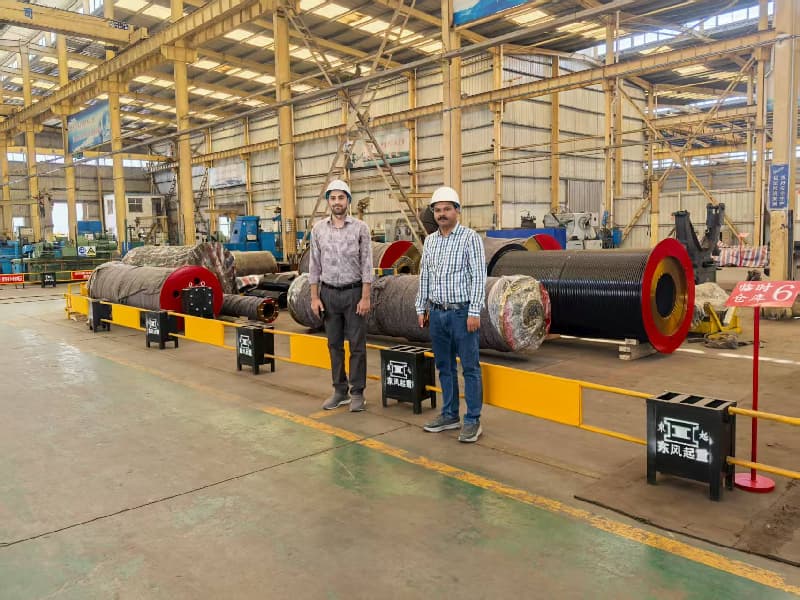
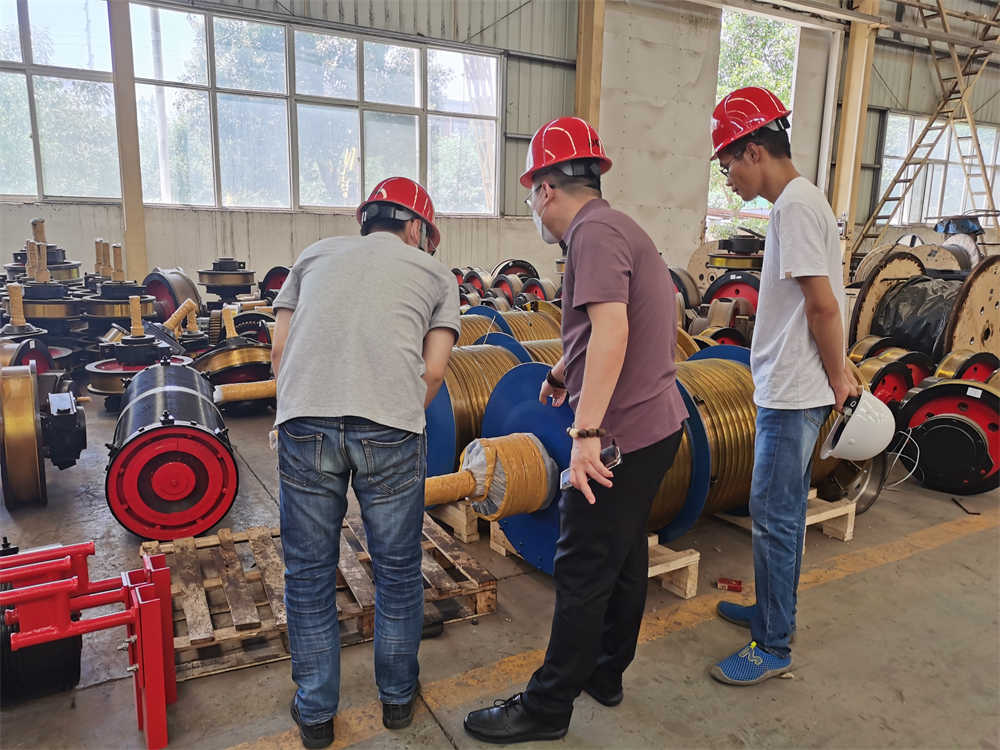
Before diving into pricing details, it is essential to understand who stands behind the numbers. Henan Dongqi Machinery Co., Ltd, known globally as Dongqi Crane or DQCRANES, is a premier China crane manufacturer and supplier of material handling equipment. Headquartered in Changyuan — the “cradleland of cranes” in Henan Province, China — our manufacturing facility spans 240,000 square meters and houses over 2,000 sets of advanced manufacturing and detection devices.
Our Scale and Capability:
- Total Investment: 240 million RMB
- Registered Capital: 108 million RMB
- Workforce: 3,600 employees, including 500 technicians and over 70 senior engineers
- Annual Production Capacity: Up to 10,000 sets of cranes per year
Our Product Portfolio:
Dongqi Crane provides a comprehensive range of lifting solutions, including:
- Overhead Bridge Cranes (single girder and double girder, capacities from 1 to 320 tons)
- Gantry Cranes and Semi-Gantry Cranes
- Jib Cranes
- Port Cranes and Container Cranes
- European Electric Hoists
- Customized lifting systems for specialized applications
Our Quality Commitment:
Dongqi Crane holds ISO9001 international quality system certification, ISO14001 environmental management system certification, and OHSAS18001 occupational health and safety certification. We cooperate with renowned European machinery manufacturers including German NORD, SIEMENS, and French Schneider, ensuring our products meet and exceed international advanced standards.
Our Global Reach:
Dongqi Crane products have been distributed throughout Southeast Asia, East Europe, the Middle East, Africa, and beyond, serving clients in over 20 countries including the United States, Russia, Australia, Brazil, India, Indonesia, Thailand, Vietnam, Malaysia, Saudi Arabia, and many more.
Section 1: Overhead Crane (EOT/Bridge Crane) Budget Reference Prices
Electric Overhead Traveling (EOT) cranes, also known as bridge cranes, are the most common lifting equipment for indoor industrial applications — factories, warehouses, assembly lines, and maintenance bays. At Dongqi Crane, we offer both standard configurations and fully customized solutions tailored to your specific facility requirements.
Price Drivers Summary
Before reviewing the numbers, understand what separates a $5,000 crane from a $50,000 crane with the same tonnage:
| Cost Factor | Budget Impact | Explanation |
|---|---|---|
| Work Duty Classification | High | An M3 (light duty) crane costs far less than an M6 (heavy duty) crane due to structural reinforcement, motor sizing, and component quality |
| Span Length | High | Longer spans require heavier bridge girders and more steel; this is often the single largest cost variable |
| Hoist Type | Medium-High | Wire rope hoist vs. chain hoist; European-style vs. standard CD/MD type; brand name components carry premium pricing |
| Control System | Medium | Pendant control (lowest cost) → Radio remote → PLC automation with VFD drives (highest cost) |
| Electrical Specifications | Medium | Special voltage requirements, explosion-proof ratings, or IP65+ enclosure ratings add cost |
| Certification Requirements | Medium | CE, ISO, or country-specific certifications (SNI, TISI, CR, DOSH) may require additional documentation and testing |
Single Girder Overhead Crane Price Ranges (USD, 2026)
Single girder overhead cranes are cost-effective for capacities up to 20 tons and spans under 30 meters. They use less steel, require lighter runway support, and are simpler to install — making them ideal for workshops, warehouses, and light manufacturing facilities.
| Capacity | Typical Span Range | Price Range (USD) | Typical Applications |
|---|---|---|---|
| 1 Ton | 7.5 – 28.5m | $2,200 – $5,500 | Small workshops, maintenance bays, light assembly |
| 2 Ton | 7.5 – 28.5m | $2,500 – $6,200 | Tool rooms, light fabrication, warehouse picking |
| 3 Ton | 7.5 – 31.5m | $2,600 – $8,500 | Medium production units, parts handling |
| 5 Ton | 7.5 – 31.5m | $3,000 – $16,500 | General manufacturing, daily production operations |
| 10 Ton | 7.5 – 31.5m | $4,000 – $20,500 | Heavy fabrication, machinery handling, steel components |
| 16 Ton | 7.5 – 31.5m | $5,000 – $24,500 | Engineering plants, automotive component handling |
| 20 Ton | 7.5 – 31.5m | $6,000 – $30,000 | Steel service centers, heavy equipment manufacturing |
Source: Dongqi Crane market analysis based on standard configuration single girder overhead cranes. Prices vary based on span, lifting height, and specific configuration requirements.
Double Girder Overhead Crane Price Ranges (USD, 2026)
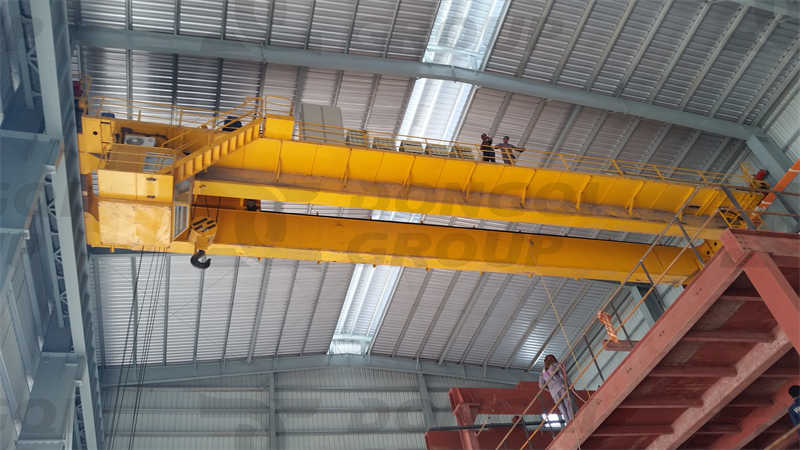
Double girder overhead cranes offer superior hook height (the hoist sits on top of the girders rather than under them), higher duty cycles, and better long-term durability for heavy industrial use. Dongqi‘s QD series double girder overhead cranes support lifting capacities from 5 to 320 tons, with spans from 10.5m to 35.5m and lifting heights from 6m to 30m.
| Capacity | Price Range (USD) | Key Features |
|---|---|---|
| 5 Ton Double Girder | $15,000 – $25,000 | Compact, ideal for workshops and light industrial use |
| 10 Ton Double Girder | $20,000 – $35,000 | High stability, medium-duty lifting |
| 15 Ton Double Girder | $25,000 – $40,000 | Robust construction for factories |
| 20 Ton Double Girder | $30,000 – $50,000 | Heavy-duty industrial use |
| 25 Ton Double Girder | $35,000 – $60,000 | Customizable for steel plants |
| 30 Ton Double Girder | $40,000 – $70,000 | High-speed lifting, durable construction |
| 40 Ton Double Girder | $50,000 – $85,000 | For shipyards and large-scale construction |
| 50 Ton Double Girder | $60,000 – $100,000 | Heavy industrial applications |
| 100+ Ton Double Girder | $120,000 – $200,000+ | Mining, mega construction projects |
Source: Dongqi Crane EOT crane price guide. Prices vary based on span, lifting height, controls, and customization.
Dongqi‘s QD Double Girder Advantage: Our QD series overhead cranes are engineered for demanding industrial lifting applications. Key advantages include:
- High-Capacity Performance: Supports up to 320 tons for the most demanding lifting tasks
- Environmental Adaptability: Suitable for high-temperature, dust, or humid conditions
- Long Lifespan: Designed for 30–50 years of reliable performance
- Frequency Inverter Control: Provides smooth and accurate speed adjustments
- Flexible Control Options: Supports cabin, pendant, or wireless remote control
- Customizable Attachments: Equipped with magnets, grabs, or C-hooks for specific cargo types
Single Girder vs. Double Girder: The Cost-Benefit Equation
The price premium for double girder typically ranges from 40% to 80% over an equivalent-capacity single girder crane. However, this additional investment often delivers superior long-term value through:
- Higher hook height (critical for facilities with limited ceiling clearance)
- Greater stability and reduced deflection under load
- Higher duty cycle capability for continuous production environments
- Easier maintenance access and longer component life
Section 2: Gantry Crane Budget Reference Prices
Gantry cranes (also called portal cranes or goliath cranes) operate on ground-level rails and are ideal for outdoor applications — ports, rail yards, construction sites, and open storage areas. They do not require an existing building structure, making them a flexible alternative to overhead cranes.
Gantry Crane Price Ranges by Type (USD, 2026)
| Type / Capacity | Price Range (USD) | Typical Applications |
|---|---|---|
| Portable Gantry (Light Duty) | $2,000 – $8,000 | Temporary lifting, equipment maintenance, locations without fixed workstations |
| 1 Ton Gantry | $8,000 – $15,000 | Small workshops, repair stations, light-duty warehouses |
| 5 Ton Gantry | $18,000 – $30,000 | General manufacturing, steel structure processing, logistics facilities |
| 10 Ton Gantry | $38,000 – $60,000 | Heavy equipment assembly, mold handling, precast component production |
| Truss Gantry (Various Capacities) | $5,000 – $100,000+ | Open yards, wind-resistant outdoor applications |
| Container Gantry | $300,000 – $880,000 | Port terminals, railway container transfer stations |
| Rail-Mounted Gantry (RMG) | $120,000 – $400,000 | Container yards, intermodal facilities |
| Rubber Tyred Gantry (RTG) | $300,000 – $4,000,000+ | Large container yards, high-mobility port operations |
Source: Dongqi Crane market analysis and industry pricing data. Actual prices vary significantly based on span, configuration, and application requirements.
Dongqi Crane‘s Gantry Crane Solutions:
As a professional gantry crane manufacturer, Dongqi provides a wide range of gantry crane configurations to meet diverse application needs. Our gantry cranes are designed with robust box-girder or truss structures, ensuring stability and long-term reliability in demanding outdoor environments. We offer lifting capacities from 10 to 800 tons, fully customizable to your project requirements.
Real-World Gantry Crane Procurement Example: India Market
An analysis of Chinese Customs data for crane imports into India reveals two distinct market trends that demonstrate the value of working with an experienced manufacturer like Dongqi Crane:
Gantry Crane Imports (2024-2025): India imported 71 units of gantry cranes in 2025, valued at $20.883 million. While volume decreased from 89 units in 2024, the average unit value increased significantly from approximately $656,000 to $1.19 million. This indicates a clear market shift toward purchasing fewer, but larger and more specialized gantry cranes — exactly the type of high-value, engineered solutions Dongqi excels at delivering.
Overhead Crane Imports (2024-2025): The overhead crane market saw explosive growth, with imports surging to 801 units in 2025 (valued at $25.386 million), up from just 183 units in 2024 — a staggering 338% increase in volume. The average unit price correspondingly dropped from approximately $119,000 to $31,700, indicating massive uptake of standardized, cost-effective overhead crane solutions across a broad spectrum of industries.
What This Means for Buyers: These contrasting trends demonstrate that different applications require fundamentally different crane investments. Dongqi Crane serves both segments — providing cost-effective standardized overhead cranes for general industrial use, as well as high-capacity, custom-engineered gantry cranes for specialized heavy-lift applications. Our team helps you determine which solution aligns with your specific operational requirements and budget constraints.
Section 3: Key Factors That Influence Your Final Crane Price
Understanding what drives crane pricing helps you make informed procurement decisions and communicate more effectively with manufacturers. At Dongqi Crane, we believe in transparency — here are the primary factors that determine your final quotation:
1. Lifting Capacity (Tonnage)
The lifting capacity determines the specifications of the main beam, legs, and lifting mechanism. There are significant differences in design strength and material usage between a 1-ton crane and a 10-ton crane. For gantry cranes specifically, the standard 10-ton gantry crane price ranges from $38,000 to $60,000, affected by configurations and installation requirements.
2. Span and Lifting Height
Span and lifting height directly affect the amount of steel used in the structure. An increase in span requires a thicker cross-section of the main beam, and an increase in lifting height requires more stable legs or longer hoist rope length. These dimensional parameters are among the most significant cost drivers in any crane quotation.
3. Work Duty Classification (FEM/ISO/CMAA)
This is the single most overlooked factor by first-time buyers:
- M3/Class C (Light Duty): Suitable for infrequent use, slow speeds, maintenance access
- M5/Class D (Medium Duty): Standard for general manufacturing and warehousing
- M6-M7/Class D-E (Heavy Duty): Required for continuous production, high speeds, and frequent lifts
Warning: Buying an M3 crane for an M6 application will lead to premature gearbox failure, cracked steel structures, and voided warranties within the first year.
4. Structural Type and Configuration
For gantry cranes, single-girder structures have lower costs and are suitable for light and medium-duty applications. Double-girder structures provide greater stability and higher load capacity but require more steel and complex engineering. For overhead cranes, the choice between single and double girder is a fundamental decision that impacts both initial cost and long-term operational performance.
5. Electrical and Control Systems
Control system complexity significantly impacts price:
- Pendant Control: Most economical, ideal for simple, intermittent lifts
- Radio Remote Control: Industry standard for safety and operational efficiency
- PLC Automation with VFD Drives: Highest cost, but delivers precise speed control and enables integration with plant-wide automation systems
Dongqi Crane‘s QD series double girder cranes feature frequency inverter control for smooth and accurate speed adjustments, with flexible control options including cabin, pendant, or wireless remote control.
6. Certifications and Compliance
Different countries have vastly different regulatory landscapes. At Dongqi Crane, our products are certified with ISO and CE standards, ensuring quality and compliance for global industrial use. Additional country-specific certifications (such as SNI for Indonesia, TISI for Thailand, CR for Vietnam, or DOSH for Malaysia) may require supplementary documentation and testing, which can affect both timeline and cost.
7. Freight and Logistics
Transportation costs vary significantly based on:
- Equipment dimensions and weight
- Shipping distance and Incoterms (FOB vs. CIF)
- Special handling requirements for oversized cargo
- Port fees and destination handling charges
8. Installation and Commissioning
Professional installation, alignment, load testing, and certification are essential for safe operation and regulatory compliance. Installation complexity varies based on site conditions, runway preparation, and local labor availability.
Section 4: Country-Specific Import Costs in Asia
For buyers importing cranes into Asian countries, understanding local tariff structures and certification requirements is essential for accurate budget planning. With Dongqi Crane‘s extensive export experience across more than 20 countries, we help navigate these complexities.
Import Duty and Certification Reference (2026)
| Destination Country | Typical Import Duty | Key Certification Requirements | Notes |
|---|---|---|---|
| Indonesia | 5% – 15% (varies by HS code) | SNI certification mandatory | Certification covers cranes, electric hoists, and lifting accessories |
| Vietnam | 3.6% (MFN); 0% under ACFTA/RCEP | CR certification; Vietnamese documentation required | Among the most cost-effective import destinations for Chinese cranes due to free trade agreements |
| Thailand | Varies (3–5% typical) | TISI certification; 10% surcharge for specific equipment | Certification fees range approximately 4,000 – 28,000 RMB |
| Philippines | 3.6% | ICC import license required | Application cycle can take up to 2 months |
| India | 7.5–10% (BCD) + 10% SWS | No mandatory certification for standard cranes | BCD applies; IGST additional based on product classification |
| Malaysia | Varies | DOSH certification required | Import procedures relatively streamlined |
| Singapore | 0% (most crane categories) | Strict safety standards | High automation requirements for port equipment |
Important Note on ASEAN-China Free Trade Area (ACFTA): Many Asian countries offer 0% preferential tariffs for crane imports from China under ACFTA or RCEP agreements. For example, bridge and gantry crane imports from China to Vietnam currently benefit from 0% duty under these arrangements. The ASEAN-China Free Trade Area provides average tariff reductions of up to 90% for qualifying goods. Always verify current trade agreement applicability with Dongqi Crane‘s export team or your logistics provider before finalizing budgets.
Dongqi Crane‘s Export Support: With products distributed throughout Southeast Asia and beyond, our experienced export team provides guidance on certification requirements, documentation preparation, and logistics coordination to ensure smooth customs clearance and timely delivery to your facility.
Section 5: The Total Cost Picture — Beyond the Equipment Price
The single most important budgeting lesson for crane buyers: The equipment price is only 50–70% of the total project cost.
Hidden Costs That Must Be Budgeted
| Cost Category | Typical Range (USD) | Notes |
|---|---|---|
| Runway Preparation & Reinforcement | $10,000 – $50,000+ | Existing beams may require strengthening; new runways require structural engineering |
| Installation & Commissioning | $8,000 – $30,000 | Professional setup, alignment, load testing, and certification |
| Electrical & Power Upgrades | $3,000 – $15,000 | Panel installation, wiring, integration with facility power |
| Safety & Compliance Equipment | $2,000 – $8,000 | Limit switches, overload protection, warning systems, signage |
| Operator Training | $1,000 – $5,000 | Required for safe operation and regulatory compliance |
| Freight & Logistics | 5% – 20% of equipment cost | Varies by distance, Incoterms, and equipment dimensions |
| Import Duties & Tariffs | 0% – 15%+ of CIF value | Varies significantly by destination country and trade agreement |
| Certification & Local Compliance | $2,000 – $15,000+ | SNI (Indonesia), TISI (Thailand), CR (Vietnam), DOSH (Malaysia), etc. |
A realistic total project cost example: A 15-ton double girder overhead crane with an equipment price of $30,000 may require $25,000–$50,000 in additional investment for runway, installation, and compliance — bringing the total project cost to $55,000–$80,000. These additional expenses can easily equal 30–50% of the crane‘s base equipment price.
Total Cost of Ownership (TCO) Considerations
Beyond initial project costs, smart buyers evaluate the total cost of ownership over the crane’s 15–20 year operating life. Key TCO factors include:
- Energy Consumption: IE3/IE4 high-efficiency motors can reduce electricity costs by 5–15% annually compared to standard IE2 motors
- Maintenance Costs: VFD control reduces mechanical wear, extending component life and reducing maintenance frequency
- Downtime Costs: Higher-quality components and robust design minimize unexpected production interruptions
- Component Life: Better sheave design and proper rope drum ratios extend wire rope life from 2–3 years to 5–7 years
Dongqi Crane‘s QD series double girder cranes are designed for 30–50 years of reliable performance, with robust box-girder construction and high-quality components that minimize long-term operating costs.
Section 6: How to Use This Guide for Smart Budget Planning
Step 1: Define Your Technical Requirements First
The most expensive mistake in crane procurement is sending an RFQ that says only “We need a 10-ton crane.” Without specifying work duty, span, lift height, and operating environment, you will receive quotes ranging from $10,000 to $50,000 for the same capacity — and you will not understand why.
Before requesting a quote from Dongqi Crane, document:
- Exact lift capacity (including below-the-hook equipment weight)
- Span (center-to-center of runway rails)
- Lift height (clear height from floor to highest hook position)
- Work duty classification (FEM/ISO/CMAA)
- Operating environment (indoor/outdoor, temperature range, corrosive conditions)
- Electrical specifications (voltage, phase, frequency)
- Any special requirements (explosion-proof, clean room, high-temperature, etc.)
Step 2: Build a Total Project Budget
Use the following formula as a starting point:
Total Project Budget = Equipment Cost × 1.4 to 1.8
The multiplier varies based on:
- 1.4× — New building with runway already installed, local supplier, simple installation
- 1.6× — Existing building requiring runway modifications, standard import logistics
- 1.8× — Complex installation, remote location, extensive certification requirements
Step 3: Compare Quotes on Total Value, Not Equipment Price
When evaluating multiple supplier proposals, compare:
- Total landed cost (equipment + freight + duties + certification)
- Total installed cost (landed cost + installation + commissioning)
- Total cost of ownership (installed cost + 5-year energy/maintenance estimate)
A “cheaper” crane with IE2 motors may cost $15,000–$20,000 more in electricity over a 10-year lifespan than a premium crane with IE4/IE5 high-efficiency motors. At Dongqi Crane, we help you evaluate these long-term trade-offs to ensure your investment delivers maximum value.
Step 4: Leverage Dongqi Crane‘s Engineering Expertise
As a manufacturer with over 70 senior engineers and 500 technicians, Dongqi Crane provides more than just equipment — we provide engineering solutions. Our team can:
- Review your facility drawings and recommend optimal crane configurations
- Identify potential installation challenges before they become costly surprises
- Propose customizations that improve operational efficiency
- Provide guidance on local certification requirements in your country
Conclusion: Partner with Dongqi Crane for Smart Procurement
This guide provides a practical framework for understanding crane pricing across Asian markets in 2026. However, the most important budget is not the one you build before you buy — it is the one that accurately reflects what the crane will cost over its 15–20 year operating life.
When you approach Dongqi Crane with complete technical specifications and a realistic understanding of total project costs, we shift the conversation from “What is your best price?” to “What is the best solution for your application?” This is how strategic procurement delivers value — not just a lower invoice, but a safer, more efficient, and more reliable lifting operation.
Why Choose Dongqi Crane?
- Manufacturing Excellence: 240,000 m² facility in China‘s “cradleland of cranes” with 2,000+ advanced manufacturing and detection devices
- Engineering Expertise: 3,600 employees including 500 technicians and 70+ senior engineers
- European Standards: ISO9001, ISO14001, OHSAS18001 certified; partnerships with Siemens, Schneider, and NORD
- Global Experience: Products distributed to 20+ countries across Southeast Asia, Middle East, Europe, Africa, and Americas
- Customized Solutions: From 1-ton light-duty overhead cranes to 800-ton heavy-duty gantry cranes, we engineer solutions tailored to your needs
- End-to-End Support: From initial consultation and custom design through manufacturing, export documentation, and after-sales service
Ready to refine your crane procurement budget with project-specific pricing?
[Contact Dongqi Crane‘s engineering team for a complimentary consultation and custom budget estimate tailored to your facility requirements.]
Disclaimer: All prices in this guide are reference ranges based on market data available as of 2026. Actual prices vary based on detailed technical specifications, order quantity, shipping destination, currency exchange rates, and current steel market conditions. Always obtain formal quotations from qualified suppliers for project budgeting purposes.
