
8 Common Crane Procurement Mistakes — 90% of Southeast Asian Buyers Make at Least 3
An Honest Guide from DONGQI CRANE for Smarter Industrial Lifting Investments
Southeast Asia is experiencing an industrial renaissance. From Thailand‘s Eastern Economic Corridor to Vietnam’s expanding electronics manufacturing hubs, from Indonesia‘s new capital city Nusantara to Malaysia’s thriving ports, the demand for overhead cranes and gantry cranes has never been stronger. Across the region, factories are expanding, warehouses are modernizing, and infrastructure projects are reshaping skylines.
Yet beneath this growth lies an uncomfortable truth: the vast majority of crane buyers in Southeast Asia are making costly procurement mistakes that erode profitability, compromise safety, and shorten equipment lifespan. Based on our four decades of manufacturing experience and thousands of installations across the region, we estimate that over 90% of Southeast Asian buyers fall into at least three of the eight procurement traps outlined below. Some mistakes add 15–30% to total ownership costs. Others create safety hazards that no factory can afford.
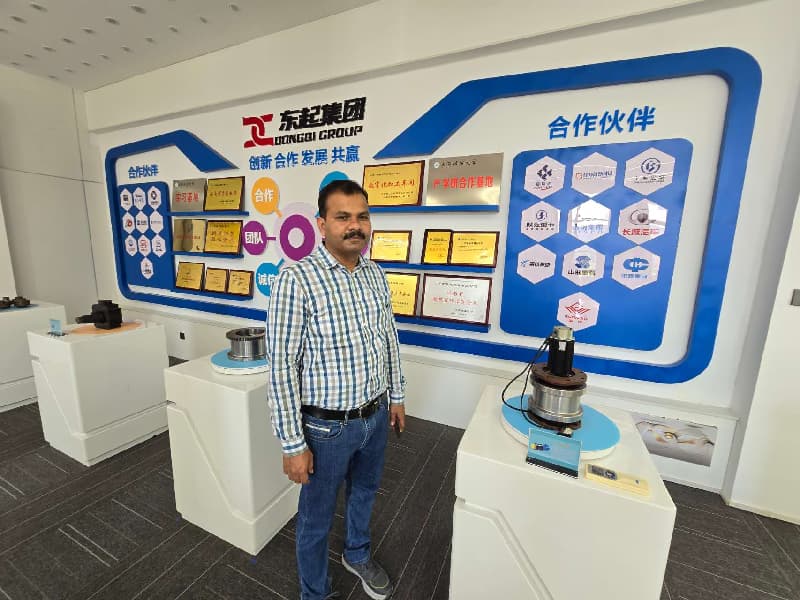
At DONGQI CRANE, a Sino-New Zealand joint venture operating from a 240,000-square-meter facility in Changyuan, China‘s “Cradleland of Cranes,” we have supplied lifting solutions to over 96 countries. Our 3,600-strong workforce, including 500 technical specialists and over 70 senior engineers, has witnessed firsthand how intelligent procurement differs from reactive purchasing.
This guide is not a sales pitch. It is a candid examination of the eight most common mistakes we see Southeast Asian buyers make—and, more importantly, how to avoid them.
The 8 Mistakes at a Glance
| # | Mistake | The Cost to You |
|---|---|---|
| 1 | Focusing only on lifting capacity while ignoring work duty classification | Premature gearbox failure, cracked structures, voided warranty within first year |
| 2 | Treating certification as an afterthought | Customs holds, rejected shipments, equipment stranded at port |
| 3 | Chasing the lowest price without understanding TCO | 5–10× higher lifetime costs due to energy, repairs, and downtime |
| 4 | Ignoring tropical climate and environmental demands | Accelerated corrosion, electrical failure, 50% reduced service life |
| 5 | Assuming “bigger is always better” in capacity and span | Higher energy bills, slower operations, unnecessary infrastructure costs |
| 6 | Overlooking installation requirements and local compliance | Installation delays, regulatory fines, project timeline collapse |
| 7 | Neglecting after-sales support and spare parts strategy | Weeks of production downtime waiting for a simple replacement part |
| 8 | Failing to conduct proper supplier due diligence | Counterfeit components, undocumented welds, no recourse when problems arise |
Mistake 1: Focusing Only on Lifting Capacity While Ignoring Work Duty Classification
The Mistake: “I need a 10-ton crane.” That‘s the most common opening line we hear from first-time buyers. It is also the most dangerous oversimplification in crane procurement.
Capacity tells you how much weight the crane can lift once. It tells you nothing about how often it can lift that weight, how fast it can move, or how long it will survive under daily use. That is what work duty classification (FEM/ISO/CMAA) defines—and it is the single most overlooked parameter by Southeast Asian buyers.
Real-World Consequence: An Indonesian steel fabricator ordered a “10-ton crane” for their Surabaya workshop. The supplier—a small trading company with no engineering capability—delivered a light-duty M3 (Class C) crane rated for occasional maintenance use. The fabricator needed M6 (Class D) for continuous production. Within eight months, the gearbox failed catastrophically. The replacement cost exceeded $12,000, and the workshop lost 17 production days. The warranty was voided because the crane was operated beyond its design parameters.
Understanding Work Duty:
| Duty Class | Application | Daily Usage | Example |
|---|---|---|---|
| M3 / A3 (Light) | Infrequent use, slow speeds | <4 hours, occasional | Maintenance bay, pump replacement |
| M5 / A5 (Medium) | Regular production | 4–8 hours, frequent | Assembly line, general fabrication |
| M6–M7 / A6–A7 (Heavy) | Continuous operation | 16–24 hours, intensive | Steel mill, container terminal |
| M8 / A8 (Severe) | Extreme duty | Continuous, high speed | Automated warehouse, foundry |
Many buyers incorrectly assume that higher capacity automatically means higher duty class. This is false. A 50-ton crane used twice a week to change a mold is light duty. A 5-ton crane moving castings 16 hours a day is heavy duty. They require fundamentally different structural design, motor sizing, and component selection.
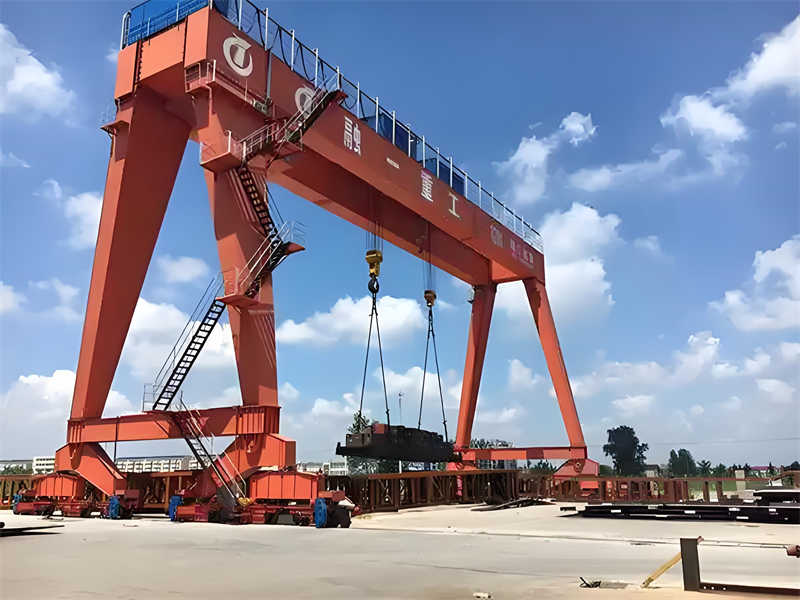
DONGQI CRANE‘s Approach: Every quotation begins with a comprehensive application questionnaire. We do not quote based on “10-ton crane” alone. We probe for daily lift frequency, average load percentage, operating hours per shift, and ambient conditions. Our HD Series single girder cranes are optimized for light to medium duty (1–20 tons, spans up to 31.5m), while the QDX Series double girder handles heavy-duty industrial applications from 5 tons to over 500 tons with fully customizable duty ratings.
Mistake 2: Treating Certification as an Afterthought
The Mistake: Many buyers assume that a CE mark or ISO certificate is sufficient for import anywhere. This assumption fails spectacularly in Southeast Asia, where each country maintains its own mandatory certification regime.
The Certification Landscape:
| Country | Mandatory Certification | Consequences of Non-Compliance |
|---|---|---|
| Indonesia | SNI (Standar Nasional Indonesia) | Equipment held at port; cannot clear customs without SNI certificate |
| Thailand | TISI (Thai Industrial Standards Institute) | Customs delays; potential rejection of entire shipment |
| Vietnam | CR (Regulation on Product Quality) + QCVN compliance | Extended inspection periods; possible re-export requirement |
| Malaysia | DOSH (Department of Occupational Safety and Health) | Cannot obtain operational permit without DOSH approval |
| Philippines | DOE/DOST certification for electrical safety | Project tender disqualification |
| Singapore | MOM (Ministry of Manpower) registration for lifting equipment | Legal prohibition on equipment operation |
Indonesia applies mandatory SNI certification covering cranes, electric hoists, and lifting accessories. Importers must obtain an SNI certificate before market entry and pass authorized performance testing—a process typically taking 15–25 working days. Thailand requires TISI certification for mechanical and electrical safety; companies are advised to complete certification before shipment to avoid customs delays. Vietnam requires detailed document verification, emphasizing translation accuracy and parameter consistency.
Real-World Consequence: A Vietnamese electronics manufacturer ordered a 15-ton overhead crane from a Chinese supplier who promised “CE certification covers everything.” The shipment arrived at Cat Lai Port in Ho Chi Minh City. Vietnam Customs flagged the equipment for lacking CR certification documentation. The crane sat at port for 43 days while the buyer scrambled to arrange compliance testing locally. Total cost of delays, storage fees, and retroactive certification: approximately $18,000—roughly 40% of the original equipment price.
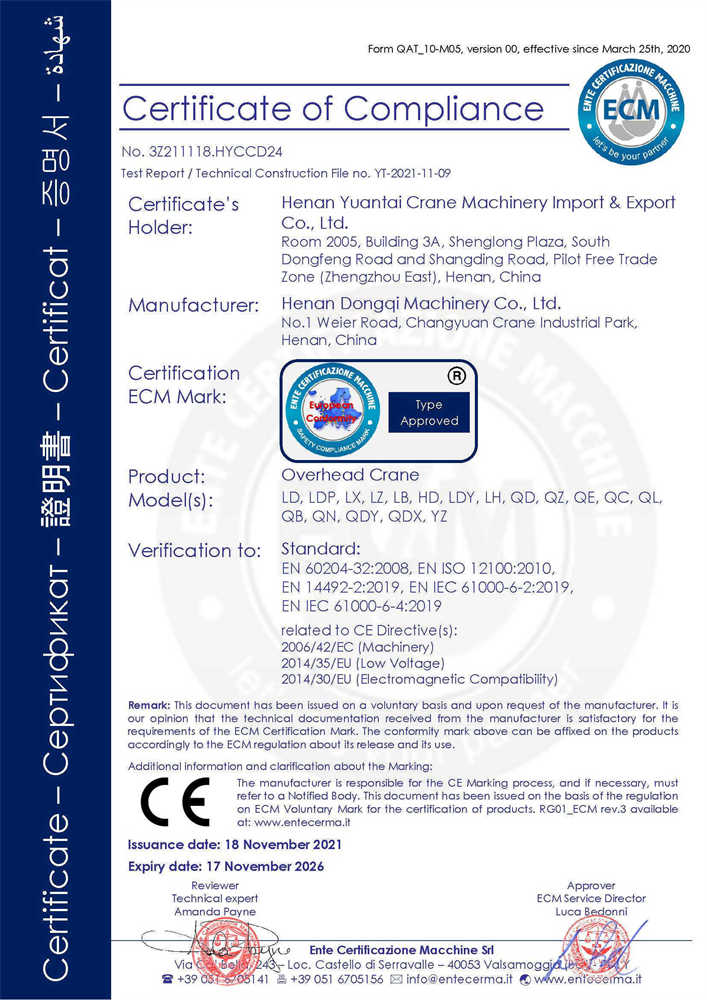
DONGQI CRANE‘s Approach: We maintain comprehensive certification capabilities and local agency relationships across Southeast Asia. Our documentation packages include material test certificates, welding procedure specifications (WPS), load test reports, and country-specific compliance documentation. We work with buyers to identify certification requirements during the quotation phase—not after shipment.
Mistake 3: Chasing the Lowest Price Without Understanding Total Cost of Ownership
The Mistake: In a competitive bidding environment, buyers naturally gravitate toward the lowest quoted price. But a crane‘s purchase price represents only 15–20% of its lifetime cost. The remaining 80–85% comes from energy consumption, maintenance, repairs, and downtime.
The TCO Reality:
| Cost Component | Low-Quality Crane | Quality Crane | 10-Year Difference |
|---|---|---|---|
| Purchase Price | $18,000 | $24,000 | +$6,000 upfront |
| Annual Electricity | ~$3,200 (IE2 motor) | ~$2,000 (IE4/IE5 motor) | -$12,000 over 10 years |
| Maintenance (5 years) | $8,000–$12,000 | $3,000–$5,000 | -$5,000 to -$9,000 |
| Downtime (lost production) | High risk, unpredictable | Minimal, predictable | Potentially $50,000+ |
| Component Replacement | Frequent, low-quality parts | Extended service intervals | -$4,000 to -$8,000 |
Research shows that different crane configurations can produce energy consumption differences of up to 40% over five years. Lower-quality components—inferior steel grades, budget bearings, uncertified electrical systems—generate a cascade of hidden costs that dwarf any initial savings.
Real-World Consequence: A Malaysian warehouse operator selected the lowest of five quotes for a 10-ton overhead crane. Within the first year, they experienced three motor failures, two brake replacements, and one gearbox rebuild. The “savings” of $8,000 on purchase price were consumed by $22,000 in repair costs and lost productivity. By year three, they replaced the entire crane with a quality unit—spending twice what they would have paid initially.
DONGQI CRANE‘s Approach: Our Sino-New Zealand joint venture structure combines European design standards with Chinese manufacturing efficiency. We specify premium components from SEW-EURODRIVE, NORD, Siemens, and Schneider Electric—the same brands used by top-tier European manufacturers. Our cranes deliver predictable TCO because they are engineered for long-term reliability, not short-term price competitiveness.
Mistake 4: Ignoring Tropical Climate and Environmental Demands
The Mistake: Southeast Asia‘s tropical climate—high humidity, salt-laden coastal air, monsoon rainfall, and ambient temperatures regularly exceeding 35°C—creates unique demands on crane components. Standard “indoor” specifications that work in temperate climates often fail catastrophically in tropical environments.
Climate-Specific Risks:
| Environmental Factor | Component at Risk | Without Proper Protection |
|---|---|---|
| High humidity (80%+ RH) | Electrical panels, motors | Condensation causes short circuits; control system failure |
| Coastal salt spray | Structural steel, fasteners | Accelerated corrosion; 50% reduction in service life |
| High ambient heat (35°C+) | Motors, VFD drives | Thermal derating; reduced duty cycle; premature winding failure |
| Monsoon rainfall | Exposed wiring, limit switches | Water ingress; electrical faults; safety system compromise |
Real-World Consequence: A Thai food processing plant in Samut Sakhon—a coastal province with high salinity and humidity—installed a standard overhead crane with basic IP54 enclosures and standard industrial paint. Within 14 months, the electrical panels showed significant corrosion. The wire rope exhibited pitting from salt exposure. The control system failed twice during monsoon season, each time halting production for 3–4 days. A properly specified crane for this environment would have included IP65 sealed enclosures, C5-M marine-grade coating on structural steel, and stainless steel fasteners for critical connections.
In Thailand‘s eastern coastal processing zones, crane bridge structures require fluorocarbon anti-corrosion coating, and electrical components need IP65 sealing to prevent salt spray damage. In southern Thailand, where annual rainfall exceeds 2,000mm and humidity reaches 90%, stainless steel components and ceramic-coated hooks are necessary to prevent rapid deterioration.
**DONGQI CRANE’s Approach: Our application questionnaire includes detailed environmental assessment: proximity to coast (salt exposure), average humidity range, presence of corrosive chemicals, and temperature extremes. We offer multiple corrosion protection packages—from standard industrial coating to C5-M marine specification—and electrical enclosures rated from IP54 to IP66. For foundries and high-heat environments, we specify high-temperature rated motors and thermal protection systems.
Mistake 5: Assuming “Bigger Is Always Better” in Capacity and Span
The Mistake: Many buyers adopt a “safety margin” mentality: “Let‘s buy a 20-ton crane even though we only lift 10 tons—just in case.” Or: “Match the span to the building width.” This logic seems prudent but actually creates unnecessary costs and operational problems.
The Capacity Trap:
A larger crane consumes more electricity even when lifting lighter loads. A 10-ton crane typically uses an 11kW motor, while a 5-ton model uses 7.5kW. The difference in electricity cost alone can exceed $1,000–$2,000 annually for a single-shift operation. Heavier cranes also have higher deadweight, which accelerates runway wear and increases maintenance frequency.
The Span Trap:
A 24-meter span crane for an operation that only occupies an 18-meter zone creates multiple issues: increased girder deflection at full load (reducing positioning accuracy), higher transport and installation costs (oversized loads require special permits), and slower trolley movement (longer spans are harder to control precisely).
Real-World Consequence: A machine shop in the Philippines purchased a 10-ton single girder crane despite daily lifts never exceeding 3 tons. Monthly electricity costs increased by approximately $160. The crane‘s slower low-speed operation reduced production output by an estimated 15%. Within a year, the additional deadweight (nearly 2 tons more than a properly sized model) caused rail grooving and premature track damage.
Proper Sizing Rule of Thumb:
- Capacity: Maximum daily load + 20% buffer (for occasional peaks)
- Span: Maximum working width + 1.5 meters (not building width)
DONGQI CRANE’s Approach: Our engineering team uses finite element analysis (FEA) to optimize girder design for each application, ensuring adequate strength without unnecessary steel weight. We help buyers identify the “Goldilocks” specification—not too small, not too large, but precisely right for their actual operating requirements.
Mistake 6: Overlooking Installation Requirements and Local Compliance
The Mistake: Buyers often assume that once the crane arrives at their facility, installation is straightforward. They may hire local contractors without crane-specific experience or attempt to self-install using only translated manuals. This mistake is particularly dangerous in Southeast Asia, where local regulatory authorities require certified installation and load testing before issuing operating permits.
Installation Oversights:
| What Buyers Assume | Reality |
|---|---|
| “Any contractor can install a crane.” | Crane installation requires certified technicians who understand alignment tolerances, torque specifications, and load testing protocols |
| “The manual has everything we need.” | Manuals require interpretation; critical details like wheel alignment and camber settings are often missed by untrained installers |
| “Local authorities will accept the factory test certificate.” | Most Southeast Asian countries require load testing witnessed by a local approved inspection body |
| “We can figure out the electrical connections.” | Voltage phase sequence errors can destroy VFD drives instantly |
Real-World Consequence: A Vietnamese manufacturer received a crane kit from an overseas supplier. They hired a local general contractor for installation. The contractor misaligned the runway rails by 8mm over 20 meters—within the tolerance for general construction but unacceptable for crane operation. Within three months, the crane wheels showed severe flange wear. The runway required re-alignment, costing an additional $7,500. The manufacturer also faced a 6-week delay in obtaining their operating permit because local authorities required a witnessed load test that had not been arranged.
Singapore authorities have found that a significant portion of safety violations stem from improper installation and maintenance practices—cranes operating with worn ropes, damaged components, or inadequate lifting plans.
DONGQI CRANE’s Approach: We offer flexible installation support tailored to each project: full turnkey installation by our certified teams, supervisor-only support (where we provide an experienced engineer to oversee local contractors), or detailed installation documentation for qualified local partners. Every crane shipment includes comprehensive assembly manuals with torque values, alignment tolerances, and commissioning checklists. We coordinate load testing with local approved inspection bodies and provide complete certification documentation for regulatory approval.
Mistake 7: Neglecting After-Sales Support and Spare Parts Strategy
The Mistake: The purchase transaction closes, the crane is installed, and the buyer assumes the relationship ends there. Months or years later, when a component fails or a maintenance issue arises, they discover the supplier has no local presence, no spare parts inventory, and no responsive technical support.
This is consistently cited as the number-one frustration among Southeast Asian buyers who source cranes from overseas suppliers. Indonesian crane builders report that after-sales support is a critical pain point when sourcing from China—especially when suppliers lack local representation or when spare parts must be ordered internationally with long lead times.
The True Cost of Poor Support:
| Scenario | With Local Support | Without Local Support |
|---|---|---|
| Motor failure | Replacement motor sourced locally within 2–3 days | 4–6 weeks for international shipment |
| Control system fault | Remote diagnostic support resolves issue in hours | Days of troubleshooting via email/translation apps |
| Annual inspection | Scheduled by local representative | Buyer must find and qualify local inspector |
| Spare parts | Critical spares held in regional inventory | Each part requires international order and customs clearance |
Real-World Consequence: An Indonesian manufacturer‘s overhead crane experienced a hoist brake failure 14 months after installation. The original supplier had no local representative. The buyer spent two weeks identifying the correct replacement part, three weeks waiting for international shipping, and one week for customs clearance. Total downtime: six weeks. Production losses: estimated $75,000. A local support presence with spare parts inventory would have reduced downtime to under one week.
**DONGQI CRANE’s Approach: Our cranes use globally available industrial components (SEW, NORD, Siemens, Schneider) that can be serviced by local technicians. We recommend strategic spare parts packages at the time of purchase—typically including brake linings, contactors, limit switches, and other high-wear items—so critical spares are on-site before they are needed. Our remote diagnostic support provides video-assisted troubleshooting, reducing the need for on-site technician visits.
Mistake 8: Failing to Conduct Proper Supplier Due Diligence
The Mistake: In the digital age, a professional website and polished product catalog create the illusion of manufacturing capability. Many “crane suppliers” in international trade are actually trading companies with no manufacturing facilities, no engineering staff, and no quality control infrastructure. They source from the lowest-bidding workshops and add a margin.
Without proper due diligence, buyers cannot distinguish between a genuine manufacturer and a middleman—until problems arise.
Supplier Due Diligence Checklist:
| Verification Point | What to Look For | Red Flags |
|---|---|---|
| Manufacturing facility | Address, photos, video tour capability | Reluctance to share factory location; “our factory is being renovated” |
| Production capacity | Annual output, equipment list, workforce size | Vague claims without specifics |
| Quality certifications | ISO 9001, ISO 14001, ISO 45001, CE | Certificates from unrecognized bodies; expired certifications |
| Component partnerships | Direct relationships with SEW, Siemens, ABB, Schneider | Cannot provide partnership verification |
| Project references | Client list with contact information for verification | Generic case studies without verifiable details |
| Engineering staff | Technical specialists on staff; design review process | No engineers available for technical consultation |
| Third-party inspection | Willingness to accept SGS, BV, or TÜV inspection | Resistance to third-party quality verification |
Real-World Consequence: A Thai buyer ordered a 20-ton double girder crane from a supplier whose website showed an impressive factory. The crane arrived with structural welds showing porosity and incomplete penetration. The gearboxes were counterfeit copies of a European brand. When the buyer attempted to claim warranty, the supplier had already changed their company name and contact information. Total loss: $55,000, plus disposal costs for the unusable equipment.
**DONGQI CRANE’s Approach: We welcome and encourage factory inspections. Our 240,000-square-meter facility in Changyuan‘s Crane Industry Park is open to client visits—in person or via live video tour. We maintain ISO 9001, ISO 14001, and ISO 45001 certifications, with annual renewal and third-party auditing. Our component partnerships with SEW, NORD, Siemens, and Schneider Electric are documented and verifiable. We provide client references from similar industries and geographies, with permission to contact. We accept third-party inspection by SGS, BV, TÜV, or any client-designated inspection body.
The DONGQI CRANE Difference: Engineering Your Solution
The eight mistakes outlined above are not inevitable. They are avoidable through informed procurement and partnership with a qualified manufacturer.
DONGQI CRANE brings 40+ years of lifting equipment expertise to every project. Our Sino-New Zealand joint venture combines European design standards with Chinese manufacturing excellence. With annual production capacity exceeding 10,000 crane sets and exports to 96+ countries, we understand the unique requirements of Southeast Asian markets.
Our commitment to Southeast Asian buyers includes:
| What You Need | How DONGQI CRANE Delivers |
|---|---|
| Correct work duty specification | Engineering-led application analysis before quotation |
| Country-specific certification | Documentation packages for SNI, TISI, CR, DOSH, and other local requirements |
| Transparent TCO | Component-level specification with premium global brands |
| Tropical climate protection | IP65/IP66 enclosures, C5-M coating, stainless steel options |
| Right-sized equipment | FEA-optimized design without unnecessary steel weight |
| Local support | Regional agencies in Indonesia, Vietnam, Thailand, Malaysia, Philippines |
| Spare parts strategy | Recommended critical spares packages; globally available components |
| Verifiable credentials | 240,000m² facility; 3,600 employees; 500+ technical staff; ISO-certified |
How Many of These Mistakes Are You Making?
Take two minutes to self-assess your procurement approach:
- [ ] Did you specify work duty classification (FEM/ISO class) in your RFQ?
- [ ] Have you identified all required country certifications for your destination market?
- [ ] Have you calculated 10-year TCO, not just initial purchase price?
- [ ] Have you specified environmental protection requirements for tropical conditions?
- [ ] Is your capacity and span specification based on actual working requirements, not assumptions?
- [ ] Do you have a clear plan for installation and local regulatory approval?
- [ ] Does your supplier have verifiable local support presence in your country?
- [ ] Have you conducted or scheduled a factory audit or third-party inspection?
Score Interpretation:
- 7–8 “Yes” answers: You are among the minority of Southeast Asian buyers who procure strategically.
- 4–6 “Yes” answers: You are making some common mistakes—address the gaps before placing your order.
- 0–3 “Yes” answers: You are at high risk of experiencing the costly consequences described above.
DONGQI CRANE: Your Trusted Partner for Overhead Cranes, Gantry Cranes, and Custom Lifting Solutions. Established in Changyuan, China’s “Cradleland of Cranes,” with 40+ Years of Manufacturing Excellence.
ISO 9001 • ISO 14001 • ISO 45001 • CE Certified
240,000m² Manufacturing Facility • 3,600 Employees • 500+ Technical Specialists • 10,000+ Annual Capacity • Exports to 96+ Countries
Ready to avoid these procurement pitfalls? [Contact DONGQI CRANE‘s Southeast Asia team for a complimentary consultation and project-specific quotation.]
