
2026 Industrial Crane Selection White Paper: A Decision-Making Path from 3 Tons to 50 Tons
Introduction: The Weight of the Right Decision
In the world of industrial operations, few investments carry as much operational and financial weight as the choice of an overhead crane. For procurement professionals, this decision extends far beyond simply matching a load capacity to a piece of equipment. It is about selecting a solution that will shape daily workflows, define safety standards, and influence the total cost of ownership for a decade or more.
A well-chosen crane becomes an invisible engine of productivity—moving materials smoothly, reliably, and safely through your facility. A poorly chosen crane, on the other hand, introduces bottlenecks, escalates maintenance budgets, and creates safety hazards that no organization can afford to overlook.
At Dongqi Crane, we have spent decades helping procurement teams navigate this complexity. This white paper is designed to serve as your structured guide—a decision-making path that moves systematically from defining your operational needs to selecting the optimal crane configuration for loads ranging from 3 tons to 50 tons. Whether you are equipping a new facility, expanding an existing line, or replacing aging equipment, the framework presented here will help you make a confident, well-informed decision.
Chapter 1: The Four Pillars of Crane Selection
Before evaluating specific crane types or tonnage ranges, it is essential to establish a common evaluation framework. In our experience working with procurement professionals across manufacturing, logistics, and heavy industry, the most successful crane selections are built on four foundational pillars:
1. Lifting Capacity and Duty Cycle
Lifting capacity is the most obvious starting point—but it is often misunderstood. The maximum load your crane will ever need to lift should be the baseline, not the average. Equally important is the duty cycle: how many lifts per hour, and how many hours per day, will the crane operate? A crane used for occasional maintenance work has vastly different structural requirements than one running three shifts per day in a high-volume production line.
2. Span and Lifting Height
The physical dimensions of your facility dictate the crane’s geometry. Span—the distance between runway rails—determines the bridge length. Lifting height determines how much vertical clearance you need. Underestimating either can result in a crane that cannot reach critical areas or one that requires expensive structural modifications after delivery.
3. Application Environment
Not all facilities are created equal. A crane destined for a foundry faces extreme heat, dust, and particulate matter. A crane in a food processing plant requires washdown capabilities and corrosion-resistant materials. Outdoor cranes must contend with wind, rain, and temperature fluctuations. Matching the crane’s construction and protective features to the environment is essential for longevity.
4. Control and Automation Requirements
How will operators interact with the crane? Traditional pendant controls offer simplicity and low cost. Radio remote controls provide flexibility and improved operator visibility. For facilities pursuing Industry 4.0 goals, cranes can now integrate with smart systems—tracking usage data, predicting maintenance needs, and even enabling fully automated workflows.
By clearly defining these four pillars before engaging suppliers, procurement professionals create a level playing field for comparison and ensure that every proposal addresses the factors that truly matter for long-term success.
Chapter 2: Tonnage-Based Selection—A Detailed Path
Now we arrive at the core of the selection process: matching crane type and configuration to the required lifting capacity. While each application is unique, the following tonnage bands represent common decision points where crane design characteristics shift meaningfully.
3 to 10 Tons – Light to Medium Duty Applications
Typical Applications:
This capacity range serves a wide variety of industries, including general manufacturing, automotive repair, machine shops, warehousing, and assembly lines. At this level, cranes often handle raw materials, finished components, or tooling changes.
Recommended Crane Types:
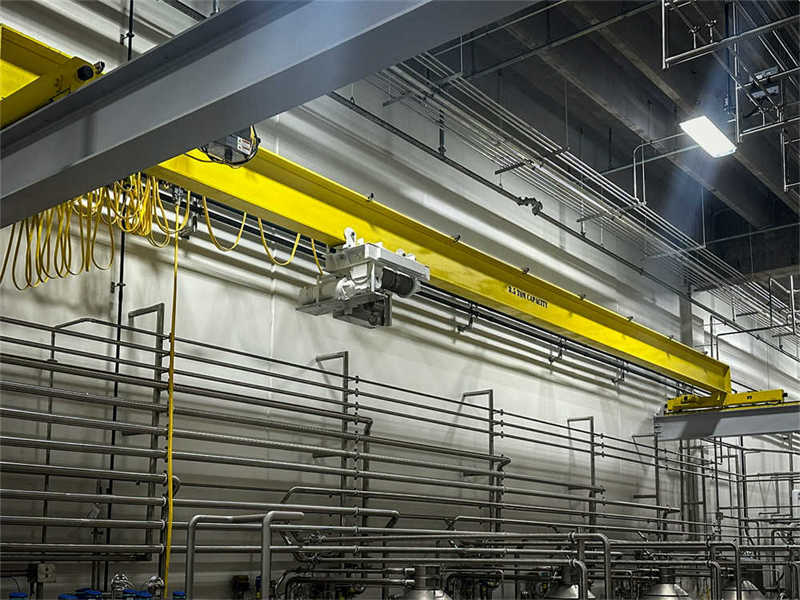
- Single-girder overhead cranes are the workhorses of this category. They consist of one bridge beam with the hoist running on the bottom flange. The design is simple, cost-effective, and easy to install.
- Jib cranes are ideal for localized lifting tasks—serving a single workstation or machine with 180- or 360-degree rotation.
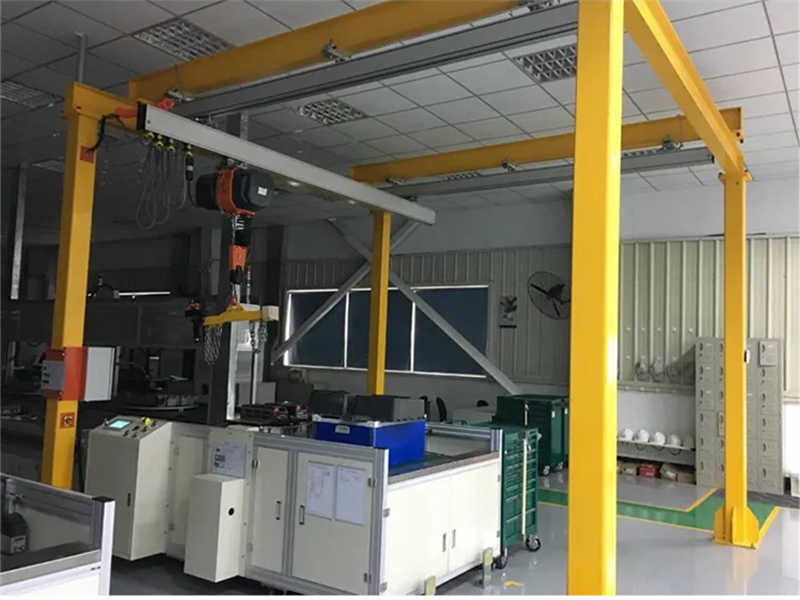
- Workstation bridge cranes offer lightweight, manual-operated solutions for repetitive lifting in confined areas.
Key Technical Considerations:
For cranes in this range, duty cycle often dictates whether a standard configuration suffices or whether upgrades are necessary. If the crane operates fewer than four hours per day with intermittent lifts, a standard single-girder design with a chain hoist may be perfectly adequate. However, for continuous operation exceeding eight hours per day, procurement professionals should consider upgrading to a dual-speed wire rope hoist, which provides smoother acceleration, reduced wear, and better energy efficiency.
Dongqi Crane Insight:
Our LD series single-girder cranes are extensively deployed in this range. They feature modular end carriages for precise alignment, and our hoist options range from economical chain hoists to high-efficiency wire rope models. We also offer articulating jib cranes for facilities requiring maximum flexibility at individual workstations.
Common Pitfalls to Avoid:
- Over-specifying a double-girder crane for a 5-ton application adds unnecessary cost and complexity.
- Under-specifying duty class—assuming intermittent use when actual operations require continuous duty—leads to premature component failure.
10 to 25 Tons – Medium to Heavy Duty Applications
Typical Applications:
As loads increase, so do the structural demands. This range is common in metal fabrication, heavy equipment assembly, steel service centers, and automotive manufacturing. Cranes here often move large dies, structural components, or finished assemblies.
Recommended Crane Types:
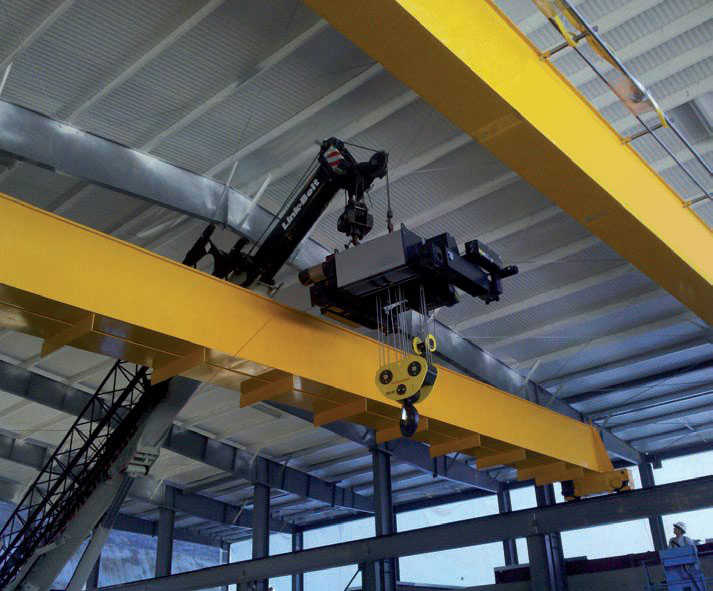
- Double-girder overhead cranes become the standard at 10 tons and above. The two-girder design distributes load more evenly, increases lifting height by positioning the hoist between the girders, and provides a platform for maintenance access.
- European-style low-headroom cranes offer an alternative for facilities where maximizing lifting height is critical. Their compact hoist design allows the hook to reach higher within the same building envelope.
Key Technical Considerations:
At this capacity level, duty class classification becomes a critical decision point. Procurement professionals should reference FEM (Fédération Européenne de la Manutention) or ISO (International Organization for Standardization) classifications. For typical manufacturing operations with 5–10 lifts per hour, FEM 3m (ISO A5) is generally appropriate. For high-frequency applications—such as automated production lines—FEM 4m (ISO A6) or higher may be required.
Speed control also becomes more important in this range. Variable frequency drives (VFDs) on bridge, trolley, and hoist motions provide smooth acceleration, reduce load swing, and extend mechanical component life. While VFDs increase initial cost, the savings in reduced maintenance and improved safety typically justify the investment.
Dongqi Crane Insight:
Our QD series double-girder cranes are purpose-built for this range. We integrate European-style hoist technology that delivers precise load control, and our modular design means that critical components—such as gearboxes and motors—are easily accessible for maintenance. For applications requiring high precision, we offer inverter-controlled positioning systems that allow operators to place loads within millimeter accuracy.
Common Pitfalls to Avoid:
- Selecting a single-girder crane for 15-ton applications may seem cost-effective initially, but the resulting lower lifting height and reduced structural stability can limit operational flexibility.
- Ignoring duty class: a crane specified for occasional use but operated continuously will experience accelerated wear on wheels, bearings, and motors.
25 to 50 Tons – Heavy to Extra-Heavy Duty Applications
Typical Applications:
At this scale, the crane becomes a mission-critical asset. Typical applications include heavy equipment manufacturing, steel mills, power plants, large-scale logistics centers, and infrastructure projects. These cranes handle massive loads—turbine components, steel coils, heavy machinery—often in demanding environments.
Recommended Crane Types:
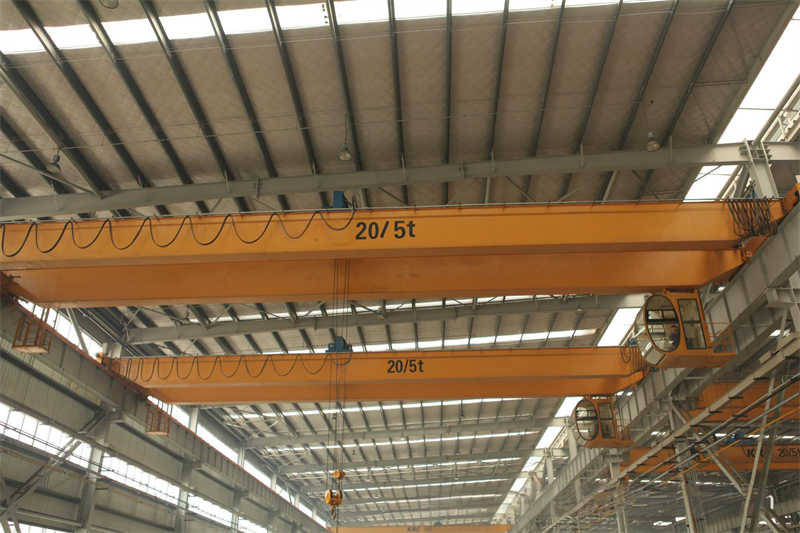
- Heavy-duty double-girder cranes remain the primary solution, with reinforced bridge structures, heavier end carriages, and robust hoist systems.
- European-style compact cranes offer significant advantages in this range. Their low-headroom design maximizes available lifting height, while their lightweight yet high-strength construction reduces runway loads—sometimes eliminating the need for costly building reinforcement.
Key Technical Considerations:
Safety systems are non-negotiable at this capacity. Every crane in this range should include:
- Overload limiters that prevent lifting beyond rated capacity.
- Emergency braking systems on both hoist and travel motions.
- Anti-collision systems for facilities with multiple cranes on the same runway.
- Buffer systems to absorb impact at end stops.
Energy efficiency also becomes a major factor in total cost of ownership. Heavy-duty cranes often run continuously; selecting a crane with regenerative drives can recapture energy during lowering or braking, reducing electricity consumption by 15–25% compared to traditional systems.
Installation planning is particularly critical. For cranes above 30 tons, the runway structure must be carefully evaluated. Existing facilities may require reinforcement of support columns, rails, and foundations. Site assessment by qualified structural engineers should occur before finalizing the crane specification.
Dongqi Crane Insight:
Our E-series European-style cranes are designed for this demanding range. They combine compact dimensions with exceptional lifting performance. Key features include:
- FEM 4m to 5m duty classes to match high-intensity operations.
- Smart control systems with diagnostic capabilities that monitor crane health and predict maintenance needs.
- Weather-resistant construction for outdoor installations, including hot-dip galvanized components and IP55-rated electrical enclosures.
Common Pitfalls to Avoid:
- Focusing solely on initial purchase price. At this capacity, the cost of downtime is immense. Investing in higher-quality components, better safety systems, and more robust duty class pays dividends over the crane’s lifespan.
- Neglecting runway evaluation. A 50-ton crane placed on an under-specified runway creates structural risks and operational limitations that cannot be corrected without significant expense.
Chapter 3: Application Environment—Matching the Crane to the Real World
Tonnage alone does not define a crane’s suitability. The environment in which the crane operates determines the materials, coatings, and components required for reliable long-term performance.
| Environment | Requirements |
|---|---|
| High Temperature (Foundries, Forging) | Heat-resistant insulation on hoist motors, high-temperature lubricants, and protective shields for electrical components. Cranes should be specified with Class H insulation and special heat barriers. |
| Corrosive (Chemical Plants, Marine) | Stainless steel or galvanized components, sealed electrical enclosures, and corrosion-resistant coatings. Aluminum or stainless hoist chains may be required. |
| Dusty / Abrasive (Cement, Mining) | Sealed bearings, enclosed gearboxes, and dust-proof electrical cabinets. Regular maintenance intervals should include cleaning of accumulated debris. |
| Food & Pharmaceutical | Washdown-capable designs with smooth surfaces to prevent bacterial growth. Stainless steel construction, food-grade lubricants, and fully enclosed components. |
| Outdoor | Weatherproof electrical enclosures (IP55 or higher), corrosion-resistant coatings, and wind protection measures such as rail clamps or wind speed monitors. |
Procurement professionals should provide detailed environmental data to suppliers during the specification phase to ensure that the delivered equipment matches the operating conditions.
Chapter 4: Total Cost of Ownership—A Procurement Perspective
For procurement professionals, the true measure of a successful crane purchase is not the initial purchase price—it is the total cost of ownership (TCO) over the crane’s expected lifespan of 15 to 20 years.
TCO Components:
- Initial Investment – Purchase price, installation, and commissioning.
- Energy Consumption – Electric motors, lighting, and control systems.
- Maintenance Costs – Scheduled service, spare parts, and labor.
- Downtime Costs – Lost production due to crane unavailability.
- Replacement Cycles – Lifespan of major components such as hoists, motors, and gearboxes.

Comparative Analysis:
| Factor | Traditional Crane | European-Style Crane (Dongqi) |
|---|---|---|
| Energy Efficiency | Standard motors, continuous operation | Regenerative drives, optimized power use (15–25% savings) |
| Maintenance Access | Components often require disassembly for service | Modular design; major components accessible independently |
| Spare Parts Inventory | Often model-specific, long lead times | Standardized components reduce inventory requirements |
| Lifespan | 10–15 years under heavy use | 15–20 years with proper maintenance |
When evaluating proposals, we encourage procurement teams to request TCO projections from suppliers. A crane with a 20% higher initial cost but 30% lower energy consumption and 40% lower maintenance costs delivers superior value over its lifecycle.
Chapter 5: Safety and Compliance—Building a Foundation of Trust
Safety is not an add-on—it is an integral part of crane design. Procurement professionals should verify that all proposed cranes comply with relevant standards, including:
- ISO 4301 / FEM 9.511 – Crane classification
- EN 13135 – Safety requirements for crane components
- ASME B30.2 / B30.17 – Overhead crane safety standards (North America)
- GB/T 3811 – Chinese crane design standards
Beyond compliance, look for safety features such as:
- Load moment indicators that account for load position, not just weight.
- Secondary hoist brakes that hold the load in case of primary brake failure.
- Fall protection systems for maintenance personnel.
- Emergency stop systems with redundant activation points.
At Dongqi Crane, all our equipment is designed with a safety-first philosophy. We provide comprehensive documentation, including load test certificates, structural calculations, and maintenance manuals, to support your compliance requirements.
Chapter 6: The Dongqi Crane Difference—Why Procurement Teams Choose Us
With many crane manufacturers in the global market, procurement professionals often ask: why Dongqi Crane?
- Engineering Excellence: Our design team brings decades of experience across industries. We do not offer off-the-shelf solutions—we engineer cranes to your specific application.
- Global Standards, Local Support: We design to international standards (FEM, ISO, ASME) while maintaining local service networks to ensure rapid response when you need it.
- Transparent Partnerships: We believe in full transparency. From initial specification to final commissioning, we provide clear documentation, honest timelines, and no hidden costs.
- Commitment to Innovation: Our European-style cranes represent the latest in energy-efficient, space-saving design. We continuously invest in R&D to bring smarter, safer, and more sustainable lifting solutions to market.
Chapter 7: Your 10-Step Procurement Checklist
To bring everything together, here is a practical checklist for your next crane procurement project:
- Define the maximum load—use real production data, not estimates.
- Calculate the duty cycle—lifts per hour, hours per day, days per year.
- Measure the facility—span, runway length, lifting height, and obstructions.
- Assess environmental conditions—temperature, moisture, dust, corrosive elements.
- Select the crane type—single-girder, double-girder, or European-style.
- Specify control and automation—pendant, remote, cab, or smart integration.
- Define safety and compliance requirements—standards, features, certifications.
- Request TCO comparison—evaluate proposals on lifecycle cost, not just price.
- Conduct site evaluation—verify structural readiness, particularly for heavy capacities.
- Partner with an experienced supplier—choose a manufacturer with proven expertise and service capability.
Conclusion: Partnering for Long-Term Success
Selecting an industrial crane from 3 tons to 50 tons is a significant decision—one that impacts safety, productivity, and profitability for years to come. By following the structured decision-making path outlined in this white paper, procurement professionals can move confidently through the selection process, ensuring that every investment delivers maximum value.
At Dongqi Crane, we are ready to be your partner in that journey. From initial consultation to installation, training, and ongoing service, we provide the expertise, quality, and support that procurement teams trust.
Whether your application calls for a simple 3-ton jib crane or a sophisticated 50-ton double-girder system, we invite you to reach out. Let us help you lift your business forward.
Dongqi Crane – Engineered for Excellence, Built for Reliability.
Disclaimer: This white paper provides general guidance for crane selection. Final specifications should be developed in consultation with qualified engineers based on site-specific conditions and applicable local regulations.
