
2026 Global Bridge & Gantry Crane Procurement Guide: Who Is Buying, and Why
Why 2026 Is a Defining Year for Bridge and Gantry Crane Procurement
A factory floor in Monterrey falls silent because a single hoist brake failed. A steel mill in India delays commissioning by six weeks waiting for a crane shipment held up at customs. A port terminal in Brazil sees its decarbonization timeline slip because the RTG cranes ordered two years ago were not specified for tropical-duty electrical enclosures. These are not hypotheticals. They happened in the past twelve months. And they all trace back to the same decision—one made weeks or months earlier, when someone sat at a desk, looked at a spreadsheet of crane specifications and price quotations, and chose.
The global crane market will reach approximately $43.43 billion in 2026, growing at a CAGR of 5.3% from the prior year. Within this market, overhead traveling cranes alone are projected to be a $5.33 billion global segment, accelerating at 6.5% annually. Gantry cranes, meanwhile, are on an even steeper trajectory—the global gantry crane market is anticipated to reach $1.70 billion in 2026 and nearly double to $3.54 billion by 2035, expanding at an 8.51% CAGR. This is not uniform growth. It is concentrated, uneven, and driven by distinct forces in specific industries and regions. The purchasing patterns of 2026 look nothing like those of 2019. Understanding why is the first step toward making a procurement decision that does not turn into a liability eighteen months later.
Dongqi Crane has spent over two decades tracking these patterns, and the view from a factory floor in Xinxiang, Henan—where overhead and gantry cranes are designed, welded, assembled, and tested for customers on six continents—affords a perspective that market reports alone cannot capture. This guide maps the industries and regions driving global demand for bridge and gantry cranes in 2026. It is written for procurement managers, project engineers, and business owners who need to understand not only what is being bought, but why—because answering the “why” is the only reliable way to get the “what” right.

Chapter 1: The Global Landscape—A $43 Billion Market in Motion
Before examining individual industries, it is worth understanding the scale and structure of global crane demand in 2026.
The broader crane and hoist market—encompassing mobile cranes, tower cranes, and fixed installations such as bridge and gantry cranes—was valued at approximately $34.65 billion in 2025 and is projected to reach $36.54 billion in 2026. The bridge crane segment specifically, which includes single-girder and double-girder overhead cranes used predominantly in factories, warehouses, and assembly plants, represents one of the largest and fastest-growing sub-categories. Bridge cranes are expected to lead the crane type segment with a 48% share of certain application categories, while active anti-sway technology is projected to dominate the control type segment at 44%.
Several macro forces are converging to create this growth. First, industrial automation is accelerating: approximately 41% of overhead crane market growth is directly attributed to increasing factory automation levels globally. Second, infrastructure spending is rising across both developed and emerging economies, with governments deploying fiscal stimulus for transport, energy, and urban development. Third, the energy transition—from fossil fuels to renewables and from internal combustion to electric vehicles—is creating entirely new categories of manufacturing facilities, each of which needs material handling equipment. Fourth, the reshaping of global supply chains in the wake of pandemic-era disruptions and geopolitical realignments is driving factory construction in new locations, from northern Mexico to Vietnam to Eastern Europe.
However, this growth is not evenly distributed. The customers buying a 50-ton double-girder bridge crane for a steel mill in West Bengal have almost nothing in common—in terms of their technical requirements, regulatory environment, budget structure, or timeline sensitivity—with the customers buying a 10-ton cleanroom bridge crane for a pharmaceutical facility in Switzerland. The procurement manager at a Saudi port authority evaluating automated STS cranes is working with a completely different decision framework than the owner of a textile factory in Dhaka who needs a basic 5-ton overhead crane to upgrade from manual lifting.
Understanding who is buying, and why, begins with disaggregating the global market into its component industries. The six sectors that follow account for the majority of bridge and gantry crane procurement in 2026.
Chapter 2: Manufacturing Onshoring—The Factory Boom Reshaping North America and Beyond
The most consequential shift in global crane procurement over the past three years has been the return of large-scale manufacturing investment to North America. U.S. overhead traveling crane imports grew from 103 units worth $4.85 million in 2024 to 129 units worth $6.13 million in 2025—a 26% increase in value that reflects not only higher volumes but a trend toward larger, heavier, and more complex crane installations. The U.S. crane market accounts for approximately 71% of North America’s total crane consumption, and its growth is fueled by construction spending, the reshoring of manufacturing capacity, and significant infrastructure investments.
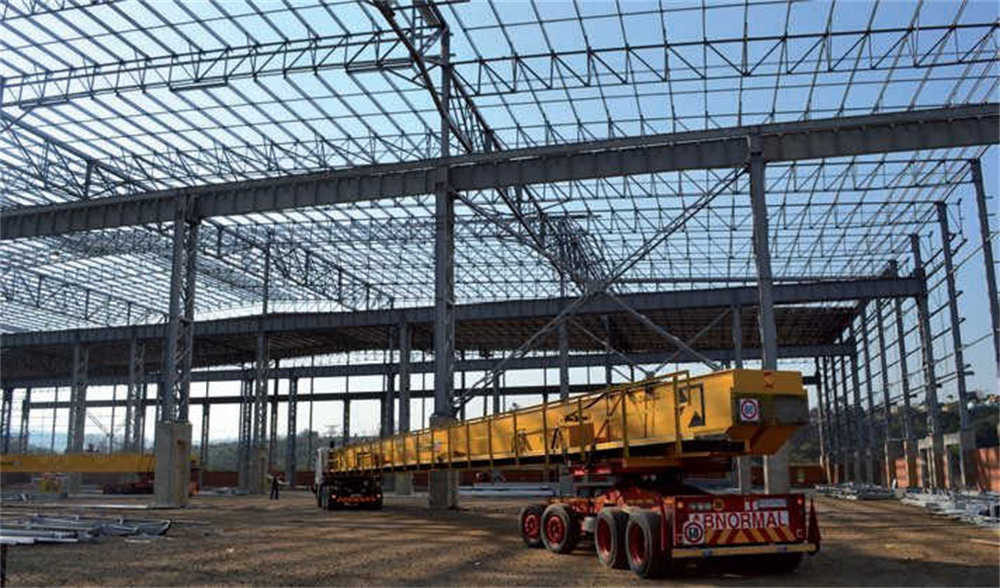
The industries behind this demand are specific and identifiable. Electric vehicle and battery manufacturing has been the single largest driver. A single EV battery plant—the kind being built by automakers and battery consortiums across Michigan, Georgia, Tennessee, and Ohio—typically requires multiple overhead cranes ranging from 5 tons to 50 tons for electrode handling, cell assembly, module integration, and finished pack handling. These are not standard, off-the-shelf cranes. They require precise load positioning, smooth acceleration and deceleration to protect delicate battery components, and in many cases, cleanroom-compatible designs.
Semiconductor fabrication is a parallel story. The CHIPS Act has unlocked tens of billions of dollars in U.S. semiconductor investment, and each new fab requires overhead cranes for wafer handling systems, equipment installation, and maintenance. These cranes operate in ultra-clean environments where even microscopic particulate shedding from crane components is unacceptable.
Beyond the United States, the same onshoring dynamic is playing out in different forms. Mexico has become a major manufacturing hub for automotive, electronics, and consumer goods destined for North American markets, with bridge crane demand concentrated in the industrial corridors of Monterrey, Saltillo, and Querétaro. Canada’s crane market is underpinned by robust conditions in mine development, general warehousing, and transport infrastructure construction.
The common thread across North American procurement in 2026 is a shift in buyer expectations. Three years ago, many North American buyers approached Chinese crane manufacturers with caution, primarily as a source of cost reduction. Today, a growing segment of buyers evaluates Chinese manufacturers on a different set of criteria: compliance with ASME B30.2 standards, availability of CSA-certified electrical components for the Canadian market, demonstrated experience with export logistics to U.S. ports, and the ability to provide installation supervision and after-sales support in-region. The buyers who are winning in this environment are those who understand that the procurement decision is not about finding the lowest price—it is about ensuring that the crane arrives on schedule, passes inspection, and performs without interruption in a production environment where downtime costs can exceed the crane’s purchase price within a single shift.
Chapter 3: Renewable Energy—The Hidden Crane Demand Story of 2026
When crane industry professionals discuss demand drivers, they usually mention construction, manufacturing, mining, and ports. Renewable energy is often treated as a footnote. In 2026, this is a significant oversight.
The renewable energy sector—spanning wind, solar, hydropower, and biomass—has quietly become one of the most important and fastest-growing sources of crane demand globally. Every turbine, panel, and dam in the wind, solar, and hydropower generation process is inseparable from overhead cranes. The applications are broad: bridge cranes handle turbine nacelles during assembly and maintenance, gantry cranes position massive generator rotors in hydroelectric plants, and overhead cranes in solar panel factories transport glass sheets and photovoltaic cells through automated production lines.
The International Energy Agency forecasts that by 2030, new photovoltaic installations will account for over half of global renewable energy capacity, driving accelerated construction of large-scale solar power plants. Each of these plants requires lifting equipment during construction and ongoing maintenance. Wind turbine manufacturing, meanwhile, is scaling rapidly in Europe, China, India, and parts of North America. A single nacelle assembly line for offshore wind turbines may require multiple overhead cranes with lifting capacities exceeding 100 tons, equipped with synchronized tandem operation capability to handle components that span dozens of meters in length.
The port and logistics sector—closely linked to renewable energy—is undergoing its own transformation driven by decarbonization pressures. In Brazil, DP World electrified 13 rubber-tired gantry cranes at the Port of Santos, cutting diesel consumption by up to 60%. In Canada, DP World piloted a hydrogen fuel cell-powered crane at the Port of Vancouver, a breakthrough initiative signaling the potential for zero-emission cargo handling equipment. These are not one-off sustainability experiments. They are part of a structural shift toward electrified, automated, and low-emission crane operations at ports worldwide—a shift that directly benefits manufacturers capable of supplying electric RTG cranes, energy-efficient drive systems, and crane control software that integrates with terminal operating systems.
For procurement managers in the renewable energy sector, the critical question in 2026 is not simply “can this crane lift the required weight.” It is whether the crane supplier understands the application context. A gantry crane used for turbine maintenance at an onshore wind farm faces completely different environmental stresses—wind loads, temperature extremes, remote location logistics—than an overhead crane inside a solar panel factory. Buyers who work with suppliers that have demonstrated experience in renewable energy applications reduce project risk substantially. Those who treat a turbine-handling crane as a generic piece of lifting equipment often discover the difference through expensive field modifications after installation.
Chapter 4: Ports and Logistics—Automation, Electrification, and the Global Trade Bottleneck
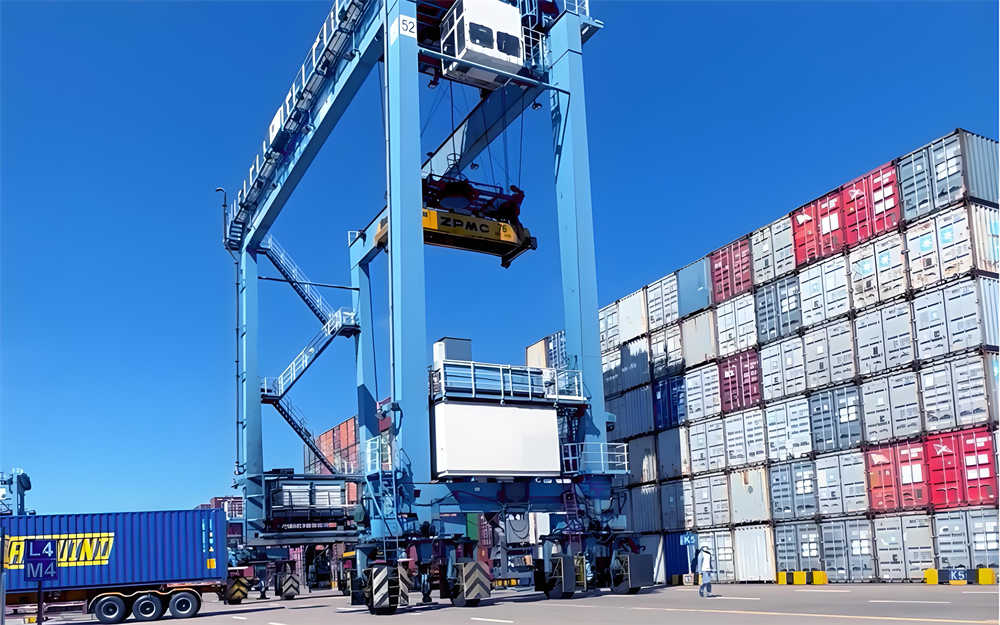
If manufacturing onshoring is the anchor of bridge crane demand in 2026, global trade logistics is the engine driving gantry crane procurement. The rail-mounted gantry (RMG) crane market, estimated at approximately $13.75 billion in 2024, is projected to reach $26.50 billion by 2032, growing at an 8.5% CAGR. This growth is fueled by port modernization programs worldwide, the rise of automated container terminals, and the increasing reliance on intermodal freight transport requiring efficient container handling at rail yards and inland depots.
No project better illustrates the scale and sophistication of modern port crane procurement than the Port of NEOM in Saudi Arabia. The Red Sea port, part of the kingdom’s $500 billion NEOM development, has taken delivery of 10 automated ship-to-shore (STS) gantry cranes and 30 automated electric rubber-tyred gantry (eRTG) cranes, with the first terminal scheduled to open in 2026. These are not standard-issue cranes. They are fully automated, remotely controlled, and integrated with digital twin technology to optimize container handling operations. The Port of NEOM represents a new benchmark: a port designed from the ground up around automation rather than retrofitting automation onto an existing facility.
The significance extends well beyond a single Saudi Arabian project. Ports in Southeast Asia—including Tanjung Priok in Indonesia, Cai Mep in Vietnam, and Manila in the Philippines—are all undergoing capacity expansions that require new gantry cranes. African ports, from Mombasa to Lagos to Durban, are modernizing their container handling infrastructure to accommodate larger vessels and growing trade volumes. Latin American ports, particularly in Brazil, Chile, and Peru, are investing in crane electrification and automation to meet ESG commitments while improving operational efficiency.
For procurement managers in the port and logistics sector, the decision framework in 2026 revolves around three considerations. First, automation readiness: even if a terminal is not planning full automation today, the crane should be specified with automation-compatible controls, sensor interfaces, and communication protocols that will not require a complete retrofit in five years. Second, energy efficiency: electric RTG cranes, regenerative drives that feed braking energy back into the grid, and high-efficiency motors are no longer premium options—they are increasingly baseline requirements driven by both operating cost calculations and corporate sustainability mandates. Third, supplier reliability: a port crane outage disrupts not just one facility but the entire logistics chain radiating from it. The cost of one day of unplanned downtime at a major container terminal can equal the purchase price of a smaller gantry crane.
Chapter 5: Heavy Industry—Steel Mills, Mining, and the Cranes That Cannot Fail
In the steel industry, certain cranes do not just lift material. They handle molten metal at temperatures exceeding 1,500°C, in environments where a failure could be catastrophic in human, environmental, and financial terms.
Steel mill overhead cranes work in electric arc furnace (EAF) areas, rolling mills, and scrap yards, where they handle scrap buckets, electrodes, molten steel ladles, hot slabs, coils, plates, and heavy equipment. These cranes must withstand extreme heat, splatter, furnace gases, and continuous operation across every shift. Charge cranes, responsible for feeding electric arc furnaces with scrap steel, are among the most demanding crane applications in existence—double-girder overhead cranes operating in high-temperature environments facing flames, radiant heat, and intense thermal exposure.
Global steel production is undergoing a structural shift from blast furnace to electric arc furnace technology. EAF steelmaking is more energy-efficient, produces lower emissions, and can be scaled to match regional demand more flexibly than traditional integrated mills. This transition is creating demand for new crane installations in EAF shops worldwide—from new plants being built in the United States and Europe to capacity expansions in India, Southeast Asia, and the Middle East. A single EAF melt shop typically requires a suite of cranes: scrap charging cranes with grab bucket attachments or electromagnets for handling irregular scrap pieces, ladle handling cranes engineered for molten metal transport, and maintenance cranes for equipment servicing.
Mining represents a parallel heavy-industry story. Countries across Latin America—Chile, Peru, Argentina, Bolivia—sit on some of the world’s largest reserves of copper, lithium, and silver. The global energy transition is driving unprecedented demand for these minerals: copper for electrical infrastructure, lithium for batteries, silver for photovoltaic panels. Mining operations require gantry cranes for equipment maintenance, overhead cranes in processing plants, and specialized hoisting systems for material handling in extreme environments. High-altitude mines in the Andes, where air is thin and temperatures swing dramatically between day and night, present unique challenges: motors must be de-rated for altitude, lubrication systems must function at low temperatures, and all electrical enclosures must be sealed against fine dust.
In Africa, the mining crane demand story is equally compelling. Zimbabwe’s National Development Strategy 2 (2026–2030), valued at more than $2 billion, includes extensive plans for mining expansion alongside rail rehabilitation and industrial modernization. Major mining investments, such as Caledonia Mining Corporation’s planned $132 million capital expenditure in 2026, are creating demand for reliable material handling equipment. Nigeria’s government has committed substantial resources to mineral exploration and mining sector development, while Kenya’s “Vision 2030” strategy has unlocked infrastructure and mining investments that drive crane procurement. Across the continent, Chinese engineering machinery exports directly reflect this demand: in early 2026, overall construction equipment exports rose sharply, with Africa identified as a key growth region alongside recovering European and North American markets.
For procurement managers in heavy industry, the lesson of 2026 is unambiguous: buying a crane for a steel mill or mine is not a transaction—it is a long-term partnership decision. The crane that costs $50,000 less at purchase but requires three unplanned service interventions in its first year is not cheaper. It is dramatically more expensive. The specifications that matter are the ones that do not appear on a standard price-comparison spreadsheet: the welding procedure specification used for the main girder, the fatigue-life calculation for the hoisting mechanism, the ingress protection rating of electrical enclosures in a dusty mining environment, the availability of critical spare parts within 48 hours in the country of installation. These are the details that separate a crane that is merely “rated for the load” from one that will perform reliably across a 20-year service life.
Chapter 6: Automation, Warehousing, and the Circular Economy—the Cranes Powering the Future of Logistics
The rise of e-commerce has fundamentally altered the global warehousing landscape, and with it, the type of cranes being purchased. The warehouse automation market is projected to reach approximately $30.7 billion by 2026, growing at a remarkable 14.8% annually. Automated storage and retrieval systems (AS/RS) and high-density distribution centers increasingly depend on sophisticated overhead crane and monorail systems to achieve the throughput speeds that modern logistics demands.
This trend is global. In North America, major retailers and third-party logistics providers are building automated distribution centers that can process orders within hours of placement. In Europe, labor shortages are accelerating warehouse automation investment, with automated material handling equipment markets projected to reach $13.04 billion by 2030. In China, the explosion of domestic e-commerce has driven a parallel wave of automated warehouse construction. In each case, the cranes required are not the general-purpose overhead cranes of traditional factories. They are precision machines operating at high cycle rates, integrated with warehouse management software, and often running 24/7 with minimal human supervision.
The Chinese crane industry has responded to this demand with substantial investment in smart crane technology. In 2026, new crane models incorporate real-time monitoring, automated collision avoidance, and energy-efficient drives as standard features rather than premium upgrades. The industry has moved from competing primarily on price to competing on technical capability. Global procurement trends now emphasize total cost of ownership, supplier innovation, and risk mitigation in crane sourcing decisions.
The recycling and circular economy sector is an underappreciated crane demand story. Scrap metal processing facilities, e-waste recycling plants, and construction material recycling operations all require bridge and gantry cranes—often equipped with electromagnets, grapples, or specialized lifting attachments. As governments worldwide tighten regulations on waste disposal and mandate higher recycling rates, investment in recycling infrastructure is creating a steady demand for cranes that can withstand abrasive, dirty, and physically demanding operating conditions. These cranes share many characteristics with their mining and steel mill counterparts: high work-duty classifications, sealed electrical systems, and robust mechanical components designed for continuous operation.
Chapter 7: Regional Dynamics—Where Government Investment Meets Crane Procurement
Across much of the developing world, crane procurement in 2026 is driven not by individual corporate investment decisions but by large-scale, government-backed infrastructure programs. Understanding these programs is essential for procurement managers, because the timing and specifications of government projects shape market dynamics—including lead times, pricing, and supplier capacity—for all buyers in a given region.
India exemplifies this dynamic. The country’s crane market was valued at approximately $3.76 billion in 2025 and is projected to reach $5.47 billion by 2034. Driving this growth is a combination of factors: the “Make in India” initiative encouraging domestic manufacturing, massive infrastructure investments in roads, railways, and urban transport, and a construction sector that is among the fastest-growing in the world. Bridge cranes are in demand for new factories across automotive, consumer goods, and heavy engineering. Gantry cranes are being procured for metro rail construction projects, port expansions, and power plant construction.
Europe presents a very different picture. The European crane market is projected to reach $17.1 billion by 2034, but growth is more moderate at a CAGR of 2.11%. The European story in 2026 is less about new capacity and more about modernization: refurbishing ageing crane fleets, replacing obsolete control systems, and upgrading to meet new energy efficiency standards. The penetration rate of European-style cranes—characterized by compact, modular designs with variable frequency drives—in new construction and retrofit projects is expected to exceed 45% by 2026. For crane buyers, this means the procurement decision increasingly involves evaluating whether a new crane’s energy savings, reduced maintenance requirements, and improved safety features justify replacement of an existing unit that may still be functional but is becoming progressively more expensive to operate.
Eastern Europe and Turkey occupy a distinctive position. Turkey’s construction sector has been a major driver of domestic crane demand, and Turkish contractors operating across the Middle East, Central Asia, and Africa frequently specify cranes for projects abroad. Romania, Poland, the Czech Republic, and other Central and Eastern European markets are benefiting from nearshoring—European manufacturers relocating production capacity from Asia to locations closer to end markets. Dongqi Crane’s analysis of the Romanian market illustrates this trend: the Asia-Pacific crane market reached $24.22 billion in 2024, with China accounting for 40.5% of this total and exporting to more than 150 countries, reflecting the globalization of crane supply chains. Buyers in these markets are sophisticated and price-sensitive, often evaluating Chinese, European, and Turkish crane suppliers against each other on a project-by-project basis.
Chapter 8: How Dongqi Crane Is Responding to 2026’s Procurement Landscape
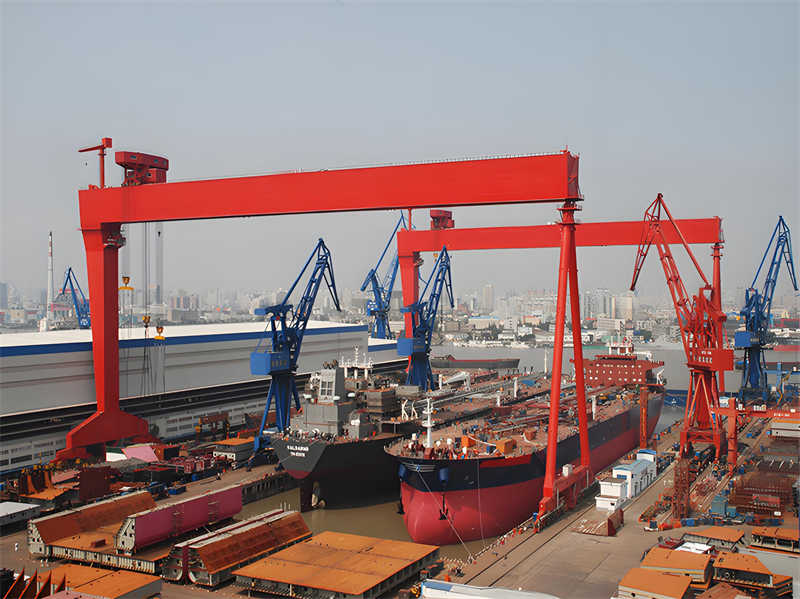
In a global market shaped by these varied forces, a crane manufacturer’s response must be more comprehensive than simply offering a lower price or a faster delivery time. Dongqi Crane’s approach to the 2026 procurement landscape is built on several pillars.
Technical independence and European-standard engineering. The company has established technical partnerships with leading European component manufacturers, including ABM, SEW, ABB, NORD, SIEMENS, and Schneider Electric. This means cranes are designed around proven drive systems, motors, and control components that are recognized and serviceable globally—a critical consideration for buyers in markets where local access to spare parts may be limited.
Customized engineering support. Every Dongqi crane project begins with application analysis rather than a price quotation. The company provides three-dimensional design diagrams and structural force analysis for each project, enabling procurement managers and their engineering teams to evaluate the proposed crane against the specific demands of their application before committing.
Global project execution. With an annual production capacity exceeding 10,000 crane sets, Dongqi Crane maintains the scale to serve projects of any size while retaining the engineering flexibility to customize each crane to its application. Recent international projects have delivered specialized 5-ton gantry cranes for a glass manufacturing facility in the Philippines—equipped with specialized lifting attachments for delicate glass panels—and QZ-type grab overhead cranes to Saudi Arabia, configured with advanced customization for the specific material handling needs of that market.
The company’s reach extends across Latin America, where Chinese-manufactured industrial cranes offer price advantages of 30–50% compared to Western competitors while meeting rigorous international standards. From Zimbabwe’s mining sector to Colombian industrial growth, Dongqi has established a track record of delivering cranes engineered for specific regional requirements, whether that means tropical-duty electrical enclosures for humid environments, high-altitude motor de-rating for Andean installations, or compliance with country-specific certification regimes.
Certifications and compliance. Dongqi Crane’s products hold ISO 9001 certification and CE marking, with documentation packages that are structured to support country-specific certification requirements in destination markets. For buyers navigating the complex regulatory landscape of 2026—where a crane that is fully compliant in one jurisdiction may require additional documentation, testing, or modification for another—working with a supplier that has experience across multiple certification frameworks reduces project risk.
Conclusion: The Questions Buyers Should Ask Before Signing a Crane Order in 2026
Global crane procurement in 2026 is characterized by diversity, complexity, and opportunity. The industries driving demand—manufacturing onshoring, renewable energy, port automation, heavy industry, warehousing logistics, and the circular economy—each have distinct technical requirements, regulatory constraints, and timeline sensitivities. The regions where demand is concentrated—North America, the Middle East, South Asia, Africa, Latin America, and Europe—each present different certification requirements, logistics challenges, and service expectations.
For the procurement manager, project engineer, or business owner evaluating a bridge or gantry crane purchase, a technical checklist can help organize the decision. Does the crane’s work-duty classification match the actual operating cycle, or is it specified based only on lifting capacity? Does the supplier have documented experience in the application or region where the crane will be installed, and can they provide reference projects? Does the quotation include a complete certification package, including welding procedure specifications, non-destructive testing reports, and load test certification? What is the service and spare parts plan—specifically, what is the guaranteed response time for after-sales support in the country of installation? And looking beyond the purchase price, has a total cost of ownership model been calculated that accounts for energy consumption, maintenance requirements, expected component life, and potential downtime costs over a 15- to 20-year service life?
A bridge or gantry crane is a 15- to 25-year asset. The purchase price, amortized over that lifespan, is almost always less than 30% of the total cost of ownership. The remaining 70%—energy, maintenance, repairs, modifications, and the cost of downtime—is determined by the quality of the crane and the thoroughness of the procurement decision. In 2026, the buyers who succeed are the ones who understand this math before they receive the first quotation.
The world is buying more cranes in 2026 than at any point in history. The reasons are diverse, but the fundamentals of a good procurement decision remain constant: understand your application, specify for the actual operating environment, verify supplier capability with evidence rather than claims, and evaluate cost over the full asset lifetime rather than the purchase price alone. Dongqi Crane has built its global practice around supporting buyers through this process, and we welcome the opportunity to do the same for your next project.
