
Unlocking the Performance & Lifespan of KBK Cranes: A Deep Dive into Core Components from Track to Hoist | Dongqi Crane
What determines the performance & lifespan of a KBK crane? Dongqi Crane, a leading hoist manufacturer, details how track, trolleys, and hoist units impact durability, safety, and efficiency.
Introduction: The Symphony of Components – Where Reliability Begins
KBK crane systems represent the pinnacle of flexibility and efficiency in modern industrial facilities. From assembly lines and machining centers to warehouses, their modular design allows for customized material handling solutions. However, the overall performance, safety, and lifespan of a KBK crane are not dictated by a single element. Instead, they are the result of the perfect synergy between its core components: the track, the suspension system, the trolley, and the hoist unit.
At Dongqi Crane, we believe that true quality starts at the microscopic level of each component. This article provides a detailed analysis of how each part, from the overhead track to the lifting hoist, fundamentally impacts the system’s long-term value and operational excellence.
Chapter 1: The Backbone of the System – The KBK Track
The KBK track is the fundamental framework that carries the entire load and guides the trolley’s movement. Its quality is the primary determinant of the system’s rigidity, smoothness of operation, and long-term structural integrity.
- Material Quality Matters: High-tensile strength alloy steel is superior to standard carbon steel. It offers a higher safety factor, allows for lighter-weight constructions, and provides exceptional resistance to metal fatigue, directly extending the crane’s service life.
- Manufacturing Process is Key: The method of production critically influences performance.
- Precision-Rolled Tracks (Dongqi Standard): These tracks are formed in a continuous process, resulting in a smooth, consistent internal surface. This minimizes friction, reduces operating force, and ensures quiet, smooth travel with minimal wear on trolley wheels.
- Welded or Low-Quality Tracks: These can have inconsistencies, internal stresses, and a rough surface finish, leading to increased resistance, jerky movement, and accelerated wear.
- Critical Parameters: Straightness, consistent profile dimensions, and the quality of track joints are non-negotiable. Imperfections here cause bumpy travel, inaccurate load positioning, and generate damaging shock loads throughout the system.
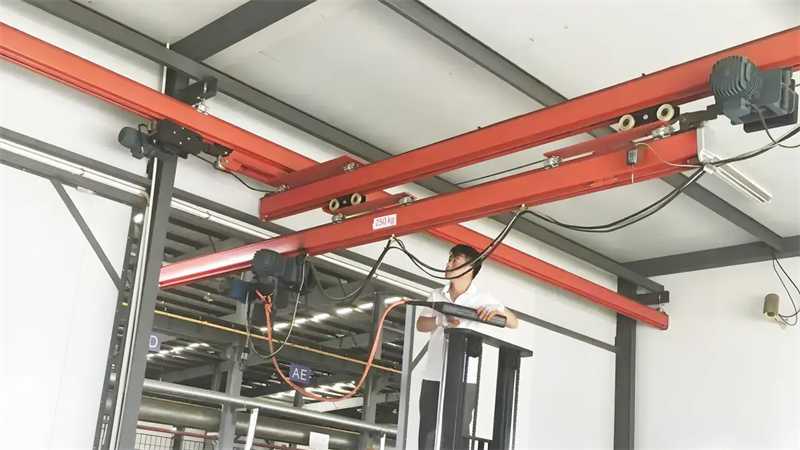
Chapter 2: The Critical Link – Suspension Systems and Track Connectors
Often overlooked, these components are vital for system stability and seamless operation.
- Suspension System Stability: The clamps and beams that secure the track to the supporting structure must be robust and precisely engineered. A weak or improperly installed suspension system leads to system sway, compromising positioning accuracy and creating dynamic stresses that shorten the life of all other components.
- Precision of Track Connectors: High-quality connectors are engineered to create a near-invisible seam between track sections.
- Dongqi’s Approach: Our precision-machined connectors ensure a perfectly smooth transition. The trolley and hoist pass over the joint without impact, ensuring silent operation and protecting the wheel bearings from damaging shock loads.
- The Alternative: Poorly made connectors create a “step.” Each time a trolley passes, it impacts the step, eventually deforming the track ends and damaging the trolley wheels, leading to premature failure.
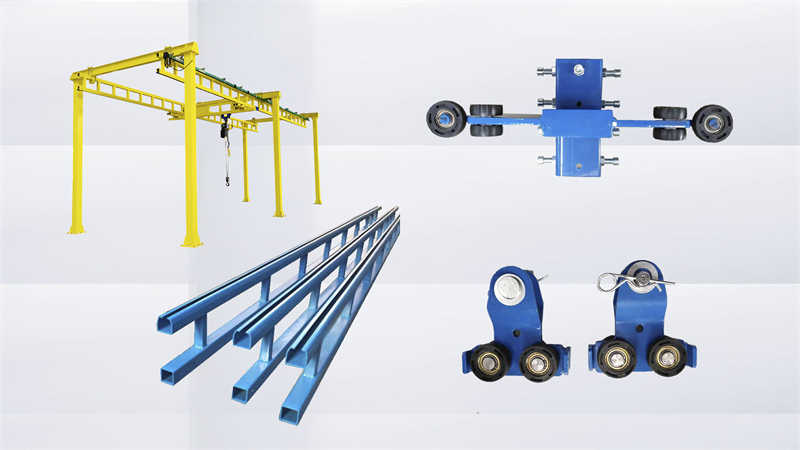
Chapter 3: The Agile Workhorse – The Trolley and End Trucks
The trolley is the mobile unit that carries the hoist along the track. Its performance dictates the ease of manual pushing or the efficiency of motorized travel.
- Wheel Material Selection:
- Nylon Wheels: Offer excellent wear resistance, are very quiet, and will not damage the track surface. Ideal for most standard applications.
- Steel Wheels: Provide higher load capacity for heavier duties. Dongqi can recommend the optimal wheel material for your specific operating conditions.
- Axle and Bearing Quality: The axles should be made from hardened steel, and the wheels should run on sealed, pre-lubricated ball bearings. This combination ensures easy, low-friction movement and protects the bearing from contaminants like dust and moisture, significantly extending trolley life.
Chapter 4: The Heart of the System – The Electric Hoist
The hoist is the component that performs the actual lifting. Its quality directly impacts lifting speed, precision, safety, and reliability.
- Choosing the Right Hoist Type:
- Wire Rope Hoists: Best for applications requiring high lifting speeds and great lifting heights. They are robust and suited for demanding, high-cycle operations.
- Chain Hoists: Characterized by a more compact design and lighter weight. Ideal for low headroom applications and precise, sensitive lifting tasks.
- Core Components Defining Performance and Lifespan:
- Motor: Look for a high insulation class (e.g., Class F) and a high Ingress Protection rating (e.g., IP54/IP55). Dongqi hoists use motors designed for frequent starts/stops without overheating, ensuring reliability in harsh environments.
- Gearbox: The soul of the hoist. Precision-cut, heat-treated gears ensure smooth, quiet, and efficient power transmission, maximizing energy efficiency and mechanical longevity.
- Braking System: A critical safety component. The brake must be fail-safe, responsive, and reliable to hold loads securely, ensuring operational safety.
- Lifting Media (Hook, Chain, Wire Rope): Dongqi uses hooks, chains, and wire ropes manufactured from high-grade materials that meet or exceed international standards, eliminating safety risks.
Conclusion: The Dongqi Crane Commitment – Excellence in Every Component
The exceptional performance and legendary durability of a KBK crane are not accidental. They are engineered into the system through the superior quality of every single component—from the track and connectors to the trolley and hoist. Choosing a system based solely on initial cost often means compromising on the very elements that ensure long-term, trouble-free operation.
At Dongqi Crane, we integrate a “System-Wide Approach” to design and manufacturing. We don’t just sell parts; we engineer complete solutions where every component is matched and optimized to work in perfect harmony. Our rigorous quality control from raw material to final testing guarantees that our cranes deliver not just functionality, but outstanding productivity, safety, and low total cost of ownership.
Your Next Step towards a Superior KBK System:
- Planning a new project? Consult with our technical engineers for a free, optimized KBK crane system design tailored to your facility’s needs.
- Experiencing downtime with existing equipment? Our experts can diagnose component failures and provide reliable upgrade or retrofit solutions.
Contact Dongqi Crane today to invest in a material handling solution built to perform for years to come.
