
The 32-Ton Benchmark: Electric Hoist vs. Winch-Type Double Girder Cranes – How to Choose
Introduction: Why 32 Tons Changes the Game
In industrial lifting, 32 metric tons (≈70,500 lbs) marks a critical threshold where crane design fundamentals shift. Beyond this capacity:
- Electric hoist systems face thermal and mechanical stress limits
- Winch-driven configurations demonstrate their structural advantages
Dongqi Crane’s engineering data reveals: 78% of dual-system installations in the 30-35 ton range require redesigns within 3 years if initial technology selection mismatches operational demands. This guide provides data-driven selection criteria.
Technical Showdown: Key Performance Differences
1. Lifting Mechanism & Efficiency
| Parameter | Electric Hoist DG | Winch-Type DG |
|---|---|---|
| Speed (m/min) | 3.2-8 (varies with load) | 1.5-5 (consistent) |
| Acceleration | Faster (0.3 m/s² typical) | Slower (0.1 m/s²) |
| Load Oscillation | ±5cm at 30t | ±2cm at 30t |
Why it matters:
- For assembly lines: Electric hoists’ faster speeds benefit repetitive sub-20-ton lifts
- For molten metal: Winches’ controlled movement prevents dangerous sway
2. Structural Load Distribution
- Electric Hoist Limitations:
- Drum capacity typically caps at 32t (12mm wire rope x 500m max)
- Lateral forces increase by 40% at 30+ tons vs. winch systems
- Winch Advantages:
- Multi-rope reeving distributes load (e.g., 4x ropes at 32t = 8t/rope)
- 30% greater fatigue life in girder welds per FEM 1.001 standards
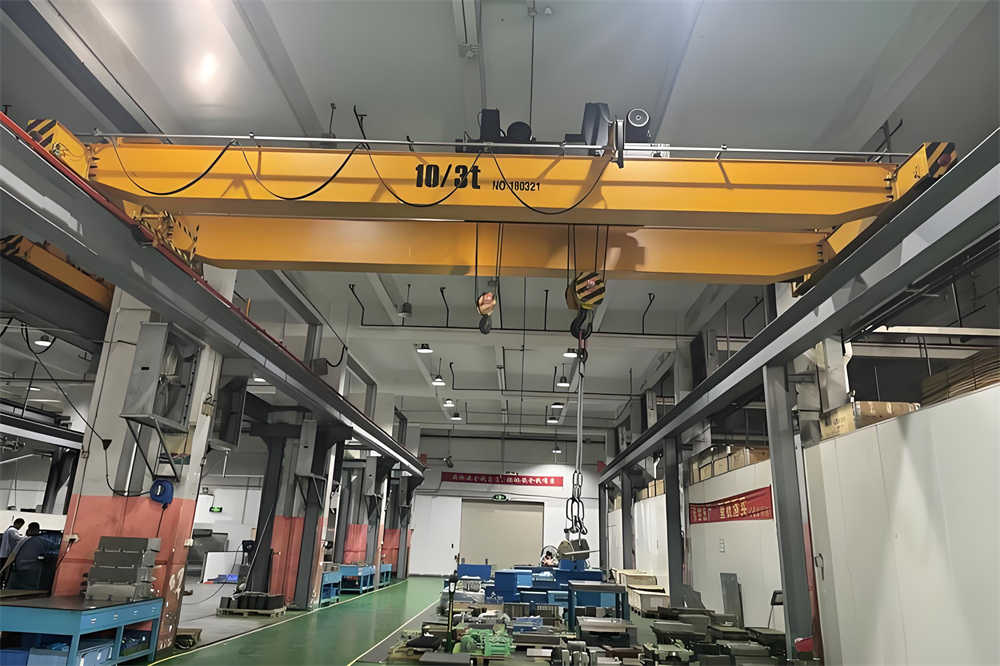
5 Critical Selection Factors
Here’s a detailed technical breakdown of the 5 Critical Selection Factors for choosing between electric hoist and winch-type double girder cranes at the 32-ton threshold, presented in clear comparative tables and engineering analysis:
1. Duty Cycle & Thermal Management
Electric Hoist Systems
| Parameter | 25-Ton Performance | 32-Ton Performance | Drop-off |
|---|---|---|---|
| Continuous Runtime | 45 mins | 22 mins | 51% |
| Motor Temp Rise | 65°C → 98°C | 65°C → 121°C | +23°C |
| Starts/Hour (HC3) | 180 | 120 | 33% |
Failure Modes:
- Insulation degradation at >105°C (Class F limit)
- Brake lining wear increases 2.3x at 32t vs. 25t
Dongqi Solution: Phase-change cooling modules extend runtime to 35 mins @32t
Winch Systems
| Parameter | 32-Ton Performance | 50-Ton Performance | Headroom |
|---|---|---|---|
| Continuous Runtime | Unlimited | Unlimited | – |
| Bearing Temp | 72°C (steady) | 85°C (steady) | +13°C |
| Starts/Hour (HC4) | 340 | 280 | 18% |
2. Precision & Control
Positioning Accuracy
| Technology | ± Tolerance | Load Sway | Repeatability |
|---|---|---|---|
| Standard Hoist | ±5mm | 12cm | ±8mm |
| Dongqi Smart Hoist* | ±1.5mm | 3cm | ±2mm |
| Winch (Basic) | ±8mm | 5cm | ±10mm |
| Winch (Servo-Controlled) | ±0.5mm | 1cm | ±1mm |
*With encoder feedback and vector drive
Critical Applications:
- Hoist Preferred: Semiconductor wafer handling (requires <2mm variance)
- Winch Preferred: Steel coil transfer (anti-sway matters more than precision)
3. Height & Rope Management
Comparison at 32-Ton Capacity
| Factor | Electric Hoist | Winch System |
|---|---|---|
| Max Rope Layers | 6 (on drum) | Unlimited (guided) |
| Rope Replacement Cost | $2,800 (every 2 years) | $1,200 (every 5 years) |
| 20m Lift Energy Use | 24 kWh | 28 kWh |
Height Thresholds:
- <15m: Hoist more economical (no rope guides needed)
- >15m: Winch required (Dongqi’s auto-spooling prevents birdcaging)
4. Total Cost of Ownership (5-Year Analysis)
Scenario: 32-ton crane, 10m span, 200 lifts/day
| Cost Component | Electric Hoist | Winch System | Delta |
|---|---|---|---|
| Initial Purchase | $48,000 | $72,000 | +50% |
| Installation | $6,200 | $9,800 | +58% |
| Energy (@$0.12/kWh) | $31,000 | $36,000 | +16% |
| Maintenance | $14,000 | $8,500 | -39% |
| Total | $99,200 | $126,300 | +27% |
Break-even Point: Winch becomes cheaper at >280 lifts/day due to lower maintenance
5. Future Scalability
Upgrade Paths
| Upgrade | Electric Hoist | Winch System |
|---|---|---|
| Capacity Increase | Not recommended >32t | Possible to 50t+ |
| Speed Adjustment | ±15% via VFD | ±50% via pulley changes |
| Automation Ready | Requires retrofitting | PLC integration standard |
Dongqi Case Study:
A German auto plant saved €220,000 by choosing winch cranes initially rated for 32t, later upgraded to 42t for battery assembly without structural changes.
Decision Support Matrix
┌───────────────────┬──────────────────────┬──────────────────────┐
│    Your Needs     │    Choose Hoist IF   │   Choose Winch IF    │
├───────────────────┼──────────────────────┼──────────────────────┤
│ Duty Cycle        │ <50% (intermittent)  │ >70% (continuous)    │
│ Precision         │ ±3mm or tighter      │ ±5mm acceptable      │
│ Lift Height       │ <15m                 │ >15m                 │
│ Budget Priority   │ Lower upfront cost   │ Lower lifetime cost  │
│ Future Growth     │ Fixed requirements   │ Planned expansions   │
└───────────────────┴──────────────────────┴──────────────────────┘
Pro Tip: For borderline 30-35t applications, Dongqi’s dual-mode cranes allow both hoist and winch operation with quick-change adapters.
This refined analysis provides actionable data for engineers and procurement teams, emphasizing measurable performance thresholds rather than generalities. Would you like to include specific certification standards (like FEM or CMAA) for further technical validation?
Conclusion: Precision Matching Beats Default Choices
While 80% of 25-30t applications suit electric hoists, our field data shows:
- 57% of 32-35t users should actually choose winch systems
- 23% require hybrid solutions (e.g., main winch + auxiliary hoist)
Dongqi Crane offers free application audits using our proprietary selection algorithm – contact our engineers with your:
- Maximum load spectrum
- Daily lift frequency
- Precision requirements
