
Suspended Flexible Rail Cranes: A Comprehensive Guide by Dongqi Crane
In today’s modern industrial landscape, efficient material handling is crucial for productivity and safety. Among the various equipment available, suspended flexible rail cranes stand out for their versatility and efficiency. As a leading manufacturer in the crane industry, Dongqi Crane is committed to providing comprehensive solutions, including these innovative systems. This article will provide a detailed overview of what suspended flexible rail cranes are, how they work, their benefits, and applications across industries.
What Are Suspended Flexible Rail Cranes?
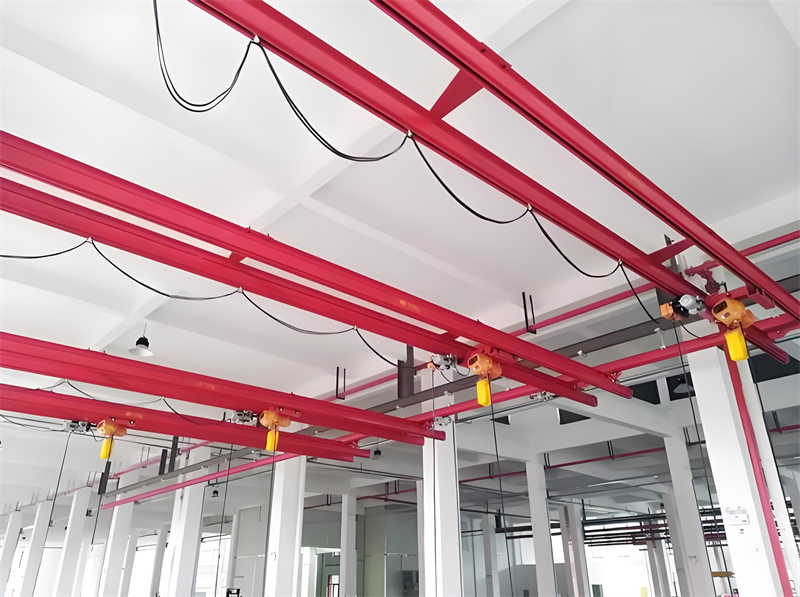
Suspended flexible rail cranes, often referred to as KBK cranes (from the German “Kranbahnkran”), are lightweight overhead lifting systems consisting of standardized components that can be combined in various configurations to meet specific material handling needs. These systems are characterized by their modular design, which allows for flexible installation and adaptation to different workspace layouts.
These cranes typically include:
- Steel tracks: Usually I-beam profiles that form the supporting structure
- Suspension components: Connect the crane to the building structure or supporting framework
- Traveling trolleys: Move along the tracks to transport loads
- Lifting devices: Such as electric chain hoists or wire rope hoists
- Support structures: Provide stability and secure mounting
How Do Suspended Flexible Rail Cranes Work?
The operation of KBK cranes is based on electric hoists that lift and move materials along a predefined rail path. The system comprises several key components working together:
- Track System: The foundation of the crane, providing the pathway for material movement. KBK tracks are typically made of high-quality steel and can be customized to fit specific workspace dimensions.
- Suspension System: Connects the crane to the building structure overhead. This allows the crane to be suspended from ceilings or overhead supports, saving valuable floor space.
- Traveling Trolley: Moves along the track system, enabling horizontal transportation of materials. Advanced systems feature intelligent control for automated movement along predetermined paths.
- Lifting Mechanism: Usually an electric hoist (chain or wire rope) that handles the vertical lifting and lowering of loads. These hoists can have various capacities depending on application requirements.
The modular nature of KBK systems allows for easy reconfiguration as production needs change, making them ideal for dynamic manufacturing environments.
Key Advantages of Suspended Flexible Rail Cranes
Suspended flexible rail cranes offer numerous benefits that make them popular across various industries:
- Exceptional Flexibility: KBK cranes feature a highly modular design that can be easily adapted to different spatial requirements and production layouts. They can be reconfigured as needs change, making them ideal for facilities that frequently update their production processes.
- Space Efficiency: By being suspended from overhead structures, these cranes maximize usable floor space—particularly valuable in crowded workshops, warehouses, and production facilities where every square meter counts.
- High Customizability: The modular nature of KBK systems allows for extensive customization. Components can be mixed and matched to create tailored solutions for specific applications, with options for different track lengths, lifting heights, and capacity requirements.
- Enhanced Safety: These systems are designed with safety in mind. Features like secure track suspension, overload protection, and smooth operation reduce accident risks. The closed track design minimizes the chance of derailment.
- Easy Maintenance: With simple structures and standardized components, KBK cranes are straightforward to maintain. Regular inspections of tracks, suspension components, and hoists are typically all that’s needed to ensure long-term reliability.
- Cost Effectiveness: Compared to traditional overhead cranes, KBK systems generally have lower installation costs and can be more energy-efficient in operation, providing savings on both upfront investment and ongoing operational expenses.
Applications Across Industries
Suspended flexible rail cranes serve diverse sectors with their adaptable material handling capabilities:
- Manufacturing Facilities: In production lines, these cranes efficiently handle raw materials, components, and finished products. They’re particularly valuable in automotive manufacturing, where they transport parts between workstations with precision.
- Warehousing and Logistics: KBK systems optimize storage operations by facilitating the movement of goods in limited spaces. They enable efficient loading, unloading, and sorting operations without consuming valuable floor space.
- Assembly Operations: The precise control offered by modern KBK systems makes them ideal for assembly applications where careful positioning of components is required.
- Specialized Environments: Specific versions of these cranes are available for challenging environments, including explosion-proof applications and settings requiring low headroom designs.
How to Choose the Right Suspended Flexible Rail Crane
Selecting the appropriate KBK system requires careful consideration of several factors:
- Load Capacity: Determine the maximum weight you need to lift, including any lifting attachments. KBK systems typically handle loads from 0.25 to 2 tons.
- Span Requirements: Measure the distance the crane needs to cover to ensure proper track selection.
- Lifting Height: Consider how high you need to raise materials and any restrictions on downward movement.
- Control Options: Choose between manual, pendant-controlled, or automated systems based on your operational needs.
- Environmental Factors: Consider special requirements like explosion protection, outdoor use, or cleanroom applications.
Dongqi Crane’s Expertise in Suspended Flexible Rail Cranes
As an experienced manufacturer of lifting equipment, Dongqi Crane offers comprehensive KBK crane solutions tailored to specific customer needs:
- Custom Design Services: Our engineering team can design KBK systems that perfectly match your facility layout and operational requirements.
- Quality Manufacturing: We utilize high-quality materials and advanced manufacturing processes to ensure the durability and reliability of our KBK systems.
- Complete Project Support: From initial consultation through design, installation, and maintenance, Dongqi provides end-to-end support for your material handling projects.
- International Standards Compliance: Our products meet international quality and safety standards, including CE certification for European markets.
- Global Service Network: With experience serving customers in over 120 countries, Dongqi provides reliable support wherever your operations are located.
Installation and Maintenance Considerations
Proper installation and maintenance are crucial for optimal performance and safety:
- Professional Installation: While KBK systems are designed for relatively straightforward installation, it’s recommended to have them installed by qualified professionals to ensure proper alignment and secure mounting.
- Regular Inspection: Establish a routine inspection schedule covering tracks, suspension points, traveling mechanisms, and lifting equipment.
- Preventive Maintenance: Regular maintenance helps prevent unexpected downtime and extends the system’s service life.
- Training Requirements: Ensure operators receive proper training on the safe use of the equipment, including load limits and emergency procedures.
The Future of Suspended Flexible Rail Cranes
Technological advancements continue to enhance KBK systems:
- Automation Integration: Increasing integration with automated control systems allows for more precise positioning and movement sequencing.
- Smart Monitoring: IoT-enabled sensors can provide real-time data on usage patterns, maintenance needs, and potential issues before they cause downtime.
- Ergonomic Improvements: New designs focus on reducing operator effort and minimizing physical strain during material handling operations.
- Energy Efficiency: Developments in motor technology and control systems are making KBK cranes more energy-efficient, contributing to sustainability goals.
Conclusion
Suspended flexible rail cranes represent a versatile, efficient, and cost-effective solution for a wide range of material handling applications. Their modular design, space-saving benefits, and adaptability make them valuable assets in manufacturing, logistics, and various other industries.
As a trusted provider of lifting solutions, Dongqi Crane combines technical expertise with practical experience to deliver KBK systems that enhance productivity and safety. Whether you need a standard configuration or a custom-designed solution, our team is ready to assist with all aspects of your material handling projects.
For more information on how suspended flexible rail cranes can benefit your operations, or to discuss your specific requirements, please contact our technical team for a personalized consultation.
