
Single vs Double Girder Overhead Crane: Which Fits Your Workshop?
Introduction
Overhead cranes are essential for material handling in industries such as manufacturing, construction, and warehousing. Choosing the right type—single girder vs double girder overhead crane—can significantly impact efficiency, safety, and cost-effectiveness.
This guide compares single and double girder cranes, helping you decide which best suits your workshop based on load capacity, cost, space requirements, and durability.
1. What is a Single Girder Overhead Crane?
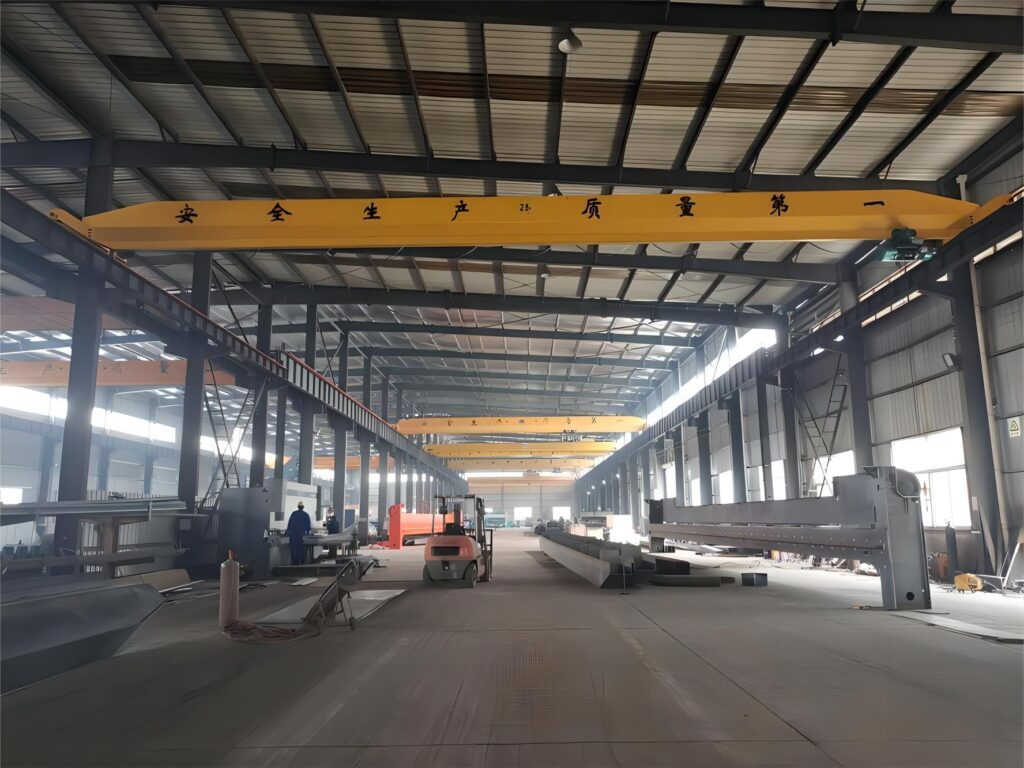
A single girder overhead crane consists of one bridge beam supporting a trolley and hoist. It is designed for light to medium-duty lifting (up to 20 tons) and is commonly used in:
- Warehouses
- Small manufacturing units
- Assembly lines
- Maintenance shops
Advantages:
✔ Lower initial cost
✔ Easier installation
✔ Requires less headroom (hoist hangs below the girder)
Limitations:
❌ Lower load capacity compared to double girder cranes
❌ Less suitable for heavy industrial use
2. What is a Double Girder Overhead Crane?
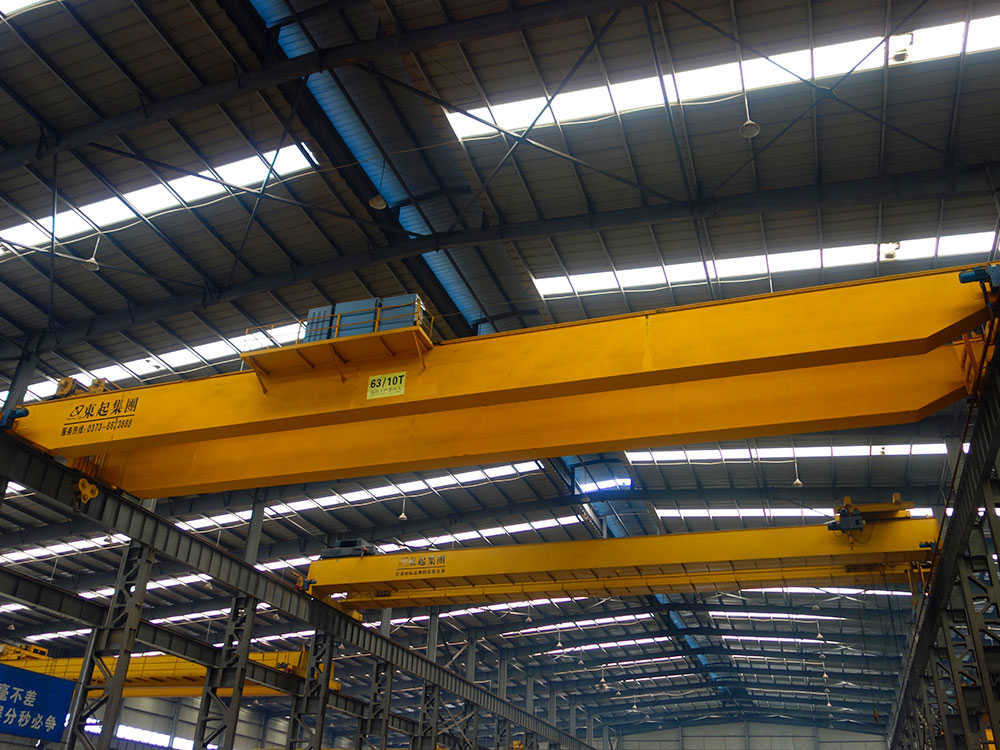
A double girder overhead crane features two parallel bridge beams, providing greater strength and stability. These cranes handle heavy-duty loads (20+ tons) and are ideal for:
- Steel mills
- Shipbuilding
- Large-scale construction
- Heavy machinery manufacturing
Advantages:
✔ Higher load capacity
✔ Longer lifespan for intensive use
✔ Can accommodate auxiliary hoists for complex lifts
Limitations:
❌ Higher initial cost
❌ Requires more installation space
3. Key Differences Between Single and Double Girder Cranes
When selecting between single and double girder overhead cranes, understanding their fundamental differences is crucial. Below we break down the key distinctions in greater detail:
3.1. Structural Design & Load Capacity
- Single Girder:
- Features one main bridge beam (typically I-beam or box girder)
- Standard capacity range: 1-20 tons (some models up to 32 tons)
- Hoist travels along the bottom flange of the girder
- Simpler construction with fewer components
- Double Girder:
- Two parallel bridge beams with a walking platform between them
- Standard capacity range: 5-550+ tons (industrial models can exceed 1,000 tons)
- Hoist travels on rails mounted on top of girders
- More complex design with additional bracing and reinforcement
Technical Insight: Double girder cranes distribute load stress across two beams, significantly increasing their maximum capacity while reducing deflection.
3.2. Span & Height Efficiency
- Single Girder:
- Optimal span range: 5-30 meters
- Better vertical clearance (hook height advantage)
- Minimum approach: Hoist can reach closer to walls
- Double Girder:
- Handles longer spans (up to 50+ meters effectively)
- Loses ~1-1.5m of hook height due to girder depth
- Requires more side clearance for end trucks
Workspace Tip: For facilities with height restrictions but needing moderate spans, single girder often provides better hook coverage.
3.3. Cost Analysis Breakdown
| Single Girder | Double Girder | |
|---|---|---|
| Initial Purchase Price | $10,000-$50,000 | $30,000-$200,000+ |
| Installation Cost | 20-30% lower | Higher (requires more structural support) |
| Operating Costs | Lower energy use | Higher power requirements |
| Maintenance Costs | Simpler, fewer parts | More complex, higher long-term costs |
| Lifespan | 15-20 years (moderate use) | 25-30+ years (heavy-duty) |
Financial Note: While double girder cranes cost more upfront, their durability often provides better lifetime value for intensive operations.
3.4. Performance & Operational Factors
- Speed & Precision:
- Single girder: Faster traverse speeds (up to 60 m/min)
- Double girder: Slower but more precise heavy load positioning
- Duty Cycle:
- Single girder: Suitable for Class A (standby) to C (moderate) service
- Double girder: Designed for Class D (heavy) to F (continuous) service
- Customization Options:
- Single girder: Limited add-ons
- Double girder: Can integrate:
- Auxiliary hoists
- Magnet/grapple attachments
- Automated control systems
3.5. Installation & Infrastructure Requirements
- Foundation Needs:
- Single girder: Lighter (50-70% of double girder weight)
- Double girder: Requires reinforced support columns/runways
- Electrical Systems:
- Single girder: Often uses festoon systems
- Double girder: Typically requires conductor bars
- Environmental Adaptability:
- Single girder: Best for standard indoor conditions
- Double girder: Better for:
- High temperatures (foundries)
- Corrosive environments
- Outdoor applications
Pro Tip: Always conduct a professional structural analysis before installation – building modifications for double girders can add 15-40% to project costs.
This detailed comparison highlights why heavy industries typically require double girder systems, while most general manufacturing facilities find single girder cranes perfectly adequate. The choice ultimately depends on your specific operational demands and growth projections.
4. How to Choose the Right Crane for Your Workshop
Step 1: Assess Your Load Requirements
- If lifting under 20 tons, a single girder crane is sufficient.
- For heavy-duty (20+ tons), opt for a double girder crane.
Step 2: Consider Workspace Dimensions
- Measure ceiling height and span length.
- Single girder cranes save headroom, while double girders need more space.
Step 3: Evaluate Budget Constraints
- Single girder: Lower initial cost, good for startups.
- Double girder: Higher upfront cost but better ROI for heavy industries.
Step 4: Future Scalability
- Will your lifting needs grow? A double girder crane offers more flexibility.
5. Common Applications for Each Crane Type
5.1 Single Girder Overhead Crane Applications
A. Light Manufacturing & Assembly
- Automotive Components: Handling sub-assemblies (1-10 ton range)
- Electronics Production: Moving delicate equipment with precision
- Appliance Manufacturing: Positioning washers, refrigerators, etc.
B. Warehousing & Logistics
- Distribution Centers: Loading/unloading pallets (3-15 ton capacity)
- Cold Storage: Food processing facilities (stain steel models)
- Package Handling: Parcel sorting operations with grab attachments
C. Maintenance & Repair Facilities
- Machine Shops: Positioning lathes/milling machines
- Vehicle Maintenance: Engine hoisting in truck garages
- Power Plants: Turbine component servicing
D. Specialized Environments
- Clean Rooms: Pharmaceutical production (low particulate models)
- Art Studios: Large sculpture positioning
- Theater Stages: Moving set pieces (quiet operation versions)
Case Example: A 5-ton single girder crane in an auto parts warehouse handles 200+ lifts daily with minimal maintenance for 15+ years.
5.2 Double Girder Overhead Crane Applications
A. Heavy Primary Industries
- Steel Mills: Handling 50-300 ton coils and slabs
- Foundries: Pouring molten metal (heat-shielded models)
- Shipbuilding: Positioning hull sections (100+ ton capacity)
B. Energy Sector
- Hydroelectric Plants: Turbine installation/removal
- Nuclear Facilities: Fuel rod handling (precision models)
- Wind Turbine Assembly: Nacelle positioning
C. Mega-Construction Projects
- Bridge Building: Precast segment installation
- High-Rise Construction: Steel beam placement
- Tunnel Boring: Segment ring assembly
D. Special Heavy Applications
- Aerospace: Fuselage movement in assembly halls
- Railcar Manufacturing: Complete car body handling
- Mining Equipment: Dragline component maintenance
Case Example: A 250-ton double girder crane in a shipyard lifts fully outfitted ship modules with millimeter precision using laser guidance systems.
5.3 Industry-Specific Configuration Examples
Food Processing:
- Single girder
- Stainless steel construction
- Washdown protection
- 3-10 ton capacity
Automotive Press Lines:
- Double girder
- 15-30 ton capacity
- High duty cycle (FEM 3m)
- Quick-change tooling attachments
Scrap Yards:
- Double girder
- 20-50 ton capacity
- Magnet/grab combos
- Reinforced against impact
Paper Mills:
- Either type based on roll weight
- Corrosion-resistant
- Spark-proof electricals
- 5-25 ton typical
5.4 Emerging Application Trends
A. Automated Smart Factories
- Single girder cranes with:
- RFID load tracking
- Automated storage/retrieval
- Cloud-based monitoring
B. Green Energy Sector
- Double girder cranes for:
- Offshore wind turbine assembly
- Battery gigafactories
- Hydrogen tank handling
C. Micro-Load Precision Handling
- Compact single girders for:
- Semiconductor wafer transport
- Medical device assembly
- Optical component manufacturing
Selection Matrix by Industry
| Industry | Recommended Type | Key Features | Typical Capacity |
|---|---|---|---|
| Machine Shops | Single | Precision controls | 1-5 tons |
| Steel Service Centers | Double | Magnet options | 10-50 tons |
| Aerospace | Double | Clean room | 5-100 tons |
| Recycling Plants | Double | Grapple attachments | 15-30 tons |
| Pharmaceutical | Single | Hygienic design | 0.5-3 tons |
| Power Generation | Double | Explosion-proof | 25-500+ tons |
Expert Insight: Many facilities now implement hybrid solutions – single girder cranes for routine handling with a central double girder unit for heavy lifts, optimizing both space and capital investment.
6. Conclusion
Choosing between a single girder and double girder overhead crane depends on:
- Load requirements
- Workspace limitations
- Budget
- Future expansion plans
For light to medium loads, a single girder crane is cost-effective. For heavy industrial use, a double girder crane provides durability and higher capacity.
Need expert advice? Consult Dongqi crane specialist to find the best fit for your workshop!
7. FAQs
Q1: Can a single girder crane be upgraded to a double girder later?
A: No, the structural design differs. You’d need a new crane system.
Q2: Which crane is better for high-temperature environments?
A: Double girder cranes handle harsh conditions better due to their robust build.
Q3: What safety features should I look for?
A: Overload protection, emergency brakes, and anti-collision systems are essential.
