
QB Series Explosion-Proof Cranes: Engineered for Safety in the Chemical Industry
In the high-stakes environment of the chemical industry, where volatile gases, vapors, and combustible dust are part of daily operations, standard material handling equipment presents an unacceptable risk. A single spark can lead to catastrophic consequences. For facilities handling flammable substances, the CE Certificate QB Explosion-Proof Overhead/Bridge Crane is not merely a piece of equipment—it is a fundamental component of your plant’s safety infrastructure. Designed specifically for hazardous zones, this crane ensures that essential lifting and transportation tasks are performed with maximum safety and reliability, protecting both your personnel and your assets.
Understanding the Critical Need for Explosion-Proof Cranes
Chemical plants, refineries, and pharmaceutical manufacturing facilities are often classified as hazardous areas due to the potential for explosive atmospheres. In such environments, conventional cranes pose a significant ignition risk through electrical sparks, hot surfaces, or mechanical friction. An explosion-proof crane is engineered from the ground up to eliminate these risks. Every component, from the motor and electrical controls to the braking system and structural connections, is designed to prevent the ignition of surrounding flammable materials. For industries dealing with substances like solvents, fuels, or fine chemical powders, investing in a certified explosion-proof crane is a non-negotiable aspect of operational safety and regulatory compliance.
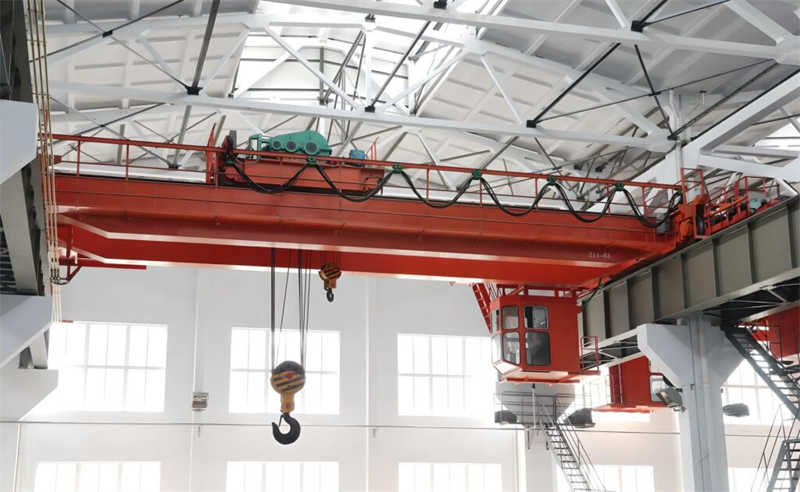
Core Engineering and Design Principles
The QB series explosion-proof crane’s safety is rooted in its meticulous engineering, which adheres to stringent international standards.
- Flameproof Enclosure (Ex d) Design: The primary protection method for the crane’s electrical components is the flameproof enclosure. Motors, control panels, and junction boxes are housed in rugged, sealed casings strong enough to contain an internal explosion without letting flames or hot gases escape to ignite the external atmosphere.
- Elimination of Ignition Sources: Beyond enclosures, the design focuses on preventing sparks and excessive heat. This includes using special non-sparking materials for gears and brakes, ensuring all electrical connections are perfectly sealed, and rigorously controlling the surface temperature of all components.
- Robust Structural Integrity: Built as a double girder overhead crane, the QB series offers superior strength and stability compared to single-girder designs. This robust box-beam construction is essential for the smooth, sway-free movement of loads, which is critical in congested and hazardous plant environments.
Technical Specifications and Performance Data
The QB Explosion-Proof Crane is designed for versatility within a defined safety framework. The model referenced in the title (Cap. 5-10t) covers the light to medium capacity range, which is common for handling containers, reactors, drums, and packaged materials in chemical plants.
Table: Key Technical Parameters for QB Explosion-Proof Cranes
| Parameter | Specification for 5-10t Models | Notes |
|---|---|---|
| Lifting Capacity | 5, 10 Tons | Also available in higher capacities up to 75t. |
| Span | 10.5 to 31.5 Meters | Customizable to fit your workshop layout. |
| Lifting Height | Up to 18 Meters | Standard height; can be engineered to specific requirements. |
| Lifting Speed | ~5.0 m/min | Optimized for controlled, precise handling. |
| Crane Travel Speed | ~22.3 m/min | Efficient traverse speed within safe limits. |
| Work Duty Class | A4, A5 | Suitable for intermediate service with regular but not continuous use. |
| Ambient Temperature | -20°C to +40°C | Designed to operate in a wide range of industrial environments. |
| Explosion-Proof Mark | Ex d IIB T4 or Ex d IIC T4 | Certified for gas groups IIB (e.g., ethylene) or IIC (e.g., hydrogen). |
| Hazardous Zone | Zone 1 & Zone 2 | Suitable for areas where an explosive atmosphere is likely or possible during normal operation. |
Key Standards and Certifications: The crane meets critical standards like GB3836.2 (for flameproof ‘d’ equipment) and JB/T5897 for explosion-proof bridge cranes. The CE Certificate confirms its compliance with the essential health, safety, and environmental protection requirements of the European Union, which is a globally recognized benchmark for quality and safety.
Primary Applications in the Chemical and Related Industries
The QB Explosion-Proof Crane is indispensable in environments where safety is paramount. Its typical applications include:
- Chemical Production Plants: Handling raw materials, intermediate products, and finished chemicals within reaction areas, mixing halls, and packaging zones.
- Paint & Coating Manufacturing: Safe operation in areas with flammable solvent vapors and combustible dust from powders.
- Pharmaceutical Facilities: Lifting equipment and materials in cleanrooms or areas where alcohol or other flammable solvents are used.
- Oil & Gas Refineries: Maintenance work, handling valves, pipes, and other equipment in potentially explosive atmospheres.
- Wastewater Treatment Plants: Handling equipment and materials in areas where combustible gases may be present.
Operational Benefits and Safety Features
Choosing a Dongqi QB crane brings tangible operational advantages that go beyond basic safety compliance:
- Enhanced Safety Systems: Features like dual support brakes on the hoist provide failsafe load holding. Explosion-proof limit switches, overload limiters, and anti-collision devices are integrated to prevent operational accidents.
- Multiple Control Options: Operators can control the crane via a pendant station, from an explosion-proof cabin, or using a certified remote control system, allowing them to position themselves safely away from the load or hazardous area.
- Reliable and Smooth Operation: Components are selected and systems are tuned for reliability and smooth acceleration/braking, which minimizes mechanical shock and potential for spark generation.
- Reduced Operational Risk: By fundamentally removing ignition hazards, these cranes significantly lower the plant’s overall risk profile, which can positively impact insurance costs and regulatory standing.
Conclusion: A Strategic Investment in Safety and Productivity
For any chemical industry stakeholder, the decision to install an explosion-proof overhead crane is a strategic investment in long-term operational resilience. The CE-certified QB Explosion-Proof Crane from Dongqi represents a synthesis of robust engineering, rigorous safety standards, and practical design tailored for hazardous environments. It transforms a critical operational risk point into a guaranteed safe process, enabling you to maintain productivity without compromising on the safety of your workforce or facility.
When evaluating your material handling needs, consider not just the lifting capacity, but the atmosphere in which the crane will operate. For Zone 1 and Zone 2 hazardous areas, the QB series provides the assurance and certification necessary for peace of mind.
To discuss how a customized QB Explosion-Proof Crane can be integrated into your specific chemical plant layout and operational process, contact Dongqi Crane’s engineering team for a detailed consultation.
