
Low Clearance Hoist Single Beam Overhead Crane with VFD Control: An Ideal Solution for Space-Constrained Facilities
In the world of material handling, maximizing efficiency in limited spaces remains an ongoing challenge for many industrial facilities. The integration of VFD control systems with low clearance hoist technology represents a significant engineering advancement that addresses this challenge head-on. This article explores the technical specifications, benefits, and applications of Low Clearance Hoist Single Beam Overhead Cranes with VFD Control—a combination that offers enhanced performance for space-constrained operations.
The Need for Space-Efficient Lifting Solutions
In many industrial settings, overhead clearances often limit the type of lifting equipment that can be installed and effectively operated. Traditional overhead cranes require substantial vertical space for their operation, which can be problematic in facilities with low ceilings or multiple overhead obstructions. This is where the specialized design of low clearance hoists becomes invaluable.
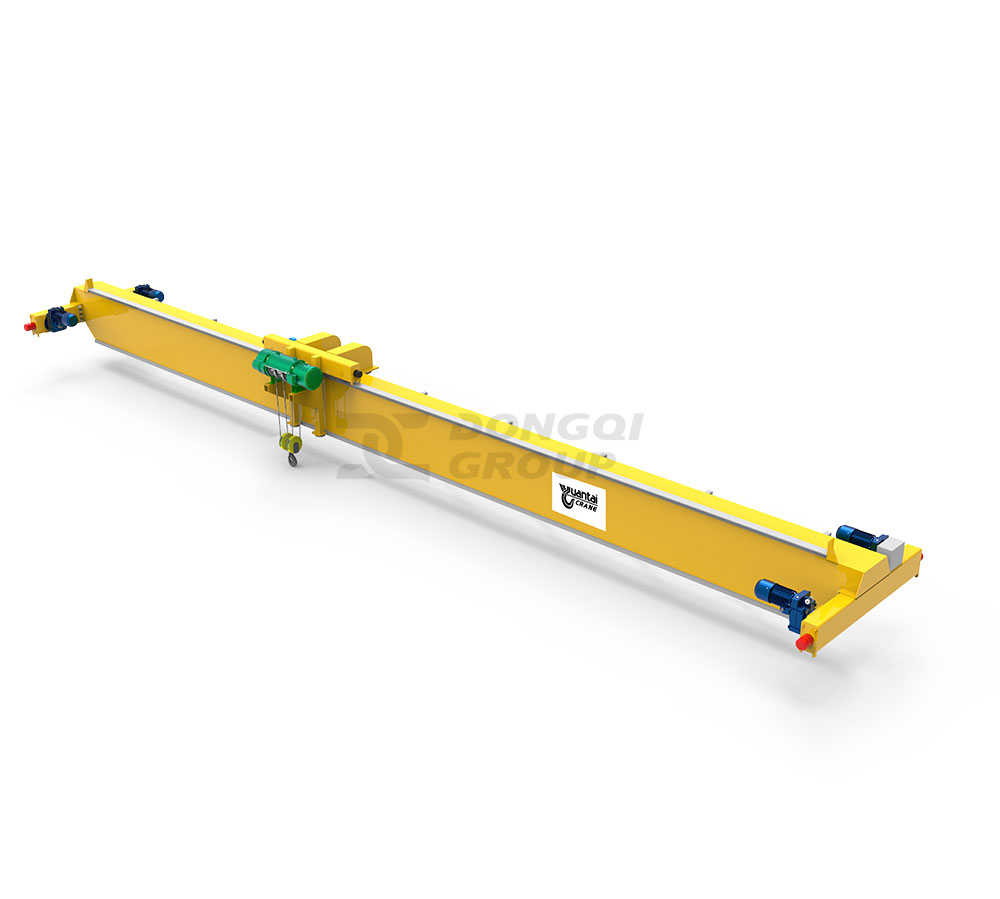
Low clearance hoists, also known as low headroom hoists, are specifically engineered to maximize lifting height in buildings with restricted vertical space. Unlike conventional hoists that are suspended below the beam, these systems are configured to operate along the side of the main beam, with their wheels traveling along the lower flange. This innovative installation method significantly reduces the hook upper limit dimensions, providing greater lifting height within the same vertical space .
When combined with Variable Frequency Drive (VFD) technology, these cranes transform into precision handling systems capable of meeting the most demanding material handling requirements while operating efficiently in confined spaces.
Key Technical Specifications
Low Clearance Hoist Single Beam Overhead Cranes with VFD Control typically feature the following specifications:
- Lifting Capacity: Ranging from 1 to 20 tons for standard models, with custom designs available for higher capacities
- Span Length: Can be customized from 4 to 31.5 meters to accommodate various facility layouts
- Lifting Height: Generally ranges from 6 to 30 meters, customizable based on specific requirements
- Work Duty: Typically classified as A3 or A4, suitable for light to medium duty cycles
- Power Supply: Compatible with 220V~660V, 50-60Hz, 3-phase AC power systems
- Control Methods: Support floor control, remote control, and cabin operation
The space efficiency of these systems becomes evident when comparing hook approach distances. In a case study comparing different types of 5-ton single girder cranes with a 10.5-meter span, the low headroom model demonstrated a hook upper limit size of only 750mm compared to 1120mm for a standard LD crane—providing approximately 370mm of additional usable lifting height .
Advantages of VFD Control in Crane Systems
The integration of Variable Frequency Drive technology brings numerous operational benefits to low clearance overhead cranes:
1. Enhanced Control and Precision
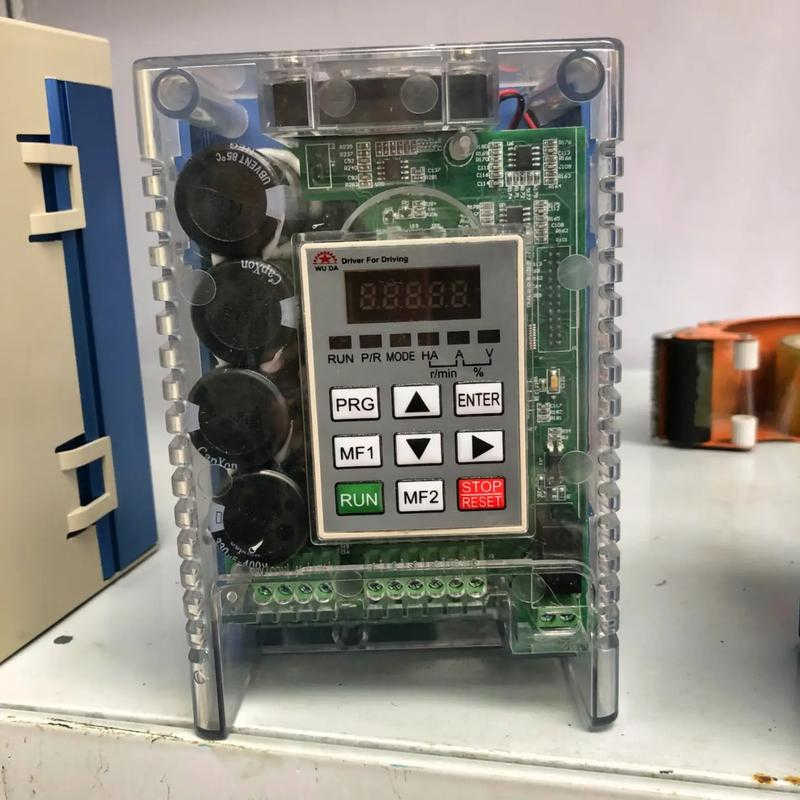
VFD systems allow for precise speed control of all crane motions—hoisting, traversing, and traveling. Unlike conventional contactor-based controls that offer only limited speed options, VFDs enable smooth acceleration and deceleration through programmable ramps. This precise control is particularly valuable when handling delicate loads or when exact positioning is critical .
2. Reduced Mechanical Stress and Maintenance
The programmable acceleration and deceleration times in VFD-controlled cranes significantly reduce stress on mechanical components including:
- Drivetrain elements such as couplings, keyways, and gearboxes
- Trolley, end trucks, and wheels
- Runway beams and structural supports
- Wire rope or chain used to support loads
By eliminating abrupt starts and stops, VFD controls extend the service life of these components, reducing maintenance requirements and downtime.
3. Significant Brake Wear Reduction
In conventional crane systems, mechanical brakes engage every time the control button is released, leading to regular wear and tear. In high-use systems, brakes may need replacement every few months or even weeks .
With VFD systems, once the control button is released, the drive controls the deceleration of the crane, slowing and stopping it in a controlled manner. The mechanical brakes then function primarily as parking brakes rather than stopping brakes. This operational change dramatically extends brake service life and reduces associated maintenance costs .
4. Energy Efficiency
VFD-controlled cranes consume power only when the motor requires it, unlike conventional systems that continuously waste energy through resistor banks. This targeted power usage can reduce energy consumption by 20%-30%, lowering operational costs and improving overall efficiency .
5. Advanced Safety Features
VFD systems incorporate multiple programmable safety functions, including:
- Load limiting capabilities that can detect hoist overload conditions and halt lifting operations
- Torque limiting to prevent the crane from performing lifts that could overload the motor
- Comprehensive protection against over-current, over-voltage, under-voltage, and phase loss scenarios
Applications Across Industries
The combination of space-efficient design and precise control makes these cranes ideal for various applications:
Manufacturing Facilities
In manufacturing plants where overhead space is often occupied by utility lines, ventilation systems, and lighting, low clearance cranes provide essential lifting capabilities without interfering with existing infrastructure. The VFD control enables precise positioning of components during assembly processes .
Warehousing and Logistics
For warehouses with limited vertical clearance, these cranes maximize available lifting height, allowing for better space utilization and more efficient material handling operations. The precise control facilitates safe loading and unloading of goods .
Older Industrial Buildings
Many historical industrial facilities feature lower ceiling heights than modern standards. Retrofitting these buildings with low clearance cranes enables modernization of material handling capabilities without structural modifications .
Specialized Environments
Explosion-proof versions of these cranes are available for hazardous environments, with protection grades of ExdⅡBT4 or ExdⅡCT4, suitable for Zone 1 & Zone 2 hazardous areas .
Cost Considerations
The pricing of Low Clearance Hoist Single Beam Overhead Cranes with VFD Control varies based on specifications:
- For a 1-ton capacity crane with an 8-meter span: Approximately $1,953
- For a 5-ton capacity crane with a 16-meter span: Approximately $4,457
- For a 10-ton capacity crane with a 20-meter span: Approximately $7,298
While the initial investment for a VFD-equipped low clearance crane is typically 15-30% higher than conventional models, the long-term operational savings through reduced maintenance, energy efficiency, and decreased downtime generally justify the premium within a reasonable payback period .
Implementation Considerations
When planning to implement a Low Clearance Hoist Single Beam Overhead Crane with VFD Control, several factors deserve attention:
Facility Assessment
A thorough evaluation of existing structures is essential. Key measurements include:
- Headroom clearance: Vertical distance from the lowest obstruction to the highest point of the crane
- Runway clearance: Minimum of 3 inches longitudinally and 2 inches laterally as per OSHA regulations
- Obstruction clearance: Adequate space around the crane’s working area to prevent collisions
Operational Training
Transitioning from conventional crane controls to VFD systems requires an adjustment period for operators. The different control response—particularly the programmed deceleration time that may allow the crane to travel an additional 5-10 feet after releasing the control button—necessitates proper training to ensure safe operation .
Customization Options
Reputable manufacturers offer various customization possibilities to match specific operational needs:
- Explosion-proof configurations for hazardous environments
- Multiple control options including pendant, cabin, and remote controls
- Specialized lifting attachments for handling specific load types
Conclusion
The integration of low clearance hoist design with VFD control technology creates a compelling solution for facilities where space constraints and precise material handling are critical concerns. This combination delivers operational benefits that extend far beyond simple space savings, including reduced maintenance costs, improved energy efficiency, enhanced safety, and superior load control.
For businesses operating in space-constrained environments, investing in a Low Clearance Hoist Single Beam Overhead Crane with VFD Control represents not just a practical equipment acquisition, but a strategic improvement to material handling capabilities that can yield significant long-term operational advantages.
As industries continue to optimize their operations within existing footprints, the demand for these space-efficient, high-performance lifting solutions is likely to grow, solidifying their position as valuable assets in the modern industrial landscape.
