
Light Duty Single Girder Overhead Cranes: The Ideal Solution for Precision Glass and Mold Lifting
Executive Summary
In the demanding environments of glass manufacturing and mold handling, precision material handling is not just a convenience—it’s a critical component of operational success. Light duty single girder overhead bridge cranes have emerged as the preferred solution for these specialized applications, offering a unique combination of precision control, space efficiency, and cost-effectiveness. This comprehensive guide explores the technical specifications, operational benefits, and selection criteria for these versatile cranes, with particular focus on their application in glass and mold industries. Dongqi Crane’s expertise in providing customized lifting solutions ensures that manufacturers can achieve new levels of efficiency and safety in their material handling processes while protecting their valuable and often delicate products from damage during transportation and placement.
1 Introduction to Light Duty Single Girder Overhead Cranes
1.1 Understanding the Basic Configuration
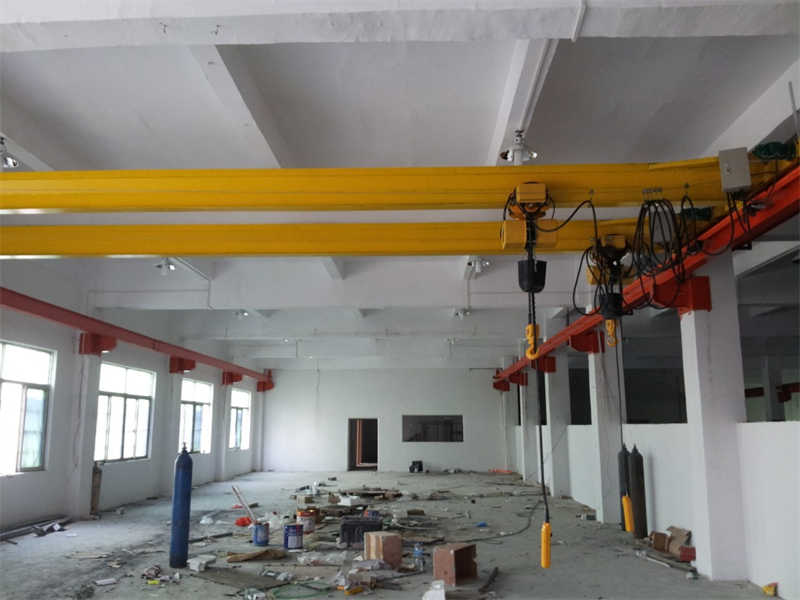
Light duty single girder overhead cranes represent a category of lifting equipment characterized by their simplified structure and optimized design for handling loads typically under 20 tons. As the name suggests, these cranes feature a single primary girder that forms the main bridging element between the runway systems. The fundamental configuration consists of several key components: the main beam, end trucks or end carriages, hoist mechanism, traveling mechanisms, and electrical control system. The electric hoist moves horizontally along the bottom flange of the main beam, which is specifically designed to support both the hoist and the load being lifted.
These cranes are engineered with an emphasis on operational efficiency and space optimization, making them particularly suitable for facilities with height restrictions or limited floor space. The overall design philosophy centers on providing reliable performance while minimizing structural complexity, which directly translates to reduced installation and maintenance requirements. According to industry specifications, these cranes typically offer lifting capacities ranging from 1 to 20 tons, with some models capable of handling up to 25 tons under specific conditions .
1.2 Key Advantages for Industrial Applications
The popularity of light duty single girder overhead cranes in industrial applications stems from several distinct advantages that align perfectly with the needs of modern manufacturing facilities:
- Compact and Space-Saving Design: The single girder configuration creates a low-profile system that maximizes available vertical space, a crucial consideration in facilities with height limitations. This design allows for higher hook approaches and better utilization of the existing building structure without requiring extensive modifications.
- Economic Efficiency: With reduced structural components and simplified installation requirements, these cranes offer significant cost advantages over double girder alternatives. The economic benefits extend beyond initial acquisition costs to include lower operational expenses, minimized maintenance requirements, and reduced energy consumption.
- Operational Flexibility: Light duty single girder cranes support various operation modes including remote pendant control, radio remote control, and cab operation. This flexibility allows manufacturers to select the control method that best aligns with their specific operational workflows and safety requirements.
- Simplified Maintenance: The straightforward mechanical design and accessible components significantly reduce maintenance complexity. Routine inspections and preventive maintenance can be performed with minimal downtime, contributing to higher overall equipment effectiveness and production continuity.
- Customization Potential: While representing a standardized product category, these cranes offer considerable customization flexibility to address specific application requirements. From specialized lifting attachments to environmental adaptations, manufacturers can tailor the crane specifications to match their unique operational challenges.
2 Technical Specifications and Design Features
2.1 Comprehensive Technical Parameters
Understanding the technical specifications of light duty single girder overhead cranes is essential for proper selection and application. The following parameters represent industry standards for these lifting systems:
Load Capacity and Span Characteristics
Light duty single girder cranes typically offer load capacities ranging from 1 to 20 tons, with some specialized models handling up to 25 tons . The capacity selection should be based on not only the weight of the normal loads but also factor in any potential future requirements or unusual loading conditions. The span, defined as the distance between the runway tracks, generally ranges from 7.5 to 31.5 meters, with custom-designed systems capable of exceeding these standard parameters . The relationship between capacity and span is critical—as the span increases, the maximum attainable capacity may decrease due to structural deflection considerations.
Lifting Height and Speed Parameters
The lifting height, representing the maximum vertical distance the hook can travel, typically ranges from 6 to 30 meters, depending on the specific application requirements and building constraints . Standard models commonly offer lifting heights of 6, 9, 12, 18, 24, and 30 meters, with custom heights available for specialized applications. Speed characteristics include lifting speeds generally between 7-8 m/min for standard models, with variable speed controls available for precision applications. Cross traveling speed (trolley movement) and long traveling speed (bridge movement) typically operate at 20 m/min as standard, with options for higher speeds up to 30, 45, 60, or 75 m/min based on operational requirements .
Table: Standard Technical Parameters for Light Duty Single Girder Overhead Cranes
| Parameter | Standard Range | Customization Options |
|---|---|---|
| Load Capacity | 1-20 tons | Up to 25 tons |
| Span | 7.5-31.5 m | Beyond 31.5 m available |
| Lifting Height | 6-30 m | Specific heights based on need |
| Lifting Speed | 7-8 m/min | Variable speed controls |
| Travel Speed | 20 m/min | Up to 75 m/min |
| Work Duty | A3-A5 | Higher classes available |
2.2 Critical Design Features for Specialized Applications
Structural Integrity and Material Selection
The structural design of light duty single girder cranes incorporates high-quality steel materials that provide exceptional durability while maintaining a lightweight profile. The main girder often utilizes a box-type design or rolled I-beam section, engineered to resist deflection under load and maintain stability during operation. Advanced manufacturers employ computer-aided engineering tools to optimize the structural geometry, ensuring maximum strength with minimal weight. For applications in corrosive environments, such as glass manufacturing facilities where exposure to moisture and chemicals is common, anti-corrosion treatments including specialized paint systems, galvanization, or stainless steel components are incorporated to extend service life and maintain structural integrity .
Precision Control Systems
Modern light duty single girder cranes incorporate advanced control technologies that enable precise load positioning—a critical requirement when handling expensive glass products or precision molds. Variable frequency drives (VFDs) allow for smooth acceleration and deceleration, eliminating load swing and enabling pinpoint placement accuracy. These control systems often include programmable logic controllers (PLCs) that can be integrated with broader facility automation systems. For specialized applications, additional features such as anti-sway technology, micro-speed precision controls, and automated positioning systems can be incorporated to enhance operational accuracy and repeatability.
Environmental Adaptations
For specific operating environments, light duty single girder cranes can be equipped with specialized features to address unique challenges. In high-temperature applications common to glass manufacturing, heat-resistant components including specialized electrical wiring, high-temperature lubricants, and thermal barriers protect critical elements from environmental extremes. Similarly, in environments where explosive gases or dust may be present, explosion-proof configurations with specially enclosed electrical components, non-sparking aluminum alloys, and advanced grounding systems ensure safe operation . These adaptations demonstrate the versatility of light duty single girder cranes in addressing diverse industrial requirements while maintaining operational reliability and safety.
3 Applications in Glass and Mold Industries
3.1 Mold Handling in Glass Manufacturing
The process of mold handling represents one of the most critical applications for light duty single girder overhead cranes in the glass industry. Molds used in glass manufacturing are responsible for shaping molten glass into precise forms—from simple containers like bottles and jars to complex decorative items—and their proper handling directly impacts both product quality and production efficiency. These molds present unique handling challenges: they are often heavy and delicate simultaneously, requiring careful movement to avoid damage that could compromise product quality . The value of precision molds and the critical timing of production processes make reliable crane operation essential.
In glass manufacturing environments, light duty single girder cranes address several specific mold handling challenges:
- High-Temperature Resistance: Molds used in glass manufacturing are often exposed to extreme temperatures, both from the molten glass and during pre-heating processes. Light duty single girder cranes configured for these applications incorporate heat-resistant components and materials that maintain structural integrity and operational reliability in elevated temperature environments .
- Precision Placement Requirements: The accurate positioning of molds is essential for maintaining product consistency and preventing defects. The precise control capabilities of modern light duty single girder cranes enable operators to position molds with millimeter-level accuracy, ensuring proper alignment and preventing damage during placement operations.
- Size and Weight Variability: Glass manufacturing facilities typically utilize molds in various sizes and weights, from small container molds weighing a few hundred kilograms to large specialty glass molds exceeding several tons. The adaptable design of light duty single girder cranes allows them to handle this wide range of mold types efficiently within a single facility.
3.2 Production Workflow Integration
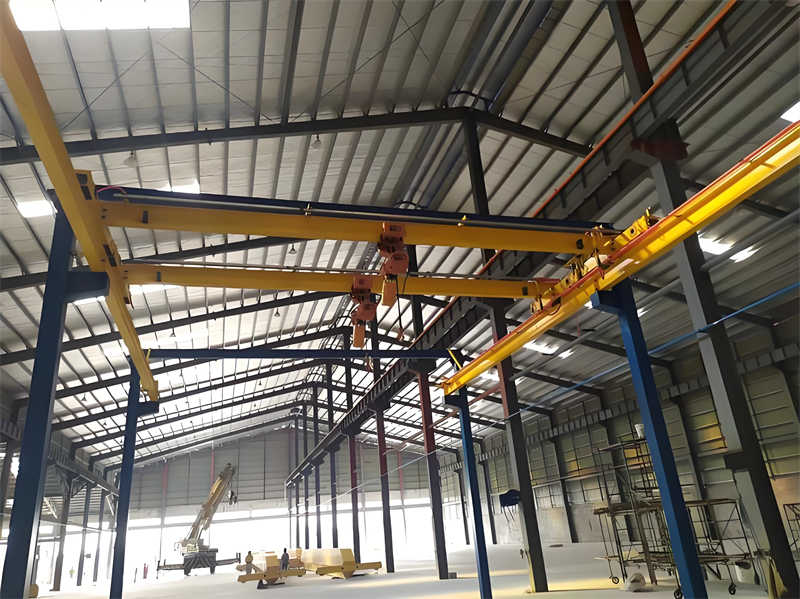
Light duty single girder overhead cranes integrate seamlessly into various stages of the glass and mold production workflow, providing material handling support throughout the manufacturing process:
Mold Preparation and Storage
Raw or cleaned molds must be transported from storage areas to production lines, often requiring precise stacking and retrieval from high-density storage configurations. The space-efficient design of light duty single girder cranes makes them ideal for these applications, as they can operate effectively in areas with limited clearance while handling molds gently to prevent surface damage that could transfer to finished glass products.
Production Line Support
During active production, molds move through various stages including coating, pre-heating, casting/forming, cooling, and cleaning. Light duty single girder cranes provide the flexible material transfer capabilities needed to move molds between these stages efficiently, adapting to changing production requirements and minimizing downtime between process steps. Their smooth operation and precise control protect both the molds and the partially formed glass products throughout these handling operations.
Maintenance and Repair Operations
Regular maintenance, repair, and refurbishment of molds are essential for maintaining product quality. Light duty single girder cranes facilitate these processes by enabling safe removal of molds from production areas to maintenance stations, allowing for careful positioning during repair operations, and returning refurbished molds to service. The versatile lifting capabilities of these cranes support not only mold handling but also the movement of maintenance equipment and replacement components, making them valuable multi-purpose tools in glass manufacturing facilities.
4 Selection Criteria for Glass and Mold Applications
4.1 Assessing Operational Requirements
Selecting the appropriate light duty single girder overhead crane for glass or mold handling applications requires careful assessment of specific operational requirements. Several key factors must be considered to ensure the selected crane will perform reliably and efficiently in its intended application:
Production Scale and Capacity Requirements
The scale of production operations directly influences crane selection criteria. For small-scale operations typically handling molds in the 1-10 ton range, compact single girder cranes with standard features provide adequate capacity and performance. Medium-scale operations with molds ranging from 5-20 tons require more robust systems with enhanced control capabilities and potentially higher duty cycles. Large-scale operations handling molds exceeding 20 tons need heavy-duty single girder configurations with advanced control systems and reinforced structural elements . Understanding not only current capacity requirements but also anticipated future needs ensures the selected crane system can support business growth without requiring premature replacement.
Spatial Considerations and Facility Layout
The physical characteristics of the facility significantly impact crane selection and configuration. Key spatial considerations include:
- Headroom Limitations: The available vertical space between the floor and overhead structures determines whether standard, low-headroom, or specialized compact crane configurations are required. Light duty single girder cranes offer particular advantages in low-clearance applications where maximizing hook height is essential.
- Span Requirements: The distance between runway rails must be carefully calculated to provide adequate coverage of the working area while respecting structural limitations of the building. Optimal span selection ensures complete area coverage without unnecessary structural bulk that increases cost and weight.
- Obstruction Management: The presence of permanent obstructions such as columns, equipment, or ventilation systems may require customized crane configurations including specialized end truck designs or modified bridge structures to ensure unimpeded operation throughout the entire working area.
4.2 Performance and Control Specifications
Speed Requirements and Operational Efficiency
The operational speeds of a crane—including lifting, cross travel, and long travel movements—directly impact production efficiency and must be carefully matched to application requirements. For glass and mold handling applications, speed must be balanced against precision requirements, with variable speed controls typically necessary to provide both rapid transit when moving between stations and precise slow-speed positioning when placing loads. Standard light duty single girder cranes typically offer lifting speeds of 7-8 m/min, travel speeds of 20 m/min, with options for higher performance up to 75 m/min for facilities where rapid material transfer is critical to production throughput .
Control System Sophistication
The level of control sophistication required depends largely on the precision needs of the application. Basic pendant control systems provide cost-effective operation for standard applications, while radio remote controls offer enhanced operator mobility and visibility. For the highest precision requirements in critical glass and mold handling applications, advanced control systems featuring variable frequency drives, precision positioning, and potentially even automated operation may be justified. These advanced control systems enable operators to manipulate delicate molds and glass products with the precision necessary to prevent damage and ensure perfect placement every time.
Duty Cycle and Service Classification
The intended usage intensity of the crane is classified according to established duty cycle standards ranging from A3 (light service) to A5 (medium service) and beyond. For most glass and mold handling applications, duty classifications of A3 to A5 are typical, representing usage patterns from occasional operation with light loads to regular operation with moderate loads . Understanding the anticipated usage pattern ensures the selected crane has adequate structural margins, motor capabilities, and electrical system capacity to deliver reliable performance throughout its operational lifespan.
Table: Crane Selection Guidelines Based on Production Scale
| Production Scale | Recommended Capacity | Crane Type | Key Features |
|---|---|---|---|
| Small-Scale | 1-10 tons | Compact single girder | Precision control, space-efficient design |
| Medium-Scale | 5-20 tons | Standard single girder | Variable speed, moderate duty cycle |
| Large-Scale | 20-50 tons | Heavy-duty single girder | Reinforced structure, advanced controls |
5 Comparison with Other Crane Types
5.1 Single Girder vs. Double Girder Cranes
When selecting overhead crane systems for glass and mold handling applications, understanding the differences between single and double girder configurations is essential for making an informed decision. Each configuration offers distinct advantages suited to different operational requirements:
Structural and Performance Characteristics
Single girder cranes feature a simpler structure with one main beam supporting the hoist and trolley assembly, while double girder configurations utilize two parallel main beams with the trolley running between them. This fundamental structural difference creates several important performance distinctions:
- Hook Height: Single girder designs provide superior hook height in applications with limited headroom, as the hoist is mounted below the girder rather than between girders. This advantage can be critical in facilities with low ceilings where maximizing lift height is essential.
- Load Capacity: While light duty single girder cranes typically handle capacities up to 20 tons, double girder configurations can support significantly heavier loads, often exceeding 50 tons for standard models and reaching 450 tons for specialized heavy-duty systems .
- Structural Rigidity: Double girder designs offer enhanced stiffness and reduced deflection under load, which can be beneficial for applications requiring extreme positioning accuracy or handling very long loads where minimal beam deflection is critical.
Economic and Operational Considerations
The choice between single and double girder configurations also involves important economic and operational factors:
- Cost Efficiency: Single girder cranes typically require lower initial investment due to simpler structural requirements, reduced components, and easier installation. This cost advantage extends throughout the equipment lifecycle with lower maintenance requirements and reduced spare parts inventory.
- Operating Characteristics: Double girder cranes often provide smoother trolley movement and potentially higher travel speeds, which may justify their additional cost in high-throughput applications where these characteristics translate directly into productivity improvements.
- Maintenance Accessibility: The simpler structure of single girder cranes generally provides better access to components for routine maintenance and repairs, potentially reducing downtime and maintenance costs over the equipment lifespan.
For most glass and mold handling applications, light duty single girder cranes offer the optimal balance of performance, cost-effectiveness, and space efficiency, particularly in facilities where headroom limitations exist or where loads typically remain under 20 tons.
5.2 Alternative Crane Configurations
While single girder overhead cranes represent an excellent solution for many glass and mold handling applications, several alternative crane configurations may be appropriate for specific operational requirements:
Gantry Crane Systems
Gantry cranes, particularly single girder gantry configurations, offer similar benefits to overhead bridge cranes but are supported by freestanding legs that run on floor-mounted rails rather than building-mounted runways. These systems provide particular advantages in facilities where overhead support structures are insufficient for bridge crane installation or where operational flexibility is prioritized. Gantry cranes can be an ideal solution for glass and mold handling in facilities with limited overhead structure capacity or where temporary installation is required .
Jib Cranes
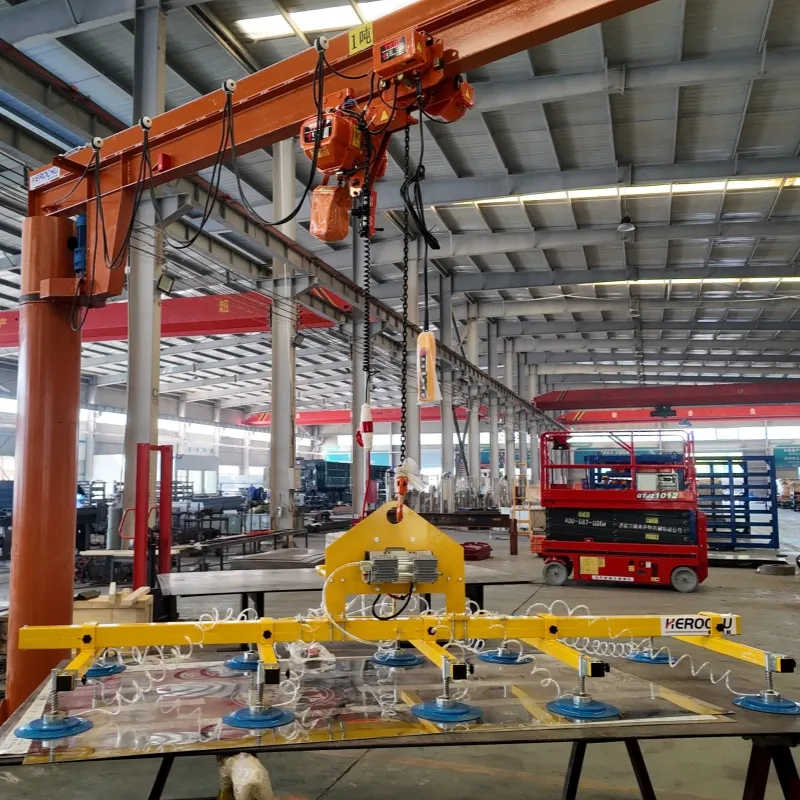
For highly localized lifting requirements within specific work cells, jib cranes offer a compact and economical solution. These systems feature a rotating arm that provides circular coverage around a fixed support point, making them ideal for loading/unloading stations, machine servicing, or localized material transfer. In glass and mold applications, jib cranes often complement larger overhead systems by handling tooling, accessories, or smaller components at specific workstations, freeing the main overhead crane for more critical movements .
Specialized Mold Handling Cranes
For operations with highly specific requirements, specialized cranes custom-designed for mold handling applications may be justified. These systems typically incorporate features such as mold-specific attachments, enhanced precision controls, temperature-resistant components, and specialized safety systems. While representing a higher initial investment, these customized solutions can deliver operational benefits that justify their cost through improved productivity, reduced product damage, and enhanced operator safety in specialized glass and mold handling applications .
6 Customization and Special Features
6.1 Application-Specific Customizations
The versatility of light duty single girder overhead cranes stems largely from their capacity for customization to address specific application requirements. For glass and mold handling applications, several specialized customizations significantly enhance performance and reliability:
Lifting Attachments and Specialized End Effectors
Standard hook-based lifting systems often prove inadequate for handling specialized glass products or precision molds, necessitating custom lifting attachments designed for specific load characteristics. These specialized attachments may include:
- Vacuum Lifters: For handling large glass panels or finished glass products where surface contact must be minimized to prevent damage or contamination.
- Custom Mold Clamps: Specifically engineered to securely grip unique mold geometries without applying damaging pressure to critical surfaces or features.
- Spreader Beams: For distributing lifting forces across wide or fragile loads to prevent deformation or damage during lifting operations.
- Rotating Devices: For repositioning molds or glass products during transportation to facilitate precise placement or access to specific features.
Environmental Adaptations
Glass manufacturing environments present unique challenges including elevated temperatures, potential chemical exposure, and airborne particulates that require specific crane adaptations:
- High-Temperature Configurations: Specialized components including heat-resistant electrical wiring, high-temperature lubricants, thermal barriers, and specialized paint systems protect crane components in elevated temperature environments commonly found near glass forming and annealing operations.
- Corrosion-Resistant Materials: For facilities where chemical exposure is common, stainless steel components, corrosion-resistant coatings, and sealed electrical elements extend equipment life and maintain operational reliability.
- Explosion-Proof Configurations: In environments where flammable vapors or combustible dust may be present, explosion-proof crane configurations with specially enclosed electrical components, non-sparking materials, and advanced grounding systems ensure safe operation .
6.2 Advanced Control and Safety Systems
Modern light duty single girder cranes can be equipped with advanced control and safety systems that enhance both operational capability and safety performance:
Precision Control Technologies
For delicate glass and mold handling applications, standard control systems often lack the precision necessary for damage-free operation. Advanced control technologies address this limitation through:
- Variable Frequency Drives: Providing smooth acceleration and deceleration to prevent load swing and enable precise positioning.
- Micro-Speed Controls: Allowing extremely slow, controlled movements for final positioning operations where millimeter-level accuracy is required.
- Programmable Logic Controllers: Enabling automated operation, repeatable positioning, and integration with broader facility automation systems.
- Anti-Sway Technology: Automatically compensating for pendulum motions that can develop during crane movement, significantly reducing positioning time and preventing collisions.
Enhanced Safety Systems
The value of molds and glass products, combined with potential safety hazards in manufacturing environments, justifies comprehensive safety systems including:
- Overload Protection: Preventing crane operation when loads exceed rated capacity, protecting both the crane structure and the load being handled.
- Limit Switches: Automatically stopping crane motion at the physical limits of travel to prevent collisions with building structures or other equipment.
- Emergency Stop Systems: Providing rapid shutdown capability from multiple locations including pendant stations, floor-mounted stations, and radio remote controls.
- Redundant Braking Systems: Ensuring reliable load control even in the event of primary brake failure, particularly critical when handling valuable molds or hazardous materials.
- Collision Avoidance Systems: Using sensors or laser positioning to prevent interference between multiple cranes operating in the same area or between cranes and fixed obstacles.
7 Dongqi Crane Solutions and Industry Applications
7.1 Comprehensive Product Range
Dongqi Crane offers an extensive range of light duty single girder overhead cranes specifically engineered to address the diverse requirements of glass and mold handling applications. Our product portfolio includes multiple distinct series, each optimized for specific operational environments and performance requirements:
LD Series – Standard Duty Cranes
The LD series represents Dongqi’s standard light duty single girder crane configuration, offering reliable performance for general material handling applications. With capacities from 1 to 20 tons and spans ranging from 7.5 to 28.5 meters, these cranes provide cost-effective lifting solutions for typical glass and mold handling operations. Standard features include versatile operation modes (floor control, remote control, or cabin operation), durable construction, and simplified maintenance access. The LD series serves as the foundation of Dongqi’s light duty crane offerings, with numerous customization options available to address specific application requirements .
AQ-LD Series – Economic Solutions
For operations prioritizing budget considerations without compromising operational reliability, the AQ-LD series offers an economic single girder crane solution suitable for small to medium-scale glass and mold handling. With capacities ranging from 1 to 25 tons and spans extending to 31.5 meters, these cranes deliver dependable performance for light to moderate duty cycles. The AQ-LD series exemplifies Dongqi’s commitment to providing value-oriented solutions while maintaining the quality and reliability standards that customers expect .
LB Series – Explosion-Proof Cranes
In glass manufacturing environments where flammable vapors or combustible dust may be present, Dongqi’s LB series explosion-proof single girder cranes provide safe, reliable operation. These specialized cranes incorporate explosion-proof electrical components, non-sparking mechanical elements, and advanced grounding systems to prevent ignition sources in hazardous environments. With explosion-proof classifications including ExdⅡBT4 and ExdⅡCT4, these cranes address the safety requirements of various hazardous environments encountered in industrial settings .
7.2 Industry-Specific Applications
Dongqi Crane’s light duty single girder overhead cranes serve diverse applications across the glass and mold industries, providing tailored solutions for specific operational challenges:
Glass Manufacturing Applications
In glass manufacturing facilities, Dongqi cranes support various critical processes:
- Raw Material Handling: Transporting batch materials including silica sand, soda ash, and limestone to mixing and charging stations.
- Mold Handling and Positioning: Moving precision molds between storage, pre-heating, forming, and maintenance stations with the care required to prevent surface damage.
- Finished Product Handling: Transferring finished glass products through cooling, inspection, and packaging operations using specialized lifting attachments that prevent surface damage.
- Furnace Maintenance: Supporting refractory replacement and general maintenance activities around glass melting furnaces where high-temperature capabilities are essential.
Mold Industry Applications
For mold manufacturers and users across various industries, Dongqi cranes provide essential material handling capabilities:
- Machining Operations: Positioning large mold blocks during machining operations with the precision necessary for accurate feature creation.
- Polishing and Finishing: Facilitating access to all mold surfaces during polishing and finishing operations through precise positioning and rotation capabilities.
- Storage and Retrieval: Enabling high-density storage of valuable molds with safe, damage-free retrieval when specific molds are required for production.
- Maintenance and Repair: Supporting mold maintenance operations including cleaning, repair, and surface treatment through precise handling and positioning.
8 Implementation and Operational Best Practices
8.1 Proper Crane Selection Process
Selecting the optimal light duty single girder overhead crane for specific glass or mold handling applications requires a systematic approach that considers all relevant operational factors:
Comprehensive Needs Assessment
The selection process should begin with a thorough assessment of current and anticipated operational requirements:
- Load Analysis: Documenting not only the weights of typical loads but also their physical dimensions, center of gravity locations, and any special handling requirements such as fragility or temperature considerations.
- Operational Workflow Mapping: Understanding how the crane will integrate with existing production processes, including identification of pickup and setdown locations, frequency of moves, and potential interactions with other equipment or personnel.
- Facility Assessment: Documenting physical facility characteristics including available headroom, floor space, column locations, and potential obstructions that might impact crane operation or installation.
- Future Requirements Consideration: Anticipating potential changes in production requirements, product mix, or facility layout that might impact crane utilization in the future.
Technical Specification Development
With comprehensive operational requirements documented, develop detailed technical specifications addressing:
- Structural Requirements: Including capacity, span, and duty cycle specifications matched to documented operational needs.
- Performance Parameters: Establishing speed requirements, control sophistication, and positioning accuracy needs based on workflow analysis.
- Environmental Considerations: Specifying appropriate materials, coatings, and component protections based on the operating environment.
- Regulatory Compliance: Identifying applicable safety standards, certification requirements, and industry-specific regulations that must be addressed.
8.2 Optimization Strategies for Glass and Mold Applications
Maximizing the benefits of light duty single girder overhead cranes in glass and mold handling applications requires implementation of operational best practices:
Workflow Integration Strategies
Successful crane implementation extends beyond proper equipment selection to include thoughtful integration with existing workflows:
- Ergonomic Operation: Positioning control stations to provide operators with clear visibility of both load and destination, reducing positioning time and preventing accidents.
- Process Synchronization: Coordinating crane movements with production cycle times to minimize waiting and maximize overall equipment effectiveness.
- Accessory Standardization: Implementing consistent lifting attachments and rigging procedures across similar operations to reduce changeover time and enhance safety.
Preventive Maintenance Programming
Protecting the significant investment in overhead crane systems requires implementation of comprehensive maintenance programs:
- Scheduled Inspection Regimen: Establishing regular inspection intervals for critical components including hoists, brakes, electrical systems, and structural elements.
- Preventive Maintenance Scheduling: Implementing time-based or usage-based maintenance activities to address wear items before they impact performance or safety.
- Documentation Systems: Maintaining complete equipment documentation including inspection records, maintenance history, and component specifications to support efficient maintenance operations.
Operator Training and Certification
Well-trained operators are essential for safe, efficient crane operation, particularly when handling valuable glass products or precision molds:
- Initial Certification Programs: Providing comprehensive training covering equipment operation, safety procedures, and application-specific handling techniques.
- Refresher Training: Offering periodic retraining to address skill degradation and introduce new techniques or procedures.
- Specialized Handling Training: Providing application-specific instruction on handling delicate, high-value, or unusual loads commonly encountered in glass and mold applications.
9 Conclusion
Light duty single girder overhead cranes represent an optimal material handling solution for glass and mold applications, combining precision control, operational efficiency, and economic viability in a single package. Their compact design, flexible configuration options, and reliable performance make them particularly well-suited to the challenging environments and delicate handling requirements of glass manufacturing and mold handling operations. By understanding the technical specifications, selection criteria, and operational best practices outlined in this comprehensive guide, manufacturers can make informed decisions that maximize the value of their material handling investments while protecting their valuable products and ensuring operational safety.
Dongqi Crane’s expertise in providing customized overhead crane solutions for specialized applications ensures that customers receive equipment precisely matched to their unique requirements. From initial consultation through installation, training, and ongoing support, Dongqi Crane partners with customers to develop lifting solutions that enhance productivity, improve safety, and deliver long-term operational value. As manufacturing environments continue to evolve with increasing emphasis on precision, efficiency, and flexibility, light duty single girder overhead cranes will continue to play a vital role in supporting the material handling needs of the glass and mold industries.
