
Heavy Duty Double Girder Overhead Bridge Cranes: The Backbone of Modern Steel Mill Workshops
Dongqi Crane empowers steel industries with robust, customized lifting solutions for enhanced productivity and safety
1 Introduction: The Critical Role of Overhead Cranes in Steel Production
In the demanding environment of a steel mill, where extreme temperatures, heavy loads, and continuous operations are the norm, the overhead bridge crane stands as an indispensable piece of equipment. These cranes are the lifeline of steel production facilities, handling everything from raw materials to molten metal and finished products. Among them, heavy duty double girder overhead cranes represent the pinnacle of lifting technology, engineered to withstand the most challenging conditions while maintaining precision and reliability.
Steel mills are among the most rigorous industrial environments, with operations that cannot afford unexpected downtime. The movement of raw materials, molten metal in ladles, and finished steel products requires robust equipment designed specifically for these demanding applications. Double girder overhead cranes have emerged as the preferred solution for steel mills worldwide due to their superior strength, enhanced safety features, and customizable configurations that adapt to specific steelmaking processes.
At Dongqi Crane, we understand the critical nature of these material handling systems. With years of expertise in designing and manufacturing specialized cranes for the steel industry, we’ve developed solutions that not only meet but exceed the expectations of modern steel producers. This comprehensive article explores the technical specifications, applications, benefits, and real-world implementations of our heavy duty double girder overhead cranes in steel mill workshops, demonstrating why they’ve become the backbone of efficient steel production facilities globally.
2 Understanding Double Girder Overhead Cranes: Design and Structural Advantages
2.1 Fundamental Components and Configuration
A double girder overhead crane is characterized by its two bridge beams that span the workshop, supported by end trucks that travel along runway rails installed on the building structure. This configuration differs significantly from single girder cranes, offering numerous advantages for heavy-duty applications. The primary components include:
- Bridge Girder: Two primary beams that form the main lifting structure, typically constructed from high-quality steel (Q235B or Q345B in Dongqi cranes) and designed with camber to withstand heavy loads without excessive deflection .
- End Trucks: Structures at each end of the bridge that house the wheels for crane movement along the runway rails. These are often connected with high-strength bolts (10.9 grade in Dongqi cranes) for easy transportation and assembly .
- Trolley and Hoist Assembly: The mechanism that travels along the bridge girders and performs the lifting function. In double girder designs, the hoist is positioned between the girders, optimizing the hook approach and lifting height .
- Runway System: The track along which the crane moves, typically consisting of steel rails mounted on dedicated support structures .
- Control Systems: Operation interfaces including cabin control, pendant stations, or radio remote control systems, with options for Variable Frequency Drives (VFDs) for smooth operation .
2.2 Comparative Advantages Over Single Girder Cranes
While single girder cranes serve well in lighter applications, double girder configurations offer distinct benefits for steel mill environments:
- Higher Lifting Capacity: Double girder cranes can handle loads from 5 tons up to 800 tons, far exceeding the typical 20-ton capacity limit of single girder cranes . This makes them suitable for handling ladles of molten metal, heavy coils, and machinery in steel mills.
- Superior Hook Height: With the hoist mounted between the girders rather than underneath them, double girder cranes provide greater lifting height in the same building footprint, a crucial advantage when handling tall ladles or stacked materials .
- Enhanced Rigidity and Stability: The dual girder design offers increased structural rigidity, minimizing deflection under heavy loads and ensuring precise load positioning even at high capacities .
- Flexibility for Specialized Attachments: Double girder designs more easily accommodate specialized lifting attachments such as magnets, grapples, and ladle hooks commonly required in steel production .
- Ability to Incorporate Multiple Hoists: The wider trolley platform can support main and auxiliary hoists or even double trolleys for handling long or unbalanced loads .
Table: Comparison Between Single Girder and Double Girder Overhead Cranes
| Parameter | Single Girder Crane | Double Girder Crane |
|---|---|---|
| Capacity Range | Up to 20 tons | 5 to 800 tons |
| Span Range | 5-22.5 meters | 10-35+ meters |
| Lifting Height | Limited by girder depth | Optimized (hoist between girders) |
| Headroom Requirements | Compact | Requires more space |
| Cost | Lower initial investment | Higher but more capability |
| Typical Applications | Workshops, warehouses, lighter loads | Steel mills, heavy industry, molten metal |
3 Technical Specifications and Customization for Steel Mill Applications
3.1 Standard Specifications and Configurations
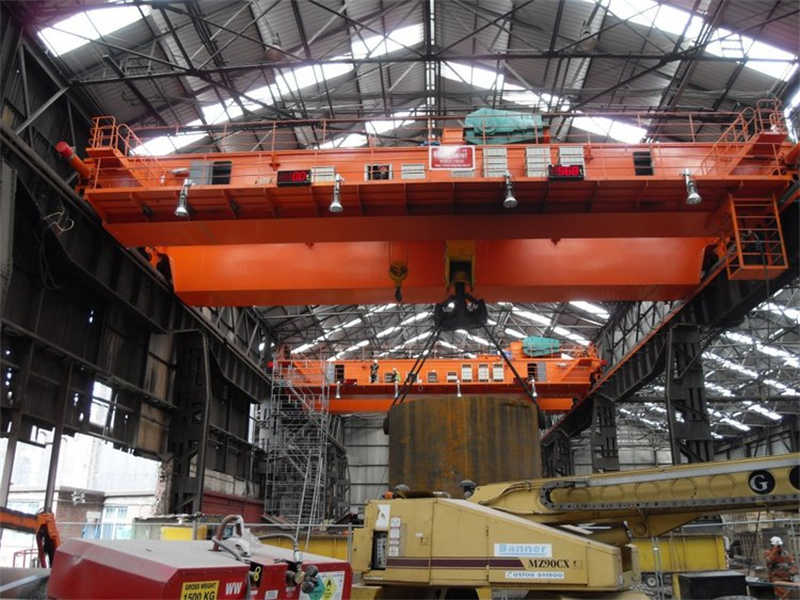
Dongqi’s double girder overhead cranes for steel mills come in various configurations tailored to specific applications:
- QD Type Electric Winch Cranes: Feature winch trolleys with capacities from 5-800 tons, spans of 10.5-31.5m, and work duty classes of A5-A6 . These are versatile cranes suitable for general material handling in steel mills.
- QDY Type Ladle Cranes: Specifically designed for handling molten metal with capacities of 5-74 tons, spans of 10.5-31.5m, and work duty class A7 for severe steel mill conditions . These incorporate special safety features for molten metal handling.
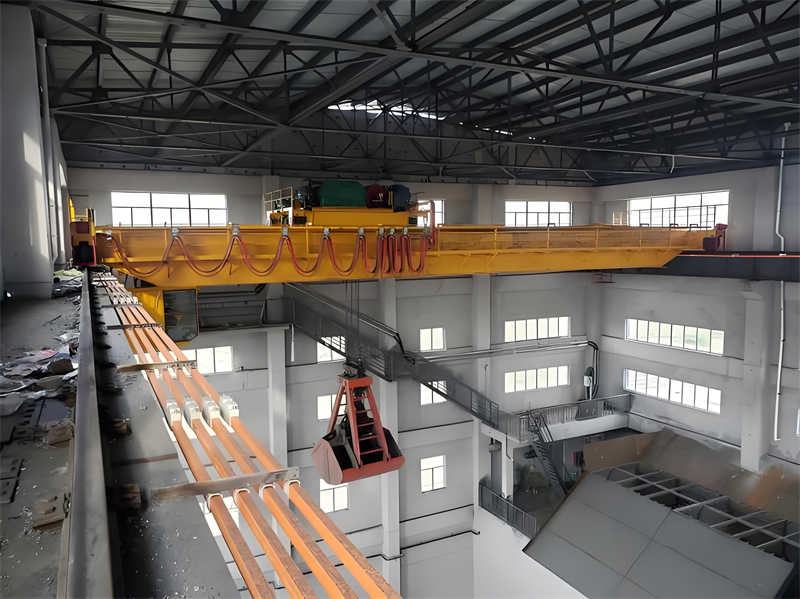
- QZ Type Grab Cranes: Used for handling bulk materials like iron ore, coal, and scrap with capacities of 5-25 tons and spans of 10.5-34.5m .
- European Standard Cranes: Built to FEM standards with capacities of 5-80 tons, spans of 10.5-35.5m, and work duty classes A4-A7 .
Table: Technical Specifications of Dongqi Double Girder Cranes for Steel Mills
| Parameter | QD Type | QDY Ladle Type | QZ Grab Type | European Standard |
|---|---|---|---|---|
| Capacity Range | 5-800 tons | 5-74 tons | 5-25 tons | 5-80 tons |
| Span Range | 10.5-31.5m | 10.5-31.5m | 10.5-34.5m | 10.5-35.5m |
| Lifting Height | Up to 50m | Customized | Customized | Customized |
| Work Duty | A5, A6 | A7 | A6 | A4-A7 |
| Ambient Temperature | -25°C to +50°C | -10°C to +60°C | -25°C to +50°C | -25°C to +50°C |
| Control Options | Pendant/Remote/Cabin | Cabin (insulated) | Pendant/Remote/Cabin | Pendant/Remote/Cabin |
3.2 Special Features for Steel Mill Environments
Steel mill cranes require specific features to handle the unique challenges of these environments:
- Thermal Protection: Special insulation and heat shielding protect components from radiant heat when handling molten materials . This includes insulated cabin designs with double-layer insulated walls for operator protection .
- Dust and Contamination Resistance: Enclosed electrical components, specialized sealing systems, and corrosion-resistant materials protect against the abrasive dust and contaminants present in steel mills .
- Advanced Safety Systems: Redundant braking systems, overload protection, emergency stop circuits, and height limiters ensure safe operation even in the event of component failure .
- Precision Control: Variable Frequency Drives (VFDs) enable smooth acceleration and deceleration, minimizing load swing – especially critical when handling ladles of molten metal .
- Specialized Lifting Attachments: Custom hooks, grabs, and fixtures designed specifically for steel mill applications such as ladle hooks, coil handlers, and sheet lifters .
4 Applications in Steel Mill Workshops: A Process-Based Overview
4.1 Raw Material Handling
The steelmaking process begins with handling raw materials, and overhead cranes play a vital role in this initial stage:
- Bulk Material Handling: Grab cranes (QZ type) are used to unload and transfer iron ore, coal, and limestone from storage yards to processing areas . These cranes are equipped with grapple buckets that can handle various material densities and characteristics.
- Scrap Handling: In electric arc furnace operations, scrap charging cranes handle and load recycled steel scrap into furnaces. These cranes often employ electromagnetic lifting devices or specialized grapples for efficient material handling .
- Raw Material Transfer: Between processing stages, such as moving materials from stockyards to sinter plants or blast furnace charging systems .
4.2 Primary Steelmaking Processes
In the heart of the steel mill, specialized cranes handle high-temperature processes:
- Molten Metal Handling: Ladle cranes (QDY type) are specifically designed for transporting ladles containing molten steel . These critical cranes feature:
- Advanced safety systems including redundant braking and overload protection
- Heat shielding to protect structural and electrical components
- Precision controls for accurate pouring operations
- Insulated operator cabins with air conditioning for operator comfort and safety
- Furnace Charging: Charging cranes feed raw materials into furnaces, requiring precise positioning and heat-resistant components .
- Slag Handling: After tapping, slag handling cranes remove the byproduct slag from the process for further processing or disposal .
4.3 Casting and Forming Operations
As molten steel is formed into semi-finished products, overhead cranes continue to play essential roles:
- Tundish Handling: In continuous casting operations, cranes handle tundishes that feed molten steel into casting molds .
- Slab and Bloom Transfer: Once cast, slabs, blooms, and billets are moved to storage or next processing stages using cranes with specialized lifting attachments .
- Coil Handling: After hot or cold rolling, steel coils are moved and stacked using cranes with C-hooks or mandrel attachments .
4.4 Finishing, Storage, and Maintenance
- Finished Product Handling: Cranes move finished steel products such as plates, sheets, and structural sections to storage or loading areas .
- Maintenance Applications: Overhead cranes facilitate equipment maintenance by moving heavy machinery components for repair or replacement . The QD type double girder cranes are often used for these general maintenance applications in steel mills .
5 Case Study: Dongqi Cranes in an Indian Steel Mill
5.1 Project Overview and Client Requirements
In 2019, Dongqi Crane secured a significant order from a major steel producer in India – a facility established in 2004 manufacturing cast iron, sponge iron, billets, TMT bars, wire rods, and ductile iron pipes . The integrated plant included a sinter plant, pellet plant, blast furnace, power plant, steel melting shop, and rolling mill .
The client needed comprehensive lifting solutions across various processes in their facility. After an initial successful small order for a bridge crane hoist, they entrusted Dongqi with supplying multiple cranes for their expansion project. The selection process was technical and specific, with the initial inquiry containing detailed requirements for speed and work level for each organization .
5.2 Customized Crane Solutions
Dongqi engineers designed and supplied nine sets of double girder overhead cranes for this project:
- Eight QZ Type Grab Cranes: These were specified for handling iron ore fines concentrate . The selection process involved determining the appropriate grab based on material density and volume, ultimately leading to the selection of four-rope grab buckets . These cranes are designed to withstand the high dust, heat, and aggressive environment of raw material handling in a steel mill .
- One QD Type Electric Winch Crane: This crane was designated for equipment maintenance applications throughout the facility . The QD type is a versatile double girder crane suitable for general material handling and maintenance duties in steel mills.
5.3 Technical Highlights and Project Execution
The successful implementation of these cranes demonstrated several Dongqi strengths:
- Application-Specific Engineering: The grab cranes were customized with the appropriate grab mechanism based on detailed analysis of the material characteristics .
- Compliance with Environmental Challenges: Both crane types were engineered to perform reliably in the challenging steel mill environment, with features to address heat, dust, and heavy-duty cycling .
- Streamlined Project Execution: Drawing on understanding gained from the initial small order, Dongqi’s sales team provided accurate feedback and professional service, earning the client’s trust and leading to the larger order .
This case study illustrates Dongqi’s capability to deliver comprehensive lifting solutions for complex steel production facilities, with customized cranes for specific applications within the same plant.
6 Advanced Features and Safety Systems for Steel Mill Cranes
6.1 Intelligent Control Systems
Modern double girder cranes for steel mills incorporate advanced control systems that enhance both performance and safety:
- Variable Frequency Drives (VFDs): These allow for smooth acceleration and deceleration, reducing mechanical stress and load swing . This is particularly important when handling ladles of molten metal or delicate finished products.
- Anti-Sway Technology: Advanced control algorithms automatically compensate for load swing, enabling faster load handling and more precise positioning .
- Programmable Logic Controllers (PLCs): These provide centralized control and monitoring capabilities, allowing for automated operations and integration with plant control systems.
- Remote Control Systems: Radio remote controls allow operators to position themselves optimally for visibility and safety, rather than being confined to a cabin .
6.2 Specialized Safety Features
Steel mill cranes require comprehensive safety systems due to the critical nature of their operations:
- Redundant Braking Systems: Multiple independent braking systems ensure safe stopping even in the event of component failure .
- Overload Protection: Load limiters prevent the crane from lifting loads beyond its rated capacity, protecting both the equipment and personnel .
- Height Limiting Devices: These prevent overwinding of the hoist, which could lead to cable damage or load dropping .
- Thermal Monitoring: Temperature sensors monitor critical components, providing warnings or shutting down operations if temperatures exceed safe limits – particularly important in high-temperature steel mill environments.
- Collision Avoidance Systems: Anti-collision devices prevent interference between multiple cranes operating in the same area or with fixed structures .
- Emergency Stop Systems: Redundant emergency stop circuits allow for immediate shutdown of operations in hazardous situations .
6.3 Special Features for Molten Metal Handling
Ladle cranes require additional specialized safety features:
- Ladle Control Systems: Precise control systems enable accurate positioning during pouring operations, minimizing spillage and safety hazards .
- Thermal Protection Systems: Heat shields and insulated components protect structural elements and electrical systems from radiant heat .
- Fail-Safe Mechanisms: Redundant systems for critical functions ensure safe operation even with component failures .
- Operator Protection: Insulated cabins with air conditioning and heat-reflective glass protect crane operators from radiant heat .
7 Selection Guide: Choosing the Right Crane for Your Steel Mill
7.1 Key Considerations for Crane Selection
Selecting the appropriate double girder crane for a steel mill application requires careful consideration of multiple factors:
- Lifting Capacity: Determine not just the weight of typical loads, but also consider occasional heavy lifts and future requirements. Dongqi offers capacities from 5 to 800 tons to meet various needs .
- Span Requirements: The distance between runway rails affects crane stability and cost. Dongqi cranes can accommodate spans from 10.5 to 35.5 meters .
- Lift Height: Consider the maximum height to which loads need to be lifted. Double girder designs provide better hook height utilization than single girder alternatives .
- Duty Cycle: Steel mill cranes typically require heavy-duty (A6) or severe-duty (A7) classifications based on frequency of operation and load spectrum .
- Environmental Conditions: Factors such as ambient temperature, presence of dust or corrosive elements, and exposure to heat must be considered when specifying crane components .
- Control Requirements: Choose between cab operation, pendant control, or radio remote control based on visibility requirements, operator safety, and operational flexibility .
7.2 Matching Crane Types to Applications
- General Material Handling: QD type winch cranes offer versatility for maintenance and general material movement .
- Bulk Material Handling: QZ type grab cranes with appropriate grabs for specific materials (iron ore, coal, limestone) .
- Molten Metal Handling: QDY type ladle cranes with appropriate safety features and heat protection .
- Finished Product Handling: Cranes with specialized attachments for coils, plates, or long products .
- Maintenance Applications: Standard double girder cranes with appropriate capacity for equipment handling .
7.3 Dongqi’s Consultation Process
Dongqi employs a comprehensive consultation process to ensure customers receive the optimal crane solution:
- Application Analysis: Detailed understanding of the specific lifting requirements, including load characteristics, movement patterns, and environmental factors .
- Facility Assessment: Evaluation of the building structure, runway system, and spatial constraints .
- Technical Specification: Development of detailed technical specifications matching the crane to the application .
- Customization Options: Identification of any special requirements or custom features needed for the specific application .
8 Maintenance and Service: Ensuring Long-Term Reliability
8.1 Routine Maintenance Practices
Proper maintenance is crucial for the reliable and safe operation of double girder cranes in demanding steel mill environments:
- Regular Inspections: Daily visual checks and periodic comprehensive inspections of critical components including brakes, wires ropes, and structural elements .
- Lubrication Management: Systematic lubrication of all moving parts using manufacturer-recommended lubricants according to a defined schedule .
- Wire Rope Care: Regular inspection of wire ropes for signs of wear, corrosion, or damage, with timely replacement when needed .
- Electrical System Maintenance: Inspection of cables, connections, and control components to ensure electrical safety and reliability .
- Brake Testing: Regular functional testing of all braking systems to ensure proper operation .
8.2 Dongqi’s Comprehensive Service Support
Dongqi Crane provides extensive after-sales support to ensure customer satisfaction and crane performance:
- Installation Services: Professional installation by experienced technicians to ensure proper setup and commissioning .
- Operator Training: Comprehensive training for crane operators and maintenance personnel .
- Technical Support: 24/7 technical assistance for troubleshooting and operational guidance .
- Spare Parts Supply: Ready availability of genuine spare parts to minimize downtime .
- Preventive Maintenance Programs: Scheduled maintenance services to identify and address potential issues before they cause downtime .
- Modernization Services: Upgrade options for existing cranes to improve performance, safety, or reliability .
9 Why Choose Dongqi Crane for Your Steel Mill Crane Needs
9.1 Expertise and Experience
Dongqi Crane brings substantial expertise to steel mill crane projects:
- Industry Specialization: Extensive experience specifically with steel mill applications, understanding the unique challenges and requirements .
- Technical Capability: Engineering expertise to design and manufacture cranes with capacities up to 800 tons and spans exceeding 35 meters .
- Global Experience: Successful projects implemented worldwide, including in challenging environments .
- Product Range: Comprehensive range of crane types and configurations to meet various steel mill applications .
9.2 Quality and Reliability
Dongqi cranes are built to deliver long-term reliable performance:
- Quality Materials: Use of high-grade steel (Q235B, Q345B) and components from reputable suppliers .
- Robust Construction: Advanced manufacturing techniques including submerged arc welding and non-destructive testing ensure structural integrity .
- Component Quality: Use of reliable components including hardened gear reducers, forged wheels, and industrial-grade electrical systems .
- Testing and Inspection: Comprehensive testing of each crane before shipment to verify performance and safety .
9.3 Customization and Flexibility
- Application-Specific Solutions: Tailored designs for specific steel mill processes and requirements .
- Flexible Configurations: Multiple options for controls, speeds, and special features to match operational needs .
- Adaptability to Constraints: Solutions for space limitations, existing structures, or special operational requirements .
10 Conclusion: Partnering for Enhanced Steel Production Efficiency
Heavy duty double girder overhead bridge cranes are indispensable assets in modern steel mills, contributing significantly to operational efficiency, workplace safety, and production quality. The selection of the appropriate crane solution requires careful consideration of technical requirements, operational needs, and environmental factors.
Dongqi Crane stands ready to partner with steel producers worldwide, offering comprehensive lifting solutions backed by engineering expertise, manufacturing quality, and service support. From raw material handling to molten metal operations and finished product management, our customized crane solutions deliver the reliability, precision, and durability demanded by the global steel industry.
The successful implementation of nine cranes at the Indian steel mill demonstrates our capability to deliver complete lifting solutions for complex steel production facilities. By choosing Dongqi as your crane partner, you gain not just equipment, but a comprehensive solution supported by technical expertise and service commitment.
Contact Dongqi Crane today to discuss your specific requirements and discover how our heavy duty double girder overhead cranes can enhance the efficiency and safety of your steel mill operations. Our technical team is ready to provide professional recommendations and customized solutions for your material handling challenges.
