
Explosion-Proof Crane Solutions for Lithium Battery Production Workshops: A Technical Guide for Dongqi Crane
1. Introduction
Lithium battery production involves high-risk processes, including electrolyte handling, electrode coating, and cell assembly, where flammable gases (e.g., hydrogen, volatile organic compounds) and combustible dust may accumulate. To ensure safety, explosion-proof cranes must comply with stringent standards such as GB 3836 (China’s explosive atmosphere equipment standard), IECEx (International Electrotechnical Commission), and ATEX (European Union). This guide outlines Dongqi Crane’s technical solutions for explosion-proof cranes in lithium battery workshops, covering design, safety systems, and compliance.
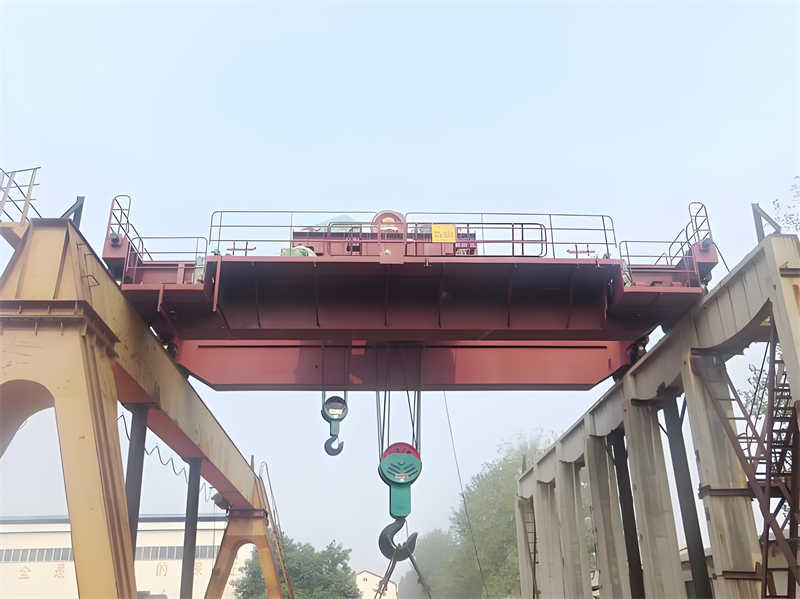
2. Key Technical Requirements
2.1 Explosion-Proof Classification & Zone Adaptation
Lithium battery workshops are typically classified as Zone 1 (gas) or Zone 21 (dust) under GB 3836. Dongqi cranes must meet:
- Gas Protection: Ex d IIB T4 (for hydrogen/VOCs) or Ex d IIC T4 (for acetylene).
- Dust Protection: Ex tD A21 IP6X (for lithium-ion dust).
- Temperature Group: T4 (≤135°C) to prevent ignition of flammable substances.
Example: A Dongqi 10-ton bridge crane for electrolyte filling zones would use Ex d IIB T4-rated motors and limit surface temperatures to ≤135°C.
2.2 Electrical System Safety
- Enclosures: All electrical components (motors, controllers, limit switches) must be housed in flameproof (Ex d) or increased-safety (Ex e) enclosures.
- Cable Management: Use armored cables with metal conduits and fire-resistant insulation. Joints must be explosion-proof (e.g., gland fittings with sealing rings).
- Grounding: Dual grounding systems (equipment frame + conductive floor) to prevent static discharge.
Case Study: In a 2025 Guangzhou lithium battery plant, Dongqi installed a 5-ton monorail crane with Ex d IICT4-rated motors and stainless steel conduits to handle electrolyte drums safely.
2.3 Mechanical Design for Safety
- Non-Sparking Materials: Use aluminum bronze or stainless steel for hooks, chains, and bearings to avoid friction sparks.
- Dust Prevention: Sealed gearboxes and IP65-rated enclosures to block lithium dust ingress.
- Vibration Damping: Anti-vibration mounts for motors to reduce mechanical stress.
Innovation: Dongqi’s patented dual-battery system (main + auxiliary lithium packs) includes bidirectional DC/DC converters to recycle braking energy without voltage spikes, reducing fire risks.
2.4 Control & Monitoring Systems
- Gas Detection: Integrate methane/VOC sensors (e.g., IR or catalytic bead type) with automatic crane shutdown if concentrations exceed 20% LEL.
- Temperature Monitoring: Embed PT100 sensors in motors and batteries to trigger alarms at ≥80°C.
- Remote Operation: Wireless pendants with fail-safe protocols (e.g., dual-channel RF) to prevent accidental activation.
AI Application: Dongqi’s AI-powered predictive maintenance analyzes vibration and temperature data to detect motor bearing wear before failure, minimizing downtime.
3. Compliance with International Standards
Dongqi cranes adhere to:
- GB/T 38331-2019: Lithium battery production equipment safety.
- JB/T 10219-2001: Explosion-proof bridge crane specifications.
- ISO 12482: Crane load testing and certification.
- FEM 9.511: European hoist design standards.
Certification: All cranes undergo type testing by CNEX (China National Supervision Test Center for Explosion-Protected Electrical Products) and carry Ex markings on nameplates.
4. Installation & Maintenance Best Practices
4.1 Site Preparation
- Explosion-Proof Zoning: Install cranes in Zone 2 (gas) or Zone 22 (dust) areas, avoiding direct exposure to ignition sources.
- Ventilation: Ensure ≥6 air changes/hour to dilute flammable gases.
- Lighting: Use Ex d-rated LED fixtures (e.g., 50W, IP66) to prevent overheating.
4.2 Maintenance Protocols
- Monthly Checks: Inspect enclosures for cracks, cables for damage, and sensors for calibration drift.
- Annual Overhaul: Replace worn bearings, test grounding resistance (≤0.1Ω), and verify gas detector accuracy.
- Training: Operators must complete ATEX-certified courses on emergency shutdowns and dust cleanup.
5. Case Study: Dongqi Crane in a Tier-1 Battery Plant
Client: CATL (Contemporary Amperex Technology Co. Limited)
Challenge: Install a 25-ton explosion-proof gantry crane for cell assembly in a Zone 1 area.
Solution:
- Ex d IIC T4-rated hoist with stainless steel chain.
- Nitrogen purging system for motor enclosures to prevent hydrogen buildup.
- Real-time monitoring via SCADA dashboard with SMS alerts for gas leaks.
Outcome: Zero safety incidents in 3 years, with 15% higher uptime vs. legacy cranes.
6. Future Trends
- Hydrogen Fuel Cells: Dongqi is testing Ex h-rated cranes powered by hydrogen fuel cells for zero-emission workshops.
- 5G Connectivity: Ultra-low-latency control for autonomous crane operation in hazardous zones.
- Solid-State Batteries: Adaptive charging systems to handle higher energy densities safely.
7. Conclusion
Dongqi Crane’s explosion-proof solutions combine rigorous compliance, cutting-edge safety tech, and industry-specific customization to meet the demands of lithium battery production. By integrating gas detection, AI maintenance, and dual-battery energy recovery, Dongqi ensures both operational efficiency and worker safety in high-risk environments.
