
2025 Workshop Crane Market Review & Selection Guide: Insights from Dongqi Crane
When planning or upgrading your workshop production line, have you ever paused due to the following challenges?
- Productivity Bottlenecks: Does material handling rely on manual labor or outdated equipment, causing slow speeds, frequent errors, and becoming a constant hurdle to smooth workflow?
- The Space vs. Flexibility Dilemma: Is your workshop height limited while you need greater lifting coverage? Do fixed crane systems become a constraint when production layouts need to change?
- The Pressure of Cost Control: Are you focusing solely on the initial purchase price, only to face unexpectedly high costs from energy consumption, frequent maintenance, and downtime later?
- Safety and Compliance Concerns: Are you worried about the risks of overloading, equipment failure, or operating errors, especially under increasingly stringent industry safety standards?
- Uncertainty About Technology Choices: With trends like smart automation and energy efficiency, are you unsure which technological upgrades are essential investments and which are merely unnecessary extras for your specific operation?
If any of these questions resonate with you, you are not alone. The core of these challenges often lies in whether the lifting equipment—the backbone of workshop logistics—truly matches the actual demands of your operational scenarios and future goals. The right workshop crane is not just a “lifting tool,” but a strategic decision that directly impacts your floor space utilization, personnel safety, production efficiency, and long-term operational costs.
The year 2025 has provided clear market feedback: solutions that offer modular design, intelligent features, and verified reliability are becoming the standard choice for overcoming these very challenges. The following review and analysis will help you translate these common pain points into clear technical parameters and selection criteria, providing a data-backed reference for your next strategic investment.
2025 Market Overview: Trends Defining Workshop Cranes
The global crane market continues its steady growth, projected to expand from USD 34.68 billion in 2025 to USD 41.56 billion by 2030. Within this, the workshop segment is heavily influenced by several key trends:
- Smart and Automated Systems: The integration of the Industrial Internet of Things (IIoT) is paramount. Modern cranes are increasingly equipped with sensors for predictive maintenance, data analytics for optimized operations, and automated features that minimize human error and boost efficiency.
- Emphasis on Energy Efficiency: Driven by sustainability goals and operational cost savings, features like regenerative braking systems and Variable Frequency Drives (VFDs) have moved from premium options to standard expectations in many new purchases.
- Demand for Flexible Solutions: There is a pronounced shift towards customizable and modular crane designs. Businesses seek solutions that can be tailored to specific spatial constraints and lifting tasks, fueling the popularity of European standard cranes known for their lightweight, modular design.
Market Breakdown: Sales Volume vs. Revenue Contribution
An analysis of the 2025 market reveals a distinct pattern between what is sold most frequently and what generates the most revenue, a key consideration for manufacturers like Dongqi Crane.
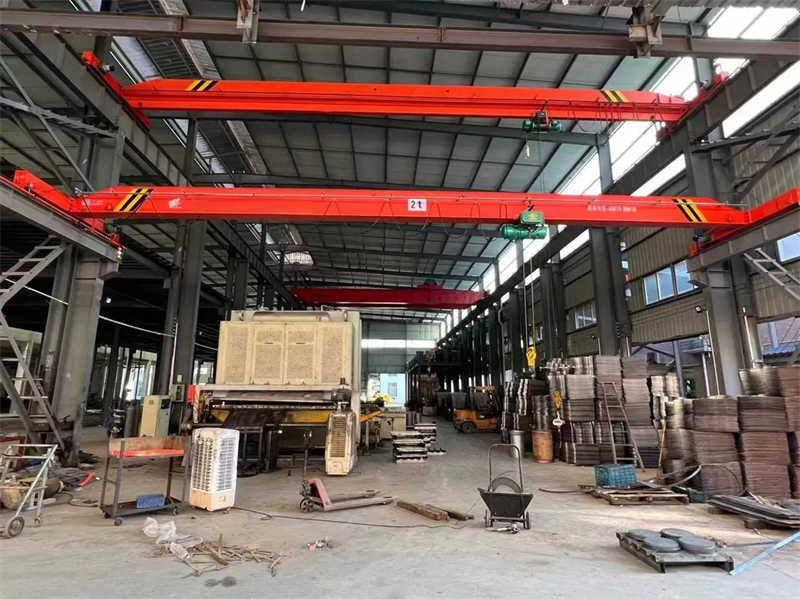
- Sales Volume Dominance (High Volume, Lower Unit Price): The vast majority of units sold are low to mid-capacity cranes. This includes small workshop cranes like single girder overhead cranes (typically 1-20 tons) and portable mobile workshop cranes (1-10 tons). Their affordability, ease of installation, and suitability for a wide range of light to medium manufacturing and maintenance tasks make them the volume leaders. European-style single girder cranes are particularly popular in this segment due to their cost-effectiveness and standardized, efficient design.
- Revenue Dominance (Low Volume, High Unit Price): Conversely, the largest share of market revenue is generated by a smaller number of high-capacity, heavy-duty installations. This includes double girder overhead cranes with capacities from 5 tons up to 550 tons, engineered for demanding, continuous applications in heavy manufacturing, steel processing, and power generation. While these units sell in far fewer quantities, their sophisticated engineering, advanced control systems, and custom configurations command significantly higher prices.
Dongqi Crane Product Analysis: Types, Performance & Applications
Dongqi Crane offers a comprehensive portfolio that aligns with these market dynamics. Here is a detailed look at the primary workshop crane types, their performance, and ideal applications.
| Crane Type | Key Models / Series | Capacity Range | Key Features & Performance | Primary Workshop Applications | Customer Feedback Highlights |
|---|---|---|---|---|---|
| Single Girder Overhead Crane | European Single-Girder, LD Series, LDP Low Headroom | 1 – 32 tons | Cost-effective, lightweight European design, lower building clearance required, suitable for light to medium duty (A3-A4 work class). | General manufacturing, assembly lines, warehouses, repair shops. | Praised for excellent value for money and ease of installation. The low headroom design is often highlighted as a space-saver. |
| Double Girder Overhead Crane | LH Series, QD Hook Crane, Insulation/Grab Specialty Cranes | 5 – 550 tons | Higher lifting height, more robust for heavy/heavy duty cycles (A4-A7 work class), can accommodate specialized tools (magnets, grabs). | Steel mills, foundries, heavy machinery fabrication, power plants, pulp & paper. | Noted for exceptional durability in demanding 24/7 environments. Specialty models (e.g., insulation cranes) solve critical niche challenges. |
| Gantry Crane | Single & Double Girder Gantry, Portable Gantry, L-Type | 1 – 200 tons | Free-standing, no need for roof support, offers excellent floor space coverage. Portable units provide ultimate flexibility. | Outdoor yards, shipping areas, workshops without supporting structures, temporary sites. | Users value the freedom from building columns and the portability of smaller models, which free up main overhead cranes for other tasks. |
| Jib Crane | Wall-Mounted, Pillar Jib | 0.25 – 16 tons | Provides localized, precise lifting within a circular area. Ideal for repetitive tasks at a workstation. | Machine loading/unloading, assembly stations, maintenance bays within a larger workshop. | Feedback emphasizes ergonomic improvements and efficiency gains at specific work cells. |
| Specialty & Custom Cranes | Explosion-Proof, Insulation, Metallurgy | 1 – 75 tons | Built with specific components (explosion-proof motors, thermal insulation) for harsh, hazardous, or specialized environments. | Chemical plants, paint shops, aluminum smelters, explosive atmospheres. | Essential for safety compliance in regulated industries. Customers appreciate tailored engineering for extreme conditions. |
Choosing the Right Crane: A Practical Selection Guide
Selecting the optimal crane involves a careful assessment of your needs. Use this guide to navigate the key decision points:
1. Assess Core Requirements:
- Lifting Capacity: Determine the maximum weight you need to lift, including the weight of any lifting attachments.
- Span & Coverage: Measure the working area. The crane’s span (distance between runways) and travel length must cover all necessary points.
- Duty Cycle: Evaluate how intensively the crane will be used (hours per day, lifts per hour). This determines the required work class (e.g., A3 for light use, A6 for heavy use).
2. Match Crane Type to Application:
- For general workshop lifting (up to 32 tons) with cost as a priority, a Single Girder Overhead Crane is often the best starting point.
- For heavy, continuous production (5+ tons), a Double Girder Overhead Crane provides the necessary strength and height.
- If you lack supporting building structures or need outdoor/versatile coverage, a Gantry Crane is the solution.
- For precision work at a fixed station, a Jib Crane boosts ergonomics and efficiency.
3. Consider Modern Features:
- Smart Controls: Evaluate the benefit of radio remote controls or automation for safety and efficiency.
- Energy Efficiency: VFDs and regenerative drives reduce long-term operating costs.
- Safety Systems: Ensure the crane includes essential features like overload limiters and emergency stops.
2026 Outlook and Final Recommendations
Looking ahead, trends point toward deeper integration of AI for predictive analytics, greater adoption of hybrid power systems, and a continued focus on modular designs that allow for future upgrades.
For your procurement strategy:
- Request Detailed Consultations: Reputable suppliers like Dongqi Crane offer engineering support to match specifications to your layout.
- Prioritize Lifecycle Value: Consider total cost of ownership, including energy consumption, maintenance needs, and potential for future upgrades.
- Verify Compliance: Ensure the equipment meets all local and industry-specific safety and performance standards.
The right workshop crane is a strategic investment in safety and productivity. By clearly defining your operational needs and understanding the evolving market landscape, you can select a lifting solution that not only meets today’s demands but is also ready for the trends of tomorrow.
