
16t Single Girder Truss Type Gantry Crane: An Efficient Solution for Precast Beam Fields
In the world of heavy construction and infrastructure development, the 16t single girder truss type gantry crane with hoist has emerged as a specialized solution for handling precast beams in construction projects. As a leading manufacturer in the lifting equipment industry, Dongqi Crane provides engineered gantry crane solutions that meet the specific demands of precast beam fields, offering a combination of structural efficiency, operational flexibility, and cost-effectiveness for construction projects of varying scales.
Understanding the 16t Single Girder Truss Type Gantry Crane
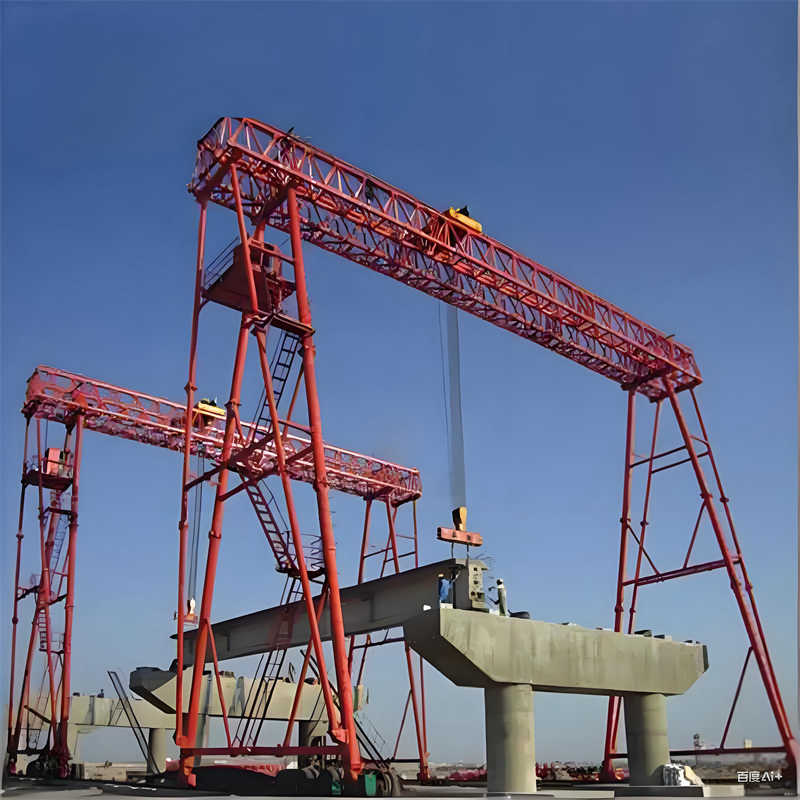
A gantry crane is defined as a bridge overhead crane variation in which two support legs are installed under the main beam and run directly on the ground track. The single girder truss type gantry crane represents a specific category of this equipment characterized by its unique structural design and lifting capabilities.
The truss-type construction features a main girder fabricated from welded structural steel in a lattice configuration, which offers distinct advantages over solid web designs. This design approach results in a crane that is notably lighter in weight while maintaining structural integrity and offering reduced wind resistance during outdoor operation. The “16t” designation indicates a lifting capacity of 16 tons, positioning this crane in the medium-capacity range suitable for handling precast concrete beams and other substantial construction components.
For precast beam field applications, these cranes are typically rail-mounted, running on tracks installed at ground level. This configuration allows for precise movement and positioning of heavy precast elements throughout the construction yard. The inclusion of a hoist mechanism enables vertical lifting and lowering operations, completing the crane’s fundamental material handling capabilities.
Key Features and Technical Specifications
Structural Advantages
The truss design of the main girder provides several technical benefits that make it particularly suitable for precast beam handling:
- Reduced Weight: Compared to box girders, truss structures offer lighter self-weight while maintaining structural strength. This weight efficiency translates to reduced foundation requirements and potentially lower overall costs.
- Enhanced Wind Resistance: The open lattice configuration allows wind to pass through the structure, minimizing wind resistance and improving stability during outdoor operation. This characteristic is particularly valuable in exposed precast yards where environmental conditions can impact operations.
- Material Efficiency: The strategic arrangement of structural members in a truss configuration optimizes material usage, creating an efficient load-bearing system without excess weight.
Technical Parameters
Based on industry standards, the 16t single girder truss gantry crane typically features the following specifications:
- Lifting Capacity: 16 tons
- Span: 12-30 meters (customizable based on application requirements)
- Lifting Height: 6-9 meters (adjustable to specific needs)
- Work Duty: A3 classification
- Power Supply: AC 50Hz 380V
The crane system comprises several integrated components including the main girder, supporting legs, crane traveling mechanism, hoisting mechanism, electric control system, and safety features such as handrails, ladders, and walkways.
Applications in Precast Beam Fields
The precast concrete industry relies heavily on specialized material handling equipment for efficient and safe operations. In precast beam fields, the 16t single girder truss gantry crane serves multiple critical functions:
Handling Precast Beams and Girders
Precast beams and girders are essential components in modern bridge construction and building projects. These elements continue to increase in both size and length as engineering designs become more sophisticated. The 16t gantry crane provides an efficient solution for:
- Transporting precast girders from casting yards to storage areas or directly to erection sites
- Loading and unloading operations involving trucks, trailers, or storage racks
- Positioning beams for assembly or storage with precision
Segmental Bridge Construction
For segmental bridge projects, precast segments require careful handling throughout the construction process. The gantry crane facilitates:
- Lifting individual precast segments to required heights
- Precise alignment of segments during the erection process
- Coordination with bridge girder erection machines for efficient installation
Versatile Project Applications
The flexibility of the 16t single girder truss gantry crane extends its utility across various construction scenarios:
- Railway and highway construction projects requiring handling of concrete beams
- Viaduct and bridge construction sites
- Outdoor storage yards for precast elements
- Infrastructure projects requiring precise placement of heavy components
Benefits for Precast Beam Handling Operations
Operational Efficiency
The implementation of a 16t single girder truss gantry crane in precast beam fields delivers significant operational advantages:
- Streamlined Workflow: By enabling direct transfer of precast elements from casting locations to storage or transport positions, these cranes minimize intermediate handling requirements.
- Time Savings: The efficient loading and unloading capabilities reduce handling time, contributing to faster project timelines.
- Labor Optimization: Gantry operations require less manual labor compared to alternative methods, allowing workforce reallocation to more value-added tasks.
Enhanced Safety Features
Safety considerations are paramount in construction environments, and the 16t gantry crane incorporates several features that enhance operational safety:
- Reduced Manual Handling: By mechanizing the lifting and moving of heavy precast elements, these cranes minimize worker exposure to potential injuries.
- Precision Control: Modern control systems allow for accurate positioning of loads, lowering the chances of accidents caused by shifting loads or improper placement.
- Stable Operation: The truss design provides structural stability during lifting operations, reducing the risk of load sway or instability.
Economic Advantages
The economic benefits of implementing a 16t single girder truss gantry crane extend beyond the initial investment:
- Cost-Effective Solution: For many precast operations, the 16t capacity represents an optimal balance between capability and cost, providing sufficient capacity for most precast elements without the expense of over-sized equipment.
- Reduced Damage: Precise control and stable operation minimize the risk of damaging expensive precast components during handling.
- Operational Versatility: The ability to handle various tasks—from transportation to precise placement—eliminates the need for multiple specialized machines, optimizing equipment investment.
Customization Options from Dongqi Crane
Dongqi Crane recognizes that each precast beam field has unique requirements based on project specifics, site conditions, and operational preferences. Therefore, the company offers comprehensive customization options for its 16t single girder truss gantry cranes:
Structural Adaptations
- Adjustable Span: Crane span can be tailored to specific site layouts, with typical ranges from 12 to 30 meters.
- Variable Lifting Height: The lifting height can be customized to accommodate local requirements, with standard options ranging from 6 to 9 meters.
- Cantilever Extensions: Optional cantilever arrangements can be incorporated to enhance operational flexibility.
Operational Customizations
- Control Systems: Multiple control options including remote control, cabin control, or panel control systems.
- Power Supply Configurations: Adaptable power supply systems to match local electrical infrastructure.
- Specialized Features: Custom solutions for extreme environmental conditions or specific operational challenges.
Comparison with Alternative Gantry Crane Types
When selecting a gantry crane for precast beam applications, understanding the differences between available types is essential. The 16t single girder truss type offers distinct advantages compared to other configurations:
Versus Double Girder Gantry Cranes
Double girder gantry cranes provide higher load capacities and superior stability for the heaviest applications. However, for many precast beam fields handling elements in the 16-ton range, the single girder truss design offers:
- Lower Initial Cost: Simplified structure typically results in reduced investment requirements.
- Reduced Weight: Lighter overall structure can translate to less substantial foundation requirements.
- Adequate Capacity: Sufficient lifting capability for most standard precast beams.
Versus Box Girder Gantry Cranes
Box girder cranes feature solid web construction that provides high load capacity and strong structural rigidity. The truss alternative presents benefits including:
- Enhanced Wind Resistance: The open structure performs better in windy conditions common to outdoor precast yards.
- Material Efficiency: Optimized use of steel reduces weight without compromising strength.
- Economic Advantages: Generally lower manufacturing costs due to efficient material utilization.
Mobility Considerations: Rail-Mounted vs. Rubber-Tyred Options
For precast beam applications, gantry cranes are typically configured in one of two primary variants:
- Rail-Mounted Gantry Cranes: These systems operate on fixed tracks, providing exceptional stability and precise movement along predetermined paths. They are ideal for large-scale projects with defined material flow patterns.
- Rubber-Tyred Gantry Cranes (RTGs): Equipped with rubber tires, these cranes offer greater mobility and flexibility. They can move freely across the construction site, making them suitable for locations where track installation is impractical.
The selection between these configurations depends on specific project requirements, with rail-mounted systems generally preferred for dedicated precast yards with consistent workflow patterns.
Implementation Considerations for Precast Beam Fields
Successful integration of a 16t single girder truss gantry crane into precast beam operations requires careful planning and consideration of several factors:
Site Assessment
- Space Availability: Evaluate the available area for crane operations, including clearances for moving long precast elements.
- Ground Conditions: Assess soil bearing capacity and surface conditions for track installation or rubber-tired movement.
- Infrastructure Requirements: Identify necessary preparations including power supply, drainage, and access roads.
Operational Planning
- Workflow Optimization: Design material flow patterns to maximize crane efficiency and minimize unnecessary movements.
- Maintenance Access: Incorporate provisions for routine maintenance and servicing of crane components.
- Safety Protocols: Develop comprehensive safety procedures specific to gantry crane operations in precast environments.
Economic Evaluation
- Total Cost of Ownership: Consider not only the initial investment but also long-term operational and maintenance costs.
- Return on Investment: Calculate potential efficiency gains and cost savings from improved material handling.
- Lifecycle Planning: Account for expected service life and potential future requirements.
Dongqi Crane’s Expertise in Gantry Crane Manufacturing
Dongqi Crane brings extensive experience and technical capability to the design and manufacturing of 16t single girder truss gantry cranes for precast beam applications. The company’s comprehensive approach includes:
Engineering Capabilities
- Custom Design Services: Tailored solutions for specific project requirements and site conditions.
- Technical Expertise: Professional engineering team with experience in crane design and applications.
- Quality Assurance: Rigorous testing and quality control procedures to ensure reliable performance.
Manufacturing Excellence
- Modern Production Facilities: Advanced manufacturing equipment and processes.
- Material Selection: Careful selection of quality components and structural materials.
- Production Standards: Adherence to international standards and certification requirements.
Service and Support
- Installation Guidance: Technical support during crane installation and commissioning.
- Training Services: Operational and maintenance training for customer personnel.
- After-Sales Support: Comprehensive service network and spare parts availability.
Future Trends in Precast Beam Handling
The precast construction industry continues to evolve, with several trends influencing the development of gantry crane technology:
Technological Integration
- Automation Features: Increasing integration of automated functions for precise positioning and movement.
- Remote Operation: Enhanced remote control capabilities for improved operator safety and convenience.
- Monitoring Systems: Advanced sensors and data collection for predictive maintenance and operational optimization.
Sustainability Considerations
- Energy Efficiency: Development of more energy-efficient drive systems and components.
- Environmental Compatibility: Designs that minimize environmental impact through reduced emissions and noise levels.
- Material Innovation: Exploration of new materials and coatings for extended service life in demanding environments.
Adaptability Requirements
- Modular Designs: Configurations that can be adapted or expanded as project requirements change.
- Multi-Function Capability: Equipment capable of handling diverse tasks within the precast yard.
- Quick Deployment: Solutions that can be rapidly implemented to meet tight project schedules.
Conclusion
The 16t single girder truss type gantry crane with hoist represents a strategic equipment solution for precast beam fields, offering an optimal balance of capacity, efficiency, and economy. Its distinctive truss structure provides technical advantages that make it particularly suitable for outdoor precast yard environments where wind resistance, weight considerations, and operational flexibility are important factors.
For construction companies engaged in bridge construction, highway development, railway projects, or other infrastructure work involving precast concrete elements, this crane type delivers reliable performance for handling precast beams and related components. The 16-ton capacity addresses the requirements of most standard precast elements while maintaining a cost-effective profile that supports project budgeting.
Dongqi Crane’s expertise in designing, manufacturing, and supporting customized gantry crane solutions ensures that clients receive equipment tailored to their specific operational needs. By considering factors such as site conditions, workflow patterns, and project requirements, the company can deliver optimized material handling systems that enhance productivity, safety, and overall operational efficiency in precast beam fields.
As construction methodologies continue to advance and precast elements evolve in size and complexity, the 16t single girder truss gantry crane remains a versatile and adaptable solution that can be customized to meet emerging challenges in the dynamic construction industry.
