
From “Functional” to “Optimal”: Why European-Style Cranes Are the Strategic Key to Cost Reduction and Efficiency Gains
Introduction: When “Good Enough” Is No Longer Enough
Walk through any manufacturing facility that has been operating for more than a decade, and you will likely see a familiar sight: an overhead crane that lifts, moves, and positions materials without fanfare. It has been there for years. It still works. By most conventional measures, it is “functional.”
But in 2026, “functional” is no longer enough. Rising energy costs are compressing margins that were already thin. Global buyers are scrutinizing supplier sustainability metrics with increasing rigor. Factory floors are being reconfigured for higher throughput, and every square meter of space carries a measurable cost. In this environment, a crane that merely “works” is silently eroding competitiveness through excessive energy consumption, frequent maintenance interventions, underutilized building space, and a lack of operational data that could inform smarter decisions.
The distinction between a crane that is “usable” and one that is genuinely “optimal” has never been more consequential. And increasingly, the bridge between these two states is European-style crane technology.
At Dongqi Crane, we have spent over 30 years engineering lifting solutions that deliver measurable, bottom-line impact. Operating from a 240,000-square-meter production campus in Changyuan—China‘s recognized “Crane Hometown”—with annual output exceeding 10,000 crane units and certifications including CE, ISO 9001, ISO 14001, ISO 45001, ISO 50001, and SGS, we supply intelligent lifting systems to customers in 96 countries. Our technology partnerships with SEW, ABB, Siemens, and Schneider Electric ensure that every crane we build meets the rigorous demands of modern manufacturing. This article examines why European-style overhead cranes represent the strategic choice for manufacturers seeking to reduce costs and improve efficiency—not marginally, but transformationally.
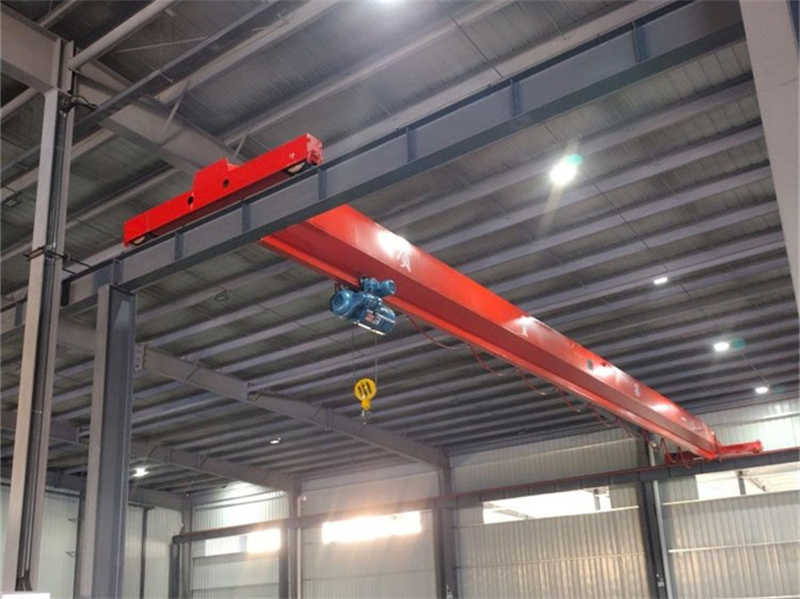
Part 1: Rethinking the Crane as a Cost Center—What Traditional Designs Cost You Every Day
To understand the value of European-style cranes, one must first understand what traditional designs are actually costing. The purchase price of a crane is only the beginning of a much longer financial story.
1.1 The Hidden Weight of Traditional Design
Traditional overhead cranes—whether based on older Soviet-influenced Chinese designs or earlier generation Western models—share a common design philosophy: robustness achieved through material mass. Heavier girders, larger motors, and bulkier structural components were the engineering solution to ensure reliability when computational design tools were limited and steel quality was variable.
This philosophy has a direct financial consequence. By utilizing high-strength low-alloy steel and employing finite element analysis to optimize material distribution precisely according to stress patterns, European-style cranes can achieve the same or greater load-bearing capacity while reducing structural dead weight by approximately 23–64% compared to traditional designs. The crane trolley alone can be over 30% lighter.
What does this weight reduction mean in practice? Heavier cranes demand more from the buildings that house them. Runway beams, support columns, and foundations must all be sized to accommodate the crane‘s weight plus its rated load. When the crane itself is lighter, every supporting structure can be lighter too—and every kilogram of structural steel saved is a kilogram not purchased, fabricated, transported, or erected.
1.2 The Energy Drain You May Not Be Measuring
Traditional crane motors operate at constant speed regardless of the actual load. A 20-ton crane moving an empty hook consumes nearly the same power as one moving a full load. This “big motor pulling small load” inefficiency compounds over thousands of operating hours annually. The financial impact is substantial: variable frequency drive (VFD) equipped cranes can save between $18,000 and $42,000 annually per unit in energy costs compared to traditional fixed-speed systems.
European-style cranes address this through variable frequency drives (VFDs) that continuously adjust motor speed and power output to match the actual load demand. The result is energy consumption typically 25–35% lower than traditional cranes, with some high-efficiency configurations achieving reductions of up to 40%. For a factory operating multiple cranes across multiple shifts, the cumulative annual savings can be measured in six figures.
1.3 The Maintenance Burden and Reliability Gap
Traditional cranes require more frequent maintenance—and experience more unplanned downtime—than their European-style counterparts. The reasons are multiple: less precise manufacturing tolerances lead to accelerated component wear; simpler control systems provide no early warning of developing problems; and fixed-speed operation imposes higher mechanical stress on structures and components with every start and stop.
The downtime cost is particularly acute. When an overhead crane fails, it rarely affects only the crane. Production lines halt. Workers wait. Shipments are delayed. The European-style approach addresses this through modular design and higher-quality components that together reduce failure rates by approximately 40%. Maintenance intervals extend to six months or longer, and when service is required, modular construction enables rapid diagnosis and component replacement rather than extended disassembly.
1.4 The Space You Are Already Paying For
Every factory pays for space—through construction costs, heating and cooling, lighting, and property overhead. Traditional cranes, with their bulky profiles and large hook approach distances, leave valuable space inaccessible. In a facility with limited headroom, a traditional crane may force the building to be taller than necessary, adding 10–15% to civil engineering costs. In an existing facility, it may prevent the installation of mezzanine storage or additional production equipment.
European-style cranes, with their compact, low-headroom design, reclaim this lost space. The low headroom configuration enables the same lifting height within a shorter building envelope, or alternatively, greater effective lifting height within the same building—typically increasing available vertical reach by 15–20%. Hook approach dimensions are tighter, meaning the crane can operate closer to walls and columns, maximizing the productive floor area.
Part 2: The Four Pillars of European-Style Crane Value
The benefits of European-style cranes are not theoretical. They are rooted in specific design and manufacturing approaches that deliver measurable improvements across four key dimensions.
Pillar One: Lightweight Engineering That Reduces Construction and Operating Costs
European-style crane design achieves weight reduction not through material compromise but through material optimization. The approach combines high-strength structural steel—typically Q345B with yield strength at least 30% higher than the Q235B commonly used in traditional designs—with computer-optimized girder cross-sections that place material precisely where stress loads demand it and remove it where they do not.
The result is a crane that weighs significantly less while meeting or exceeding all relevant structural standards. For a typical 10-ton overhead crane, the European design may reduce main girder plate thickness from 20mm to 14mm, cutting girder weight by approximately 1.8 tons. At the 20-ton capacity level, the difference is even more dramatic: a traditional QD-type crane may exert a maximum wheel load of 434 kN on the runway, while an equivalent European-style crane exerts only 170 kN—a reduction of over 60%.
The construction cost impact. Lighter cranes require less robust building structures. For new construction, this translates directly into reduced steel tonnage in the building frame, lighter foundations, and smaller support columns. Industry data indicates that incorporating European-style cranes into the initial building design can reduce overall construction costs by 10–17%. In a standard 5,000-square-meter industrial building, the structural steel savings alone can exceed $14,000. When the crane‘s lighter wheel loads permit wider column spacing, the savings multiply: fewer columns mean less foundation work, fewer obstructions on the factory floor, and greater layout flexibility.
For existing facility upgrades, the benefits are equally tangible. A factory that would require structural reinforcement to accommodate a traditional crane may be able to install a European-style crane on its existing runways with minimal or no modification. In documented cases, this has saved facilities over $40,000 in avoided structural reinforcement costs.
The operating cost impact. Lighter weight means lower inertia. Lower inertia means less energy required for acceleration and less braking force required for deceleration. Combined with efficient VFD motor control, the energy savings are substantial: operational resistance decreases by approximately 30%, and annual electricity consumption drops by 25–35%. For a 10-ton crane operating eight hours daily, this translates to approximately $1,700 in annual electricity savings—enough to recover the equipment price premium within approximately five years through energy savings alone.
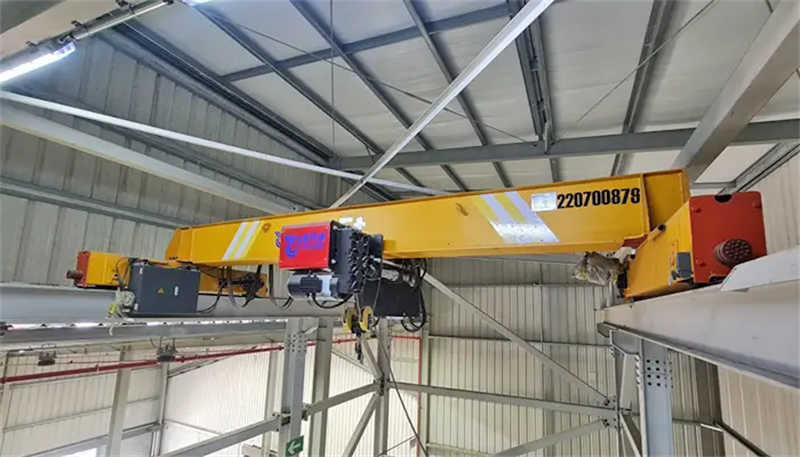
Pillar Two: Space Optimization That Multiplies Facility Productivity
Space in an industrial facility is never free. Every square meter carries a cost, and every meter of vertical clearance represents either an investment made or an opportunity lost. European-style cranes address this reality through compact, space-efficient design.
Vertical space. Traditional cranes require significant headroom between the top of the crane and the building roof to accommodate the hoisting mechanism, trolley frame, and safety clearances. European-style cranes minimize this requirement through tightly integrated design—the hoist is nestled close to the girder, and the overall crane profile is substantially lower. For a facility with a 12-meter building height, this can mean the difference between achieving a 10-meter effective lifting height and being limited to 8 meters—a 25% improvement in vertical working range.
The construction implications are direct. Reducing required building height by just 1.5 meters can lower structural steel consumption by 20%, delivering savings of approximately 12% on total construction cost. In renovation scenarios, the compact design may enable a taller crane in an existing building, unlocking storage or production configurations that were previously impossible.
Horizontal space. European-style cranes feature shorter end carriages and optimized hook approaches, allowing the hook to reach closer to building walls and columns. This minimizes the “dead zone” at the building perimeter where material cannot be lifted, increasing the productive floor area. For a facility handling large workpieces, this additional reach can eliminate the need for secondary handling equipment and reduce workflow complexity.
Space reclamation in existing facilities. Perhaps the most compelling space benefit occurs when a traditional crane is replaced with a European-style unit in an existing building. One documented case in an automotive components factory demonstrated that after installing a lightweight European-style crane, the facility was able to add an entire additional level of storage racking, improving space utilization by nearly 40%—effectively expanding the facility‘s capacity without adding a single square meter of floor space.
Pillar Three: Intelligent Control and Precision That Accelerate Workflow
Traditional cranes typically offer two or three fixed speeds—slow for positioning, fast for travel—with abrupt transitions between them. The result is load swing that requires operator waiting time, positioning inaccuracy that demands manual adjustment, and mechanical stress that accelerates component wear.
European-style cranes replace this with continuously variable speed control through VFD technology. The crane accelerates and decelerates smoothly, with the motor output precisely matched to the load requirement at every moment. Electronic anti-sway systems actively counteract load pendulum motion, eliminating the waiting time traditionally required for the load to stabilize. The combined effect is positioning accuracy measured in millimeters and lift cycle times reduced by approximately 35%.
Consider the cumulative impact in a high-duty-cycle operation. A crane performing 60 lift cycles per shift, with each cycle shortened by 20–30 seconds, gains 20–30 minutes of productive time per shift—time that can be directed toward additional production or earlier shift completion. Over a year of multi-shift operation, the throughput improvement is substantial. One documented upgrade project saw single-shift lift counts increase from 60 to 92—a 53% improvement—following conversion to European-style VFD control.
The safety implications are equally significant. Smoother operation means less mechanical shock to the crane structure and components, extending service life. Precise positioning reduces the risk of load collisions with equipment or personnel. And overload protection, zone control, and anti-collision systems—standard on modern European-style cranes—actively prevent unsafe conditions rather than merely alerting operators after the fact.
Pillar Four: Reliability and Maintainability That Keep Production Moving
The most expensive crane is the one that is not working when production demands it. European-style cranes address this through a combination of premium components and modular design that maximizes uptime and simplifies service.
Component quality. European-style cranes utilize internationally recognized components—SEW gearmotors, ABB or Siemens drives and controls, Schneider electrics—engineered for extended service intervals and long operational life. The integrated “three-in-one” drive units, combining motor, gearbox, and brake in a single compact housing, eliminate the alignment issues and coupling wear points common in traditional separate-component designs. Sealed bearings and lubrication-free designs further reduce routine maintenance requirements.
Modular serviceability. When maintenance is required, modular construction enables rapid diagnosis and component-level replacement. A failed drive unit can be swapped in hours rather than days, minimizing production disruption. Standardized components across the crane fleet reduce spare parts inventory requirements and simplify technician training.
Predictive intelligence. Modern European-style cranes increasingly incorporate IoT sensors that continuously monitor motor temperature, gearbox vibration, brake wear, and operating cycles. This data enables predictive maintenance strategies that identify developing problems before they cause failures—a capability that can reduce unplanned downtime by 40% or more compared to traditional reactive maintenance approaches.
The reliability advantage is measurable: European-style cranes typically demonstrate mean time between failures (MTBF) substantially higher than traditional designs, with correspondingly lower total maintenance costs over the equipment lifecycle. For a factory where crane downtime costs thousands of dollars per hour in lost production, this reliability premium alone can justify the equipment investment.
Part 3: The Dongqi Crane Difference
Dongqi Crane‘s European-style products are engineered to deliver each of these four value pillars with the quality and support that global manufacturers require.
Design and manufacturing. Our cranes are designed to FEM/DIN standards with CE certification, ensuring compliance with European machinery directives and international quality benchmarks. We utilize Q345B structural steel with Charpy impact testing at -20°C for assured toughness across operating conditions. CNC machining centers ensure manufacturing precision, while 100% ultrasonic and magnetic particle testing of critical welds to EN ISO 5817-B standards verifies structural integrity. The result is equipment that consistently meets or exceeds specification requirements.
Component selection. We integrate premium components from our technology partners—SEW, ABB, Siemens, Schneider Electric—combined with our own fabricated structures and system integration expertise. This approach delivers European-level performance and reliability at competitive pricing enabled by Chinese manufacturing efficiency. Energy consumption is reduced by up to 40% compared to traditional bridge cranes through optimized power distribution and advanced motor technology.
Global reach, local support. With a presence in 96 countries, Dongqi Crane provides responsive after-sales support including spare parts delivery, technical consultation, and on-site service. Our certifications—CE, ISO 9001, ISO 14001, ISO 45001, ISO 50001, SGS, and GJB9001C—provide independent verification of our quality management, environmental stewardship, and occupational health and safety systems.
Customized solutions. Every facility is different, and our European-style cranes are configured—not just selected—to match specific requirements. Span, lifting height, duty classification, control interface, environmental protection, and special features are all tailored to the application, ensuring that customers receive a crane optimized for their operational reality rather than an off-the-shelf compromise.
Part 4: The Total Cost of Ownership Framework—Making the Business Case
For procurement leaders, the decision between a traditional crane and a European-style alternative ultimately rests on a comprehensive cost analysis that accounts for the full equipment lifecycle. The purchase price is only the most visible element of a much larger financial equation.
4.1 Initial Investment: Understanding the Premium
A European-style crane typically commands a 15–30% price premium over a traditional domestic crane of equivalent rated capacity. This premium reflects the higher-grade materials, premium components, precision manufacturing, and international certifications that distinguish European-style equipment. For a 20-ton double-girder crane, this might mean a premium of approximately $20,000—a meaningful difference that requires justification.
4.2 The Offsetting Savings: Where the Premium Pays Back
The premium, however, is typically recovered through operational savings across multiple dimensions, often within two to five years:
Energy savings (Annual). A 30% reduction in crane energy consumption on an annual electricity cost of $50,000 yields $15,000 per year. VFD-equipped cranes at steel plants have demonstrated annual savings of $28,000 per unit. For multi-crane facilities, these savings compound significantly.
Maintenance savings (Annual). A 40% reduction in maintenance costs on an annual maintenance budget of $30,000 yields $12,000 per year. Extended maintenance intervals reduce not only direct service costs but also the indirect costs of scheduled downtime. Spare parts costs are reduced by approximately 30% due to component standardization and longer service intervals.
Construction savings (One-time). For new construction, incorporating European-style cranes reduces building structural requirements, saving 10–17% on construction costs. On a $1 million building project, this represents $100,000 to $170,000 in reduced capital expenditure. For existing facilities, avoiding structural reinforcement can save $40,000 or more in renovation costs.
Productivity improvements (Annual, Ongoing). A 25–35% improvement in material handling throughput enables additional production revenue or reduced overtime costs. The value varies by operation, but for a facility where crane-dependent processes are the production bottleneck, the throughput gain alone can deliver a six-month payback.
Space utilization (Annual, Ongoing). In facilities where space is at a premium, the additional storage or production capacity enabled by compact European-style crane design represents real financial value—either enabling growth without facility expansion or enabling consolidation that reduces facility overhead.
4.3 The Lifecycle View: 15–20 Years of Accumulating Advantage
Over a 15–20 year service life, the annual operational savings from a European-style crane compound to a sum that dwarfs the initial purchase price premium. The economic case is compelling: a lower total cost of ownership despite a higher upfront investment.
Moreover, the European-style crane typically delivers a longer useful service life—reflecting superior materials, more precise manufacturing, and less accumulated mechanical stress over years of operation. Where a traditional crane might require major overhaul or replacement after 12–15 years, a well-maintained European-style crane can remain in productive service for 20 years or more, further widening the lifecycle cost advantage.
Conclusion: The Strategic Imperative
The transition from “functional” to “optimal” is not merely an equipment upgrade—it is a strategic decision that shapes a facility‘s cost structure, productivity ceiling, and competitive position for years to come. Every day that a factory operates with a traditional crane, it incurs costs that a European-style alternative would avoid: higher energy bills, more frequent maintenance, slower material handling, and underutilized space.
In 2026, as energy costs remain elevated, sustainability expectations intensify, and manufacturing competitiveness demands ever-greater efficiency, the European-style crane has moved from a premium option to a strategic necessity for forward-looking manufacturers. The question is not whether the investment makes financial sense—the lifecycle cost analysis makes that clear—but whether a manufacturer can afford to continue operating with equipment that was designed for a less demanding era.
Dongqi Crane is ready to partner with manufacturers who recognize that “good enough” lifting equipment is no longer good enough. With over 30 years of experience, European-standard engineering, globally certified quality, and responsive support across 96 countries, we deliver cranes that transform material handling from a cost center into a source of competitive advantage.
Contact Dongqi Crane
To discuss how European-style overhead cranes can reduce your operating costs and improve your material handling efficiency, visit pk.craneyt.com or contact our engineering team directly. We will work with you to develop a customized lifting solution that meets your specific requirements and delivers measurable returns from day one.
About Dongqi Crane
Henan Dongqi Machinery Co., Ltd. is a leading manufacturer of European-standard overhead cranes, gantry cranes, electric hoists, and intelligent lifting solutions. Headquartered in Changyuan, China‘s “Crane Hometown,” our 240,000-square-meter manufacturing facility produces over 10,000 crane units annually for customers in 96 countries. Our certifications include CE, ISO 9001, ISO 14001, ISO 45001, ISO 50001, SGS, and GJB9001C. Technology partners include SEW, ABB, Siemens, and Schneider Electric. Contact us at pk.craneyt.com.
