
Securing Crane Production Capacity and Avoiding Delivery Delays Amid Global Supply Chain Volatility: A Procurement Guide for 2026 and Beyond
Introduction: When Delivery Dates Become Moving Targets
In an era of unprecedented supply chain volatility, the moment a procurement team issues a crane purchase order, an invisible clock starts ticking. That clock no longer measures a predictable manufacturing lead time. It now ticks against a backdrop of congested shipping lanes, semiconductor shortages, fluctuating steel prices, and geopolitical tensions that can delay a critical shipment without warning. For a factory manager waiting on a 30‑ton overhead crane to commission a new production line, or a logistics center awaiting a rail‑mounted gantry crane to unload vessels, every day of delay cascades into lost revenue, contractual penalties, and missed market opportunities.
The numbers confirm the stress. In 2025, global container shipping schedule reliability hovered below 65%, meaning more than one in three shipments arrived late. For heavy, oversize equipment like cranes—often requiring break‑bulk or flat‑rack transport—the risks are amplified. Yet, in 2026, demand for lifting equipment is accelerating. Infrastructure investment across the Belt and Road Initiative, reshoring of manufacturing to North America and Europe, and the energy transition are all driving crane procurement to new heights. The result is a classic supply–demand squeeze: more orders competing for finite factory capacity, skilled labor, and shipping slots.
How can procurement professionals break through this chaos and lock in the crane they need, when they need it? This guide answers that question. It provides a practical, multi‑step framework for securing crane production capacity, compressing delivery schedules, and insulating projects from the shocks that have become the new normal in global logistics. At Dongqi Crane, we have refined these strategies over thousands of international deliveries to 96 countries. This article shares that operational know‑how—along with specific ways our manufacturing scale, inventory management, and project planning capabilities directly benefit customers who need a crane on time, every time.
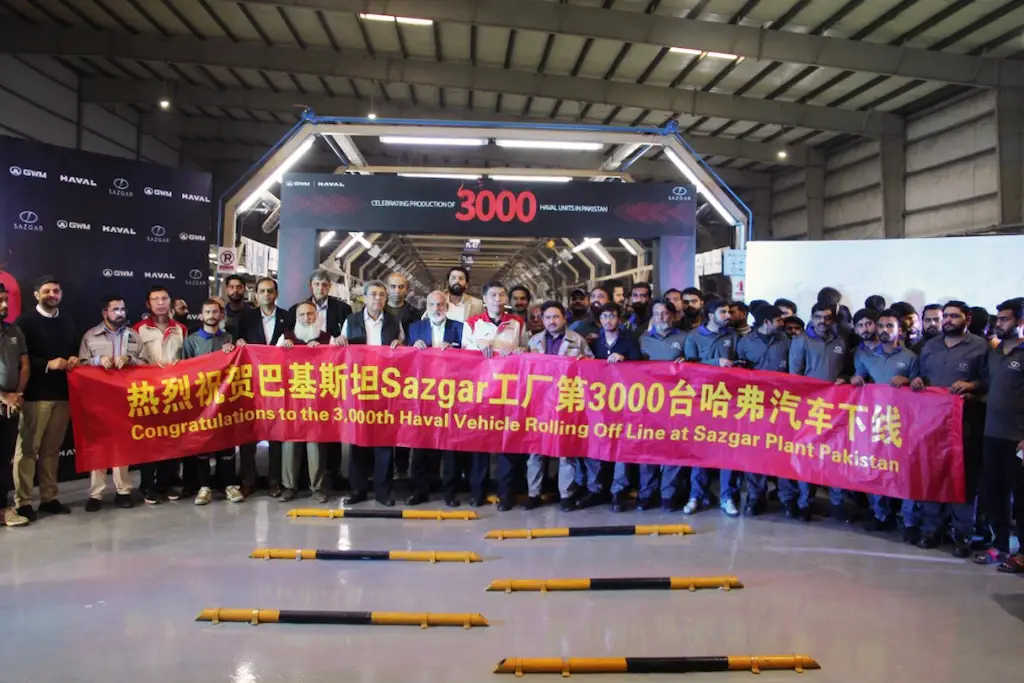
About Dongqi Crane: Headquartered in Changyuan, Henan Province—China’s “Cradleland of Cranes”—Dongqi Crane operates a 240,000‑square‑meter manufacturing facility with over 3,600 employees, including more than 70 senior engineers. With an annual production capacity exceeding 10,000 crane sets and a 36‑person multilingual overseas service team, we combine European‑standard design with the throughput of one of the world’s largest crane factories. Our delivery models are tailored to each project’s needs, from fully assembled cranes to component kits, and our order book is managed to guarantee delivery dates that our clients can rely on.
Part 1: The New Landscape of Crane Supply Chain Risk
1.1 Why Crane Lead Times Have Become Unpredictable
A decade ago, a standard overhead crane could be ordered with a 10‑to‑12‑week lead time and arrive within a narrow window. Today, the same crane may be quoted at 16–24 weeks, with occasional extensions that strain project schedules. The root causes are structural, not temporary:
- Steel market volatility: Crane girders, end carriages, and trolley frames are fabricated from structural steel plate. Global steel prices can swing 20–30% in a single quarter, affecting both cost and availability. Mills sometimes ration production during price spikes, delaying plate deliveries to fabricators.
- Component supply chain pressure: Electric hoists, variable‑frequency drives, bearings, and control systems rely on a global electronics and precision‑engineering supply chain that has been strained since the pandemic. Lead times for branded gearboxes and VFD modules can stretch to 12–20 weeks, directly influencing crane completion dates.
- Logistics bottlenecks: Oversized crane girders require specialized shipping—flat racks, open‑top containers, or break‑bulk vessels. Port congestion, vessel schedule slippage, and a shortage of heavy‑lift handling equipment at transshipment hubs can each add weeks to delivery without warning.
- Skilled labor scarcity: Welding, machining, and electrical assembly of cranes demand certified tradespeople. In China’s crane manufacturing cluster in Changyuan, demand for skilled welders and fitters has grown sharply as export orders surge, creating capacity constraints that affect all local manufacturers.
1.2 The Real Cost of Late Delivery
When a crane arrives late, the financial impact extends far beyond the equipment’s purchase price. A single month of delay on a steel mill’s ladle crane can translate into millions of dollars in lost production. For a warehouse, a late gantry crane may mean containers piling up at the port, incurring demurrage charges of hundreds of dollars per day per container. For a construction project, a delayed launching gantry can stall an entire bridge‑building schedule, triggering penalty clauses and reputational damage.
Dongqi Crane’s project managers have witnessed these cascading costs directly. In one instance, a precast concrete plant in Southeast Asia faced a 30‑day delay because the local contractor’s runway beams were not ready to receive the crane. The crane was completed and ready to ship on schedule, but the site was not. This experience taught us a critical lesson: securing delivery is not only about what happens in the factory—it is about aligning the entire supply chain, from raw material procurement to final site readiness.
Part 2: Pre‑Order Strategies—Locking In Capacity Before You Sign
The most powerful lever for on‑time delivery is exercised before a purchase order is even issued. Proactive buyers can secure a place in the production queue, reserve long‑lead components, and align shipping plans months in advance. Here is how.
2.1 Early Engagement and Capacity Reservation
When you invite a crane manufacturer into your project during the design phase—not after the building is fully specified—you unlock significant scheduling advantages. Dongqi Crane works with EPC contractors, consulting engineers, and end‑user procurement teams to:
- Pre‑allocate production slots: Even before the final crane specification is frozen, we can reserve a tentative manufacturing slot based on the project’s target completion date. This ensures that when the purchase order arrives, the crane enters fabrication immediately rather than joining the back of a queue.
- Lock in long‑lead components: Critical components such as European‑standard hoist gearboxes, VFD modules, and heavy‑duty bearings often have the longest lead times. By pre‑ordering these items against a reserved slot, we ensure they are on hand when fabrication begins, eliminating the most common cause of schedule drift.
- Align design freeze with production planning: A predictable design freeze date—the point at which the crane specification is finalized—allows our engineering team to release fabrication drawings without delay. Late design changes after fabrication has started are one of the most common causes of delivery delay. We work with clients to establish a realistic design freeze milestone and then adhere to it rigorously.
2.2 Standardization and Configure‑to‑Order
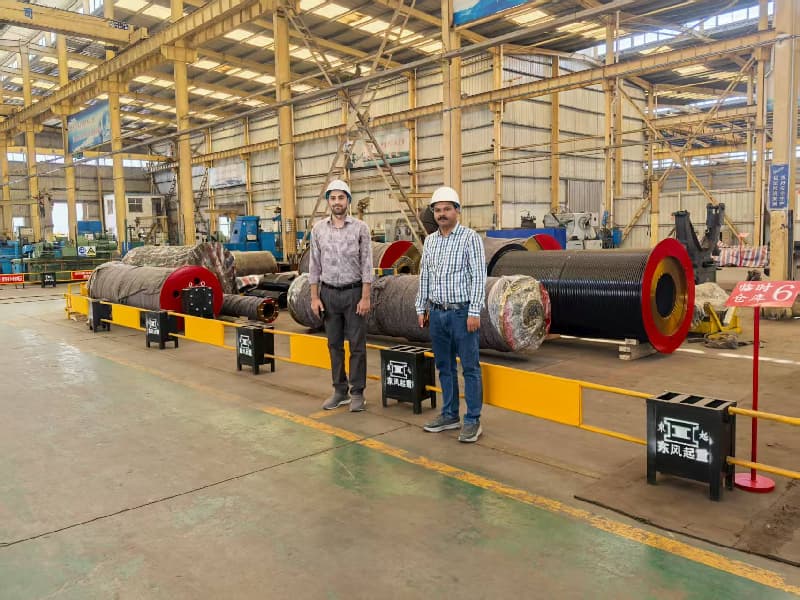
For many industrial applications, a fully custom crane is unnecessary. Dongqi Crane’s European‑standard product line covers a broad range of capacities, spans, and duty classifications with pre‑engineered designs that can be configured with options to match specific requirements. Choosing a configured crane rather than a fully custom design reduces engineering time by 3–5 weeks and significantly simplifies component procurement.
Our HD Series double‑girder European cranes, MG Series gantry cranes, and KBK flexible crane systems all follow this philosophy: standard core design with configurable parameters. For a steel service center requiring a 10‑ton overhead crane with A5 duty and 20‑meter span, we can often select a pre‑engineered girder design from our library, adjust for specific rail gauge and hook path, add required options (radio remote, anti‑sway, special paint), and release to manufacturing within days rather than weeks.
Standardization also supports our inventory strategy. We maintain a buffer stock of common components—motors, brakes, sheaves, bearings—that are used across multiple crane models. This buffer absorbs short‑term demand fluctuations without extending lead times.
2.3 Clear Technical Specification and Avoidance of Scope Creep
Ambiguity in the technical specification is a hidden source of delays. When a procurement document says “suitable for foundry environment” without defining ambient temperature, dust concentration, or heat radiation levels, the manufacturer must either make assumptions that may later prove incorrect or pause to seek clarification. Each round of clarification adds days or weeks to the pre‑production phase.
Dongqi Crane provides a comprehensive technical questionnaire during the inquiry stage that captures all the parameters needed to proceed directly to design. We encourage clients to involve their production engineers and maintenance teams in completing this questionnaire, ensuring that the specification reflects the real operating conditions. By investing time in specification clarity upfront, we eliminate the clarification loops that otherwise consume weeks of the pre‑production schedule.
Part 3: Supply Chain Strategies—Dongqi Crane’s Operational Playbook
The factory floor is where capacity commitments either translate into steel on the shop floor or evaporate into production delays. Dongqi Crane’s manufacturing system is built on the principle that on‑time delivery is not a goal to be hoped for—it is a metric to be engineered into every process.
3.1 Vertical Integration and Manufacturing Scale
Dongqi Crane’s 240,000‑square‑meter production campus in Changyuan is one of the largest single‑site crane manufacturing facilities in the world. Within this facility, we control the critical stages of crane production:
- Steel preparation and cutting: CNC plasma and laser cutting machines process structural steel plate to precise dimensions, with nesting software that maximizes material utilization and reduces waste.
- Welding and fabrication: Our four‑gun air‑protection portal‑shaped automatic welding machines produce the deep, consistent weld penetration that heavy‑duty crane structures demand. Semi‑automatic and robotic welding cells handle repetitive sub‑assemblies, maintaining consistent quality while accelerating throughput.
- Surface preparation and painting: Impeller blasting descaling equipment achieves SA 2.5 surface cleanliness, and automated spray‑paint lines apply multi‑layer epoxy systems in controlled conditions—a process that, if outsourced, would introduce scheduling dependency on subcontractor capacity.
- Machining and assembly: CNC‑controlled plant drills and machining centers produce wheel axles, end‑carriage mounting surfaces, and gearbox interfaces with the precision that on‑time commissioning demands.
- Component production: Dongqi Crane manufactures its own electric hoists, end carriages, and control panels, reducing reliance on external suppliers for the components that most frequently cause schedule delays.
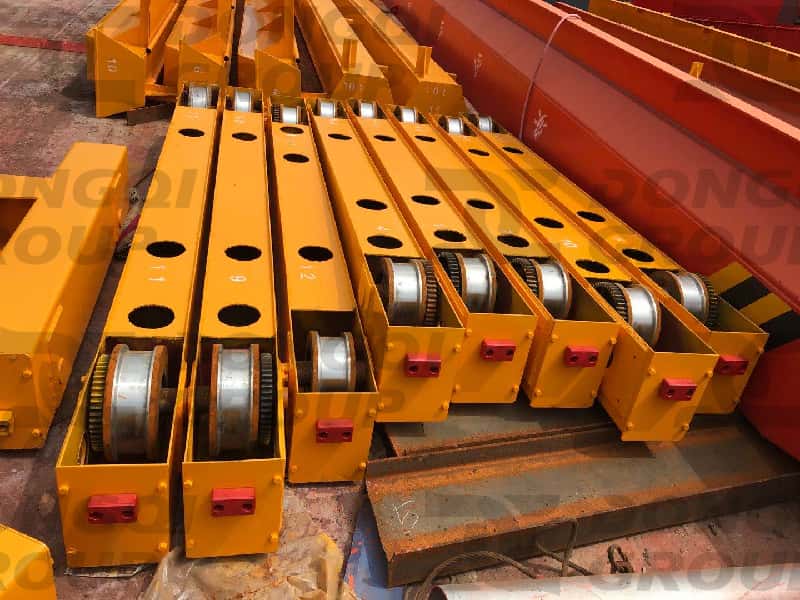
This vertical integration means that the critical path of crane manufacturing runs almost entirely within our own factory walls. The external dependencies that exist—mainly for specialized items like branded bearings, high‑capacity VFDs, and explosion‑proof certifications—are managed through the early procurement and buffer stock strategies described in Part 2.
With over 2,000 sets of manufacturing and detection equipment and an annual output exceeding 10,000 crane sets, Dongqi Crane possesses the throughput to absorb large orders while maintaining delivery discipline. We are not a small workshop that becomes overwhelmed when a single major project lands—our production system is designed for volume, variety, and velocity.
3.2 Component Inventory and Buffer Management
For the externally sourced components that are on the critical path, Dongqi Crane maintains strategic inventories that decouple our production schedule from supplier lead‑time variability. High‑consumption items—bearings, rope, sheaves, brake linings, contactors, limit switches—are stocked at levels calculated from historical demand and current order book projections.
This buffer stock serves three functions: it ensures that production can continue uninterrupted when a supplier delivery is delayed; it allows us to respond to urgent orders by drawing on inventory while waiting for replenishment; and it supports our aftermarket service by providing genuine spare parts on short notice.
Our inventory philosophy is conservative: we would rather carry slightly more stock than theoretically optimal than risk a single delivery delay caused by a missing component. In the context of crane manufacturing, where a delayed gearbox can idle an entire assembly bay, the cost of excess inventory is far lower than the cost of delayed delivery.
3.3 Flexible Manufacturing and Parallel Processing
Crane production does not need to be strictly linear. At Dongqi Crane, multiple sub‑assemblies can proceed in parallel. While the main girder is being welded, the end carriages are being machined. While the trolley frame is being fabricated, the electrical panels are being wired and tested. This parallel processing compresses the total manufacturing lead time and reduces the sensitivity of the overall schedule to delays in any single sub‑assembly.
For large projects involving multiple cranes, we further optimize by batching common components. If a client orders ten identical overhead cranes, we produce all ten girder pairs as a batch, all twenty end‑carriage sets as a batch, and so on. Batching reduces setup time at each workstation and enables a steady production rhythm that achieves higher throughput than processing each crane individually.
3.4 Factory Load Balancing and Subcontractor Management
When our order book is at peak levels, we selectively deploy qualified subcontractors for non‑core fabrication tasks—such as standard walkway gratings, ladder fabrications, and simple bracketry—while retaining all structural welding, machining, and assembly in‑house. This preserves our core quality control while expanding effective capacity.
Crucially, subcontractor capacity is pre‑qualified and placed under long‑term agreements that guarantee availability when we need it. We do not scramble for subcontractor availability at peak times—we have already secured it.
Part 4: Logistics and Shipping—The Invisible Half of Delivery
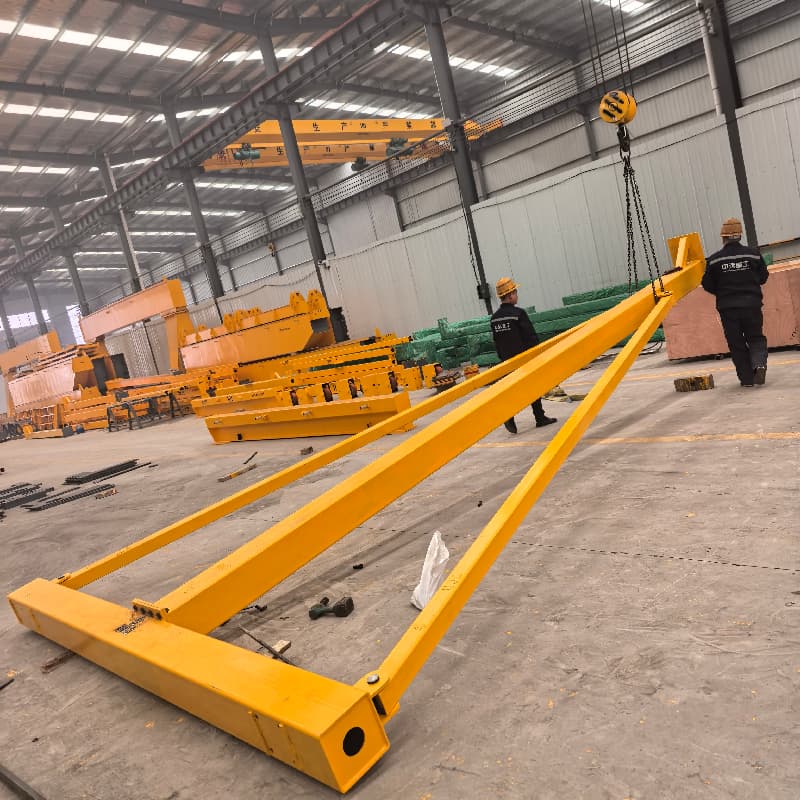
A crane completed in the factory is only halfway to the customer. The logistics phase—packaging, inland transport, ocean freight, customs clearance, and final site delivery—contains its own set of delay risks that must be actively managed.
4.1 Packaging Engineered for Transit Protection and Efficiency
Crane components are vulnerable to corrosion, impact, and handling damage during transit. Dongqi Crane’s export packaging specifications are designed for worst‑case scenarios: electrical panels in sealed moisture‑barrier bags with desiccant, machined surfaces coated with rust‑preventive compound, bolted connections organized in clearly labeled boxes, and main girders supported on purpose‑built shipping cradles that prevent deflection and distortion.
Proper packaging serves a schedule function as well: well‑packaged cargo clears customs faster because the contents match the packing list exactly, and there are no loose or unidentified parts to raise inspection flags.
4.2 Freight Mode Selection and Booking Strategy
For international crane deliveries, Dongqi Crane offers multiple freight modes matched to project requirements:
- Full container load (FCL): For cranes that can be disassembled to fit within standard 40‑foot containers or flat racks. This is the most cost‑effective mode for many single‑girder and smaller double‑girder cranes.
- Break‑bulk / RO‑RO: For oversized components such as long‑span girders that exceed container dimensions. Break‑bulk shipments are booked on vessels with heavy‑lift gear, and the schedule is coordinated with vessel availability.
- Crane kit without main beams: For destinations where ocean freight for girders is disproportionately expensive or port handling is constrained. Dongqi Crane supplies all mechanical and electrical components, with the client fabricating main girders locally to our drawings. This reduces shipping volume and weight by 30–50%, cutting freight costs and compressing delivery time.
We book ocean freight through established forwarders with proven reliability on the required routes. For critical projects, we may secure space on multiple vessel options to protect against last‑minute schedule changes.
4.3 Incoterms and Responsibility Clarity
Clear allocation of logistics responsibilities prevents misunderstandings that cause delays. Dongqi Crane works with clients to select the Incoterm appropriate to the project: FOB, CIF, DAP, or DDP. For many international projects, we recommend FOB (Free On Board) with the client’s nominated forwarder, or CIF (Cost, Insurance, Freight) where we manage the ocean freight to the destination port. In either case, the responsibilities at each handoff point are documented in the contract, eliminating ambiguity.
4.4 Site Readiness and Final‑Mile Delivery
The most avoidable cause of delivery delay is an unprepared site. When a crane arrives at a destination port and the site is not ready to receive it—no unloading equipment, runway beams not installed, power supply not connected—the crane may sit in a lay‑down yard for weeks, accumulating storage charges and risking damage.
Dongqi Crane addresses this through our site readiness checklist, issued well before the scheduled shipment date. The checklist confirms that the runway is installed and aligned, the power supply meets specifications, unloading equipment (crane, forklift, or mobile crane) is available, and all necessary permits and customs documentation are in place. We request that the client confirms site readiness in writing before we authorize the shipment to depart.
Our Pakistan office provides a case in point: by maintaining a local presence, we can physically verify site readiness before a crane arrives, eliminating the risk of a last‑minute site deficiency that delays commissioning.
Part 5: Contractual and Project Management Levers
Even the best operational planning cannot eliminate all uncertainty. The contractual framework should therefore include provisions that align incentives for on‑time delivery while protecting both parties from events genuinely beyond control.
5.1 Delivery Milestones with Liquidated Damages
The contract should define not a single “delivery date” but a series of milestones—design approval, factory acceptance test (FAT), ready for shipment, arrival at port, and commissioning complete. Each milestone carries a target date, and delay penalties (if applied) are tied to the milestone that was missed, not the entire project. This structure incentivizes the manufacturer to maintain schedule at every stage.
Dongqi Crane’s standard contracts include such milestone schedules, and we track progress against them using a project management system visible to both our team and the client.
5.2 Factory Acceptance Test as a Schedule Guarantee
The FAT is the single most important verification point before shipment. Dongqi Crane conducts a comprehensive FAT for every crane: static load test at 125% of rated capacity, dynamic test at 110%, and full functional verification of all mechanisms and safety devices. The FAT confirms that the crane meets its specifications and is ready to ship. From that point forward, the only variables that can delay commissioning are logistics and site readiness—both of which can be managed.
We strongly encourage clients to attend the FAT in person or via live video feed. It provides confidence that the crane is complete and performing, and it marks the definitive transition from manufacturing to logistics. A properly conducted FAT eliminates the risk of discovering performance deficiencies at the destination site that would require extensive rework.
5.3 Force Majeure and Contingency Planning
No contract can eliminate all risk. Force majeure provisions cover events beyond either party’s control—natural disasters, wars, port closures, pandemics. Beyond legal language, however, the parties should agree on practical contingency measures: alternative shipping routes, accelerated production if needed, and access to rental cranes as a bridging solution while the permanent crane is delivered.
Dongqi Crane has, on several occasions, expedited production for a client whose project was brought forward unexpectedly, drawing on our buffer stock and factory flexibility to compress a standard lead time. This capability is built into our operational philosophy: capacity is reserved, not just hoped for, and the production system is designed to respond to surges.
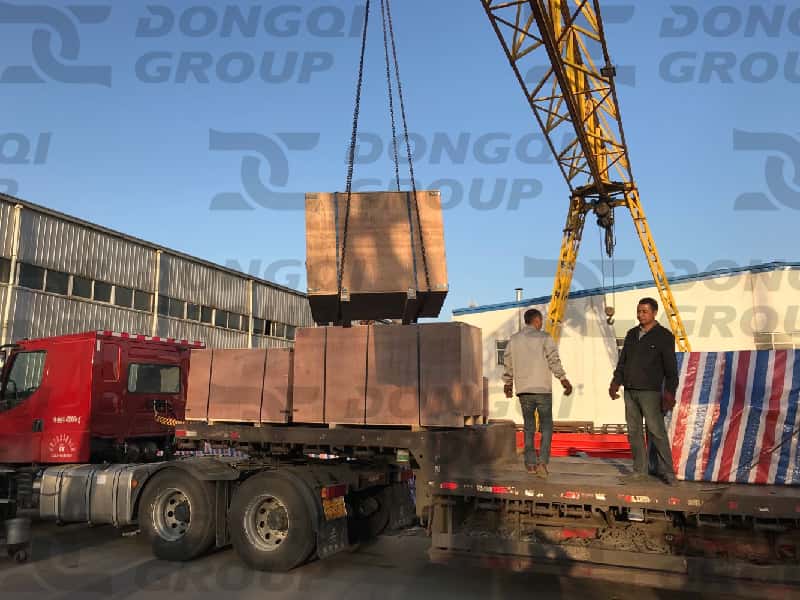
Part 6: The Dongqi Crane Advantage—Turning Capacity into Certainty
6.1 The Factory That Scales with You
At 240,000 square meters and over 10,000 crane sets per year, Dongqi Crane’s Changyuan facility is an industrial asset that directly benefits our customers. It provides not only volume but surge capacity: when a major project requires ten, twenty, or fifty cranes on a coordinated schedule, our factory has the bays, the equipment, and the workforce to execute. We are not limited to one or two cranes per month; we can deliver fleets.
This scale also supports our commitment to honor quoted lead times. Even as our order book grows, the production system is dimensioned to handle peak demand without extending lead times beyond our standard published ranges.
6.2 Regional Presence That Reduces Last‑Mile Risk
Our permanent overseas office in Pakistan, our 36‑person multilingual overseas service team, and our network of agents and service partners in key markets together form a delivery infrastructure that extends beyond the factory gate. A local presence means we can verify site readiness, clear customs efficiently, arrange inland transport, and begin commissioning immediately upon arrival—all factors that compress the post‑shipment phase of delivery.
6.3 Delivery Transparency and Communication
Every Dongqi Crane order is assigned a project coordinator who maintains regular communication with the client. Weekly progress reports, photographs of the crane in production, and early notification of any potential schedule deviation are standard. This transparency allows clients to plan their own project schedules with confidence, knowing that the crane’s status is visible and that any issues are being addressed.
Part 7: A Step‑by‑Step Action Plan for Buyers
Based on the strategies described above, here is a concrete action plan that procurement teams can implement to lock in crane capacity and avoid delays:
Step 1: Start Early. Engage crane manufacturers during the building design phase or as soon as the project schedule is known. Reserve a production slot with a target delivery window.
Step 2: Freeze Specifications. Use Dongqi Crane’s technical questionnaire to define all parameters. Involve your production engineers to ensure the specification is complete and accurate. Commit to a design freeze date and adhere to it.
Step 3: Select Standard Where Possible. Evaluate whether a configured standard crane meets your requirements. If a fully custom crane is necessary (as determined by the criteria in our Custom vs. Standard guide), ensure the custom features are clearly defined.
Step 4: Confirm Component Availability. Request confirmation that long‑lead components have been ordered against your project. Dongqi Crane provides this confirmation as part of our order acknowledgment.
Step 5: Plan Logistics Early. Determine the shipping mode and Incoterms in consultation with Dongqi Crane. Book ocean freight as soon as the crane enters production, not after it is completed.
Step 6: Prepare the Site. Complete the site readiness checklist at least four weeks before the scheduled shipment date. Confirm runway alignment, power supply, unloading equipment, and customs documentation.
Step 7: Attend the FAT. If possible, attend the factory acceptance test in person or via video. Confirm that the crane meets all specifications before it ships.
Step 8: Maintain Communication. Stay in regular contact with your Dongqi Crane project coordinator throughout the process. Early notification of any change—on either side—enables rapid replanning.
Conclusion: Delivery Certainty Is Engineered, Not Hoped For
Global supply chain volatility will not disappear in 2026. The forces that disrupt shipping lanes, extend component lead times, and stress factory capacity are structural features of the current global economy. But they are not unmanageable. With early engagement, smart specification, a manufacturer that has invested in capacity and inventory, and a coordinated logistics plan, procurement teams can achieve the delivery certainty their projects demand.
Dongqi Crane has built its manufacturing system, supply chain management, and project delivery processes around this principle. Our factory scale, vertical integration, component inventory, and logistics expertise are not just operational advantages—they are the mechanisms by which we convert capacity commitments into delivery results. From a single 2‑ton gantry crane for a small workshop to a fleet of heavy‑duty overhead cranes for a steel mill, every order we accept is a promise to deliver on time.
Contact Dongqi Crane to lock in your crane capacity:
- Website: pk.craneyt.com
- Project Inquiry: Submit your project schedule and technical requirements for a capacity check and delivery proposal—response within 24 hours
- Factory Visit: Inspect our production capacity and inventory management at our 240,000‑square‑meter facility in Changyuan, China
- International Support: 36‑person multilingual team covering 96 countries, with permanent office in Pakistan
With Dongqi Crane, you gain more than a crane—you gain a partner whose operational systems are designed to deliver on time, despite a world that seems determined to make that difficult.
© 2026 Dongqi Crane. All rights reserved. Delivery commitments are subject to contract terms and conditions. The strategies described in this guide are general recommendations; individual project schedules should be confirmed during the procurement process.
