
Top Industrial Crane Manufacturers in 2026: A Comprehensive Comparison & Selection Guide
Introduction: The High-Stakes Nature of Crane Supplier Selection
Selecting an industrial crane supplier is one of the most consequential capital equipment decisions a procurement professional will make. The wrong choice can cascade into years of operational headaches: excessive downtime, spiraling maintenance costs, safety incidents, and premature replacement. The right choice, conversely, delivers decades of reliable service that quietly powers production without drawing attention to itself.
The stakes have never been higher. As of May 2026, the global crane market has reached approximately $43.43 billion, growing at a compound annual rate of 5.3%. The overhead crane segment alone is projected to expand to $53.3 billion in 2026, with a robust CAGR of 6.5% driven by expanding industrial manufacturing, automotive production facilities, and increasing demand for efficient material handling solutions. China, already the world’s largest crane market, now accounts for over 35% of global market share, while Chinese manufacturers collectively command 20.4% of global engineering machinery sales—second only to the United States and Japan.
Yet market size and growth alone do not guide procurement decisions. What decision-makers need is a clear, objective framework for comparing the leading manufacturers across dimensions that matter: technical capability, product quality, total cost of ownership, global service infrastructure, and industry-specific expertise.
This guide provides exactly that. We examine the global industrial crane landscape as it stands in May 2026, categorize the major players, and equip you with a structured evaluation methodology. While this guide is published by Dongqi Crane and naturally highlights our strengths, we have made every effort to present competing manufacturers fairly and accurately—because an informed buyer is the best long-term partner.
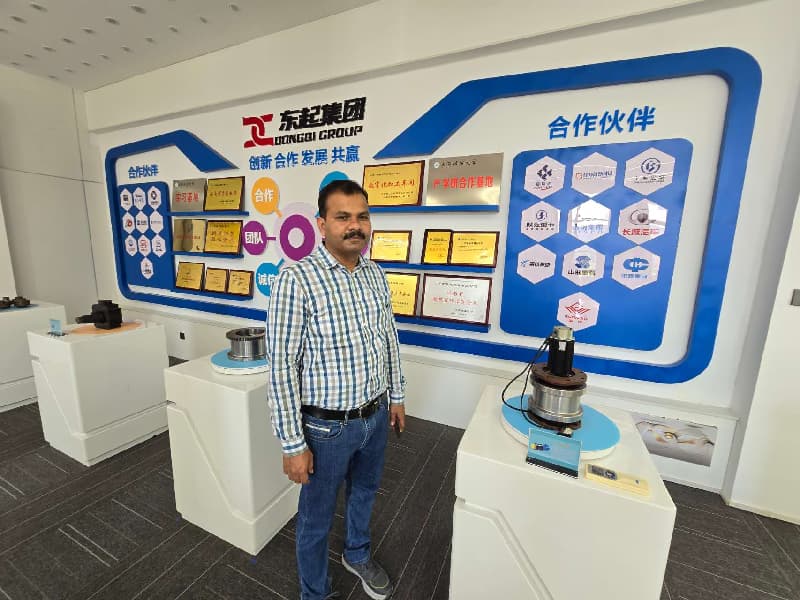
About Dongqi Crane: Dongqi Crane is a Sino-New Zealand joint venture headquartered in Changyuan, Henan Province—China’s renowned “Cradleland of Cranes.” Our 240,000-square-meter manufacturing facility, staffed by over 3,600 employees including 500 technicians and more than 70 senior engineers, produces over 10,000 crane sets annually. We combine European design philosophy with Chinese manufacturing efficiency, delivering cranes certified to FEM, ISO, and CE standards to clients in 96 countries across steel, automotive, petrochemical, energy, and precision manufacturing sectors.
Part 1: Why a Comparative Approach Is Essential
1.1 A Fragmented, Rapidly Evolving Market
The overhead crane manufacturing landscape presents a complex picture. At the top, a small group of European and Japanese incumbents—Konecranes (Finland), Demag (Germany), ABUS (Germany), GH Crane & Components (Italy), KITO Group (Japan)—dominate the high-end segment, particularly in markets requiring premium engineering and advanced automation. These first-tier players collectively hold a substantial share of the global market.
Meanwhile, Chinese manufacturers have undergone a dramatic transformation. Once stereotyped as low-cost, low-quality alternatives, leading Chinese crane makers have invested heavily in European technology transfer, advanced manufacturing equipment, and international certifications. The result is a new category of manufacturer—exemplified by Dongqi Crane, Weihua Group, and Dafang Heavy Machine—that delivers European-standard engineering at Chinese cost structures.
This fragmentation creates both opportunity and risk for buyers. The opportunity: competitive pricing and multiple sourcing options. The risk: quality variability and the difficulty of distinguishing genuine manufacturers from trading companies that merely resell equipment without engineering depth.
1.2 Key Trends Reshaping the Industry in 2026
Several structural shifts are reshaping crane procurement:
Smart Technology Integration: Smart crane control systems, remote monitoring, and predictive maintenance capabilities are transitioning from optional extras to standard requirements. The industry is experiencing increasing adoption of smart crane control systems, rising demand for high-capacity lifting solutions, and an enhanced focus on operator safety. By 2026, smart crane market penetration is projected to reach approximately 18%, with IoT-enabled remote monitoring, adaptive load control, and fault prediction systems fundamentally redefining operational efficiency standards.
Energy Efficiency and Sustainability: Rising demand for energy-efficient hoists and automated lifting systems is reshaping procurement criteria. European-standard cranes with lightweight design, regenerative drives, and high-efficiency motors are gaining preference over traditional heavy designs that consume more energy.
Supply Chain Realignment: Tariffs on imported steel structures, hydraulic systems, and electronic controls are driving localized manufacturing and modular crane designs that reduce reliance on imported components. These dynamics are increasing equipment prices and extending delivery timelines in some markets—but also creating opportunities for manufacturers with localized production and service capabilities.
Service-Centric Competition: As equipment technology converges, after-sales service, spare parts availability, and technical support have become decisive differentiators. The industry has shifted toward evaluating the full lifecycle service capability of suppliers, not just their equipment specifications.
Part 2: How to Evaluate a Crane Manufacturer: The 7-Point Framework
Before comparing specific manufacturers, it is essential to establish a clear evaluation framework. Relying on brand reputation alone—or worse, price alone—is insufficient.
The industry has identified several critical dimensions for supplier evaluation: technology and performance indicators (rated lifting capacity, duty classification A1-A8, span, lifting height, operating speed, control precision), solution adaptability (non-standard customization capability, complex working condition solutions), full lifecycle service (installation qualifications, maintenance systems, emergency response speed, spare parts availability), and compliance with safety standards.
Drawing on industry best practices, we recommend the following structured approach:
2.1 Manufacturer Type: OEM vs. Trading Company
One of the most fundamental distinctions—and a frequent source of procurement mistakes—is whether you are dealing with an original equipment manufacturer (OEM) or a trading company.
OEM crane manufacturers operate their own factories, exercising full control over design, R&D, production, and testing. They maintain independent engineering teams, support customized designs, and enforce stringent quality control throughout the production process. OEMs are strongly preferred for complex operating conditions or custom projects.
Trading companies lack production capabilities, instead aggregating third-party resources for sales. They function as intermediaries—which may offer flexibility but removes the critical link between engineering responsibility and manufacturing execution.
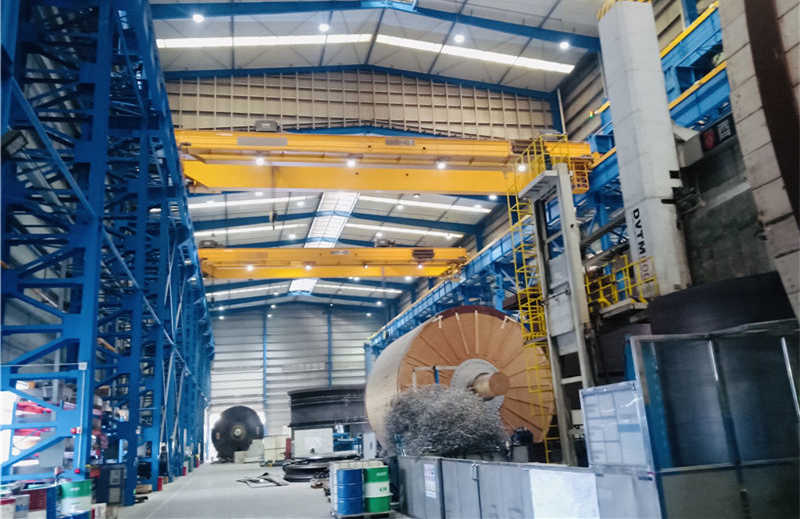
Recommendation: Before engaging any supplier, verify their manufacturing status. Request factory photographs, production line videos, facility addresses, and independent evidence of manufacturing capability. Schedule a factory visit before making any significant commitment. At Dongqi Crane, we welcome—and actively encourage—prospective clients to visit our 240,000-square-meter facility in Changyuan and to witness our manufacturing processes, quality control systems, and full-load testing procedures firsthand.

2.2 Technical Depth and R&D Capability
Beyond production capability, assess the manufacturer’s engineering depth. Key indicators include patents held, participation in industry standard-setting, size and qualifications of the engineering team, and investment in testing facilities. Evaluate R&D capabilities through patents and engineering team credentials.
2.3 Certifications and Standards Compliance
Verify compliance with relevant international standards: ISO 9001 (quality management), ISO 14001 (environmental management), ISO 45001 (occupational health and safety), CE marking for European market access, and region-specific certifications (GOST for Russia/CIS, ASME for North America). Certifications should be current and verifiable through independent databases.
2.4 Product Range and Customization Capability
A manufacturer offering only standard catalog products may be unable to address your specific operating conditions. The best suppliers can customize cranes for specialized environments: high temperature (steel mills, foundries), corrosive atmospheres (chemical plants, coastal installations), explosive dust or gas (petrochemical, grain handling), cleanroom (semiconductor, pharmaceutical), and extreme duty cycles (A6-A8 applications).
2.5 International Project Experience
For overseas buyers, a manufacturer’s export track record is critical. Examine case studies from projects in your region or similar industries, references from previous international clients, and the manufacturer’s familiarity with local regulations, electrical standards, and logistics requirements. Select a crane manufacturer with proven international case studies.
2.6 After-Sales Service Infrastructure
Equipment value is realized not at the point of purchase, but over decades of operation. Industry data indicates that equipment maintenance costs can account for over 60% of total lifecycle costs, making professional, timely service essential for ensuring safety and efficiency. Evaluate spare parts availability (both stocked items and lead time for non-stocked), technical support responsiveness, installation and commissioning capability, operator training programs, and warranty terms and post-warranty service agreements.
2.7 Total Cost of Ownership (TCO)
The initial purchase price of a crane represents only a fraction of the total expenditure over its 15-25 year service life. Procurement decisions should always prioritize total cost of ownership over the initial purchasing price—a principle that guides all Dongqi Crane consultations. A comprehensive TCO calculation includes energy consumption, routine maintenance costs, spare parts replacement, downtime costs, and eventual decommissioning. A crane that costs 15% more upfront but consumes 30% less energy and requires 40% less maintenance over its life is the far better investment.
Part 3: Manufacturer Profiles—Three Tiers of the Global Crane Market
The global industrial crane market segments broadly into three tiers, each serving different buyer priorities.
3.1 Tier One: European Legacy Manufacturers
These companies represent the historical gold standard of crane engineering. They dominate the high-end market with extensive technical expertise, refined over more than a century of engineering development, and strong presence in demanding applications (automotive, aerospace, nuclear). Their global service networks are comprehensive, though pricing typically commands a 50-100% premium over Tier Two alternatives.
Konecranes (Finland): One of the world’s leading manufacturers of lifting equipment, offering overhead cranes, gantry cranes, and light crane systems. Konecranes is known for its advanced automation capabilities, TRUCONNECT remote monitoring, and extensive service network spanning 50 countries. The company leads in smart crane technology and data-driven maintenance. Konecranes (including its Demag brand) is widely recognized as the largest global overhead crane manufacturer by revenue.
Demag (Germany, now part of Konecranes): A historic German brand providing overhead cranes, jib cranes, and electric hoists. Demag’s expertise in standardized components and precise control systems has made it a mainstay in automotive and manufacturing applications. In specialized segments such as aircraft maintenance cranes, Demag offers stability and proven reliability, particularly for 40-60 meter span standard hangars.
ABUS (Germany): A specialist in lightweight cranes and electric chain hoists with millimeter-level positioning accuracy. ABUS holds approximately 25% of the European light crane market and serves as a core supplier for automotive production lines. The company operates several production sites in Germany with 60,000 square meters of production facilities, with 80% of production remaining in Germany.
GH Crane & Components (Spain/Italy): GH provides overhead cranes, gantry cranes, and special lifting solutions, with particular strength in the European and Latin American markets. GH is recognized for its component-level engineering and ability to supply crane kits for local assembly.
Key Consideration for Buyers: European manufacturers excel in technical sophistication, but this comes at a price. For budget-constrained projects or applications where moderate-duty classification is adequate, the value proposition of Tier One may not justify the premium. Additionally, lead times can be longer, and spare parts for legacy installations can be expensive and slow to source outside Europe.
3.2 Tier Two: Leading Chinese Manufacturers with International Capability
This tier represents the fastest-growing segment of the global crane market. These manufacturers have invested substantially in European technology transfer, international certifications, and export-oriented service infrastructure. They offer a compelling balance of European-standard engineering and significantly more competitive pricing—typically 30-50% below Tier One equivalents.
Dongqi Crane (China/New Zealand Joint Venture):
Dongqi Crane occupies a distinctive position within this tier as a Sino-New Zealand joint venture that directly integrates European design philosophy into its product development. Our European-standard overhead cranes are designed to FEM and DIN standards, featuring optimized lightweight structures using S355JR and S420ML high-tensile steel, achieving 25-30% weight reduction without sacrificing structural integrity.
Core Capabilities:
- Manufacturing Scale: 240,000-square-meter facility in Changyuan, Henan Province, with annual production capacity exceeding 10,000 crane sets
- Engineering Team: Over 3,600 employees including 500 technicians and more than 70 senior engineers
- Product Range: Single-girder and double-girder overhead cranes (1-500 tons), gantry and semi-gantry cranes, KBK flexible track systems, explosion-proof cranes, European-standard hoists, intelligent monitoring systems (AICrane platform)
- Certifications: ISO 9001, ISO 14001, ISO 45001, CE certification
- Global Reach: Products exported to 96 countries, with a dedicated overseas team of 36 professionals providing multilingual service in English, Arabic, Spanish, Russian, and Korean
- Specialization: European-standard cranes for A4-A6 classification, intelligent crane systems, customized solutions for steel, automotive, and manufacturing applications
Distinctive Advantages:
- European engineering standards at Chinese cost structures—typically 35-45% less than equivalent European-brand cranes
- Factory-direct procurement eliminates intermediary markups
- Willingness to customize based on specific operational requirements
- Transparent factory inspection policy encouraging client visits
- Rapid response: customized proposals typically within 24 hours
Weihua Group (China):
Weihua is one of China’s most prominent crane manufacturers, with bridge and gantry crane production and sales ranking first in China for 19 consecutive years. Founded in 1988 in Changyuan, Henan (the same “Cradleland of Cranes” where Dongqi is based), the company achieved 2024 sales revenue of RMB 289 billion and a brand value of RMB 36.956 billion.
Weihua’s strengths include a comprehensive product portfolio covering 10 major series and over 200 categories, serving 31 major industries. The company has developed large-tonnage products including 600-ton bridge cranes and 900-ton beam-shifting cranes. In the steel metallurgy sector, Weihua’s overhead and gantry cranes hold a market share exceeding 25%, with specialized high-temperature cranes capable of continuous 12-hour operation in 800°C environments. The company also offers intelligent products such as heavy-load space robots for automated material handling.
Dafang Heavy Machine:
Also located in the Henan crane manufacturing cluster, Dafang is recognized in global EOT crane market analyses as a significant manufacturer. The company focuses on medium-to-heavy duty overhead cranes and gantry cranes for industrial applications.
Henan Mine Crane:
Listed among global overhead crane manufacturers, Henan Mine produces a wide range of bridge and gantry cranes with a focus on value-oriented solutions for manufacturing and warehouse applications.
Key Consideration for Buyers: Tier Two Chinese manufacturers offer the most attractive price-performance ratio in the global market. However, quality and capability vary significantly across this segment. Buyers should look for manufacturers with verifiable international certifications, export experience, and a demonstrated commitment to engineering standards rather than price competition alone.
3.3 Tier Three: Regional Manufacturers and Specialist Suppliers
These companies serve specific geographic markets or niche applications. They offer localized service advantages and may provide adequate solutions for standard, light-duty applications, but generally lack the engineering depth and international support infrastructure required for complex or heavy-duty projects.
Notable Examples:
- Eilbeck Cranes (Australia): A leading domestic manufacturer specializing in overhead cranes, gantry cranes, and jib cranes for the Australian and Pacific markets
- Deshazo (USA): A recognized EOT crane manufacturer serving the North American market with custom-engineered solutions
- Gorbel (USA): Specializes in workstation cranes, jib cranes, and light-capacity bridge crane systems
Part 4: Head-to-Head: Dongqi Crane vs. Tier One European Brands
For procurement professionals evaluating Dongqi Crane against established European brands, the following comparison highlights the key differentiators:
| Comparison Dimension | Tier One European Brands (Konecranes/Demag/ABUS/GH) | Dongqi Crane |
|---|---|---|
| Engineering Standard | FEM/DIN/ISO; century-plus legacy | FEM/DIN/ISO; European-standard design philosophy through Sino-New Zealand JV |
| Price Level (Index) | 100 (baseline) | 55-65 |
| Typical Lead Time | 16-24 weeks (standard models) | 8-12 weeks (standard models) |
| Customization Flexibility | Moderate; engineering change orders costly and slow | High; in-house engineering team adjusts designs efficiently |
| Smart Technology | Advanced, proprietary ecosystems | AICrane platform with open-protocol integration |
| Spare Parts Cost | Premium pricing | Factory-direct pricing, typically 40-60% lower |
| Service Network | Extensive across Europe and North America | Growing global network, 96 countries served, overseas offices in key markets |
| Minimum Order Flexibility | Often high MOQ requirements | Flexible; single-unit orders accepted |
| Best For | Premium automation, critical applications, projects with abundant budget | Value-driven procurement, mid-to-heavy duty, projects requiring customization and fast delivery |
The Strategic Trade-Off: Choosing Dongqi Crane over a Tier One European brand is not a compromise on quality—it is a strategic decision to access European-standard engineering at a significantly lower cost, with greater customization flexibility and faster delivery. The trade-off is primarily in brand prestige and, in some markets, in the depth of local service presence—though Dongqi Crane’s service network continues to expand.
Part 5: Head-to-Head: Dongqi Crane vs. Other Chinese Manufacturers
For buyers evaluating multiple Chinese suppliers, the following comparison provides clarity:
| Comparison Dimension | Weihua Group | Dongqi Crane |
|---|---|---|
| Founded | 1988 | Sino-New Zealand JV |
| Location | Changyuan, Henan | Changyuan, Henan |
| Employees | ~8,600 | ~3,600 (including 500+ technicians) |
| Product Focus | Full range, heavy emphasis on large-tonnage and metallurgy | European-standard overhead cranes, intelligent systems, customized solutions |
| Annual Revenue (2024) | RMB 28.9 billion | Not publicly disclosed |
| International Certifications | ISO, CE | ISO 9001, ISO 14001, ISO 45001, CE |
| Export Coverage | 170+ countries | 96 countries |
| Design Philosophy | Traditional Chinese heavy engineering with growing European influence | European-standard lightweight design core to product DNA |
| Overseas Service Centers | Limited | Dedicated overseas team of 36 multilingual professionals; Pakistan office established |
| Best For | Very large capacity cranes, Chinese domestic projects, heavy metallurgical applications | International procurement, European-standard applications, projects requiring strong engineering support and fast delivery |
| Pricing (Relative) | Competitive mid-range | Competitive mid-range with European engineering advantage |
Both companies are located in Changyuan, China’s crane manufacturing capital, and benefit from the region’s mature supply chain. The choice between them should be driven by project requirements: Weihua excels at very large capacity applications, while Dongqi Crane’s European-standard product line is purpose-built for international buyers seeking FEM/DIN compliance with the cost advantages of Chinese manufacturing.
Part 6: Procurement Decision Framework with Weighted Scoring
Having examined the landscape, here is a weighted decision-making model for evaluating crane suppliers:
| Evaluation Criterion | Weight (%) | Scoring Guidance |
|---|---|---|
| Equipment Price | 15 | Look at total project cost, not just crane cost; include runway and installation |
| Engineering Quality & Standards | 20 | Verify FEM/ISO classification documentation, material certificates, weld procedures |
| Manufacturing Capability | 15 | Factory visit; assess equipment, QC processes, testing facilities |
| Customization Capability | 10 | Can the supplier adapt to your specific operating conditions? |
| International Experience | 10 | Check case studies, client references in your region and industry |
| After-Sales Service | 15 | Evaluate response time commitments, spare parts strategy, technician availability |
| Technology & Innovation | 10 | Smart monitoring, VFD control, energy efficiency, automation readiness |
| Financial Stability & Long-Term Viability | 5 | Will the supplier still be supporting you in 20 years? |
| Total | 100 | Weighted score determines the optimal supplier for your specific needs |
How to Use This Framework:
Score each candidate manufacturer on a 1-10 scale for each criterion, then multiply by the weight and sum. This exercise brings objectivity to a decision that is often influenced by brand familiarity or sales relationships. It also highlights where a lower purchase price may mask higher lifecycle costs—or vice versa.
Part 7: The Dongqi Crane Difference in Practice
7.1 Engineering Philosophy: European Standards, Chinese Efficiency
Dongqi Crane’s Sino-New Zealand joint venture structure embeds European design thinking into the product development process. Our European-standard cranes feature:
- Optimized box girder design using finite element analysis, reducing self-weight by 25-30% compared to traditional designs
- Deflection control at ≤ L/1000, ensuring smooth travel and minimal wear
- Standard variable frequency drives on all motions for smooth acceleration and energy efficiency
- Full load testing at 125% static and 110% dynamic before shipment
7.2 Integrated Service Model
We provide comprehensive support throughout the equipment lifecycle: pre-purchase structural assessment and application analysis, installation supervision and commissioning, operator training, spare parts supply with factory-direct pricing, technical support via phone, video, or on-site visits, and upgrade and modernization services for existing installations.
7.3 Project Management Excellence
For international projects, we manage the entire logistics chain—from factory acceptance testing through export packaging, ocean freight, customs clearance, and on-site delivery. Our multilingual project managers serve as single points of contact, ensuring clear communication and timely execution.
7.4 Case Example: European-Standard Crane for a Southeast Asian Steel Processor
A steel processing plant in Indonesia required a 20-ton overhead crane for a cut-to-length line operating 16 hours per day. The client compared proposals from Dongqi Crane and a European brand. The European proposal: approximately $145,000, estimated 20-week delivery. Dongqi Crane’s proposal: $82,000, 10-week delivery, with identical FEM 3m classification, S355JR girder construction, VFD control, and CE certification. The client visited Dongqi Crane’s factory, verified our manufacturing quality, and placed the order. Post-installation, the crane has operated with zero unplanned downtime, and the client has since ordered three additional cranes for other production lines.
Part 8: Actionable Steps for Your Procurement
Step 1 — Define Your Requirements Precisely: Before contacting any manufacturer, document lifting capacity, duty classification (ISO/FEM), span and lift height, operating environment (temperature, dust, corrosion, explosion risk), speed requirements, control preferences (VFD, automation level), and budget range and timeline.
Step 2 — Shortlist 3-5 Manufacturers Across Tiers: Consider at least one European brand, at least two capable Chinese manufacturers with international experience, and a regional option if local service is paramount.
Step 3 — Request Comparable Proposals: Issue a consistent inquiry package to all shortlisted manufacturers. Ensure proposals specify the same or equivalent standards, classifications, and scope of supply to enable meaningful comparison.
Step 4 — Conduct Factory Audits: For any manufacturer under serious consideration, a factory visit is essential—not optional. Observe production processes, quality control, testing procedures, and meet the engineering team. A supplier’s willingness to host a factory audit is itself an important signal.
Step 5 — Apply the Weighted Scoring Framework: Use the framework from Part 6 to evaluate proposals objectively.
Step 6 — Negotiate with Transparency: The best supplier relationships are partnerships, not adversarial transactions. Be clear about your budget constraints and priorities. A quality manufacturer will work with you to optimize the specification for value rather than pushing unnecessary features.
Conclusion: An Informed Decision Is the Best Investment
The global crane manufacturing landscape offers more choice than ever before—and with that choice comes the responsibility to evaluate diligently. The best crane supplier for your project is not necessarily the most expensive, the most famous, or the cheapest. It is the manufacturer whose engineering capability, quality standards, service commitment, and commercial terms best align with your specific operational requirements and long-term business objectives.
At Dongqi Crane, we understand that every procurement decision represents a significant commitment of capital and trust. We do not expect to be selected based on marketing claims alone. We invite rigorous evaluation: factory visits, reference checks, specification comparisons, and detailed engineering discussions.
Take the Next Step:
- Request a comparative proposal: Send us your crane specifications for a detailed quotation. We will respond with a comprehensive proposal within 24 hours, including technical specifications, compliance documentation, and pricing.
- Visit our factory: Schedule an inspection of our 240,000-square-meter manufacturing facility in Changyuan, Henan, China—the heart of China’s crane industry. See our production lines, testing facilities, and quality control processes firsthand.
- Speak with our engineers: Our technical team is available to discuss your application, assess your building structure, and recommend the optimal crane configuration—at no cost and with no obligation.
Contact Dongqi Crane:
- Website: pk.craneyt.com
- International Support: 36-member multilingual team providing service in English, Arabic, Spanish, Russian, and Korean
- Global Reach: Products and support in 96 countries worldwide
Make your next crane procurement decision with confidence—backed by data, guided by a structured framework, and supported by Dongqi Crane’s engineering expertise.
© 2026 Dongqi Crane. All rights reserved. Information about competing manufacturers is based on publicly available sources as of May 2026 and is provided in good faith for comparison purposes. Buyers should verify all claims directly with each manufacturer.
