
A Buyer’s Guide to Crane Factory Inspections: What to See, What to Ask, and What to Photograph
A Practical Resource from DONGQI CRANE for Procurement Professionals and Project Managers
For most industrial equipment purchases, a factory inspection is optional—a formality that confirms what brochures and spec sheets already suggest. For a crane, a factory inspection is different. It is the single most effective way to separate capable manufacturers from marketing operations, quality engineering from cosmetic imitation, and reliable long-term partners from transactional vendors.
A crane is not a standard product pulled from inventory. It is an engineered system that will operate in your facility for 15 to 25 years, lifting loads that directly impact your production, your safety record, and your bottom line. Visiting the facility where that crane will be designed, fabricated, and assembled provides insights that no quotation or video call can fully convey.
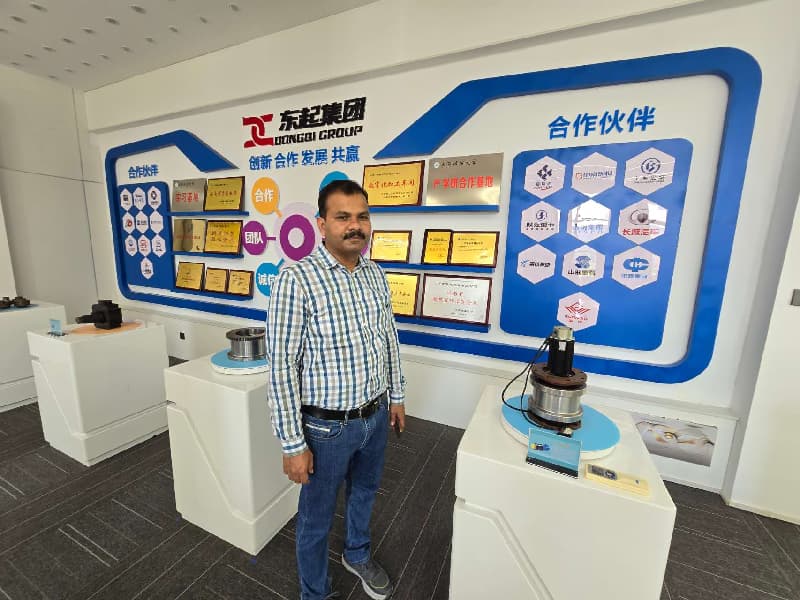
At DONGQI CRANE, a Sino-New Zealand joint venture with over 40 years of manufacturing experience, we welcome and encourage factory inspections by prospective clients. Our 240,000-square-meter facility in Changyuan, Henan Province—China’s renowned “Cradleland of Cranes”—is open to qualified buyers who want to verify our capabilities firsthand. This guide provides a structured framework for conducting a meaningful factory inspection, regardless of which crane manufacturer you are evaluating.
Why a Crane Factory Inspection Is Essential
Factory inspections in the crane industry serve three critical purposes that no amount of remote communication can fully address.
First, you verify manufacturing capability. A company website can display impressive facility photos and list impressive capacity numbers. Only a physical visit confirms whether those images reflect current reality, whether the equipment shown is actually in operation, and whether the stated capacity is supported by genuine infrastructure.
Second, you evaluate quality culture. Certifications like ISO 9001 document that a quality management system exists on paper. A factory visit reveals whether that system is lived daily—in the organization of workstations, the condition of equipment, the precision of welding, and the demeanor of the workforce.
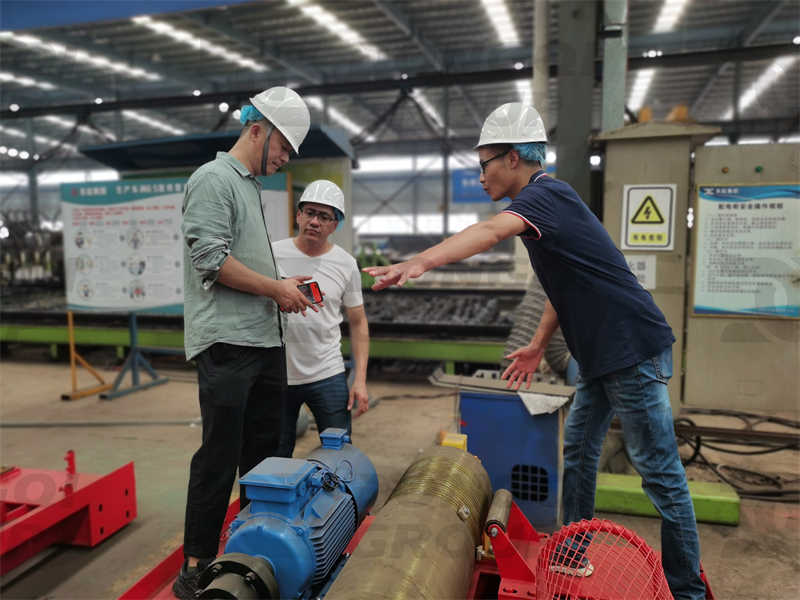
Third, you assess the people behind the product. A crane is a long-term relationship, not a one-time transaction. Meeting the engineers, production managers, and quality inspectors who will build your crane establishes the personal confidence that supports effective communication throughout the project.
Important Context for International Buyers: China is the world’s largest crane manufacturing hub, and the industry spans an enormous quality spectrum. At one end are joint ventures and established manufacturers with European design standards, premium component partnerships, and internationally certified quality systems. At the other end are small workshops producing non-compliant equipment with substandard materials and undocumented processes. The price difference between these extremes can be 30% to 50%—but the long-term cost differential is far greater. A factory inspection is your primary tool for distinguishing between them.
Section 1: Before You Go—Preparation and Timing
When to Schedule the Inspection
The optimal timing for a factory inspection depends on your procurement stage:
| Inspection Timing | Purpose | Recommended For |
|---|---|---|
| Pre-Qualification Visit | Narrow supplier shortlist before detailed quotations | First-time crane buyers; buyers new to Chinese sourcing |
| Post-Quote Verification Visit | Confirm that quoted capabilities match actual facilities | Projects above $50,000; complex or customized cranes |
| Pre-Production Inspection | Verify materials and processes before your specific crane enters fabrication | Projects above $100,000; critical production applications |
| Pre-Shipment Inspection | Confirm completed crane meets specifications before shipping | All international shipments (can be third-party if travel impractical) |
Allow a full business day for a comprehensive inspection. A rushed two-hour tour will not provide meaningful insights. Plan to arrive in the morning when production is fully active and workers are at normal pace.
Who Should Attend
The ideal inspection team includes at least two roles:
- A technical representative (engineer or experienced maintenance manager) who can evaluate welding quality, machining precision, and production processes
- A procurement representative who can verify commercial claims, understand production scheduling, and establish personal relationships with the commercial team
If technical expertise is not available in-house, consider engaging a third-party inspection service with crane-specific experience. This is a worthwhile investment for high-value or critical-application purchases.
What to Request in Advance
Before traveling, request the following from each supplier you plan to visit:
- Factory profile: Total area, building layout, number of employees, annual production capacity
- Equipment list: Major production and testing equipment with photos (verify in person)
- Certifications: ISO 9001, ISO 14001, ISO 45001, CE, and any country-specific certifications
- Recent project references: Three to five projects similar to yours in capacity and industry
- Scheduled production: Will cranes similar to yours be in production during your visit?
Important Note on Factory Visits to DONGQI CRANE: We welcome qualified buyers with advance scheduling. Contact our international sales team to arrange a visit. We will provide a detailed agenda, arrange technical staff for discussion, and ensure you have full access to production areas. Due to production schedules and engineering availability, unannounced visits cannot be accommodated.
Section 2: What to See—The Physical Inspection Checklist
A systematic factory inspection follows the production flow from raw material receipt through final testing and dispatch.
2.1 Raw Material Storage and Preparation
What to observe:
- Steel plate and section storage: Is material stored under cover or exposed to weather? Proper storage prevents corrosion before fabrication even begins.
- Material identification: Are plates clearly marked with grade, heat number, and mill certificate reference? Traceability is fundamental to quality assurance.
- Shot blasting and surface preparation: Is there automated shot blasting equipment for surface preparation prior to cutting and welding? Proper surface preparation is essential for coating adhesion and long-term corrosion protection.
What to ask:
- “What steel grades do you typically use for bridge girders? For end carriages?”
- “Do you maintain material test certificates for all structural steel? Can I see examples?”
- “What is your incoming material inspection process?”
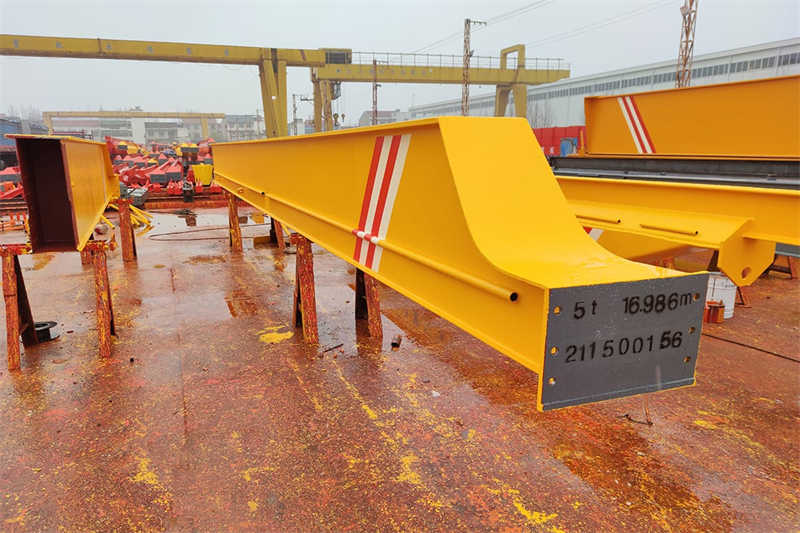
DONGQI CRANE practice: We source structural steel from certified mills and maintain full material traceability throughout production. Steel plate is stored in covered areas, clearly marked with heat numbers, and processed through automated shot blasting lines before fabrication. Material test certificates are provided in final documentation packages.
2.2 Cutting and Preparation
What to observe:
- Cutting equipment: Look for CNC plasma or laser cutting machines, not manual oxy-fuel cutting for structural components. CNC cutting ensures dimensional accuracy and consistent edge quality.
- Edge preparation: Are cut edges clean and free of slag? Proper edge preparation improves weld quality.
- Part marking: Are cut parts marked with identification numbers for traceability through assembly?
What to ask:
- “What cutting tolerances do you maintain?”
- “How do you ensure cut parts are traceable to material certificates?”
DONGQI CRANE practice: Our facility operates 30 CNC machining centers and automated cutting lines. All critical structural components are CNC-cut to precise dimensions, with part marking for traceability. This precision reduces fit-up time during assembly and improves overall structural integrity.
2.3 Welding and Fabrication
This is arguably the most important area of the factory. A crane’s structural integrity depends entirely on weld quality. Poor welding cannot be detected after painting and may only reveal itself through fatigue cracking years later.
What to observe:
- Welding processes: Look for submerged arc welding (SAW) for main girder seams and gas metal arc welding (GMAW/MIG) for structural connections. Some manual welding is normal for complex joints, but main girder welding should be automated for consistency.
- Welder qualification: Are welders working from qualified welding procedure specifications (WPS)? Are their qualification records maintained?
- Fit-up before welding: Are components properly aligned and tacked before full welding? Proper fit-up prevents distortion and ensures dimensional accuracy.
- Weld appearance: Welds should be uniform in width and profile, free of visible porosity, undercut, or overlap. Good welds have a consistent “stacked coin” appearance or smooth continuous bead depending on process.
- Post-weld inspection: Look for signs of post-weld dimensional checking, straightening if required, and any non-destructive testing (NDT) activity.
What to ask:
- “Do you have certified welding procedure specifications? May I see an example?”
- “What non-destructive testing do you perform? On what percentage of welds?”
- “Are your welders certified? To what standard?”
- “How do you control distortion during girder welding?”
DONGQI CRANE practice: We maintain documented welding procedure specifications for all joint configurations. Main girder welding is performed on automated submerged arc welding lines for consistent penetration and profile. Critical welds receive ultrasonic testing (UT) or magnetic particle inspection (MPI) according to specifications. Our welders are certified to international standards, with qualification records maintained and regularly renewed.
2.4 Machining and Component Assembly
What to observe:
- Machining equipment: Look for CNC machining centers, not manual lathes for critical components. Wheel bores, gearbox mounting surfaces, and bearing seats require precise tolerances.
- Assembly area organization: Is the assembly area clean and organized? Are components protected from contamination during assembly?
- Gearbox and hoist assembly: If the manufacturer produces their own hoists, observe the assembly process. Cleanliness is critical for gearbox assembly.
What to ask:
- “What machining tolerances do you hold for critical components?”
- “Do you manufacture your own hoists or purchase externally?”
- “What brands of bearings and seals do you use?”
DONGQI CRANE practice: We manufacture our own hoists—CD type, MD type, and European-style—in dedicated assembly areas. Our machining capabilities include CNC equipment maintaining tight tolerances for critical rotating components. We use premium bearings and seals from international suppliers to ensure long service life.
2.5 Surface Treatment and Painting
The quality of surface preparation and painting directly determines how well the crane resists corrosion over its service life. In coastal, humid, or chemically aggressive environments, this is a critical differentiator.
What to observe:
- Surface preparation: Is shot blasting performed before painting? What standard of surface cleanliness is achieved?
- Painting process: Is painting performed in a dedicated spray booth with environmental controls? Or in an open shop area with overspray everywhere?
- Coating system: How many coats are applied? What is the total dry film thickness? What paint brand and specification is standard?
- Quality verification: Is dry film thickness measured and recorded? Are adhesion tests performed?
What to ask:
- “What surface preparation standard do you achieve (Sa 2.5, etc.)?”
- “What is your standard coating system (primer, intermediate, topcoat)?”
- “What paint brands do you use?”
- “Can you provide elevated corrosion protection (C4, C5-M) if required?”
DONGQI CRANE practice: All structural components receive shot blasting to Sa 2.5 cleanliness before painting. Standard coating consists of epoxy zinc-rich primer, epoxy micaceous iron oxide intermediate, and polyurethane topcoat. For coastal or corrosive environments, we offer C5-M marine-grade coating systems. Dry film thickness is measured and recorded for quality assurance.
2.6 Electrical Panel Assembly and Testing
Electrical reliability is a primary driver of crane uptime. The quality of panel assembly and component selection directly impacts long-term operational costs.
What to observe:
- Panel shop cleanliness: Electrical assembly should occur in a clean, organized area separate from fabrication.
- Wiring workmanship: Wiring should be neatly routed, properly labeled, and securely terminated. Look for wire duct covers, proper cable gland installation, and clear labeling.
- Component brands: Note the brands visible on contactors, relays, VFDs, and circuit breakers. Premium brands (Schneider, Siemens, ABB) indicate commitment to quality.
- Testing: Is there a dedicated electrical test station? Are panels powered up and tested before installation on the crane?
What to ask:
- “What brands of electrical components are standard?”
- “Do you offer VFD control on all motions?”
- “What protection ratings (IP54, IP55, IP65) are standard for enclosures?”
- “Are panels tested before shipment?”
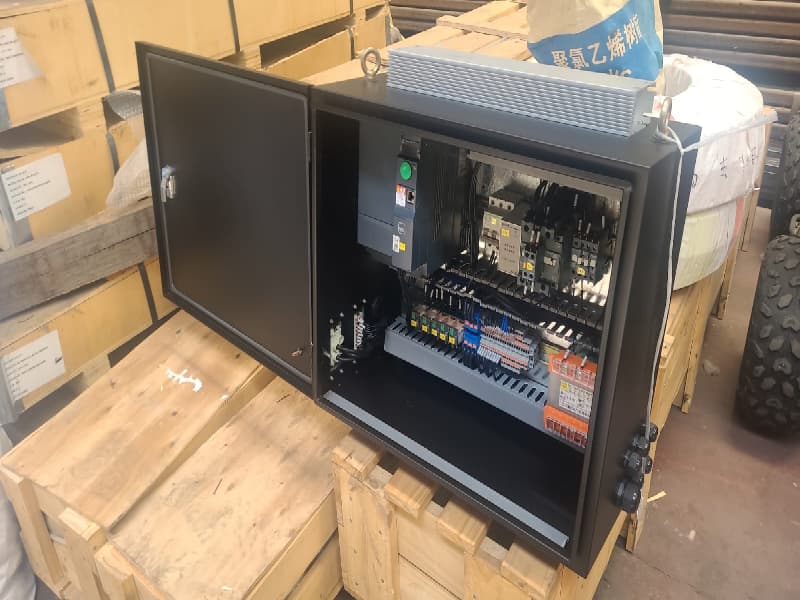
DONGQI CRANE practice: Our standard electrical components are Schneider and Siemens. Panels are assembled in a dedicated electrical shop, fully wired and tested before installation. We offer VFD control options on hoist, cross travel, and long travel motions. Standard enclosure rating is IP54, with IP65 available for harsh environments.
2.7 Final Assembly and Testing
What to observe:
- Engineered-to-order cranes in final assembly: Is there evidence of customized engineering, or do all cranes look identical? A capable manufacturer should have cranes of different configurations in production.
- Load testing capability: Is there a dedicated load test area with calibrated test weights? How high can the manufacturer lift during testing?
- Measurement and alignment: Is precision measurement equipment (laser alignment, theodolite) in use for final geometry verification?
What to ask:
- “Do you full-load test every crane before shipment?”
- “To what percentage of rated capacity do you test?”
- “What dimensional checks are performed before shipment?”
- “Will my crane be assembled and tested at the factory before disassembly for shipping?”
DONGQI CRANE practice: Every crane we manufacture undergoes factory assembly and testing before disassembly for shipment. Load testing is performed to verify hoist performance and structural deflection. Final geometry verification includes span, camber, wheel alignment, and hook height measurements using precision instruments. Load test certificates and geometric survey reports are provided with final documentation.
2.8 After-Sales Support Infrastructure
Understanding how the manufacturer supports customers after delivery is essential. This includes spare parts availability, technical support, and engineer dispatch capabilities.
What to observe:
- Spare parts inventory: Is there an organized spare parts storage area? What volume of parts is maintained?
- Service coordination area: Is there evidence of an active service department—workstations for service engineers, documentation for recent dispatches?
- Customer training facilities: Is there a dedicated training room or demonstration area?
What to ask:
- “How do I order spare parts after the warranty period?”
- “What is your typical response time for a spare parts order?”
- “Do you dispatch engineers for on-site support? In what circumstances?”
- “Is remote technical support available?”
Important Context on DONGQI CRANE Support Model:
We are completely transparent about our service model because it differs from what some buyers expect. DONGQI CRANE does not maintain local service agencies or spare parts warehouses in destination countries. We operate a direct-from-factory support model that leverages China’s world-class manufacturing and logistics infrastructure.
What we provide:
- Direct Engineer Dispatch: When on-site expertise is required, we dispatch DONGQI CRANE factory engineers directly from our China headquarters to your facility anywhere in the world. These are the engineers who designed and built your crane—not third-party contractors.
- Rapid Spare Parts Fulfillment: We maintain comprehensive parts inventory at our 240,000m² factory. Standard replacement parts ship within 24–48 hours of order confirmation via international express courier (DHL, FedEx, UPS), typically reaching major global destinations within 3–7 business days.
- Remote Technical Support: Our engineering team provides video-assisted troubleshooting via WeChat, WhatsApp, or Zoom. Many issues can be resolved remotely.
- Recommended Spare Parts List: At time of purchase, we provide a critical spares recommendation so you can stock high-wear items locally if desired.
This direct-from-factory model eliminates intermediary markups and ensures you receive genuine DONGQI CRANE parts and factory-trained expertise when needed.
Section 3: What to Ask—Essential Questions for Factory Personnel
Beyond observing the physical facility, the questions you ask—and the responses you receive—reveal much about a manufacturer’s capabilities and culture.
Technical and Engineering Questions (Ask Production Managers or Engineers)
| Question | What to Listen For |
|---|---|
| “Can you show me your welding procedure specifications for main girder welding?” | A capable manufacturer has documented WPS and can produce them promptly. Vague responses or inability to produce documentation indicate quality system gaps. |
| “What FEM/ISO duty classifications do you routinely manufacture?” | Manufacturers should easily articulate the classifications they produce. An M3-only manufacturer cannot properly engineer an M6 crane. |
| “How do you calculate and verify girder camber?” | Look for mention of FEA analysis during design, controlled welding sequence, and post-weld camber measurement with documentation. |
| “What is your standard deflection criteria (L/800, L/1000)?” | European-standard manufacturers target L/1000 or better. Lower-capability manufacturers may not know the term. |
| “How do you ensure wheel alignment during assembly?” | Look for laser alignment tools, precision measurement, and documented alignment records. |
| “May I see a completed quality documentation package for a recent shipment?” | A capable manufacturer maintains complete documentation for every crane shipped and can produce a sample. |
Quality System Questions (Ask Quality Manager)
| Question | What to Listen For |
|---|---|
| “What material test certificates do you maintain?” | Steel should be traceable to mill certificates with heat numbers. Certificates should be available for review. |
| “What non-destructive testing do you perform on welds?” | Minimum: visual inspection of all welds. For critical welds: ultrasonic (UT) or radiographic (RT) testing according to specification. |
| “Are your measuring instruments calibrated? By whom and how often?” | Look for evidence of calibration program—stickers on instruments, calibration certificates, third-party calibration service. |
| “What happens when a quality issue is discovered during production?” | Capable manufacturers have a documented non-conformance process, root cause analysis, and corrective action. “We fix it” is not sufficient. |
| “May I see your ISO 9001 certification and most recent audit report?” | Current certification should be displayed. Inability to produce certification is a major red flag. |
Production and Capacity Questions (Ask Production Manager)
| Question | What to Listen For |
|---|---|
| “What is your current production lead time for a crane like mine?” | Realistic answer: 30–90 days from order to ex-factory, depending on complexity and current backlog. Promises of “next week” for a custom crane are unrealistic. |
| “What is your annual production capacity?” | Should be a specific number supported by facility size. Vague “we can handle anything” responses suggest lack of production planning discipline. |
| “What percentage of components do you manufacture versus purchase?” | Vertical integration (manufacturing own steel structures, machining, assembly) provides better quality control than pure assembly operations. |
| “How do you manage production scheduling?” | Look for evidence of ERP system, production planning boards, or scheduled workflow. |
| “Where are you sourcing your motors and gearboxes for this crane?” | Premium suppliers (SEW, NORD, ABB, Siemens) indicate quality commitment. Obscure local brands may compromise reliability. |
Commercial and Support Questions (Ask Sales or Service Manager)
| Question | What to Listen For |
|---|---|
| “Can you provide references for similar cranes shipped to my country/region?” | Established exporters have references. Reluctance to provide them is concerning. |
| “What documentation package is standard with each crane?” | Minimum: operation manual, maintenance manual, electrical schematics, spare parts list, load test certificate. Premium: material certificates, weld maps, geometric survey reports. |
| “How do you handle warranty claims?” | Clear process for reporting issues, evaluating claims, and providing remedies (parts replacement, technical support). |
| “What is the process for ordering spare parts after warranty?” | Clear ordering process, typical lead times, payment terms. DONGQI CRANE provides express international shipping. |
| “Do you offer installation supervision or turnkey installation?” | DONGQI CRANE offers engineer supervision of installation by local contractor. Full turnkey requires local partner. |
Red Flag Responses That Warrant Further Investigation
| Response | Why It’s Concerning |
|---|---|
| “We don’t have that crane in production right now.” | A manufacturer serving your market segment should have similar cranes in production. |
| “That’s proprietary information.” | Core process information—steel grades, deflection criteria, welding procedures—should not be secret. |
| “We can’t show you the testing area today.” | Access limitations during a scheduled visit suggest hidden problems. |
| “Our engineer is not available to answer technical questions.” | A scheduled factory inspection should include access to technical staff. |
| “We cannot provide references in your country.” | Established exporters can provide regional references. |
Section 4: What to Photograph—A Systematic Record
Photographs serve two purposes: documenting what you observed for later reference and creating a record that can be shared with colleagues who could not attend. Take photographs systematically in each area.
Recommended Photo Checklist
| Area | What to Photograph | Why |
|---|---|---|
| Factory exterior | Main building, signage, overall facility | Documents actual facility size and condition |
| Raw material yard | Steel plate storage, material marking, shot blast equipment | Documents material handling and traceability practices |
| Cutting area | CNC cutting machines in operation, cut parts with markings | Documents precision capability and traceability |
| Welding area | Main girder welding—preferably submerged arc line; close-up of completed welds; welders at work | Documents welding automation and workmanship quality |
| Machining area | CNC machines, work in progress showing machined surfaces | Documents machining capability and precision |
| Electrical panel shop | Panel assembly area, completed panels with wiring visible | Documents electrical workmanship and component quality |
| Paint/surface treatment | Shot blasting equipment, spray booth, freshly painted components | Documents corrosion protection capability |
| Assembly area | Cranes in various stages of assembly; overall view showing multiple cranes | Documents production volume and organization |
| Test area | Load test in progress, test weights, measurement equipment | Documents testing capability and thoroughness |
| Spare parts area | Parts storage organization | Documents after-sales support readiness |
| Quality control | Measurement instruments, calibration stickers, inspection records | Documents quality system implementation |
| Certifications | ISO certificates displayed on wall, CE certificates | Documents certification status |
| DONGQI CRANE specific | Factory sign, main production hall, COORD3 CMM equipment, automated production lines | Documents DONGQI CRANE’s 240,000m² facility and advanced equipment |
Photography Tips
- Ask permission first. Most manufacturers welcome photos but appreciate courtesy. Some areas may have restrictions for proprietary reasons.
- Include scale reference. A person or familiar object in the frame helps viewers understand equipment size.
- Capture overall workflow. Wide shots showing material flow through the facility help assess production logic.
- Document issues. If you observe concerns, photograph them discreetly for later reference.
- Note photo context. Keep a simple log of what each photo shows while memory is fresh.
Section 5: After the Visit—Evaluation and Decision Framework
A factory inspection provides raw observations. Converting those observations into a procurement decision requires systematic evaluation.
Post-Visit Evaluation Framework
Rate the manufacturer on each dimension using a 1–5 scale (5 = excellent):
| Evaluation Dimension | Key Observations | Rating (1–5) |
|---|---|---|
| Manufacturing Capability | Equipment quality, automation level, facility organization | |
| Quality Culture | Cleanliness, workmanship, documentation discipline, calibration | |
| Technical Competence | Engineering staff knowledge, WPS documentation, duty class understanding | |
| Production Capacity | Current throughput, lead time realism, workflow efficiency | |
| After-Sales Readiness | Parts inventory, service coordination, support model clarity | |
| Professionalism | Staff demeanor, communication quality, transparency | |
| Alignment with Your Needs | Experience with similar cranes, duty class capability, certification fit |
Total scores:
- 28–35: Strong candidate; likely a capable long-term partner
- 21–27: Acceptable with some concerns; address gaps before contract
- 14–20: Significant concerns; only proceed with substantial corrective actions
- Below 14: High procurement risk; consider alternative suppliers
Comparing Multiple Suppliers
If visiting multiple manufacturers, compare them against the same criteria. A manufacturer with a lower score but significantly lower price is rarely a better value—the long-term costs of quality gaps, delivery delays, and support limitations typically exceed any initial savings.
Final Verification Before Contract
Based on your factory inspection findings, confirm the following before signing a purchase agreement:
- [ ] Work duty classification is correctly specified and matches manufacturer’s proven capability
- [ ] Component brands (motors, gearboxes, electrical) are specified in the purchase agreement
- [ ] Steel grade and deflection criteria are documented
- [ ] Documentation package requirements are itemized
- [ ] Installation, commissioning, and testing scope is clearly defined
- [ ] Warranty terms and start date are documented
- [ ] After-sales support process is understood and acceptable
- [ ] Manufacturer’s bank details match the legal entity you inspected
Section 6: The DONGQI CRANE Factory Inspection Experience
At DONGQI CRANE, we believe that a transparent, welcoming factory inspection is the foundation of a successful client relationship. We encourage every serious buyer to visit our facility and verify our capabilities firsthand.
What You Will See at DONGQI CRANE
240,000 Square Meters of Integrated Manufacturing
Our Changyuan facility is one of the largest and most advanced crane manufacturing complexes in China. The site houses steel preparation, cutting, welding, machining, painting, assembly, and testing under one integrated operation—ensuring quality control at every stage.
Advanced Manufacturing Equipment
- 30 CNC machining centers for precision component production
- Automated submerged arc welding lines for consistent main girder fabrication
- COORD3 coordinate measuring systems for precision dimensional verification
- Automated shot blasting and multi-layer painting systems
- Dedicated electrical panel assembly and testing facility
Certified Quality Systems
Our facility operates under ISO 9001, ISO 14001, and ISO 45001 certified management systems. CE certification supports exports to European and international markets. Full material traceability is maintained from incoming steel through finished crane.
Engineers Available for Technical Discussion
During your visit, our engineering team is available to discuss technical requirements, review specifications, and address any concerns. We can provide examples of completed quality documentation packages and material test certificates.
Transparent Support Model Discussion
We will clearly explain our direct-from-factory support model: no local agencies, but direct engineer dispatch when needed, rapid spare parts fulfillment via international express, and remote technical support. No hidden limitations discovered after purchase.
Scheduling Your Visit to DONGQI CRANE
| Step | Description |
|---|---|
| 1. Initial Inquiry | Contact our international sales team to express interest in a factory visit |
| 2. Qualification | We confirm that a visit is appropriate for your project scope and timing |
| 3. Scheduling | We propose dates when relevant production can be observed |
| 4. Agenda Confirmation | We provide a detailed agenda including areas to be visited and personnel available |
| 5. Travel Arrangements | We provide guidance on travel to Changyuan (nearest airports: Zhengzhou, Xinzheng) |
| 6. Visit | Full-day inspection with technical staff, lunch, and detailed discussion |
| 7. Follow-Up | Answers to any additional questions raised during the visit |
Important Note: Due to production schedules, engineering availability, and the need to ensure a meaningful visit experience, we require advance scheduling. Unannounced visits cannot be accommodated.
Conclusion: Visit Before You Commit
A crane is a capital investment that will operate in your facility for 15 to 25 years. The time and expense of a factory inspection—typically a few days and moderate travel costs—represents a tiny fraction of the total project value. Yet it is the single most effective way to verify that the manufacturer you select is capable of delivering the crane you need.
At DONGQI CRANE, we welcome inspection because our facility, our processes, and our people demonstrate the quality we deliver. We encourage you to ask hard questions, verify our claims, and compare us to any alternative. A transparent, capable manufacturer has nothing to hide.
Ready to schedule your factory visit to DONGQI CRANE?
[Contact our international sales team today to begin planning your inspection and experience firsthand the capabilities behind our 40-year reputation for quality and reliability.]
DONGQI CRANE: Your Direct-from-Factory Partner for Overhead Cranes, Gantry Cranes, and Custom Lifting Solutions Since 1985.
Factory Inspections Welcome • Transparent Operations • Engineering-Driven Manufacturing
ISO 9001 • ISO 14001 • ISO 45001 • CE Certified
240,000m² Manufacturing Facility • 10,000+ Annual Capacity • Exports to 96+ Countries
Direct Engineer Dispatch Worldwide • Express Spare Parts Delivery • Remote Technical Support
