
How Much Do Work Duty Classifications A3, A5, and A7 Impact Crane Price and Service Life?
A Procurement Decision Guide from DONGQI CRANE for Factory Owners and Project Engineers
You are reviewing crane quotes for your facility, and you notice something puzzling. Three suppliers have quoted you a 10-ton overhead crane. The specifications appear similar on the surface—same capacity, similar span, comparable lift height. Yet one quote is $18,000, another is $26,000, and the third is $34,000. What explains the nearly 90% price difference?
The answer lies in a single, often-overlooked specification: work duty classification. Expressed as A3, A5, A7 under FEM and ISO standards (or equivalently M3, M5, M7), this classification determines how intensely a crane is designed to operate. It is not about how much weight you lift once. It is about how often you lift it, how fast you move it, and how many years it must survive.
At DONGQI CRANE, a Sino-New Zealand joint venture with over 40 years of manufacturing experience and products operating in 96 countries, we manufacture overhead cranes and gantry cranes across the entire work duty spectrum—from A3 light-duty applications to A7 heavy-duty industrial environments. We do not have a vested interest in selling you the highest classification. Our goal is to help you select the right classification for your actual operating conditions. Because choosing incorrectly—in either direction—has significant financial consequences.
This article provides a comprehensive, data-driven analysis of how work duty classification affects both initial purchase price and long-term service life, equipping you to make informed procurement decisions.
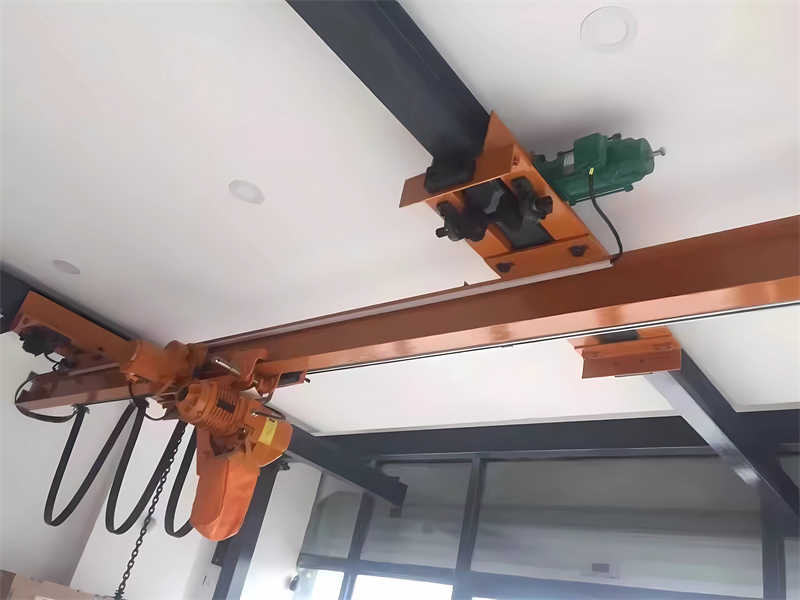
What Is Work Duty Classification? The Most Misunderstood Crane Specification
Work duty classification (also called duty class or service class) is the engineering parameter that defines the operational intensity a crane is designed to withstand over its entire service life. It is determined by two fundamental variables:
- Load spectrum: What percentage of the crane‘s rated capacity does it lift, on average, across all lifting cycles? A crane that routinely lifts 80% of its rated capacity experiences far greater cumulative stress than one that typically lifts 30%.
- Usage frequency: How many lifting cycles does the crane perform per hour, per shift, per day? A crane making 200 lifts daily accumulates fatigue loading twenty times faster than one making 10 lifts daily.
These two variables combine to define the crane’s total fatigue exposure. Every structural member, weld, gear tooth, bearing, brake, and electrical component must survive this cumulative loading. A crane designed for high frequency and high load percentage requires heavier structural sections, higher-grade components, and more robust electrical systems than one designed for low frequency and light loads—even if both carry the identical rated capacity.
The fundamental principle: Two cranes with identical rated capacity can be completely different machines, with dramatically different prices and expected service lives, because their work duty classifications differ. Understanding this distinction is the single most important factor in making a sound crane procurement decision.
Global Classification Systems: FEM, ISO, and CMAA
Multiple international standards define crane work duty classification. While the naming conventions differ, the underlying engineering logic is consistent:
| Standard | Classification Range | Typical Application Guidance |
|---|---|---|
| FEM (European) | A1 – A8 | Based on work cycles, load variation, and fatigue life |
| ISO 4301 | M1 – M8 | Equivalent to FEM; widely adopted internationally |
| CMAA (North American) | Class A – Class F | Ranges from infrequent standby service to continuous severe service |
The correspondence between these systems is well established. FEM A3 corresponds to ISO M3 and CMAA Class B/C. FEM A5 corresponds to ISO M5 and CMAA Class D. FEM A7 corresponds to ISO M7 and CMAA Class E/F. At DONGQI CRANE, we design and certify cranes to all three standards, ensuring seamless compliance regardless of your destination market.
For this article, we will focus on A3 (light duty), A5 (medium/heavy duty), and A7 (heavy/continuous duty) —the three classifications that span the vast majority of industrial applications.
Part 1: How Work Duty Classification Affects Purchase Price
The Price Premium Hierarchy
The single biggest driver of price difference between otherwise identical cranes is work duty classification. It is also the most commonly overlooked factor in procurement, leading many buyers to inadvertently select under-specified equipment.
| Work Duty Classification | Typical Application | Price Premium vs. A3 Baseline |
|---|---|---|
| A3 / M3 (Light Duty) | Maintenance bays, infrequent use, light loads | Baseline (0%) |
| A5 / M5 (Medium/Heavy Duty) | General manufacturing, daily production, moderate frequency | +30–50% |
| A7 / M7 (Heavy/Continuous Duty) | Steel mills, foundries, continuous operation, harsh environments | +60–100% |
These are not minor calibration differences. An M6 class crane costs 30–40% more than an equivalent M3 model due to reinforced components, higher-grade motors, and enhanced structural engineering required for intensive operation. For an A7 classification, the premium over A3 can reach 60–100%—meaning a 10-ton crane quoted at $18,000 in A3 configuration may cost $32,000–$36,000 in A7 configuration with otherwise identical span and lift height.
Why Does Higher Duty Class Cost So Much More?
The price difference is not arbitrary. It reflects tangible engineering and component upgrades across every major crane subsystem:
| Component | A3 (Light Duty) | A5 (Medium/Heavy Duty) | A7 (Heavy/Continuous Duty) |
|---|---|---|---|
| Lifting Motor | Standard duty, lower torque, 25% duty cycle rating | Higher torque, 40% duty cycle rating | Heavy-duty continuous rating, 60% duty cycle |
| Gearbox | Standard gearing, lower service factor | Reinforced gears, higher service factor | Hardened alloy gears, premium bearings, extended fatigue life |
| Structural Steel | Lighter beam sections, standard grade | Heavier sections, optimized for higher cycle fatigue | Reinforced box girder, premium grade steel, full penetration welds |
| Braking System | Standard brake, intermittent use | Higher thermal capacity brake | Heavy-duty continuous rated brake with thermal protection |
| Electrical Controls | Basic contactor control | VFD optional | VFD standard, premium components (Siemens/Schneider), IP65 enclosures |
| Wire Rope & Sheaves | Standard diameter, standard groove profile | Increased safety factor, hardened sheaves | Premium rope, hardened sheaves, extended replacement intervals |
| Welding & Fabrication | Standard procedures, basic NDT | Enhanced procedures, spot NDT | Full documentation, 100% critical weld NDT, fatigue-rated details |
For the most demanding applications, the cost escalation is even more pronounced. Class F cranes in heavy steel mill service may cost three to five times the equivalent catalog crane price.
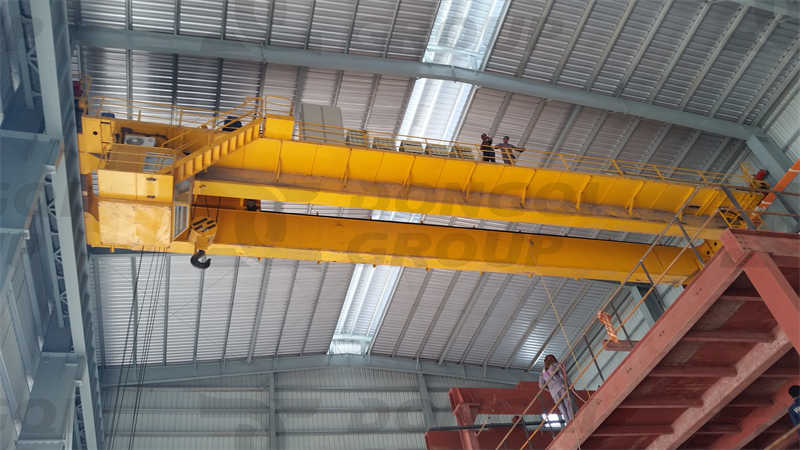
The CMAA Perspective: Daily Usage Drives Cost
Looking at the North American CMAA system provides additional clarity on how usage frequency translates to price. For a 10-ton gantry crane, the relationship between daily operating hours and cost premium is linear and substantial:
| CMAA Class | Daily Usage | Application | Price Premium |
|---|---|---|---|
| Class B | < 2 hours | Maintenance, standby | Baseline |
| Class C | 3–5 hours | Machine shop, general production | +15–25% |
| Class D | 8+ hours | Manufacturing, continuous shifts | +30–45% |
| Class F | 24 hours | Steel mill, foundry | +55–75% |
For context, Class D cranes require motors with a 60% duty cycle, while Class B cranes only require 25%. Matching the duty cycle to actual usage prevents over-investment and premature failure.
The Counterintuitive Cost of Under-Specification
Many procurement teams, focused exclusively on initial purchase price, select the lowest quoted classification. This appears to save money. In reality, it often achieves the opposite. The cost of specifying a crane one duty class too low is not paid at time of purchase—it is paid over years of accelerating maintenance costs, unplanned downtime, and ultimately premature replacement.
Consider this real-world example from a Southeast Asian manufacturing facility:
The procurement team needed a 10-ton crane for daily production, operating 8–10 hours per day with approximately 80 lifts per shift. They selected an A3 crane based on its lower price ($18,000 vs. $26,000 for an A5). Within 18 months, the gearbox failed. Within three years, the facility had replaced the motor, brake, and several wheels. By year five, accumulated repair costs exceeded the initial savings, and the crane required a major overhaul. The A5 crane would have delivered reliable service for 15+ years with routine maintenance. The A3 crane became a chronic problem.
Lesson: The right classification is not about spending more—it is about spending correctly.
Part 2: How Work Duty Classification Affects Service Life
Design Life by Classification
Work duty classification directly determines the designed service life of a crane. Industry data consistently shows that higher-duty classifications—despite being built more robustly—have shorter design lifespans. This apparent paradox makes sense when you understand the underlying engineering: higher-duty cranes are designed to perform vastly more work in a compressed timeframe.
| Work Duty Classification | Design Service Life | Total Work Cycles |
|---|---|---|
| A1 – A2 (Light, Infrequent) | 30 years | 3.2×10⁴ – 6.3×10⁴ |
| A3 – A5 (Light to Heavy Duty) | 25 years | 6.3×10⁴ – 5×10⁵ |
| A6 – A7 (Heavy to Severe Duty) | 20 years | 2.5×10⁵ – 2×10⁶+ |
The key insight: An A7 crane may have a 20-year design life, while an A3 crane has a 25-year design life. But during those 20 years, the A7 crane will perform ten to forty times more lifting cycles than the A3 crane performs in its 25 years. The A7 crane is designed to work harder, faster, and more continuously.
Why Higher Duty Cranes Have Shorter Design Lifespans
This is not a quality issue. It is fundamental material science. All steel structures subjected to cyclic loading experience cumulative fatigue. Higher duty classifications mean:
- More cycles per year: An A7 crane operating 16 hours daily accumulates fatigue cycles twenty times faster than an A3 crane used two hours daily
- Higher average loads: Heavy-duty applications routinely lift loads closer to rated capacity, increasing stress amplitudes
- Harsher environments: High-duty applications (steel mills, foundries, ports) typically involve heat, dust, or corrosive conditions that accelerate wear
The design life figures are based on the crane operating continuously at its rated duty classification. In practice, actual service life may be extended or reduced based on:
- Actual operating hours: A crane used less than its design intensity will last longer
- Maintenance quality: Proper lubrication, inspection, and component replacement extend life
- Operating environment: Clean, climate-controlled environments reduce wear
- Load management: Avoiding overloads and minimizing shock loading preserves structural integrity
The Replacement Cost Equation
For financial planning purposes, understanding the long-term implications of classification choice is essential. An A3 crane in a light-duty application may serve reliably for 25–30 years with minimal major overhaul expense. An A7 crane in a steel mill may require major component replacement or complete refurbishment after 15–20 years of continuous operation—not because it is inferior quality, but because it has performed an order of magnitude more work.
This reality has direct financial implications: An M5 class 10-ton gantry crane is 25–35% more expensive than an M3 class one due to the need for reinforced components and higher-quality motors. When you purchase that higher classification, you are paying for the ability to perform more work in less time. The investment is justified if your operation requires that intensity.
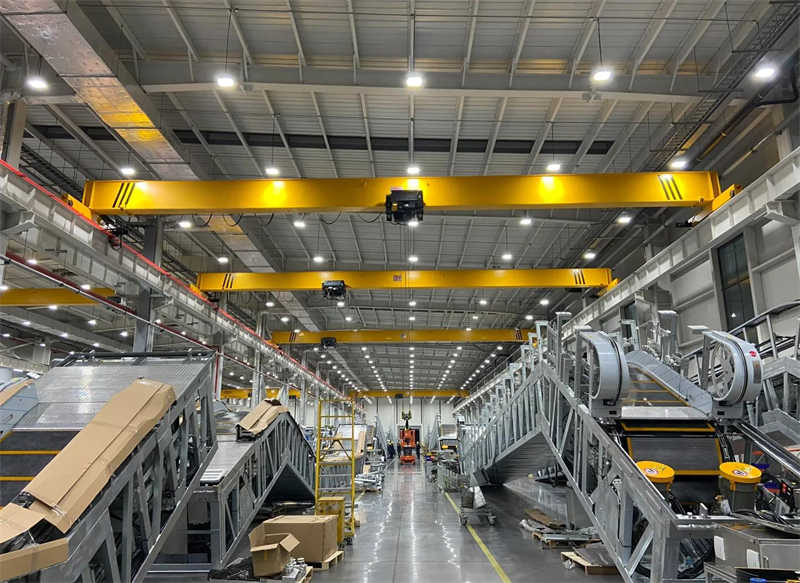
Part 3: Application Guide – Matching Classification to Real-World Use
A3 Classification: Light Duty, Occasional Use
A3 (equivalent to ISO M3) cranes are designed for applications where the crane is used intermittently with long idle periods between lifts. These cranes are not intended for daily production use.
Typical A3 applications:
- Power plant and utility maintenance bays
- Equipment installation and removal (rare use)
- Emergency standby cranes
- Infrequent workshop maintenance
- Warehouse picking with low throughput
Operating parameters for A3:
| Parameter | Typical Value |
|---|---|
| Daily operating hours | < 2–4 hours |
| Lifts per hour | < 25 |
| Average load (% of capacity) | < 50% |
| Duty cycle (ED%) | 25% |
A5 Classification: Medium to Heavy Duty, Daily Production
A5 (equivalent to ISO M5) cranes are designed for regular, daily operation in general industrial environments. This classification represents the workhorse of manufacturing—cranes that run every shift, moving materials and components as part of routine production.
Typical A5 applications:
- Machine shops and fabrication facilities
- General assembly lines
- Warehouse and logistics operations (daily use)
- Shipbuilding installation and outfitting
- Concrete product manufacturing
- Automotive component handling
Operating parameters for A5:
| Parameter | Typical Value |
|---|---|
| Daily operating hours | 4–8 hours |
| Lifts per hour | 25–40 |
| Average load (% of capacity) | 50–70% |
| Duty cycle (ED%) | 40% |
A7 Classification: Heavy to Severe Duty, Continuous Operation
A7 (equivalent to ISO M7) cranes are designed for the most demanding industrial environments. These cranes operate continuously, handle loads near rated capacity, and must survive harsh conditions including heat, dust, moisture, or corrosive atmospheres.
Typical A7 applications:
- Steel mills and metal processing (charging, tapping, slab handling)
- Foundries (mold handling, ladle transfer, shakeout)
- Heavy machinery manufacturing
- Shipyards (engine installation, hull section positioning)
- Container terminals and ports
- Scrap yards and recycling facilities
- Continuous casting operations
Operating parameters for A7:
| Parameter | Typical Value |
|---|---|
| Daily operating hours | 16–24 hours |
| Lifts per hour | 50–60+ |
| Average load (% of capacity) | 70–90% |
| Duty cycle (ED%) | 60% |
The Regional Perspective: Southeast Asia and Beyond
For buyers in Southeast Asia, understanding the local operational context is essential. A3–A4 configurations are suitable for workshops or outdoor use where daily operating time does not exceed 8 hours. A5–A6 configurations, typically with European-style components, accommodate daily use up to 18 hours—the reality for many manufacturing facilities running two or three shifts.
Heavy industry in Indonesia, Thailand, Vietnam, and Malaysia—including mining, steel processing, and port operations—requires A6–A7 classifications. These applications demand reinforced structures, premium components, and robust electrical systems capable of withstanding the region‘s high humidity and ambient temperatures.
At DONGQI CRANE, we manufacture cranes across the entire A3–A7 spectrum, enabling us to provide exactly the right classification for your specific operating conditions—no more, no less.
Part 4: Total Cost of Ownership – The Complete Financial Picture
Initial Price vs. Lifetime Cost
The most expensive crane is not the one with the highest purchase price. It is the one that fails prematurely in an application it was never designed to handle. When evaluating procurement options, consider the complete financial picture:
| Cost Category | A3 Crane (Under-Specified) | A5 Crane (Correctly Specified) |
|---|---|---|
| Initial purchase price | Lower ($18,000) | Higher ($26,000) |
| Years 1–3 maintenance | Low | Low |
| Years 4–7 maintenance | Escalating (gearbox, motor, brake replacements) | Routine only |
| Downtime events | Multiple unplanned outages | Minimal |
| Year 8–10 status | Major overhaul or replacement required | Continuing reliable service |
| 10-Year Total Cost | Often 2–3× initial savings | Predictable, budgeted |
The multiplier effect is significant: a crane that is premium across all key configuration items can cost two to three times more than a budget configuration—even with identical capacity. Understanding the trade-offs behind each item is essential to making the right procurement decision.
The False Economy of Under-Specification
A manufacturing facility in Vietnam provides an instructive case. The procurement team selected an A3/M3-class 10-ton crane for a production line operating 10 hours daily with approximately 70 lifts per shift. Within 14 months, the gearbox failed. Within three years, the crane had required motor replacement, brake replacement, and multiple wheel changes. By year five, total repair costs exceeded $12,000—already more than the $8,000 difference between the A3 and A5 crane quotes. And the crane still required a major structural inspection and likely refurbishment within two more years.
An A5 crane would have delivered reliable service for 15+ years with routine maintenance. The A3 crane became a chronic operational and financial drain.
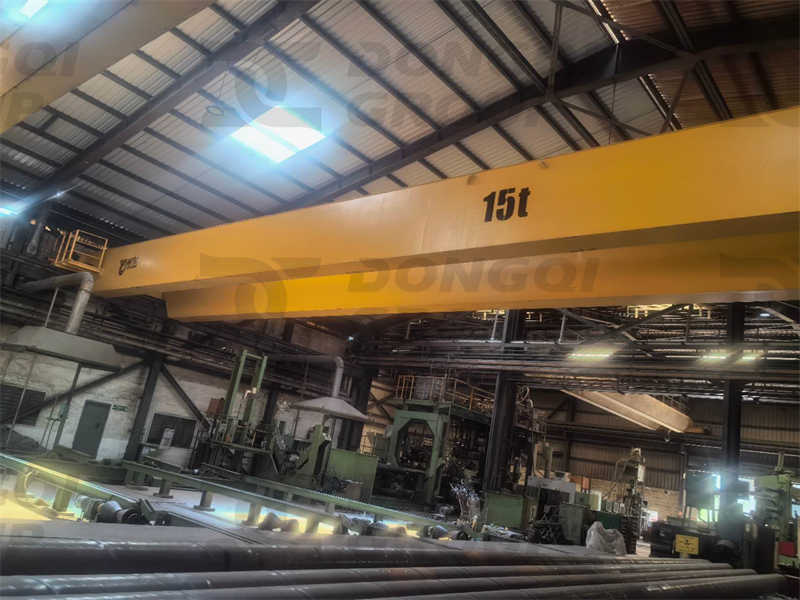
Part 5: The DONGQI CRANE Support Model
DONGQI CRANE operates a direct-from-factory support model. We do not maintain local sales agencies or spare parts warehouses in destination countries. Instead, we provide:
Direct Engineer Dispatch: When your crane arrives at your facility, we dispatch experienced DONGQI CRANE engineers directly from our China headquarters to your site anywhere in the world. Our engineers supervise installation, oversee commissioning, conduct load testing, and provide operator training. You receive support from the engineers who designed and built your equipment.
Rapid Spare Parts Fulfillment: Need a replacement component? We ship directly from our 240,000-square-meter manufacturing facility to your door via international express courier (DHL, FedEx, UPS). Most standard parts ship within 24–48 hours and reach major global destinations within 3–7 business days. For clients who prefer immediate on-site availability, we provide a recommended critical spares list at the time of purchase.
Remote Technical Support: Our engineering team provides video-assisted troubleshooting via WeChat, WhatsApp, or Zoom. Many operational questions and minor issues can be resolved remotely.
Comprehensive Certification Support: DONGQI CRANE holds ISO 9001, ISO 14001, ISO 45001, and CE certifications. Every shipment includes complete certification packages—material test certificates, weld procedure specifications, load test reports, and geometric survey documentation—that satisfy local regulatory authorities worldwide.
Part 6: How to Determine Your Required Classification
Use the following decision framework to identify the appropriate work duty classification for your application:
Step 1: Document Your Operating Profile
| Question | Your Answer |
|---|---|
| How many hours per day will the crane operate? | _ hours |
| How many lifts per hour (average)? | _ lifts |
| What is the typical load as a percentage of rated capacity? | _ % |
| How many shifts per day? | _ shifts |
| Is operation seasonal or year-round? | _ |
| Are there plans to increase production in the next 3–5 years? | Yes / No |
Step 2: Compare to Classification Benchmarks
| If Your Profile Matches… | Likely Required Classification |
|---|---|
| < 4 hours daily, < 25 lifts/hour, < 50% average load | A3 / M3 |
| 4–8 hours daily, 25–40 lifts/hour, 50–70% average load | A5 / M5 |
| > 8 hours daily, > 40 lifts/hour, > 70% average load | A7 / M7 |
| Harsh environment (heat, dust, corrosive) | Add one classification level |
Step 3: Plan for Future Production Increases
If you anticipate production volume increasing significantly within the crane‘s service life, consider specifying one classification higher than current needs would indicate. Upgrading a crane’s classification after installation is generally impractical and cost-prohibitive.
Step 4: Consult DONGQI CRANE Engineering
Our engineering team can perform a detailed duty cycle analysis based on your specific application parameters. We will recommend the appropriate FEM/ISO classification and provide a complete technical and commercial proposal tailored to your requirements.
Conclusion: Invest in the Right Classification for Your Operation
Work duty classification—whether A3, A5, or A7—is not a minor technical detail. It is the single most consequential specification in crane procurement, directly determining how much you pay today and how reliably your crane performs for decades to come.
Select A3 when: Your crane will be used infrequently—maintenance bays, standby applications, light-duty workshops. A3 cranes deliver reliable performance at the lowest capital cost when matched to appropriate operating conditions.
Select A5 when: Your crane supports daily production operations—machine shops, assembly lines, general manufacturing. A5 cranes provide the durability and reliability required for regular use, with a price premium that delivers genuine long-term value.
Select A7 when: Your crane operates continuously in demanding industrial environments—steel mills, foundries, ports, heavy manufacturing. A7 cranes are engineered for the intensity and longevity that these applications demand.
The cost of choosing incorrectly is substantial. Under-specification leads to premature failures, escalating maintenance costs, and unplanned downtime that far exceeds any initial savings. Over-specification wastes capital that could be deployed elsewhere.
At DONGQI CRANE, our commitment is to help you select the right classification for your specific application. With over 40 years of manufacturing experience, products operating in 96 countries, and engineering expertise across the full A3–A7 spectrum, we provide the technical guidance and manufacturing excellence to ensure your crane investment delivers reliable, efficient service for its entire design life.
Ready to determine the optimal work duty classification for your facility?
[Contact DONGQI CRANE‘s engineering team today for a complimentary duty cycle analysis and custom proposal.]
DONGQI CRANE: Your Direct-from-Factory Partner for Overhead Cranes, Gantry Cranes, and Custom Lifting Solutions Since 1985.
A3 Light Duty • A5 Medium/Heavy Duty • A7 Heavy/Continuous Duty • Custom Classifications
ISO 9001 • ISO 14001 • ISO 45001 • CE Certified
240,000m² Manufacturing Facility • 10,000+ Annual Capacity • Exports to 96+ Countries
Direct Engineer Dispatch Worldwide • Express Spare Parts Delivery • Remote Technical Support
