
5 Advantages and 3 Critical Risks of Sourcing Cranes from China
A Comprehensive Buyer’s Guide from DONGQI CRANE – Your Trusted Manufacturing Partner
The global crane market is undergoing a significant shift. As of 2025, Asia-Pacific dominates the worldwide crane industry, with China firmly established as the world’s premier manufacturing hub for lifting equipment. For plant managers, procurement directors, and project engineers worldwide, sourcing cranes from China has evolved from a cost-saving experiment to a mainstream procurement strategy.
But like any major capital decision, it comes with both compelling advantages and legitimate risks that must be carefully evaluated.
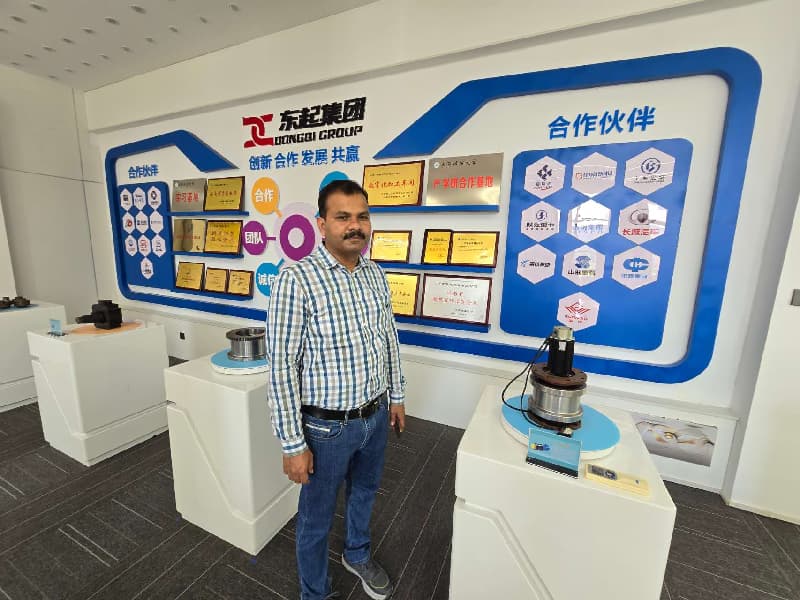
At DONGQI CRANE, we have witnessed this transformation firsthand. As a Sino-New Zealand joint venture headquartered in Changyuan, Henan Province—China’s renowned “Cradleland of Cranes”—we have manufactured high-quality overhead cranes, gantry cranes, and electric hoists for over 40 years. Our 240,000-square-meter facility houses more than 2,000 sets of advanced manufacturing and detection equipment, supported by 3,600 professionals including 500 technical specialists and over 70 senior engineers. With products exported to over 96 countries worldwide, we understand both the opportunities and the pitfalls of sourcing cranes from China.
This guide offers an honest, balanced perspective. We will not pretend the risks do not exist—they do. But we will also show you how informed buyers mitigate those risks and capture the substantial advantages that have made Chinese crane manufacturing the choice of businesses across six continents.
Part 1: The 5 Compelling Advantages of Sourcing Cranes from China
Advantage 1: Unmatched Cost Competitiveness Without Compromising Core Quality
The most frequently cited reason for sourcing from China is cost savings—and the numbers support this. Chinese overhead crane manufacturers typically offer prices 20% to 40% lower than comparable Western or Japanese equipment for equivalent technical specifications. Import data illustrates this dynamic clearly: India imported 801 units of overhead cranes from China in 2025, a 338% volume increase over the previous year, with average unit values dropping to approximately $31,700—reflecting strong demand for cost-effective, reliable solutions.
Where do these savings come from?
The cost advantage is not primarily about lower labor rates—though China’s concentrated manufacturing ecosystem does create efficiencies. The real drivers are:
- Integrated supply chains: Changyuan, where DONGQI CRANE is headquartered, is known as China’s “Cradleland of Cranes.” Within a 50-kilometer radius, you will find specialized manufacturers of every crane component—motors, gearboxes, wire ropes, control systems, and structural steel. This geographic concentration eliminates multiple layers of logistics costs and middlemen markups that fragment Western supply chains.
- Economies of scale: Chinese crane manufacturers produce at volumes that dwarf most Western competitors. DONGQI CRANE alone has an annual production capacity exceeding 10,000 crane sets. This scale drives down per-unit fixed costs in ways that smaller manufacturers simply cannot match.
- Vertical integration: At DONGQI CRANE, we manufacture our own structural components, assemble our own electrical panels, and maintain direct partnerships with premium component suppliers like SEW, NORD, ABB, Siemens, and Schneider. This eliminates intermediary markups at multiple stages of production.
The quality equation: Importantly, cost competitiveness does not mean quality compromise when you work with established manufacturers. DONGQI CRANE maintains ISO 9001, ISO 14001, ISO 45001, and CE certifications. Our Sino-New Zealand joint venture structure ensures European design standards are integrated with Chinese manufacturing efficiency. The key is selecting a supplier whose quality systems match their pricing claims.
| Cost Comparison Element | Typical Western Manufacturer | DONGQI CRANE | Savings Potential |
|---|---|---|---|
| 10T Double Girder EOT Crane | $45,000 – $65,000 | $22,000 – $42,000 | 35–50% |
| 20T Double Girder EOT Crane | $70,000 – $100,000 | $35,000 – $90,000 | 30–40% |
| 5T Single Girder EOT Crane | $12,000 – $18,000 | $5,000 – $12,000 | 30–50% |
| Premium Components (SEW/Siemens) | Standard | Available at additional cost | Still below Western baseline |
Note: Ranges reflect FOB factory pricing for standard configurations. Actual pricing varies with span, lift height, duty classification, and custom requirements.
Advantage 2: Extraordinary Customization Flexibility and Engineering Responsiveness
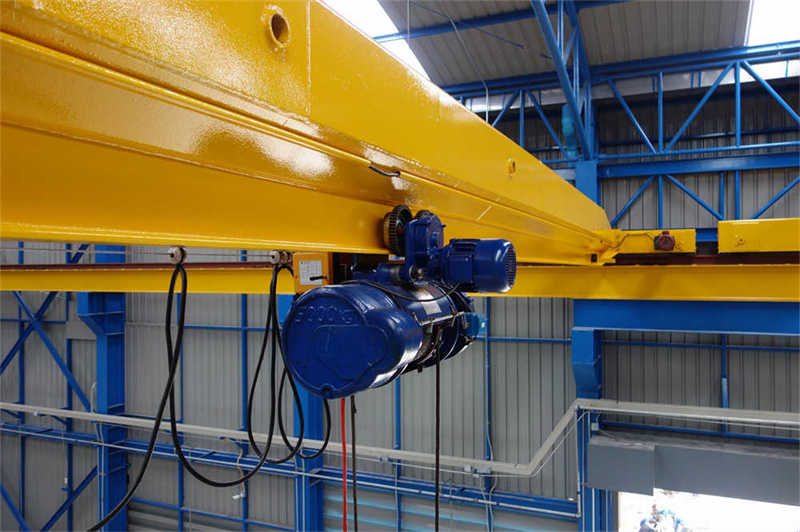
Western crane manufacturers often operate within standardized product catalogs. Customization is possible—but it typically comes with extended lead times and significant cost premiums. Chinese manufacturers approach customization differently.
At DONGQI CRANE, we maintain a dedicated R&D center with specialized design rooms for bridge cranes, gantry cranes, hoists, and electrical systems. Our engineering team includes over 60 senior technical specialists and 500 technical professionals. This depth of engineering capacity enables us to:
- Design cranes for non-standard spans, lift heights, and building constraints without excessive cost premiums
- Develop specialized configurations for unique applications—explosion-proof cranes for chemical plants, insulated cranes for electrolytic operations, high-temperature cranes for foundries
- Modify electrical systems for any voltage/frequency combination worldwide (220V–690V, 50Hz/60Hz)
- Integrate automation features including PLC control, remote monitoring, and anti-sway technology
Real example: When a Southeast Asian client required a 50-ton double girder crane with an unusually narrow span of 8 meters—far below standard design parameters—our engineering team developed a custom girder configuration that maintained structural integrity while fitting the constrained space. Total engineering time from inquiry to approved drawings: 5 days.
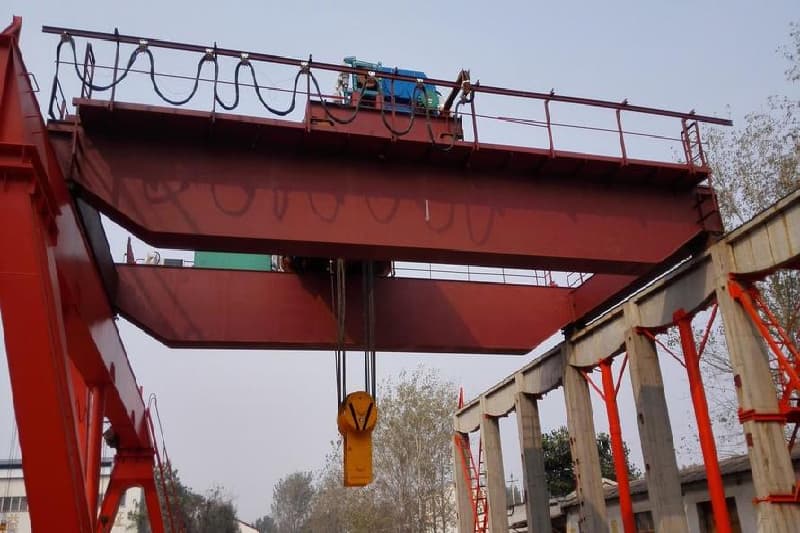
This responsiveness stems from China’s manufacturing culture, where high-mix, low-volume production is the norm rather than the exception. Where Western manufacturers might decline non-standard requests or quote prohibitive prices, established Chinese manufacturers like DONGQI CRANE treat customization as standard business practice.
Advantage 3: Comprehensive Product Range from a Single Source
Imagine coordinating crane procurement across three different Western suppliers: one for the overhead crane in your main production bay, another for the gantry crane in your outdoor yard, and a third for the jib cranes at individual workstations. Now imagine managing three separate vendor relationships, three spare parts inventories, three service contracts, and three sets of technical documentation.
Chinese manufacturers offer a compelling alternative: single-source supply across the entire lifting equipment spectrum.
DONGQI CRANE’s product portfolio includes:
| Product Category | Capacity Range | Key Applications |
|---|---|---|
| Single Girder Overhead Cranes | 1–20 tons | Light to medium manufacturing, warehouses, assembly |
| Double Girder Overhead Cranes | 5–500+ tons | Heavy manufacturing, steel mills, power plants |
| European-Standard Cranes | 1–80 tons | High-duty-cycle applications, precision lifting |
| Gantry Cranes | 10–800 tons | Outdoor yards, ports, construction sites |
| Semi-Gantry Cranes | Custom | Facilities with one building wall and one floor rail |
| Jib Cranes | 0.25–20 tons | Individual workstations, machine tool loading |
| Electric Hoists | 0.5–100 tons | Standalone lifting, crane component replacement |
| Explosion-Proof Cranes | 1–50 tons | Chemical plants, oil & gas facilities, hazardous areas |
| Metallurgical Cranes | 5–320 tons | Steel mills, foundries, high-temperature applications |
| Intelligent Cranes | Custom | Automated warehouses, precision positioning systems |
The single-source advantage manifests in multiple ways:
- Simplified procurement: One contract, one point of contact, one set of commercial terms
- Standardized components: Common spare parts across your entire crane fleet reduce inventory costs
- Unified training: Operators and maintenance personnel learn one control philosophy and one maintenance protocol
- Consolidated logistics: Combined shipping reduces freight costs and simplifies customs clearance
- Integrated automation: Cranes from a single manufacturer can be networked together more easily for plant-wide control systems
Advantage 4: Established Global Logistics and Export Infrastructure
Sourcing heavy industrial equipment from China is not the logistical challenge it was 20 years ago. China’s crane industry has developed sophisticated export infrastructure that rivals or exceeds that of any manufacturing nation.
At DONGQI CRANE, our export operations include:
- Dedicated export packaging: All cranes are disassembled, preserved, and packed according to international shipping standards for ocean freight. Critical components receive VCI (Vapor Corrosion Inhibitor) protection for long sea voyages.
- Container optimization: Our engineering team designs packaging configurations that maximize container utilization, reducing your freight costs. Where necessary, we arrange breakbulk or flat-rack shipping for oversized components.
- Documentation expertise: Our export documentation team prepares all necessary certificates of origin, commercial invoices, packing lists, and compliance documentation required for smooth customs clearance at destination ports.
- Incoterms flexibility: We quote and ship under all standard Incoterms—FOB, CIF, CFR, DAP—allowing you to select the risk and cost allocation that best suits your procurement strategy.
Proven global reach: With products in 96+ countries and local agencies established in Saudi Arabia, Indonesia, Vietnam, Thailand, Malaysia, Uzbekistan, Russia, and beyond, DONGQI CRANE has successfully navigated virtually every major shipping lane and customs regime worldwide. Our export team handles the complexities so you do not have to.
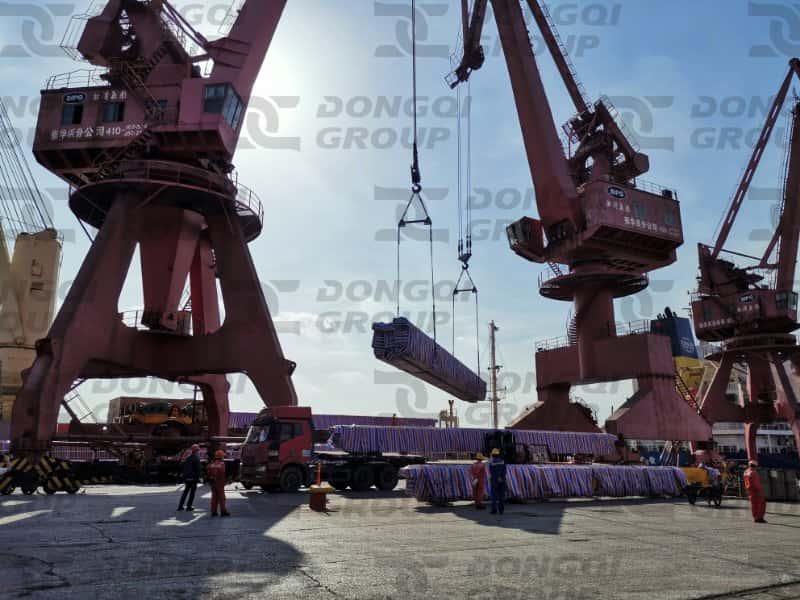
For buyers concerned about delivery reliability: China’s major ports—Shanghai, Ningbo, Qingdao, Tianjin—offer frequent sailings to every major destination worldwide. Container availability is generally excellent, and shipping costs from China are often lower than from alternative manufacturing locations due to high trade volumes and competitive carrier pricing.
Advantage 5: Accelerating Technology Adoption and Smart Manufacturing Capabilities
Perhaps the most underappreciated advantage of sourcing cranes from China is access to advanced technologies at accessible price points. Chinese manufacturers have invested heavily in automation, digital control systems, and smart manufacturing capabilities—and these investments are increasingly reflected in the equipment they produce.
At DONGQI CRANE, our manufacturing facility integrates:
- 30+ CNC machining centers ensuring precision manufacturing of critical components
- COORD3 coordinate measuring systems for quality verification to micron-level tolerances
- Automated welding lines delivering consistent, high-quality structural fabrication
- Shot blasting and painting lines providing uniform surface preparation and corrosion protection
These manufacturing technologies translate directly into product quality and consistency. A crane structure welded by automated systems will have more uniform weld penetration and lower residual stress than one welded manually—even by a skilled welder.
Advanced crane technologies available from DONGQI CRANE include:
| Technology | Description | Benefit |
|---|---|---|
| Variable Frequency Drives | Smooth acceleration/deceleration control | Reduced mechanical wear, extended component life, energy savings |
| Anti-Sway Control | Electronic load stabilization | Faster cycle times, improved positioning accuracy, enhanced safety |
| PLC Automation | Programmable logic control | Integration with plant-wide systems, automated movement sequences |
| Remote Monitoring | IoT-enabled condition tracking | Predictive maintenance, reduced downtime, performance analytics |
| Regenerative Braking | Energy recovery during lowering | 15–30% energy savings in high-duty-cycle applications |
| Load Spectrum Monitoring | Real-time duty cycle tracking | Accurate remaining life prediction, optimized maintenance scheduling |
The accessibility of these technologies from Chinese manufacturers is transforming capital equipment economics. Features that were once premium options reserved for high-end Western equipment—VFD control, anti-sway systems, remote diagnostics—are now available on standard crane configurations from leading Chinese manufacturers at minimal cost premiums.
Part 2: The 3 Critical Risks You Must Address When Sourcing from China
We have presented the advantages honestly. Now we must address the risks with equal candor. Sourcing cranes from China offers substantial benefits, but only for buyers who approach the process with open eyes and proper due diligence.
Risk 1: Quality Variability Across the Supplier Landscape
This is the most frequently cited concern about Chinese sourcing—and it is legitimate. The Chinese crane industry spans an enormous quality spectrum. At one end: ISO-certified manufacturers with decades of experience, advanced manufacturing facilities, and global customer bases. At the other end: small workshops with limited quality systems, minimal engineering capability, and no meaningful after-sales support.
The problem is not that quality cranes cannot be sourced from China—they absolutely can. The problem is that buyers without proper due diligence may select the wrong supplier.
How this risk manifests:
- Substandard materials: Lower-tier manufacturers may use steel plate with inconsistent thickness or metallurgical properties, leading to premature structural issues.
- Inadequate welding: Poor weld penetration, porosity, or inconsistent bead profiles can create hidden structural weaknesses that only become apparent under load.
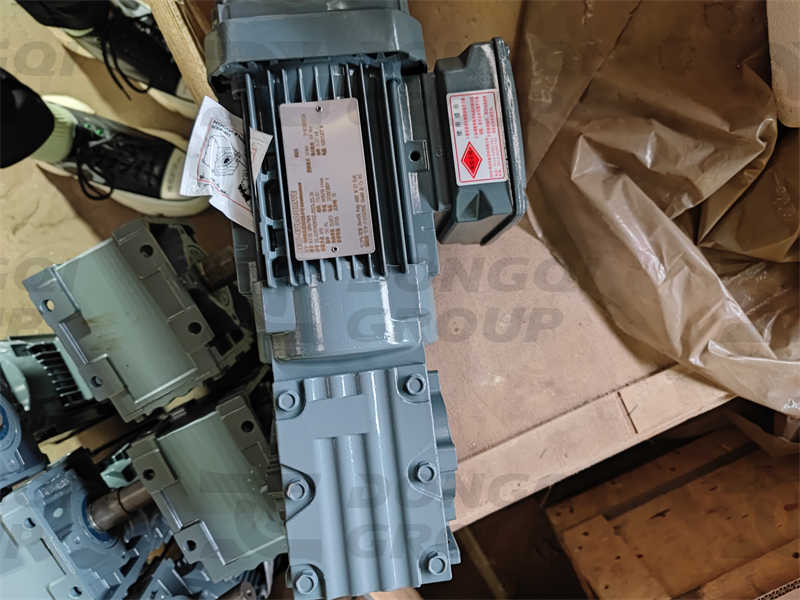
- Counterfeit components: Disreputable suppliers may substitute genuine SEW, Siemens, or Schneider components with convincing but inferior counterfeits.
- Surface preparation shortcuts: Inadequate shot blasting and substandard paint systems lead to premature corrosion, especially in coastal or humid environments.
How DONGQI CRANE mitigates this risk for our customers:
Our quality assurance framework includes:
- ISO 9001, ISO 14001, and ISO 45001 certified quality, environmental, and occupational health management systems
- CE certification confirming compliance with European safety and performance standards
- Full material traceability with mill certificates for all structural steel
- Welding Procedure Specifications (WPS) documented and qualified to international standards
- Non-destructive testing including ultrasonic and magnetic particle inspection of critical welds
- 100% load testing at 125% of rated capacity before shipment, with certified test reports
- Genuine premium components sourced directly from SEW, NORD, ABB, Siemens, and Schneider
Your due diligence checklist when evaluating any Chinese crane supplier:
| Verification Item | What to Request | Red Flags |
|---|---|---|
| Factory Audit | On-site visit or third-party inspection report | Reluctance to allow factory access |
| Certifications | Valid ISO, CE certificates with current dates | Expired or unverifiable certificates |
| Component Sourcing | List of component brands and procurement channels | Vague answers about component origins |
| Welding Qualifications | Welder certification records, WPS documentation | No documented welding procedures |
| Test Capabilities | Description of testing equipment and procedures | No load testing capability on-site |
| Reference Projects | Contact information for similar projects in your region | Unable to provide verifiable references |
Risk 2: Communication Barriers and Specification Misalignment
Even when both parties act in good faith, communication gaps can lead to costly misunderstandings. Crane procurement involves highly technical specifications—span dimensions, duty classifications, electrical requirements, and certification standards. A single misinterpreted parameter can result in equipment that does not fit your building or meet your operational requirements.
How this risk manifests:
- Language barriers: Technical discussions conducted through basic translation tools or non-technical interpreters can miss critical nuances.
- Different industry terminology: A “heavy duty” crane means different things in different markets. Chinese manufacturers use FEM/ISO classifications; your local engineering team may reference different standards.
- Incomplete specifications: Suppliers may quote based on incomplete information, leading to equipment that meets the letter of your inquiry but not the spirit of your requirements.
- Cultural differences: Direct questions about capabilities may receive optimistic answers that reflect aspiration rather than current reality.
How DONGQI CRANE mitigates this risk for our customers:
- Dedicated international sales engineers with technical backgrounds and fluent English communication skills
- Standardized technical questionnaires that systematically capture all necessary specification parameters
- Detailed quotation documents that explicitly list all assumptions, exclusions, and technical specifications
- 3D modeling and drawing review before production begins, ensuring complete alignment on design
- Clear documentation including GA drawings, electrical schematics, and component specifications
Communication best practices for buyers:
| Practice | Why It Matters | How to Implement |
|---|---|---|
| Use written specifications | Verbal agreements are difficult to enforce | Document all requirements in writing before order placement |
| Request detailed GA drawings | Confirms exact dimensions and clearances | Review and approve drawings before production begins |
| Specify standards explicitly | Prevents assumptions about what “standard” means | Reference specific ISO, FEM, CMAA, or local standards |
| Confirm component brands | Prevents unauthorized substitutions | List acceptable component manufacturers in contract |
| Document all communications | Creates audit trail if disputes arise | Save emails, meeting notes, and marked-up drawings |
Risk 3: After-Sales Support and Long-Term Service Sustainability
A crane is a 15–20 year capital asset. The purchase transaction represents perhaps 20% of the total cost of ownership; the remaining 80% accrues over the equipment’s operating life through energy consumption, maintenance, repairs, and eventual modernization.
When you source a crane from a manufacturer 8,000 kilometers away, legitimate questions arise: What happens if something breaks? How quickly can I get replacement parts? Who can troubleshoot a complex electrical fault?
How this risk manifests:
- Parts availability: Obtaining a specific replacement component—a specialized bearing, a custom gear, a proprietary control board—can take weeks if the manufacturer has no local presence.
- Technical troubleshooting: Remote diagnosis of complex issues is challenging. Without local technical support, even minor problems can lead to extended downtime.
- Warranty enforcement: A warranty is only as good as the manufacturer’s ability and willingness to honor it across international borders.
- Installation support: Local installers may lack familiarity with the specific crane model, leading to improper assembly or commissioning.
How DONGQI CRANE mitigates this risk for our customers:
- Comprehensive spare parts program: We maintain extensive spare parts inventory and can ship critical components globally. We also identify commonly available local alternatives where applicable.
- Remote technical support: Our engineering team provides video-based troubleshooting and diagnostic support during your business hours.
- Installation supervision: We offer turnkey installation by DONGQI CRANE technicians or certified supervision of your local installation contractor.
- Detailed documentation: Every crane ships with complete operation manuals, maintenance schedules, electrical schematics, and parts catalogs.
- Training programs: Comprehensive operator and maintenance technician training available on-site or at our China facility.
Questions to ask any international crane supplier about after-sales support:
| Question | What to Listen For | Red Flags |
|---|---|---|
| Do you have local representation in my country? | Specific agent/office location and contact information | “We can ship anywhere” without local support |
| What is typical spare parts lead time to my location? | Specific number of days/weeks with shipping method | Vague “it depends” without concrete examples |
| How do you handle warranty claims? | Clear process with defined response times | No written warranty procedure |
| Can you provide remote diagnostic support? | Specific tools/process (video call, remote desktop) | “Just send us an email” with no escalation path |
| Do you offer installation supervision? | Yes, with defined scope and cost | No installation support available |
Part 3: The DONGQI CRANE Difference—How We Turn Risks into Reassurance
We have described the advantages and the risks honestly. Now let us explain how DONGQI CRANE specifically addresses the challenges of international crane sourcing.
Our Manufacturing Foundation
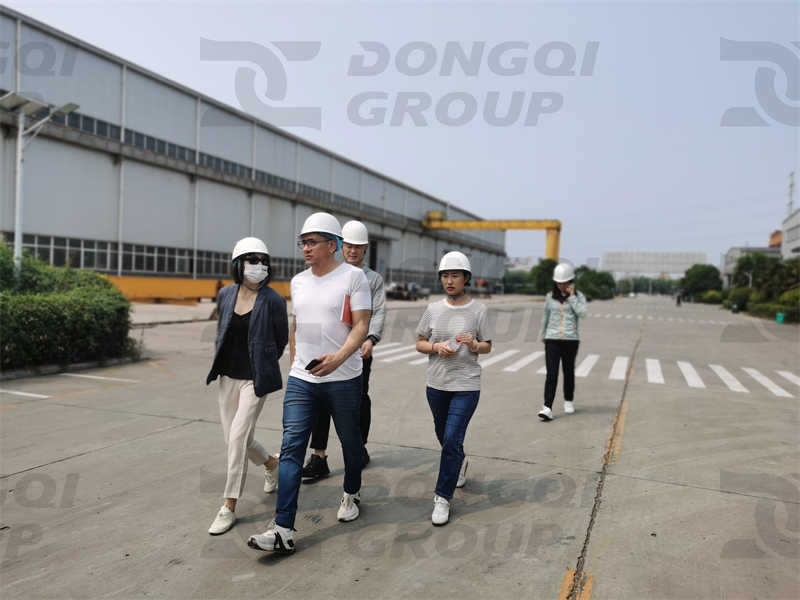
DONGQI CRANE is not a trading company that simply sources cranes from various factories and resells them under our name. We are a manufacturer. Our 240,000-square-meter facility in Changyuan—China’s “Cradleland of Cranes”—houses the complete production process under one roof.
Key manufacturing capabilities:
| Capability | Specification | Quality Impact |
|---|---|---|
| CNC Machining | 30+ centers | Precision components with tight tolerances |
| Coordinate Measurement | COORD3 CMM systems | Verification to micron-level accuracy |
| Automated Welding | Robotic welding lines | Consistent, high-quality structural welds |
| Shot Blasting | Full structural surface preparation | Superior paint adhesion and corrosion resistance |
| Load Testing | Up to 125% SWL | Verified performance before shipment |
| NDT Capabilities | Ultrasonic, magnetic particle | Detection of hidden structural defects |
Our Quality Commitments
Certifications: ISO 9001 (Quality Management), ISO 14001 (Environmental Management), ISO 45001 (Occupational Health and Safety), CE (European Conformity)
Component Partners: SEW-Eurodrive, NORD Drivesystems, ABB, Siemens, Schneider Electric
Testing Protocols: Every crane undergoes factory acceptance testing at 125% of rated capacity before shipment. Test certificates are provided with every delivery.
Our Customer Commitments
Transparent Communication: You will receive detailed quotations with explicit technical specifications, clear commercial terms, and documented assumptions. We answer questions in plain English—not technical jargon or vague promises.
Documentation Excellence: Every crane ships with comprehensive documentation including GA drawings, electrical schematics, component datasheets, maintenance schedules, and spare parts catalogs.
Post-Sale Support: Our relationship does not end when the crane ships. We provide installation support, commissioning assistance, operator training, and ongoing technical consultation for the life of your equipment.
What Our Customers Say
“As a Sino-New Zealand joint venture, DONGQI CRANE combines European design standards with Chinese manufacturing efficiency. Their technical documentation and communication exceeded our expectations for an international supplier.” — Industrial Equipment Distributor, Southeast Asia
“We were initially cautious about sourcing cranes from China, but DONGQI CRANE’s factory tour changed our perspective. The manufacturing facility is world-class, and their quality systems are transparent and documented.” — Plant Manager, Heavy Manufacturing Facility, Middle East
Part 4: A Practical Framework for Evaluating Your Crane Sourcing Options
How should you think about sourcing cranes from China versus alternative supply bases? The following framework helps structure your evaluation.
Step 1: Define Your Non-Negotiable Requirements
Before comparing suppliers from any country, document:
- Technical specifications: Capacity, span, lift height, duty classification, operating environment
- Compliance requirements: Local certifications, electrical standards, safety regulations
- Timeline constraints: Required delivery date, installation window, commissioning deadline
- Budget parameters: Total project budget including equipment, freight, duties, installation
Step 2: Evaluate Suppliers Against Objective Criteria
| Evaluation Criteria | Weight | How DONGQI CRANE Performs |
|---|---|---|
| Technical capability to meet specifications | High | 40+ years experience, 500+ technical staff, complete product range |
| Manufacturing quality systems | High | ISO 9001/14001/45001, CE, documented quality procedures |
| Price competitiveness | High | 20–40% below Western equivalents for comparable specifications |
| Communication and responsiveness | Medium-High | Dedicated English-speaking technical sales engineers |
| After-sales support infrastructure | High | Global agency network, spare parts program, remote diagnostics |
| Reference projects in your region/industry | Medium-High | 96+ countries, project references available upon request |
| Financial stability and longevity | Medium | 40+ year operating history, Sino-New Zealand joint venture backing |
Step 3: Conduct Verification
Do not rely solely on supplier claims. Verify:
- Factory visit: If possible, visit the manufacturing facility. If not, request a third-party inspection report.
- Reference checks: Contact customers who have purchased similar equipment for similar applications.
- Documentation review: Request sample documentation—GA drawings, test certificates, manuals—to assess quality.
- Sample communication: Conduct technical discussions with the supplier’s engineering team, not just sales representatives.
Step 4: Structure the Commercial Relationship
- Clear contract: Document all specifications, deliverables, timelines, and warranty terms in writing.
- Milestone payments: Structure payments around verifiable milestones—order confirmation, drawing approval, factory acceptance test, shipment, commissioning.
- Inspection rights: Reserve the right to inspect equipment before shipment, either personally or through a third party.
- Retention: Consider a retention amount payable after successful commissioning at your facility.
Conclusion: Informed Sourcing Delivers Value
Sourcing cranes from China offers substantial advantages: cost competitiveness, customization flexibility, comprehensive product range, established logistics, and access to advanced technologies. These advantages have made Chinese crane manufacturing the choice of businesses across 96+ countries served by DONGQI CRANE alone.
But these advantages are not automatic. They accrue to buyers who approach the process with open eyes, conduct proper due diligence, and partner with established manufacturers who have demonstrated commitments to quality, communication, and after-sales support.
At DONGQI CRANE, we invite that scrutiny. Visit our factory in Changyuan. Review our certifications. Speak with our engineering team. Contact our reference customers. We are confident that informed buyers who compare us against any global alternative will recognize the value we deliver.
The question is not whether Chinese cranes can meet your requirements. The question is whether you will select the right Chinese manufacturer.
Ready to explore sourcing options for your next crane project?
[Contact DONGQI CRANE’s international sales team for a consultation and custom quotation tailored to your specific requirements.]
About DONGQI CRANE: Dongqi Crane is a Sino-New Zealand joint venture crane manufacturer headquartered in Changyuan, Henan Province, China. With over 40 years of manufacturing experience, a 240,000-square-meter production facility, and more than 3,600 employees including 500 technical specialists, we produce overhead cranes, gantry cranes, electric hoists, and specialized lifting equipment for customers in over 96 countries worldwide. Our ISO 9001, ISO 14001, ISO 45001, and CE certified manufacturing processes ensure consistent quality and reliable performance for every crane we deliver.
