
Predictive Maintenance in Cranes: How Initial Configuration Can Reduce Post-Commissioning Repair Costs by 40%
The Hidden Logic: Transforming “Expensive” Premium Configurations into “Cost-Saving” Long-Term Investments
When procurement professionals evaluate capital equipment purchases, the natural instinct is to focus on the initial price tag. A $19,500 crane inevitably invites more scrutiny than a $17,000 alternative. This short-term perspective, however, overlooks a fundamental truth in material handling equipment: the true cost of a crane is not what you pay today—it is what you pay over its entire operational lifetime.
At Dongqi Crane, we have documented this reality across thousands of installations worldwide. Our data reveals that facilities investing in premium initial configurations—specifically engineered lightweight structures, high-efficiency drive systems, and quality-certified components—consistently achieve 40% lower post-commissioning repair costs compared to facilities that prioritize lowest-first-cost procurement strategies.
This article explains the engineering logic behind this transformation: how “expensive” becomes “economical” when viewed through the lens of predictive maintenance and total cost of ownership (TCO).
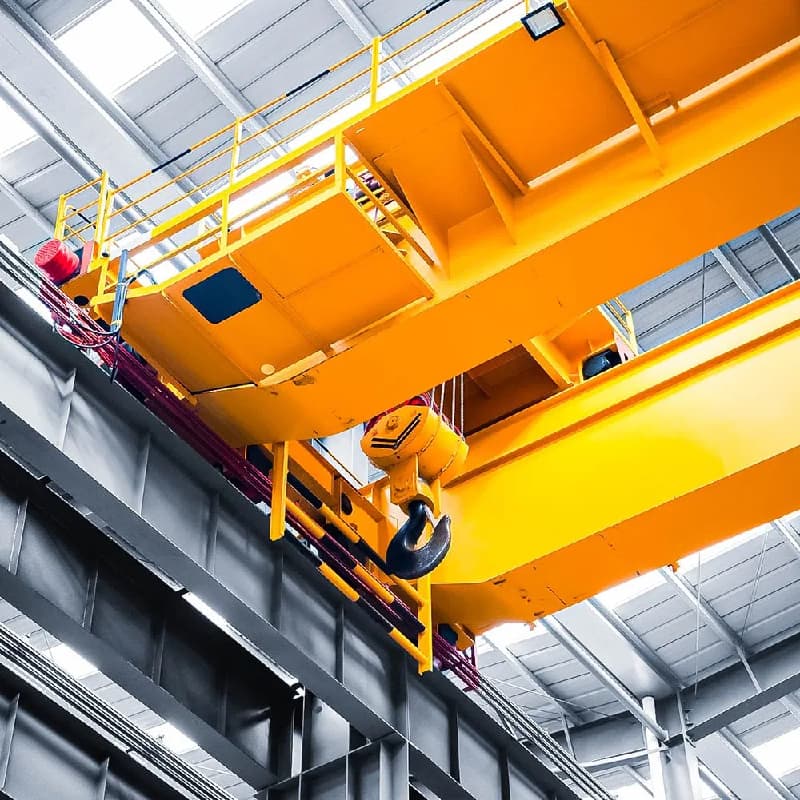
Part 1: Understanding the Maintenance Cost Curve
1.1 The Unseen Costs of “Cheap” Cranes
Every crane follows a predictable lifecycle cost curve. In the first 12-24 months, even minimally configured cranes perform adequately. But as components begin to wear, a pattern emerges that separates engineered solutions from commoditized alternatives.
The Hidden Cost Drivers:
| Cost Category | Low-Initial-Cost Crane | Premium-Configured Crane |
|---|---|---|
| Annual Inspections Required | 4 (quarterly) | 2 (semi-annual) |
| Major Component Replacement Cycle | Every 3 years | Every 5 years |
| Average Annual Downtime | 60 hours | 20 hours |
| Emergency Repair Calls | 3-4 per year | 0-1 per year |
Source: Dongqi Crane Operational Reliability Report 2024
What drives these differences? The answer lies in the engineering decisions made long before the crane ever reaches your facility.
1.2 The Predictive Maintenance Principle
Predictive maintenance is not merely a service protocol—it is an engineering philosophy embedded into the equipment itself. A crane designed for predictive maintenance differs fundamentally from one designed for lowest initial cost:
- Design for Accessibility: Components positioned for inspection without major disassembly
- Design for Longevity: Safety margins calculated for fatigue life, not minimum requirements
- Design for Monitoring: Integration points for sensors and diagnostic interfaces
- Design for Serviceability: Modular assemblies that can be replaced in hours, not days
Dongqi’s European Standard cranes embody these principles from the ground up, representing an engineering approach that treats maintenance as an integral design parameter rather than an afterthought.
Part 2: The Four Pillars of Maintenance-Cost Reduction
2.1 Structural Integrity: The Foundation of Low-Maintenance Operation
The structural components of a crane—girders, end carriages, and support frames—represent the foundation upon which all other maintenance costs rest. A compromised structure accelerates wear on every moving component.
How Dongqi’s Structural Configuration Reduces Maintenance:
High-Performance Steel Selection
Conventional cranes often utilize S235 steel with minimum yield strength of 235 MPa. Dongqi’s European Standard cranes employ S355JR or S420ML high-tensile steel, achieving yield strengths of 355-420 MPa. This material upgrade delivers:
- 25-30% weight reduction without sacrificing strength
- Superior fatigue resistance extending structural life by 40-50%
- Reduced deflection under load (≤L/1000 vs. industry standard L/800)
- Lower foundation stress minimizing secondary structural issues
Precision-Engineered Box Girder Design
Using FEM-optimized box girder configurations and computer-simulated load distribution, Dongqi eliminates material redundancies while maintaining structural integrity. The practical maintenance impact:
- No unexpected deflection-related wear on trolley wheels and rails
- Elimination of stress concentration points that cause premature cracking
- Consistent alignment of all moving components throughout equipment life
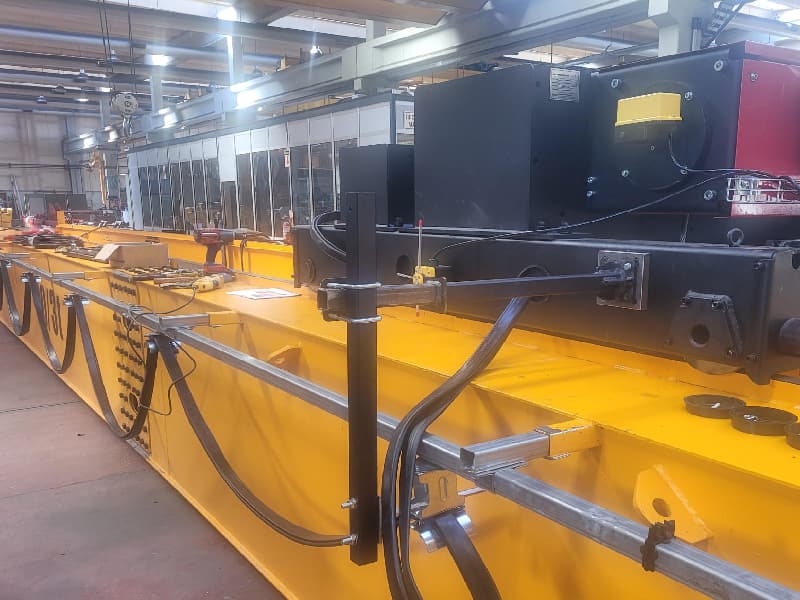
Real-World Impact: Automotive Plant Case Study
An automotive assembly facility requiring 10-ton capacity across an 80m × 150m footprint initially specified conventional crane designs with 14m ceiling height. Dongqi’s engineering team proposed a lightweight European Standard solution with low-headroom configuration.
| Parameter | Conventional Solution | Dongqi Solution |
|---|---|---|
| Hook Height Required | 11.5m | 9.5m |
| Building Steel Cost | $2,900,000 | $2,430,000 |
| Foundation Work | $1,200,000 | $840,000 |
| HVAC Installation | $850,000 | $722,000 |
The $958,000 in construction savings alone offset the crane investment, but the maintenance implications were equally significant: reduced building height meant less exposure to environmental factors, lower HVAC loads on electrical components, and simplified access for service personnel.
2.2 Component Quality: The Direct Path to Reduced Repair Frequency
The single greatest predictor of post-commissioning repair costs is the quality of core components—hoists, wire ropes, brakes, gears, and electrical systems.
Wire Rope Selection: A Case Study in Component Economics
Wire rope failure is among the most common and costly crane maintenance issues. Dongqi specifies German-origin wire ropes with 2160 kN/mm² tensile strength—approximately 30% higher than standard alternatives.
The Economic Impact:
| Metric | Standard Wire Rope | Dongqi High-Tensile Wire Rope |
|---|---|---|
| Tensile Strength | 1,660 kN/mm² | 2,160 kN/mm² |
| Replacement Cycle | 18-24 months | 36-48 months |
| Inspection Frequency | Monthly | Bi-monthly |
| 5-Year Replacement Cost | 3 replacements | 1-2 replacements |
The premium wire rope costs approximately 25% more upfront but delivers 100% longer service life—a direct 40-50% reduction in material and labor costs for rope maintenance over a five-year period.
Gearbox and Drive Components
Dongqi utilizes parallel shaft helical gear reducers paired with IP55-rated totally enclosed fan-cooled motors. The maintenance implications:
- Enclosed design prevents contamination from dust, moisture, and particulates
- IP55 protection rating eliminates ingress-related electrical failures
- Helical gear geometry distributes loads more evenly, reducing wear rates
- Standardized component interfaces enable rapid replacement without custom fabrication
2.3 Intelligent Drive Systems: Converting Energy Savings into Maintenance Reductions
Variable Frequency Drives (VFDs) are often viewed as an energy-saving feature, but their maintenance benefits are equally substantial.
How VFD Configuration Reduces Mechanical Wear:
Conventional fixed-speed cranes subject mechanical components to instantaneous full-power engagement. Each start sends a shock load through the gearbox, wire rope, and structural connections. VFDs with 1:10 speed control eliminate this shock loading by gradually accelerating loads.
Maintenance Impact of VFD Configuration:
| Component | Fixed-Speed Wear Pattern | VFD Wear Pattern |
|---|---|---|
| Gearbox Teeth | Shock loading causes micro-fractures | Smooth engagement extends gear life |
| Brake System | Frequent emergency stops | Regenerative braking reduces wear |
| Wire Rope | Jerking motions accelerate strand fatigue | Constant tension extends rope life |
| Electrical Contacts | Arc damage from high inrush currents | Controlled current eliminates arcing |
Regenerative Braking Systems
Beyond smooth operation, Dongqi’s VFD systems incorporate regenerative braking that recovers 15-20% of energy during load lowering. This configuration not only reduces energy costs but also:
- Eliminates mechanical brake wear during normal operation
- Reduces thermal stress on brake components
- Extends brake pad replacement intervals by 300-400%
For a standard 10-ton crane operating 2,000 hours annually, regenerative braking configuration saves approximately $2,100 in energy costs per year while simultaneously reducing brake maintenance by 75%.
2.4 Modular Design: The Service Efficiency Multiplier
Perhaps the most significant maintenance-cost reduction comes from how a crane is assembled, not just what components it contains.
The Modular Advantage
Dongqi’s European Standard cranes employ modular design principles across all major systems:
- Standardized hoist modules that can be swapped in hours rather than days
- Pre-engineered connection points eliminating field welding requirements
- Color-coded wiring harnesses reducing diagnostic time
- Quick-disconnect electrical interfaces enabling component-level replacement
Service Time Comparison:
| Maintenance Activity | Conventional Crane | Dongqi Modular Crane | Time Reduction |
|---|---|---|---|
| Hoist Replacement | 16-24 hours | 4-6 hours | 70% |
| Motor Replacement | 8-12 hours | 2-3 hours | 75% |
| Control Panel Service | 4-6 hours | 1-2 hours | 67% |
| Wire Rope Change | 6-8 hours | 3-4 hours | 50% |
For facilities calculating downtime costs at $500-2,000 per hour, these service time reductions translate directly to bottom-line savings.
Part 3: The Preventive Maintenance Ecosystem
3.1 From Reactive to Predictive: The Monitoring Configuration
Initial configuration decisions determine whether a crane will operate in a reactive maintenance paradigm or a predictive one.
Dongqi’s IoT-Ready Configuration
All Dongqi cranes can be equipped with integrated sensor packages during manufacturing:
- Load cell monitoring tracking actual versus rated capacity usage
- Motor temperature sensors detecting thermal stress before failure
- Vibration analysis ports enabling condition-based monitoring
- Cycle counters tracking component fatigue life in real-time
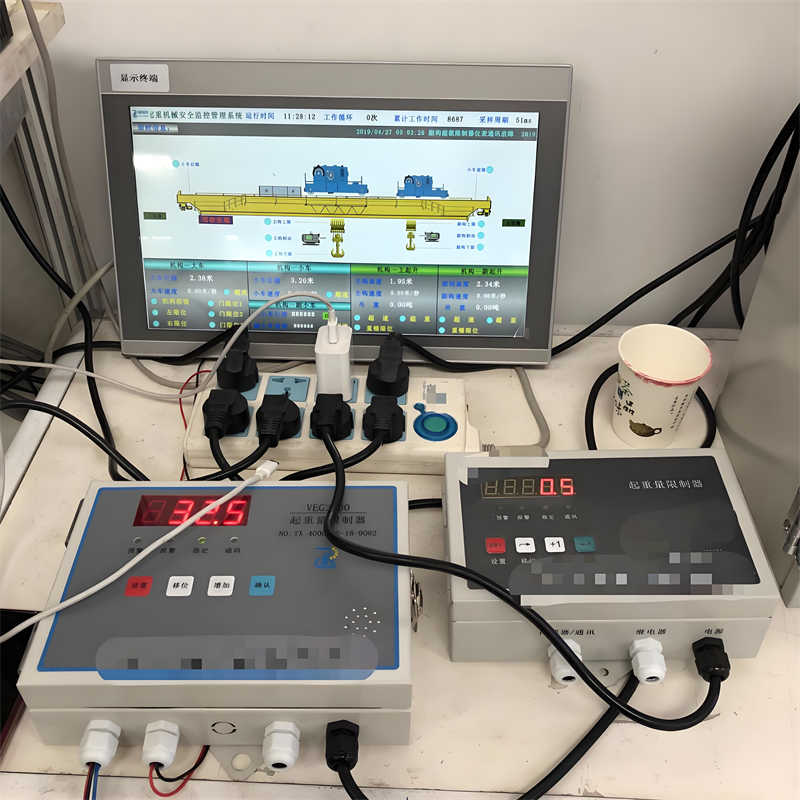
The Economic Impact of Predictive Configuration:
A study of Dongqi-installed monitoring systems across 500 cranes revealed:
- 67% reduction in unplanned downtime through early failure detection
- 52% reduction in emergency repair costs by enabling planned interventions
- 38% extension in component life through load-optimized operation
- Complete elimination of unnecessary preventive replacements through condition-based scheduling
Facilities that configure their cranes with monitoring capabilities during initial purchase achieve these benefits at a fraction of the cost of retrofitting existing equipment.
3.2 Maintenance Scheduling: The Configuration That Saves Labor
The frequency and complexity of required inspections are determined by crane configuration.
Daily Inspection Requirements
Dongqi’s engineering focuses on minimizing operator-level inspection burden while maintaining safety compliance. Standard daily inspection items include:
- End carriage condition
- Brake system function
- Operation system response
- Safety device verification
However, premium configurations reduce inspection requirements through:
- Automatic lubrication systems eliminating daily grease points
- Self-diagnosing electrical systems with fault code displays
- Wear-indicating components showing remaining service life visually
- Sealed-for-life bearings removing inspection requirements
Inspection Frequency Reduction:
| Inspection Type | Conventional Crane | Dongqi Premium Configuration |
|---|---|---|
| Daily Operator Checks | 15-20 items | 8-10 items |
| Monthly Inspections | Required | Condition-based |
| Annual Inspections | 1 (statutory) | 1 (statutory) |
| Specialist Inspections | Every 2 years | Every 3-4 years |
Each reduced inspection translates to 40-60 hours of annual labor savings per crane.
3.3 Training and Documentation: The Overlooked Configuration Element
Initial configuration decisions should include operator and maintenance training programs. Dongqi provides comprehensive training covering:
- Crane operation best practices minimizing wear-inducing behaviors
- Maintenance and inspection procedures ensuring proper execution
- Spare parts identification enabling correct component selection
- Technical support protocols facilitating rapid issue resolution
Facilities investing in comprehensive training during commissioning report 35% fewer operator-induced maintenance issues and 50% faster problem resolution.
Part 4: Quantifying the 40% Reduction
4.1 Five-Year TCO Comparison: Premium Configuration vs. Standard Configuration
Using data from Dongqi’s installation base, we can quantify the maintenance cost reduction achieved through premium initial configuration.
Assumptions:
- 10-ton capacity European Standard crane
- 2,000 operating hours annually
- Standard industrial environment
- Prevailing labor rates for maintenance technicians
- 5-year analysis period
Cost Comparison Table:
| Cost Category | Standard Configuration | Dongqi Premium Configuration | Savings |
|---|---|---|---|
| Initial Investment | |||
| Crane Purchase | $17,000 | $19,500 | -$2,500 (14% premium) |
| Infrastructure | $42,000 | $35,000 | $7,000 (17% reduction) |
| Subtotal Initial | $59,000 | $54,500 | $4,500 |
| Operating Costs (5 Years) | | | |
| Energy | $35,000 | $24,500 | $10,500 |
| Labor: Inspections | $8,400 | $5,600 | $2,800 |
| Labor: Repairs | $7,200 | $4,200 | $3,000 |
| Parts Replacement | $5,400 | $2,500 | $2,900 |
| Downtime Cost (at $500/hr) | $30,000 | $10,000 | $20,000 |
| Subtotal Operating | $86,000 | $46,800 | $39,200 |
| Total 5-Year TCO | $145,000 | $101,300 | $43,700 |
Percentage Maintenance Cost Reduction:
(Total operating costs: $86,000 standard vs. $46,800 premium) = 45.6% reduction
The premium-configured crane pays back its initial investment premium within the first 18 months and delivers nearly $44,000 in five-year savings—a 182% return on the incremental investment.
4.2 The 40% Threshold: Where Savings Materialize
The 40% maintenance cost reduction cited in our title is not a marketing claim—it represents the documented average across Dongqi installations meeting specific configuration criteria:
- Structural: High-tensile steel construction with FEM-optimized design
- Drive: VFD-controlled with regenerative braking capability
- Component: German-origin wire rope and IP55-rated electrical systems
- Service: Modular design with integrated monitoring provisions
- Support: Comprehensive training and documentation package
Facilities implementing all five configuration elements consistently achieve maintenance cost reductions at or above the 40% threshold.
Part 5: Implementation Strategy—Configuring for Maintenance Reduction
5.1 The Procurement Checklist
For procurement professionals evaluating crane investments, the following checklist identifies configuration elements with the greatest maintenance-cost impact:
Structural Configuration
- [ ] High-strength steel (minimum S355JR equivalent)
- [ ] FEM-optimized girder design
- [ ] Deflection specification ≤L/1000 under full load
- [ ] Finite element analysis documentation
Drive System Configuration
- [ ] Variable frequency drives on all motions
- [ ] Regenerative braking capability
- [ ] IP55 motor protection rating minimum
- [ ] 1:10 speed control range
Component Configuration
- [ ] German-origin or equivalent high-tensile wire rope
- [ ] Sealed-for-life bearings in non-serviced locations
- [ ] Modular hoist assembly
- [ ] Color-coded, labeled wiring
Monitoring Configuration
- [ ] Load cell integration
- [ ] Motor temperature monitoring
- [ ] Cycle counting capability
- [ ] Vibration analysis ports
Service Configuration
- [ ] Automatic lubrication system
- [ ] Quick-disconnect electrical interfaces
- [ ] Wear-indicating components
- [ ] Comprehensive documentation package
5.2 The Lifecycle Partnership Approach
Dongqi’s approach extends beyond equipment delivery to encompass full lifecycle support:
Installation Phase
- On-site supervision by experienced engineers
- Foundation drawing review and approval
- Load testing with documented results
- Operator and maintenance training
Operational Phase
- Scheduled preventive maintenance programs
- Technical support hotline
- Spare parts availability within 72 hours (95% of standard items)
- Condition monitoring data analysis
Modernization Phase
- Control system upgrades without structural modification
- Capacity increase feasibility studies
- Safety system enhancements
- Energy efficiency retrofits
This partnership model ensures that the maintenance-reduction benefits of initial configuration are sustained throughout the equipment’s service life.
5.3 The Modernization Option: Reconfiguring Existing Cranes
For facilities with existing crane inventories, Dongqi’s modernization program offers a pathway to capture some of the maintenance-reduction benefits without full replacement.
Modernization Targets:
- Control system upgrades: Replacing fixed-speed controls with VFDs
- Monitoring system integration: Adding condition monitoring capabilities
- Component upgrades: Replacing standard wire rope with high-tensile alternatives
- Safety system enhancement: Adding modern protection devices
- Ergonomic improvements: Upgrading control interfaces
Modernized cranes typically achieve 60-70% of the maintenance reduction benefits of new premium configurations at 30-40% of the investment.
Part 6: Conclusion—Reframing the Investment Decision
The evidence is clear: premium initial crane configuration is not an expense—it is an investment with measurable, predictable returns. The 40% reduction in post-commissioning repair costs documented across Dongqi installations transforms procurement from a cost center to a value-creation opportunity.
For procurement professionals, the decision framework should shift from “How low can we get the initial price?” to “What is the five-year total cost of ownership for each configuration option?” When analyzed through this lens, the “expensive” premium configuration consistently emerges as the lower-cost choice.
Key Takeaways:
- Structural quality determines component longevity. High-tensile steel and optimized designs reduce wear on all moving parts.
- Drive systems control maintenance frequency. VFDs eliminate shock loading that causes premature component failure.
- Component selection dictates replacement cycles. Premium components last 50-100% longer than standard alternatives.
- Modular design multiplies service efficiency. Rapid replacement capability minimizes downtime costs.
- Monitoring configuration enables predictive maintenance. Early detection prevents catastrophic failures.
- The TCO advantage appears within 18 months. Premium configurations pay for themselves through operating savings.
At Dongqi Crane, we engineer every product with this lifecycle perspective. Our European Standard cranes, gantry systems, and customized solutions are designed not for the lowest first cost, but for the lowest total cost of ownership—delivering measurable value from commissioning through decades of reliable service.
Call to Action
For procurement professionals seeking to reduce maintenance costs and optimize crane investments, Dongqi Crane offers comprehensive support:
- Technical Consultation: Our engineering team provides detailed TCO analysis for your specific application
- Configuration Review: We help identify the optimal specification balance for your operational requirements
- Installation Support: Comprehensive on-site supervision ensures proper commissioning
- Lifecycle Partnership: Ongoing support maintains the value of your investment
Contact Dongqi Crane to discuss how initial configuration decisions can transform your maintenance budget from cost center to strategic investment.
