
Bridge Crane vs. Gantry Crane: 5 Dimensions to Guide Your Investment Based on Facility Structure
In the early stages of industrial facility construction or renovation, the selection of an overhead crane (often called an EOT or bridge crane) is a critical decision that dictates the logistical efficiency of the entire production line. A common pitfall for many business owners is focusing solely on lifting capacity (“tonnage”) or the initial purchase price. The harsh reality often surfaces during installation: the hook height is insufficient for the tallest machinery, or the foundation wasn’t engineered to handle the wheel loads.
Selecting the right crane isn’t about determining which type is “better” in a vacuum; it’s about identifying which configuration is most compatible with your physical space. This article breaks down the decision logic into five professional dimensions: Space Utilization, Structural Load Capacity, Flexibility, Operational Efficiency, and Return on Investment (ROI) . We will dissect the trade-offs between a bridge crane (using the low-headroom LH double-girder type as a prime example) and a gantry crane.
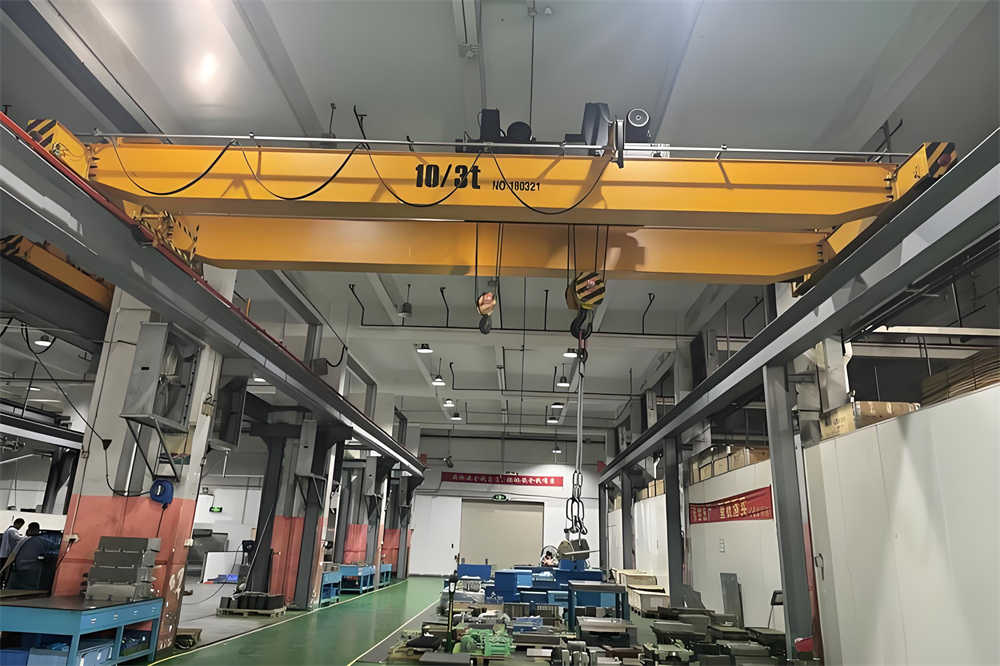
Dimension 1: Space Utilization — “Maximizing Vertical Height” vs. “Optimizing Horizontal Span”
Every square meter of a factory floor represents a cost. In environments where space is at a premium, the structural design of the crane directly dictates production capacity and logistical flow.
Bridge Crane (LH Type Case Study)
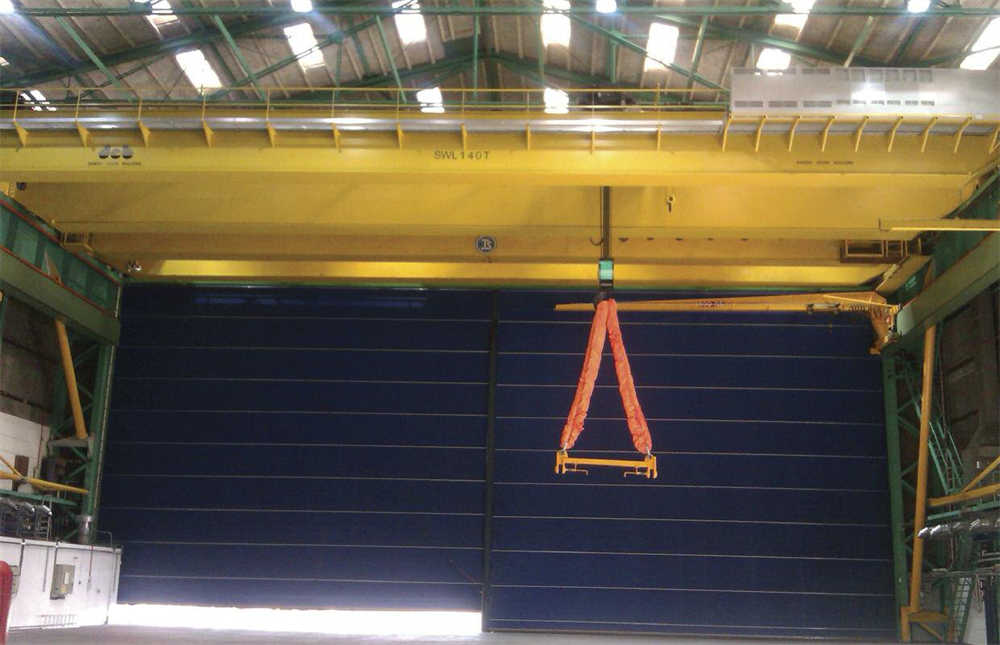
A bridge crane is mounted on runway beams fixed to the elevated columns of the factory building. It occupies zero floor space. The LH type double-girder crane represents a pinnacle of compact engineering. In this configuration, the electric hoist trolley runs on top of two parallel bridge girders. Modern LH designs utilize Finite Element Analysis (FEA) to optimize the structural profile, minimizing the distance from the top of the bridge to the roof structure (the dead-band) while maximizing the hook approach to the walls.
- Core Advantage: It “squeezes” every centimeter of vertical space. If your facility has a relatively low roof but requires the ability to lift large molds, dies, or machinery, the LH type offers a superior actual lifting height compared to traditional single-girder or standard double-girder units. By reducing the overall crane profile, it allows the hook to ascend closer to the roof, effectively increasing the usable vertical lifting range without raising the building’s roof.
Gantry Crane
Gantry cranes are self-supporting structures with legs that run on rails laid directly on the ground. While this eliminates the need for a building to support the crane, it comes with a significant spatial penalty. The area occupied by the legs and the ground rails becomes a “no-go” zone for storage, forklifts, and personnel traffic. This creates logistical dead zones that can disrupt the flow of a busy shop floor.
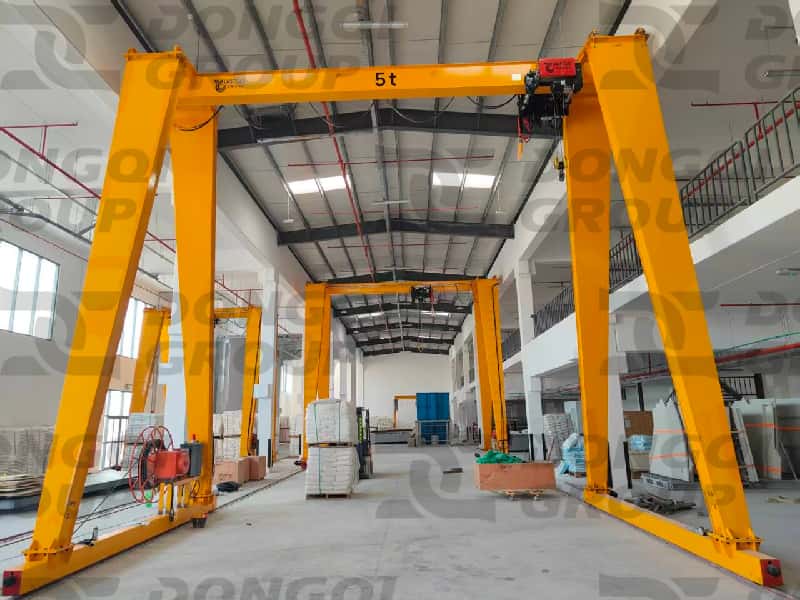
Decision Advice
If your facility prioritizes high-density floor storage, frequent forklift traffic, or if the production line requires a clear, unobstructed floor area, a Bridge Crane (LH Type) is the only logical choice. It utilizes the “dead space” near the ceiling, keeping the ground entirely free for operations. Conversely, a Gantry Crane is only suitable if the facility has exceptionally high ceilings (allowing for the leg height) and the ground space is intentionally dedicated to a linear, open-layout processing area or outdoor storage.
Dimension 2: Structural Load Requirements — Can Your Beams and Foundation Handle It?
Cranes are dynamic, heavy-load machinery. The pressure they exert on the supporting structure is a primary concern for structural engineers and architects. The difference in how bridge and gantry cranes transmit this load is a fundamental factor in project cost and feasibility.
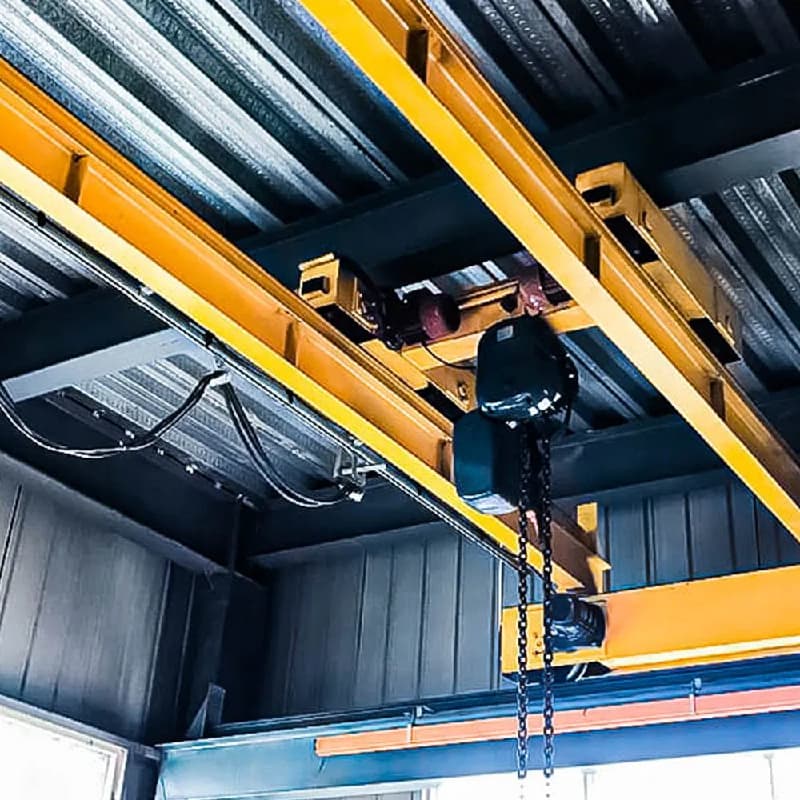
Bridge Crane (LH Type Focus)
A bridge crane transfers its entire load—including the weight of the crane, the trolley, and the lifted load—through the end trucks, onto the runway beams, and ultimately into the building’s columns. This imposes significant lateral and vertical forces on the facility’s steel structure.
- The “Weight Reduction” Technology of LH Types: Modern LH series cranes are designed with a focus on low wheel load. Through advanced FEA (Finite Element Analysis), manufacturers optimize the design to reduce the crane’s self-weight while maintaining structural integrity. For the factory owner, this translates to a crucial benefit: lower reaction forces on the building’s corbels (brackets) and columns. In a new facility, this can allow for lighter steel columns or reduced structural steel tonnage, offsetting part of the crane’s initial cost. In retrofit situations, a low wheel-load crane is often the only viable option for a building not originally designed for heavy lifting.
Gantry Crane
A gantry crane simplifies the structural equation by bypassing the building entirely. The load is transferred directly from the crane legs to the ground. However, this does not mean it is “foundation-free.” A gantry crane requires a robust, dedicated foundation. This typically involves excavating trenches, laying reinforced concrete, embedding heavy rails, and ensuring the ground’s bearing capacity is sufficient to handle the wheel loads without settling over time. This foundation work is a significant civil engineering cost that is often underestimated in initial budget projections.
Decision Advice
If your facility already has a robust steel structure with existing runway beams and properly engineered corbels, a Bridge Crane is the most cost-effective and structurally efficient route. If you are operating in a simple steel shed, a temporary outdoor site, or a building with a lightweight structure that cannot support overhead loads, a Gantry Crane allows you to achieve lifting capability without reinforcing the main building frame.
Dimension 3: Installation and Retrofit Flexibility — Balancing the Present with the Future
B2B capital investments must account for business evolution over the next 5 to 10 years. The ability to modify, upgrade, or relocate equipment is a valuable strategic asset.
Bridge Crane (LH Type Focus)
Bridge cranes are generally considered permanent installations. They are typically designed to have a lifespan that matches the facility itself. However, technological evolution has changed this rigidity.
- Modular Upgrades: In modern LH type cranes, the design is modular. If a business wants to upgrade from a pendant control to a radio remote control, or from a fixed-speed hoist to a variable frequency drive (VFD) for smoother operation, these upgrades can often be performed in situ. The modular design allows for the replacement of the trolley or control systems without dismantling the main bridge girders or runway beams.
- Disadvantages: Relocating a bridge crane to a new facility is a complex, expensive undertaking that typically involves disassembly, structural engineering for the new location, and re-installation.
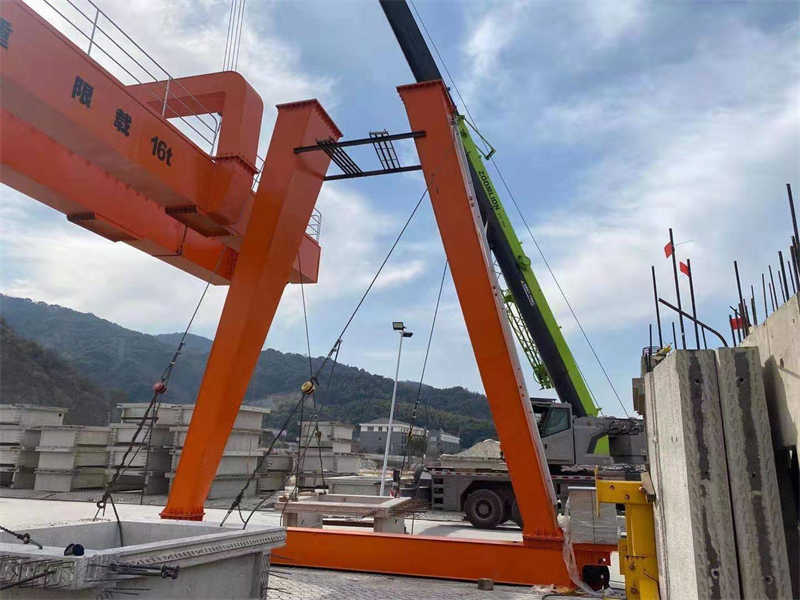
Gantry Crane
Gantry cranes offer high installation flexibility. They are the preferred choice for project sites, shipyards, and temporary manufacturing setups. If a business is leasing a facility and anticipates future relocation, a gantry crane (especially a portable or semi-gantry version) can be disassembled into manageable components and reassembled at a new site. While the foundation work at the original site is a sunk cost, the core equipment retains mobility.
Decision Advice
For businesses seeking long-term fixed asset stability, asset value retention, and a permanent solution for a facility they own, Bridge Cranes are the superior investment. For businesses with a high degree of operational mobility, those operating in leased facilities with uncertain long-term tenure, or those in project-based industries (like precast concrete or steel fabrication), Gantry Cranes provide the necessary flexibility.
Dimension 4: Operational Coverage, Precision, and Efficiency
The ultimate purpose of a crane is to move loads efficiently and precisely. The design of the crane dictates its effectiveness in achieving this.
Coverage Area and Blind Spots
- Bridge Crane: The trolley on a bridge crane can travel to the very edge of the runway beams. This results in minimal blind spots, often only a few centimeters from the sidewalls of the facility. This allows for the full utilization of the entire rectangular floor plan.
- Gantry Crane: Gantry cranes have inherent blind spots. The legs restrict the hook’s ability to approach the ends of the runway. Furthermore, any obstacles (stored materials, equipment) within the leg span can impede travel, reducing the effective coverage area.
Precision and Stability
- Bridge Crane: The double-girder configuration of the LH type crane places the trolley and hoist on a rigid track supported by two steel beams. This creates a stable, low-deflection platform. For precision tasks such as die alignment, mold mounting, or assembling heavy machinery components, this rigidity translates to superior positioning accuracy and significantly reduced load swing compared to single-girder or gantry cranes.
- Gantry Crane: The stability of a gantry crane is heavily reliant on the quality of the ground rail installation and the structural stiffness of the legs. If the rails settle unevenly, the crane can experience skewing, which affects precision. While capable for general lifting, they are generally not suited for high-precision assembly work.
Decision Advice
For high-frequency, high-precision manufacturing processes involving sensitive equipment assembly, tool-and-die work, or automated production lines, the Double-Girder Bridge Crane (LH Type) is the definitive recommendation. Its stability and comprehensive coverage are essential for maximizing throughput and protecting valuable workpieces. Gantry cranes are better suited for bulk handling, stacking, loading/unloading trucks, and general maintenance tasks where pinpoint accuracy is less critical.
Dimension 5: Total Cost of Ownership and Return on Investment (ROI)
A myopic focus on the purchase price is a common mistake in crane procurement. A holistic analysis of the total cost of ownership—including installation, maintenance, and operational lifespan—reveals the true ROI.
1. Initial Capital Expenditure (CAPEX)
It is a common misconception that gantry cranes are always cheaper.
- Gantry Crane Reality: The “sticker price” of the crane itself might be lower than a bridge crane. However, this is often misleading. The total installed cost for a gantry crane must include site preparation, excavation, reinforced concrete foundations, anchor bolts, and rail installation. For a 10-ton gantry crane, these civil works can easily add 30-50% to the total project cost.
- Bridge Crane Reality: If a facility is new or has pre-existing runway beams, the installation cost for a bridge crane is primarily the crane assembly and electrical hookup. The cost of the steel runway beams is often considered part of the building cost, not the crane cost.
2. Operational Expenditure (OPEX) and Maintenance
- Environmental Factors: Bridge cranes operate indoors, protected from rain, UV radiation, extreme temperature fluctuations, and airborne contaminants (like salt spray or sand). This results in slower wear on mechanical components (gearboxes, wheels) and electrical systems. Gantry cranes, often in outdoor or semi-outdoor environments, are exposed to the elements, accelerating corrosion and increasing maintenance frequency.
- Standardization: Modern LH type bridge cranes utilize highly standardized components (hoists, motors, end trucks) that are readily available in the industrial supply chain. This reduces spare parts inventory costs and minimizes downtime when repairs are needed.
- Downtime Risk: In a bridge crane, the hoist is the primary moving part. In a gantry crane, the complexities include not just the hoist, but also the leg wheels, steering mechanisms (if motorized), and the ground rail alignment. A misaligned rail in a gantry crane can cause wheel flange wear and structural stress, leading to unplanned downtime that is often more complex to repair than a simple hoist issue in a bridge crane.
Decision Advice
When calculating ROI, businesses should look beyond the initial quote. Bridge Cranes (LH Type) typically offer a lower total cost of ownership over a 15-20 year lifespan due to reduced civil works (if the building is prepared), lower maintenance costs in a controlled environment, and longer component life. Gantry Cranes may show a favorable ROI in short-term project applications or where the building infrastructure is completely absent and cannot be economically retrofitted.
Expert Summary: Comparative Table
| Dimension | Bridge Crane (Recommended LH Type) | Gantry Crane |
|---|---|---|
| Space Footprint | Occupies overhead space only. 100% floor utilization. | Legs and ground rails create dead zones and obstruct logistics. |
| Lifting Performance | LH type offers exceptional headroom utilization. Maximizes hook height in low buildings. | Hook height is limited by leg height and overall structural clearance. |
| Civil / Structural Cost | Relies on building columns. No ground rails required. High cost if building lacks runway structure. | Requires significant site prep: excavation, reinforced concrete foundations, and rail installation. |
| Precision & Stability | High rigidity. Excellent for precision assembly, die handling, and vibration-sensitive loads. | Moderate. Stability depends on ground rail condition; prone to sway during rapid movements. |
| Typical Environment | Indoor, clean manufacturing, automotive, aerospace, high-precision machining. | Outdoor stockyards, shipping container handling, construction sites, warehouses with high ceilings. |
Conclusion
Choosing between a bridge crane and a gantry crane is ultimately a strategic decision that seeks the “golden balance” between building constraints, equipment capability, and operational efficiency. It is a decision that should be made with a comprehensive understanding of your facility’s physical parameters and long-term business strategy.
If your facility has a low ceiling where every centimeter of lift matters, and your operations demand high precision and stable, high-frequency handling, the LH type double-girder bridge crane represents the highest ROI. Its low-headroom design and low wheel loads make it the most versatile and future-proof solution for modern manufacturing environments.
Conversely, if your operation is primarily outdoor storage, or you lack the supporting building structure entirely, a gantry crane provides a robust solution that bypasses the limitations of the facility.
Expert Support:
If you are still uncertain which solution is right for your specific facility, we are here to help. Our engineering team specializes in translating physical constraints into optimized material handling solutions.
Take the next step: You can upload your facility CAD drawings to our secure portal. Our technical team will provide you with a free, no-obligation 1:1 crane layout simulation and a detailed wheel load calculation report within 24 hours, empowering you to make a data-driven investment decision.
