
Dongqi Crane in Kenya: Aligning with Your Industrial Growth
Market Overview & Our Commitment
Recent Chinese customs data offers a clear snapshot of Kenya’s growing investment in material handling equipment. In 2025, Kenya’s imports of gantry cranes from China reached 29 units, valued at USD 22.002 million, a significant increase from 11 units (USD 0.125 million) in 2024. Simultaneously, the market for overhead cranes remained steadily active, with 66 units imported in 2025 (USD 1.266 million) , compared to 60 units (USD 1.44 million) the previous year.
These figures point to two key trends:
- Scaling Up Infrastructure: The surge in gantry crane value suggests Kenyan projects are moving toward larger-scale, heavy-lift requirements, typical in port development, energy, and large-scale construction.
- Sustained Industrial Activity: The consistent volume of overhead crane imports reflects the steady, ongoing needs of Kenya’s manufacturing, workshops, and logistics centers.
At Dongqi Crane, these numbers align with our own experience. We have been a consistent partner to Kenyan industries for years, supplying reliable equipment across the country. Our focus is not on chasing short-term market spikes, but on providing application-matched engineering, durable equipment, and long-term technical support that local operators and project managers can depend on. This page introduces the core products we offer to support your specific lifting challenges.
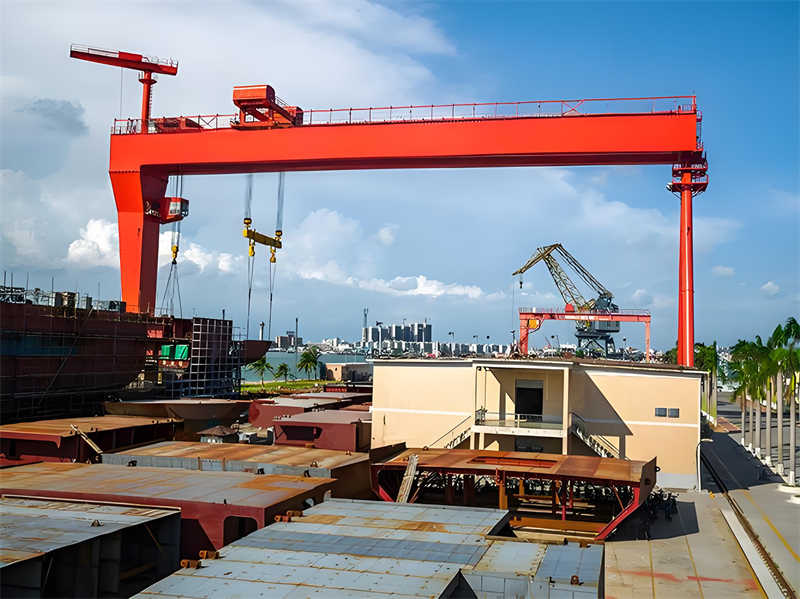
Product Range 1: Gantry Cranes for Kenya’s Heavy Lifting
The 2025 import data points clearly to one conclusion: Kenyan infrastructure and industrial projects are increasingly requiring heavier, more capable lifting equipment. Gantry cranes, with their outdoor operation flexibility and high capacity, are essential for these applications.
At Dongqi Crane, we offer a comprehensive range of gantry cranes designed to meet the specific demands of Kenyan industries—from port operations and rail logistics to heavy fabrication and construction. Each model is engineered with attention to durability, safety, and total cost of ownership.
Double Girder Gantry Crane
Ideal for: Heavy-duty outdoor applications, container handling at ports and rail yards, bulk material storage, steel fabrication yards, and large-scale construction projects.
Key Specifications:
- Capacity: Customized to project requirements, typically ranging from 5 tons to 150 tons and above
- Span: Customized based on site dimensions and operational needs
- Configuration Options: Available with various hoist types, control systems, and leg designs to suit specific applications
Application Notes for Kenya:
The double girder gantry crane represents the core of heavy-lift capability in our product range. Its twin-girder design provides exceptional rigidity and stability when handling heavy loads—critical factors for safety and precision in demanding environments.
In Kenya’s port facilities, such as Mombasa and Lamu, these cranes handle container loading and unloading, as well as bulk cargo transfer. Their robust construction ensures reliable performance under continuous operation, while the double girder design allows for higher lifting heights and greater hook coverage compared to single girder alternatives.
For inland logistics hubs serving the standard gauge railway, double girder gantry cranes efficiently transfer containers between trains, trucks, and storage yards. The ability to handle stacked containers requires both lifting capacity and precise control—capabilities built into our crane designs.
In heavy fabrication and steel service centers, these cranes maneuver steel plates, sections, and fabricated assemblies. The stability of the double girder design reduces load swing during positioning, improving both safety and productivity.
Environmental Considerations:
Kenya’s coastal environments present specific challenges for outdoor equipment. Our double girder gantry cranes can be specified with enhanced corrosion protection for marine locations. For inland sites with high dust levels, we recommend sealed electrical enclosures and appropriate component protection to maintain reliability.
Single Girder Gantry Crane
Ideal for: Lighter outdoor duties, maintenance depots, smaller fabrication workshops, agricultural facilities, and general warehousing.
Key Specifications:
- Capacity: Customized, typically ranging from 1 ton to 20 tons
- Span: Customized to site requirements
- Advantages: Lighter overall weight, lower initial investment, faster installation
Application Notes for Kenya:
The single girder gantry crane offers a cost-effective entry point into mechanized outdoor lifting. Its simpler design translates to lower procurement costs while still providing reliable performance for less demanding applications.
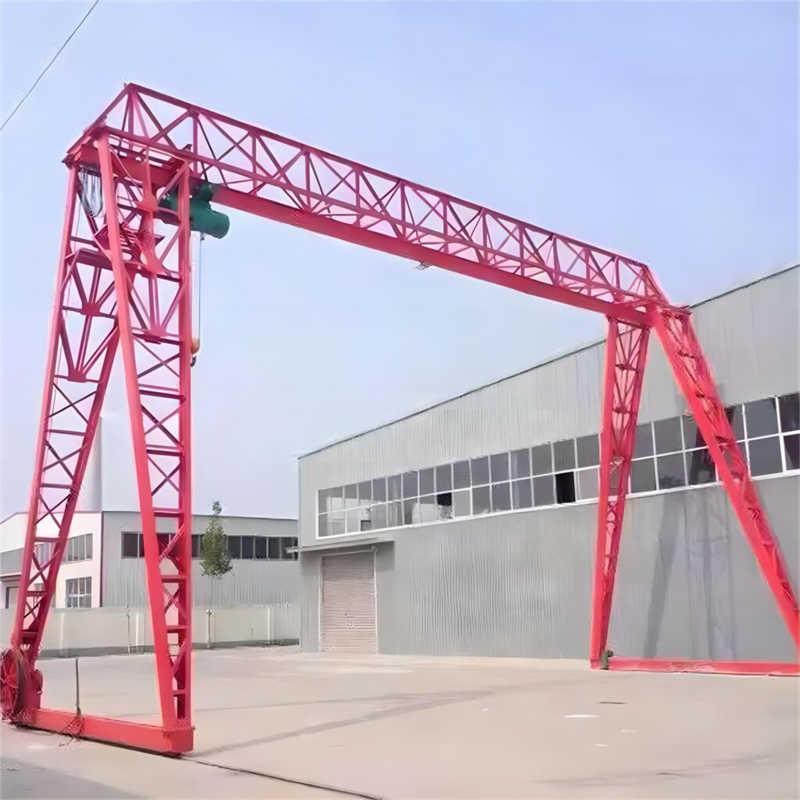
Kenya’s growing network of vehicle and equipment maintenance depots—serving trucks, agricultural machinery, and construction equipment—benefits from single girder gantries. These cranes handle engine pulls, component changes, and general workshop lifting without requiring the capacity or investment of heavier-duty equipment.
For smaller fabrication shops and metalworking facilities, single girder gantries provide essential lifting capability for raw materials and finished products. Their lighter weight also means reduced foundation requirements, potentially lowering installation costs.
In agricultural and grain handling operations, these cranes move sacks, equipment, and supplies. The outdoor capability is particularly valuable for facilities without covered workshop space.
Operational Considerations:
Single girder gantry cranes offer good flexibility for facilities with varying lift requirements. They can be specified with either top-running or under-running configurations depending on available space and operational preferences. For facilities that may relocate or reconfigure their operations, these cranes are generally easier to disassemble and move than larger double girder units.
Semi Gantry Crane
Ideal for: Workshops and factories where one side of the runway can be wall-mounted, maximizing usable floor space while retaining outdoor capability.
Key Specifications:
- Capacity: Customized to application requirements
- Configuration: One leg runs on a floor rail; the opposite side runs on a wall-mounted runway
- Advantages: Space-efficient, reduced floor space occupation, cost-effective for facilities with existing strong wall structures
Application Notes for Kenya:
The semi gantry crane offers a practical solution for facilities that need outdoor lifting capability but face space constraints. By running one side on a wall rail, these cranes free up floor space that would otherwise be occupied by a second rail system.
Kenyan manufacturing facilities with loading bays or external work areas adjacent to buildings can benefit from this configuration. The crane can service both the external yard and, with appropriate building openings, internal work areas.
In railway maintenance depots and workshops, semi gantry cranes positioned along building walls provide efficient handling of components and materials while minimizing interference with ground-level activities.
For facilities considering future expansion, the semi gantry configuration can be designed to allow conversion to full gantry operation if needs change.
A-frame Portal Crane & Portable Gantry Crane
Ideal for: Mobile applications, construction sites, temporary facilities, maintenance tasks at multiple locations.
Key Specifications:
- Capacity: Varies by model, typically lower capacities for portable units
- Configuration: Self-supporting A-frame design; portable models may feature adjustable height and span
- Advantages: Mobility, flexibility, no permanent runway required, can be relocated as needed
Application Notes for Kenya:
The mobility of A-frame and portable gantry cranes makes them valuable for operations with changing lift locations or temporary project requirements.

On Kenyan construction sites, these cranes handle materials, equipment, and components at various points throughout the project lifecycle. Their ability to move with the work reduces the need for multiple fixed lifting points.
In maintenance operations, portable gantry cranes can be positioned wherever heavy components need lifting—whether in a workshop, at a vehicle parking area, or at a remote field location. This flexibility is particularly valuable for organizations maintaining distributed assets.
For smaller enterprises not ready to invest in permanent overhead or gantry systems, portable cranes offer a lower-commitment entry point to mechanized lifting.
Operational Considerations:
Portable gantry cranes require careful attention to setup and stability. We provide clear guidance on proper positioning, load rating limitations, and safe operating procedures. For applications requiring frequent relocation, we recommend models designed specifically for repeated setup and takedown.
L Type Electric Trolley Gantry Crane
Ideal for: General outdoor lifting in stockyards, warehouses, timber yards, and bulk material storage areas.
Key Specifications:
- Capacity: Customized to application requirements
- Configuration: Characteristic “L” shaped legs provide clearance for loads passing through the gantry
- Advantages: Good stability, clearance for wide loads, suitable for frequent operation
Application Notes for Kenya:
The L type gantry crane takes its name from the shape of its legs, which angle outward at the base. This design provides excellent stability while offering clearance for loads to pass through the gantry opening.
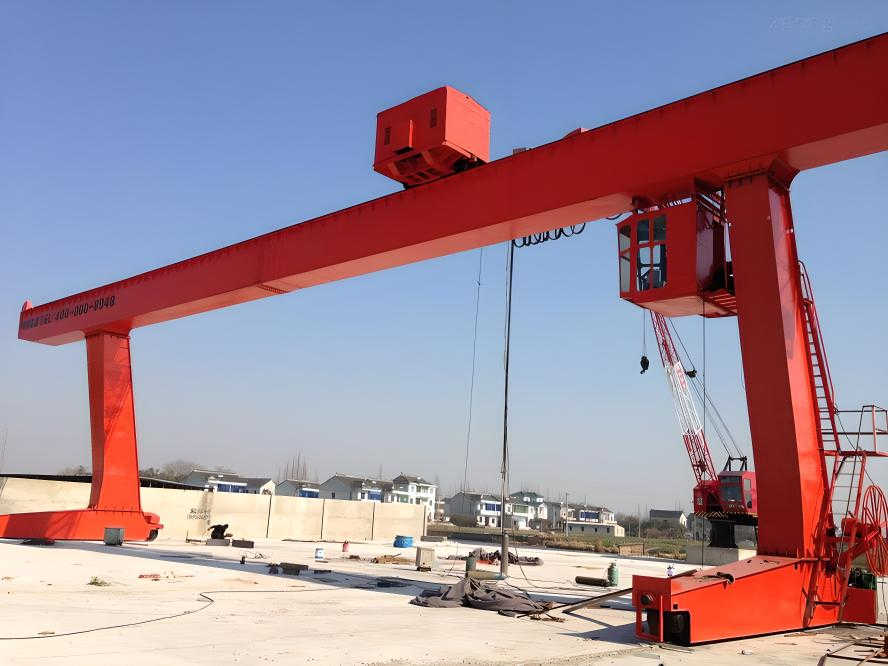
In Kenya’s timber and building materials yards, these cranes handle stacks of timber, pipes, and other long materials. The leg design allows materials to extend beyond the crane’s footprint when necessary.
For bulk storage operations handling bagged goods, agricultural products, or general merchandise, L type gantries provide reliable day-to-day lifting with good stability characteristics.
The electric trolley configuration ensures smooth load movement across the span, reducing operator fatigue and improving positioning accuracy compared to manually moved trolleys.
Our Approach to Gantry Crane Selection
Selecting the right gantry crane involves more than matching capacity and span to the application. Based on our experience with Kenyan projects, we consider several additional factors:
Site Conditions:
We assess ground conditions, drainage, and surface preparation requirements. Gantry cranes require properly designed rail foundations to operate safely and maintain alignment over time. For sites with challenging soil conditions, we can recommend appropriate foundation designs or discuss mitigation measures.
Environmental Exposure:
Kenya’s varied climate means different protection requirements for different locations. Coastal installations need enhanced corrosion protection. Inland sites with high dust or seasonal rainfall require appropriate electrical and mechanical component sealing. High-altitude locations may require motor derating considerations.
Duty Cycle Analysis:
Two cranes with identical capacity may have very different internal specifications depending on how often they operate and under what loads. We analyze expected duty cycles to select appropriate hoist groups, motor ratings, and mechanical components—ensuring the crane is neither under-specified for the task nor over-specified beyond reasonable requirements.
Operator Training:
Even the best-designed crane requires skilled operation. We discuss training requirements with clients to ensure operators understand safe operating procedures, routine maintenance tasks, and basic troubleshooting.
After-Sales Support:
Our relationship extends beyond delivery. We maintain contact with clients to understand how equipment performs in service and to offer guidance on maintenance planning, spare parts requirements, and operational best practices.
Product Range 2: Overhead Cranes for Kenya’s Workshops & Factories
The 2024-2025 import data for overhead cranes reveals a market characterized by steady, consistent demand. Unlike the project-driven spikes sometimes seen in gantry crane procurement, overhead crane imports tend to track ongoing industrial activity—workshop expansions, manufacturing operations, and replacement cycles.
At Dongqi Crane, we offer a comprehensive range of overhead cranes designed to meet the specific demands of Kenyan industries—from small fabrication shops to large manufacturing facilities and logistics centers. Each model is engineered with attention to reliability, serviceability, and total cost of ownership.
LH Type Double Girder Hoist Overhead Crane
Ideal for: Medium-duty workshops, infrastructure project sites, logistics centers, general manufacturing, and assembly operations.
Key Specifications:
- Capacity: 0.5 to 30 tons (customized to requirements)
- Span: 10.5 to 31.5 meters (customized based on workshop dimensions)
- Lifting Height: 3 to 48 meters (customized to building specifications)
- Voltage: 380V, 50Hz, 3-phase (accommodating Kenya’s standard industrial power supply)
- Working Class: Suitable for A3-A5 duty cycles
Working Characteristics:
The LH double girder hoist overhead crane combines the compactness of a hoist-based system with the stability of a double girder design. Its key operational features include:
- Compact Structure, Low Headroom: The hoist travels on the bottom flange of the girders, allowing for a lower overall crane height compared to traditional double girder configurations. This maximizes usable lifting height within existing workshop buildings—a valuable advantage in facilities with limited clearance.
- Light Body, Reduced Building Load: The optimized design reduces the crane’s dead weight and wheel loads, potentially lowering requirements for building structural reinforcement. This can translate to cost savings in both new construction and existing facility upgrades.
- Stable Travel, Smooth Operation: Variable frequency drive options provide smooth acceleration and deceleration, reducing load swing and improving positioning accuracy. This is particularly important when handling delicate or valuable materials.
- Adjustable Speeds: Hoisting and cross-travel speeds can be tailored to application requirements, balancing productivity with control.
Application Notes for Kenya:
The LH series is one of our most versatile overhead crane models, suitable for a wide range of Kenyan industrial settings.
In Kenya’s manufacturing sector, particularly in growing industries such as automotive assembly and machinery production, these cranes support production line operations. They move components between workstations, position materials for assembly, and handle finished products for packaging or shipping. The stable operation and precise control characteristics contribute to efficient, safe production processes.
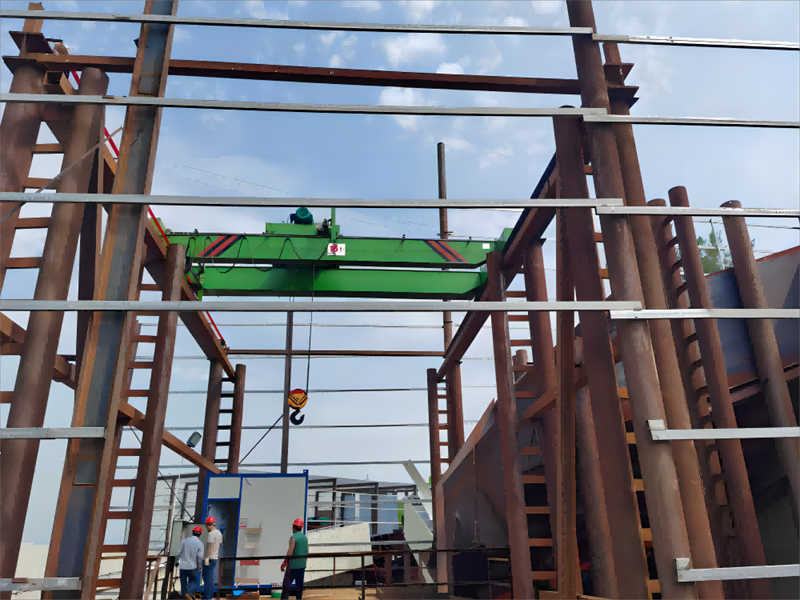
For infrastructure construction projects, LH cranes are often installed in precast yards, material staging areas, and equipment maintenance facilities. They handle steel reinforcement, formwork, and prefabricated components, improving material flow and reducing manual handling requirements.
Logistics and distribution centers benefit from the LH crane’s ability to handle a variety of loads—from palletized goods to machinery and equipment. The compact design allows efficient operation in facilities where maximizing storage space is a priority.
In general engineering workshops, these cranes serve as reliable workhorses for daily lifting tasks. Their adaptability to different load types and operating conditions makes them suitable for job shops handling diverse projects.
Environmental Considerations:
For Kenyan facilities operating in hot or dusty environments, we recommend appropriate protection measures for electrical and mechanical components. Sealed control panels, properly rated motors, and regular maintenance of travel rails help ensure reliable operation in challenging conditions.
QDX Type European Double Girder Hoist Overhead Crane
Ideal for: High-efficiency production lines, precision assembly operations, facilities with limited headroom, applications demanding low maintenance and energy efficiency.
Key Specifications:
- Capacity: 1 to 80 tons (customized to requirements)
- Span: 7.5 to 28.5 meters (customized based on workshop dimensions)
- Lifting Height: Customized to building specifications
- Voltage: 380V, 50Hz, 3-phase
- Design Standard: European FEM/ISO standards
Working Characteristics:
The QDX series represents our advanced engineering approach, incorporating European design principles focused on optimization and efficiency.
- Lightweight, Optimized Design: The QDX crane achieves significant weight reduction through finite element analysis and optimized structural design. Lower dead weight translates to reduced wheel loads on building structures, potentially lowering civil engineering costs for new facilities and enabling installation in existing buildings with limited load capacity.
- Compact Dimensions: The low headroom and close approach dimensions maximize effective workspace. The hoist is designed to fit within the girder profile, allowing the hook to reach closer to side walls and achieve higher lift heights within the same building envelope.
- High-Efficiency Electrical System: Variable frequency speed control is standard, providing smooth starts and stops that reduce mechanical stress on the crane and building structure. Regenerative options in some configurations can recover energy during braking, contributing to lower operating costs.
- Intelligent Control Systems: Advanced PLC-based controls enable precise load positioning, automated sequences for repetitive tasks, and integration with facility management systems. Remote monitoring capabilities allow for real-time performance tracking and predictive maintenance planning.
- Multiple Safety Protections: Standard safety features include overload protection, limit switches on all motions, emergency stop circuits, and anti-collision systems for multi-crane installations. These measures reduce accident risk and protect both personnel and equipment.
- High-Quality Materials: Critical components are manufactured from high-strength steels and alloys, with strict quality control throughout the production process. Pre-delivery testing ensures each crane meets specified performance and safety standards.
Application Notes for Kenya:
The QDX European crane is particularly well-suited to operations where productivity, precision, and long-term reliability are primary considerations.
In Kenya’s advanced manufacturing facilities, such as automotive assembly plants or machinery manufacturers, the QDX crane’s precise control and smooth operation support high-quality production processes. The ability to position components accurately reduces assembly time and improves finished product quality.
For facilities with height constraints, the QDX design’s low headroom can make the difference between installing an overhead crane or compromising with a floor-based system. By maximizing lift height within existing buildings, these cranes enable efficient use of available space.
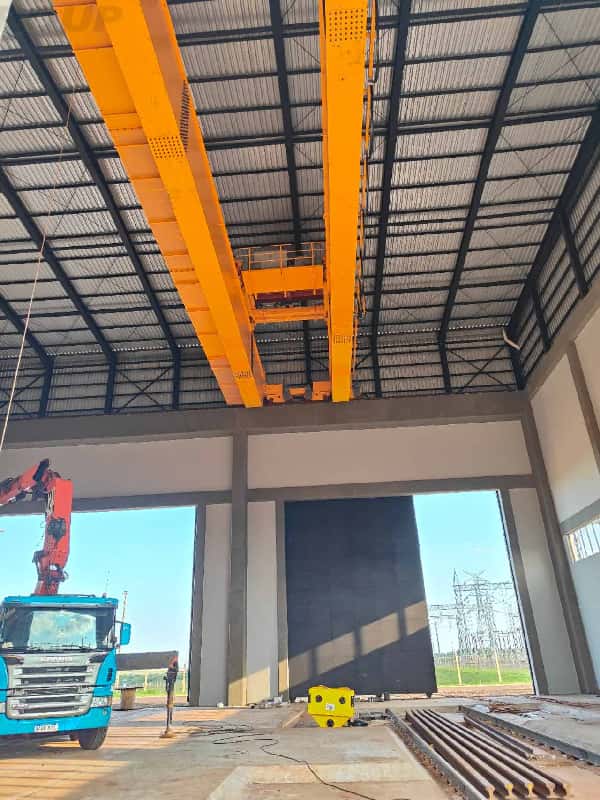
Maintenance and repair facilities serving heavy equipment—such as truck depots, construction equipment yards, or agricultural machinery centers—benefit from the QDX crane’s reliable performance and reduced maintenance requirements. Less downtime for crane maintenance means more availability for revenue-generating work.
In applications involving high-duty cycles, such as continuous production lines or busy distribution centers, the QDX design’s robust components and efficient operation deliver long-term value. Lower energy consumption contributes to reduced operating costs over the crane’s service life.
Operational Considerations:
The advanced features of the QDX crane require appropriate operator training to realize full benefits. We recommend comprehensive training programs covering control system operation, routine maintenance, and safety procedures. For facilities with multiple operators, standardized training ensures consistent, safe operation.
HD Type Single Girder Electric Hoist Crane
Ideal for: Light-to-medium general workshop duties, maintenance tasks, smaller fabrication shops, warehouse operations, and facilities with limited budgets.
Key Specifications:
- Capacity: 1 to 20 tons (customized to requirements)
- Span: 7.5 to 28.5 meters (customized based on workshop dimensions)
- Working Class: A3, A4, A5 (matching typical workshop duty cycles)
- Working Environment: -20°C to 40°C
- Configuration: Single girder with under-running electric hoist
Working Characteristics:
The HD single girder crane offers a practical, cost-effective solution for facilities with moderate lifting requirements.
- Compact Structure, Flexible Operation: The single girder design results in a lighter overall crane with smaller dimensions. This flexibility allows installation in workshops where space is at a premium and enables quicker response to various lifting needs.
- Large Lifting Capacity Relative to Crane Weight: Despite its lighter construction, the HD crane provides substantial lifting capacity for its class, making it suitable for a wide range of general industrial applications.
- Precise Electrical Control: Modern control systems provide accurate load positioning and smooth operation. While less sophisticated than the QDX series, the controls are well-matched to typical workshop applications.
- Easy Maintenance, Lower Costs: The simpler design of single girder cranes translates to reduced maintenance requirements and lower parts costs. Routine inspections and service can often be performed by facility maintenance personnel with appropriate training.
- Quick Installation: The lighter weight and modular construction allow for faster installation compared to heavier double girder systems, minimizing disruption to facility operations.
Application Notes for Kenya:
The HD crane is our most popular entry-level overhead crane, suitable for Kenya’s diverse and growing small-to-medium enterprise sector.
In Kenya’s small to medium fabrication workshops, these cranes handle raw materials, work-in-progress, and finished products. They reduce manual handling fatigue and injury risk while improving productivity. For shops producing gates, railings, structural components, or agricultural equipment, the HD crane provides essential lifting capability at an accessible price point.
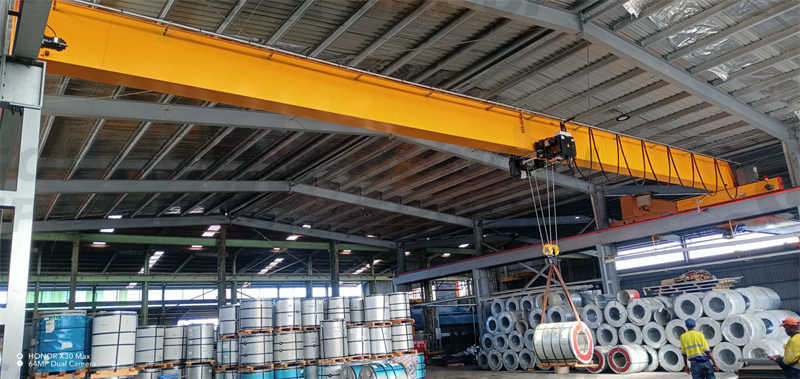
Vehicle repair and maintenance facilities benefit from HD cranes for engine removal, transmission work, and heavy component handling. The flexible operation allows positioning over vehicles or work areas as needed.
For warehouses and distribution centers handling palletized goods or miscellaneous freight, HD cranes speed loading and unloading operations. They can be configured with various lifting attachments to suit specific cargo types.
Agricultural facilities, such as equipment sheds, grain handling operations, or processing plants, use HD cranes for maintenance and material movement. The simple, robust design suits rural environments where specialized technical support may be limited.
In facilities with intermittent lifting needs, where a crane may sit idle for periods then perform intensive work, the HD crane’s straightforward design ensures reliable operation when needed without the complexity of more advanced systems.
Environmental Considerations:
The HD crane’s simpler systems are generally robust in varied environments. For dusty operations, we recommend sealed electrical enclosures and regular cleaning of travel rails. For facilities with temperature extremes, appropriate lubricants and component selections maintain reliable operation.
LDA Type Single Girder Hoist Overhead Crane
Ideal for: General manufacturing, machine shops, warehouses, and facilities requiring reliable, straightforward lifting equipment.
Key Specifications:
- Capacity: 1 to 32 tons (customized to requirements)
- Span: 7.5 to 28.5 meters (customized based on workshop dimensions)
- Working Class: A3 to A5
- Working Environment: -25°C to 40°C
- Hoist Configuration: Typically paired with CD1 or MD1 electric wire rope hoists
Working Characteristics:
The LDA crane represents a proven, traditional design that has served industries worldwide for decades.
- Reasonable Structure, Strong Rigidity: The LDA design emphasizes structural integrity, with girders engineered for minimal deflection under load. This rigidity contributes to stable, predictable operation and long component life.
- Light and Small Classification: Despite its robust construction, the LDA crane falls within light-to-medium classifications, making it suitable for facilities without heavy-duty requirements.
- Flexible Operation: Standard controls provide reliable response to operator inputs. While not offering the advanced features of European-style cranes, the LDA design is straightforward and intuitive to operate.
- Matched Electric Hoists: The LDA crane is specifically designed for use with CD1 and MD1 electric wire rope hoists—proven, reliable hoists with decades of field service worldwide. This matched combination ensures compatible performance and simplifies spare parts inventory.
- Proven Reliability: The LDA design has been refined over many years, with millions of operating hours across diverse applications. This track record provides confidence in long-term performance.
Application Notes for Kenya:
The LDA crane is particularly well-suited to facilities where reliability and simplicity are valued over advanced features.
In Kenya’s machine shops and general engineering works, LDA cranes handle raw materials, tooling, and finished components. The predictable performance and simple controls allow operators to focus on their primary tasks rather than crane operation.
For manufacturing facilities producing consistent products, LDA cranes integrated into production workflows provide reliable material movement day after day. The matched hoist and crane design ensures compatible performance across the system.
Warehouses and storage facilities use LDA cranes for moving heavy or bulky items. The strong rigidity ensures stable load handling, reducing the risk of swinging loads that could damage goods or injure personnel.
In facilities with limited technical support—such as remote workshops or smaller towns—the LDA crane’s straightforward design simplifies maintenance. Local mechanics with basic skills can often perform routine service, reducing dependence on specialized technicians.
Operational Considerations:
While the LDA crane is straightforward to operate, proper training in safe lifting practices remains essential. We recommend that all operators receive instruction on load rating limits, sling and rigging techniques, and emergency procedures.
For facilities using CD1 and MD1 hoists, maintaining an adequate spare parts inventory for common wear items—such as contactors, limit switches, and brake components—minimizes downtime when replacements are needed.
Specialized Overhead Crane Solutions
Beyond our standard overhead crane models, we offer specialized configurations for specific material handling challenges.
Grab Bucket Overhead Crane
Designed for handling bulk materials such as coal, fertilizer, grain, or aggregates. Common applications in Kenya include:
- Port facilities transferring bulk cargo
- Agricultural processing plants handling grain
- Fertilizer blending and storage operations
- Industrial facilities managing bulk raw materials
The grab bucket configuration requires careful attention to duty cycle and material characteristics. We work with clients to select appropriate grab types and crane specifications for efficient, reliable bulk handling.
QC Electromagnetic Overhead Crane
Ideal for handling ferrous metals in steel service centers, scrap yards, and foundries. Applications include:
- Moving steel plates, sections, and pipes
- Loading and unloading scrap metal
- Feeding furnaces or processing equipment
- Sorting and organizing ferrous materials
Electromagnetic cranes require careful integration with facility power systems and consideration of backup power for load holding. We provide comprehensive guidance on these requirements.
QY Insulation Overhead Crane
Specifically designed for high-temperature environments such as:
- Aluminum smelting and casting facilities
- Glass manufacturing plants
- Heat treatment operations
- Foundries and forge shops
Insulation cranes incorporate specialized materials and design features to protect critical components from radiant and conducted heat. These cranes maintain reliable operation where standard equipment would fail.
Our Approach to Overhead Crane Selection
Selecting the right overhead crane involves evaluating several factors beyond basic capacity and span.
Duty Cycle Analysis:
Perhaps the most critical factor in crane selection is matching the equipment to the actual work demands. A crane used for occasional maintenance lifting has very different requirements than one operating continuously on a production line.
We analyze:
- Average lifts per hour/day: Higher frequency requires more robust components
- Typical load weight relative to capacity: Continuous heavy lifts demand higher duty classifications
- Travel distances and speeds: Longer travel distances may justify higher speeds
- Precision requirements: Positioning accuracy affects control system selection
This analysis ensures the crane is neither under-specified (leading to premature failure) nor over-specified (incurring unnecessary cost).
Building Interface Considerations:
Every overhead crane must work within the constraints of the building that houses it. We assess:
- Available headroom: Determines crane configuration and lift height
- Column spacing: Affects span and runway design
- Building structure capacity: Influences crane weight and wheel loads
- Power supply location and capacity: Affects electrical installation requirements
For existing buildings, we conduct site assessments to verify dimensions and structural capacity before finalizing crane specifications.
Operator Interface:
How operators interact with the crane affects both productivity and safety. Options include:
- Pendant control: Most common for general applications; available in standard or ergonomic designs
- Radio remote control: Provides operator mobility and clear line of sight; ideal for complex lifts
- Cab operation: Suitable for very frequent use or applications requiring maximum visibility
- Semi-automated or automated operation: For repetitive sequences or integration with other equipment
We discuss operator preferences and application requirements to recommend appropriate control configurations.
After-Sales Support Planning:
Even the most reliable equipment requires occasional maintenance. We discuss with clients:
- Scheduled maintenance requirements: Frequency and scope of routine service
- Spare parts recommendations: Critical spares to maintain on-site
- Technical documentation: Manuals, drawings, and parts lists provided with each crane
- Support availability: Our commitment to answering questions and providing guidance throughout the crane’s service life
Specialized Solutions
Beyond standard cranes, we offer equipment for specific material handling challenges:
- Grab Bucket Overhead Crane: For handling bulk materials like coal, fertilizer, or grain in ports or industrial processing plants.
- QC Electromagnetic Overhead Crane: Ideal for handling ferrous metals in steel yards or scrap recycling facilities.
- QY Insulation Overhead Crane: Specially designed for use in high-temperature environments, such as aluminum or glass production.
- Jib Cranes (Pillar, Wall-Mounted, Mobile): For localized lifting needs at individual workstations or in tight spaces.
- Electric Hoists (CD1, MD1, European, Chain Hoists): The core lifting component, available in various speeds and configurations to match your crane and application.
Why Partner with Dongqi Crane in Kenya?
Your investment in lifting equipment is a long-term decision. We believe our value extends beyond the hardware:
- Decades of Engineering Experience: We apply global best practices to design cranes that are reliable, safe, and efficient.
- Application-Specific Advice: We take the time to understand your project, facility, and operational goals to recommend the right solution, not just the first one.
- Commitment to Quality: From high-strength steel to reputable electrical components, we focus on materials and manufacturing that ensure longevity and lower total cost of ownership.
- After-Sales Support Philosophy: We are committed to building our technical knowledge of the Kenyan market to provide informed support for your equipment throughout its lifecycle. We can discuss training, spares, and maintenance planning.
Connect with Our Team
Selecting the right crane involves careful consideration of capacity, span, duty cycle, and your specific site conditions. We invite you to start a conversation.
Please send us a message with your requirements, and our crane specialists will provide a free consultation to guide you through the selection process.
