
The Symbiotic Lift: Why Fragmented Procurement Undermines Material Handling Integrity
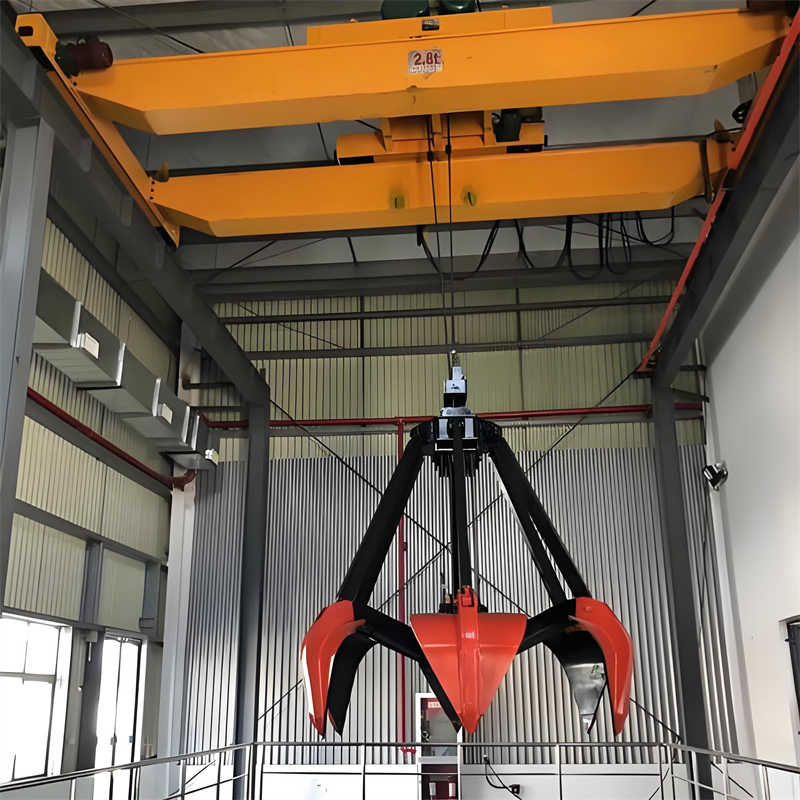
In the lexicon of industrial manufacturing and heavy logistics, the overhead crane is often viewed as the monarch of the shop floor. It commands the highest ceiling real estate, moves with a deliberate grace, and represents a significant capital investment. Meanwhile, the below-the-hook (BTH) lifting device—the spreader beam, the lifting frame, the coil grab, or the sheet lifter—is frequently treated as a mere accessory; a piece of hardware dangling from the hook, purchased as an afterthought or sourced from the lowest bidder.
This hierarchical view of lifting equipment is not just outdated; it is operationally dangerous and economically inefficient. By decoupling the purchase of the crane and the below-the-hook device, organizations are not simply buying two products separately. They are inadvertently severing the critical link between load, machine, and environment. This article argues that the only rational approach to modern material handling is the procurement of a holistic lifting system, wherein the crane and the attachment are designed, engineered, and specified in parallel. To do otherwise is to build a Formula One car and fit it with tires from a tractor.
The Anatomy of a Lift: Redefining the “System”
To understand why separation fails, we must first redefine what constitutes a lifting system. Most procurement managers view the crane as the system and the BTH device as a tool. In reality, the crane is merely the prime mover. The true “system” is the kinetic chain from the top girder all the way down to the load’s center of gravity.
When a crane lifts a load, it does not simply fight gravity; it fights physics. The load swings, the structure deflects, and momentum builds. A below-the-hook device is the interface that translates the brute force of the hoist into controlled, precise motion. It is the interpreter between the machine and the material.
When these two components are designed in isolation, they speak different languages. A crane engineered for maximum vertical lift might lack the fine-speed creeping control required to engage a complex BTH latching mechanism. Conversely, a highly specialized BTH device designed for fragile materials may be paired with a wire rope hoist that inherently imparts torque and twist, damaging the very product it was meant to protect.
The Integrated Approach: When purchased together, engineers can map the “lift path” from floor to final placement. They can ask critical questions: Does the attachment require anti-twist features on the hoist? Does the width of the load require a specific end truck configuration to prevent racking? Does the duty cycle of the magnet require a dedicated busbar or a secondary power source on the bridge? These are not peripheral details; they are architectural requirements.
The Hidden Tax of “We’ll Get It Later”
One of the most pervasive mistakes in capital project planning is the deferral of the below-the-hook purchase. A new facility is being built, or a production line is being retooled. The crane is a critical path item; it must be installed before the roof is sealed. The BTH device, however, is viewed as a “nice to have” that can be sourced in time for launch.
This sequencing error imposes a “hidden tax” on the project that manifests in three distinct phases.
Phase 1: The Structural Penalty
A crane ordered without a specific BTH device is a crane ordered without a definitive hook height requirement. To stay safe, the crane manufacturer speculates. They add extra headroom “just in case.” They oversize the runway beams to accommodate unknown future loads. This speculative engineering costs money—money spent on steel that may never be stressed to its capacity. Conversely, if the BTH device is known, engineers can often reduce the required lift height. A custom-engineered spreader beam, for example, can be designed with a low-profile geometry that nests closer to the hook, allowing for a lower building elevation or a higher effective hook height under the same roof.
Phase 2: The Modification Penalty
This is the most visible form of waste. The crane arrives and is commissioned. Six months later, the custom lifting device arrives. It fits the hook, but it doesn’t fit the facility. The operator finds that the attachment swings too close to the building columns. The power requirements for an electromagnet overload the control panel, requiring a field-installed contactor kit. The pendant station is on the wrong side of the hoist for the operator to see the attachment’s alignment guides.
Retrofitting a crane for a BTH device is routinely 2.5 to 4 times more expensive than including those features in the original build. A variable frequency drive (VFD) that costs $4,000 as a line-item option on a new hoist can cost $15,000 to install in the field after commissioning, factoring in engineering time, field wiring, re-certification, and production downtime.
Phase 3: The Compliance Penalty
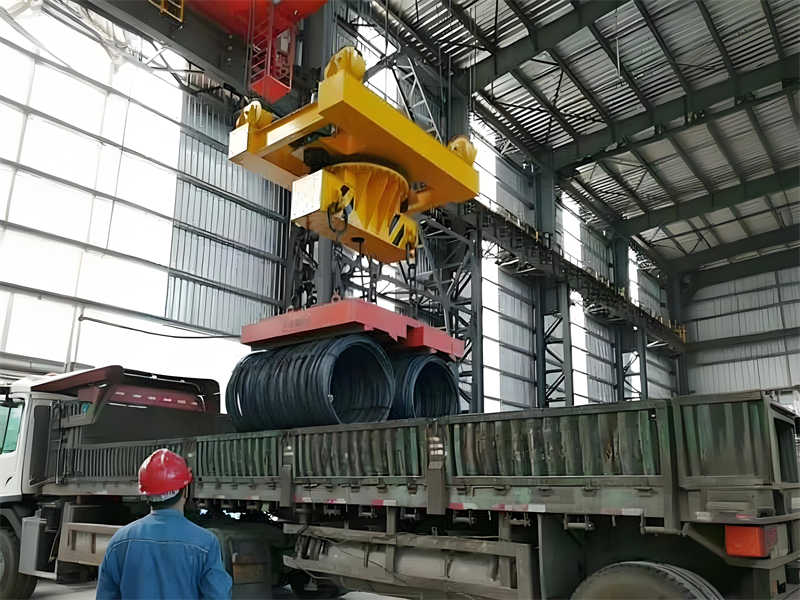
When purchased separately, the burden of system integration falls on the end user. The crane meets OSHA 1910.179. The lifting beam meets ASME B30.20. However, no entity has verified the system compatibility. Who validates the seismic response of the combined unit? Who calculates the dynamic loading of the crane structure when the BTH device catches a snag? Usually, no one does. This gray area becomes a liability black hole during an incident investigation.
The Mechanical Divorce: When “It Fits” Isn’t Enough
The physical act of placing a BTH device onto a hook creates a mechanical interface that is surprisingly complex. The standard crane hook is a universal joint, designed to swivel and pivot. However, this universality is often detrimental to specialized lifting.
Torsional Mismatch:
Consider a wire rope hoist. Under load, wire rope has a natural tendency to unlay, or spin. For a standard hook lifting a basket, this spin is irrelevant. For a BTH device lifting a 40-foot-long steel plate, that spin is catastrophic. It rotates the load, creating a safety hazard for riggers and potentially twisting the material. When purchased together, the crane supplier can specify rotation-resistant rope, or the BTH designer can incorporate anti-swivel features that lock the attachment to the hook. Separately, the crane manufacturer blames the rigging, and the rigging supplier blames the rope.
Sling Angle Ignorance:
A crane is typically rated for a vertical lift. However, many BTH devices, particularly magnetic and vacuum lifters, are designed with pick-up points that create a suspended angle. This introduces horizontal forces into the crane’s hook. A standard hook latch is not designed for lateral loading. The ears of a hook block can bend or fracture under repeated side-loading from a rigid spreader beam. When these components are paired after the fact, these lateral forces are often overlooked until a crack is found during a mandated inspection.
Economic Alchemy: Turning Overhead into Throughput
The financial argument for separate purchasing is usually based on “competitive bidding” and “first-cost reduction.” Procurement departments are incentivized to hit low price points on individual line items. This siloed accounting ignores the impact of the system on throughput.
When a crane and BTH device are engineered together, the result is not just safer; it is faster.
Cycle Time Engineering:
If a crane is equipped with “snag” protection that automatically centers the load, or if the BTH device is designed with self-locating guides that interface with specific fixtures on the floor, the operator’s cognitive load decreases. They no longer need to “jog” the crane back and forth to align a pin. They move directly to the target.
This is the difference between a crane as a tool and a crane as a manufacturing cell. In high-volume operations—such as automotive stamping or coil processing—shaving 15 seconds off a 2-minute cycle time translates to hundreds of thousands of dollars in annual labor savings. This velocity cannot be achieved by buying components from different vendors who never speak to one another.
The Myth of “Universal” and the Trap of Over-Specification
A common rebuttal to integrated purchasing is the desire for “flexibility.” Facility managers worry that a crane paired with a specific BTH device will be “locked in” to one task. This fear leads to a dangerous overcorrection: the purchase of a crane so generic it does nothing well, and a BTH device so complex it attempts to do everything poorly.
True future-proofing is not about being vague; it is about being modular and intelligent. When you buy a crane with a specific BTH device, you are not buying a monogamous relationship. You are buying a compatible platform.
For example, a facility purchasing a 10-ton capacity crane for a new assembly line might buy it today with a low-headroom lifting beam for machinery installation. By planning ahead, they can specify the crane with an auxiliary electrical circuit on the bridge and a programmable “soft lift” mode in the VFD. Two years later, when the facility pivots to handling fragile composite materials, they can purchase a vacuum lifter that plugs directly into that existing circuit and utilizes the pre-programmed speed profiles. The crane doesn’t need to be replaced; it simply adapts.
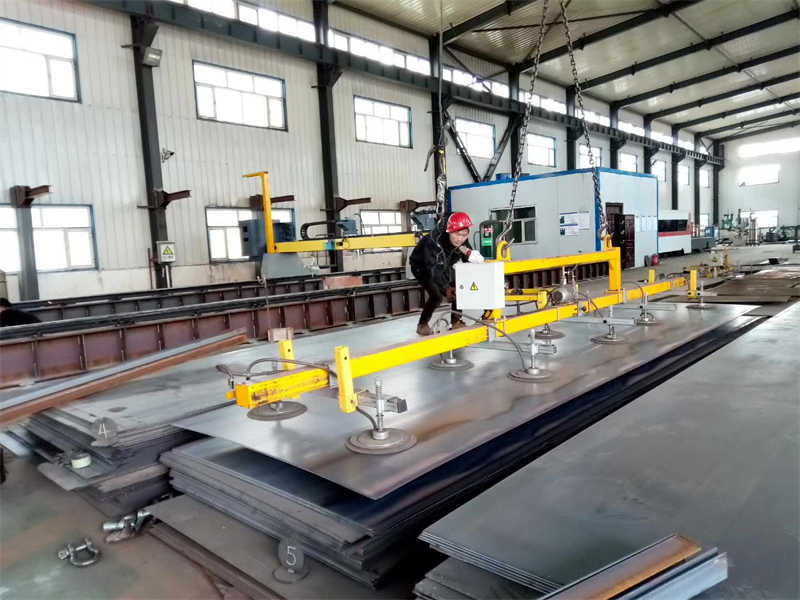
The alternative—buying a 15-ton crane “just in case” and a generic spreader beam that is heavy and cumbersome—degrades efficiency today for a vague promise of utility tomorrow.
The Cognitive Dissonance of Safety
Safety standards are rigorous, but they are also reactive. ASME B30.20 governs below-the-hook devices, and ASME B30.2 governs overhead cranes. These standards are comprehensive, but they exist in parallel, not in concert.
When an incident occurs—a dropped load, a tipped beam, a structural failure—investigators do not ask if the crane met its standard and the device met its standard. They ask if the system was used as intended. A BTH device designed for symmetrical lifting that is used on a crane with a worn, off-center hook will fail. A crane rated for 5 tons that is paired with a 5-ton BTH device that weighs 1.5 tons is, in effect, a 3.5-ton system. This arithmetic seems obvious, yet it is routinely miscalculated when components are sourced separately.
Purchasing from a single source—or at minimum, requiring a signed integration letter from the engineering firms involved—creates a single thread of accountability. There is no “finger pointing” when the load drifts. There is only the system.
The Operator and the Interface
We often discuss cranes in terms of motors, gearboxes, and beams. We rarely discuss the human holding the pendant or sitting in the cab. The operator is the most sensitive sensor in the system. They feel the vibrations, hear the strain, and see the swing.
A fragmented procurement process creates a fragmented user experience. An operator who struggles to align a BTH device into a tight receptacle will compensate. They will “inch” the hoist, causing premature wear on the contactors. They will swing the load to gain momentum, stressing the bridge ends. They will, eventually, damage the equipment or reject it as “junk.”
When the crane and BTH are designed together, the operator interface is unified. If the BTH device utilizes laser guides, the pendant displays the targeting data. If the BTH device requires precise landing, the hoist is equipped with micromotion control. The operator trusts the machine. This trust is the foundation of both high productivity and high safety.
A New Procurement Paradigm: The “Lift Coach” Approach
To achieve the benefits of an integrated system, procurement and engineering teams must abandon the Request for Quote (RFQ) process that treats the crane and attachment as separate line items. Instead, they should adopt a “Lift Coach” philosophy.
Imagine a football team purchasing a quarterback and a wide receiver from different agencies, allowing them to meet for the first time on the field. This is how we currently buy lifting equipment.
Instead, project managers should issue performance-based specifications. Define the object to be lifted—its dimensions, weight, center of gravity, and sensitivity. Define the path—the starting point, the obstacles, and the destination. Define the cadence—the lifts per hour, the acceleration tolerances.
Then, invite suppliers to solve the problem. Some will propose a double-girder solution. Some will propose a freestanding workstation bridge with a custom end-effector. Some will propose a standard top-running crane with a passive mechanical grab. By removing the artificial barrier between “crane” and “tool,” the market can offer solutions that are often lighter, faster, and cheaper than the sum of two independently procured parts.
The Environmental and Energy Case
There is also an emerging environmental imperative for integration. Sustainability in manufacturing is no longer just about recycling coolant; it is about energy intensity.
A crane and BTH device designed together can be lighter. If the BTH device is engineered to minimize weight while maximizing stiffness, the crane’s required lifting capacity decreases. A 7.5-ton crane with an optimized 500-lb lifter is more energy-efficient to operate than a 10-ton crane with a generic 1,500-lb beam. The reduced deadweight means smaller motors, lower peak power demand, and reduced stress on the runway and building steel.
Furthermore, integrated electrical systems allow for better energy recovery. Capacitive energy storage systems on cranes can capture energy from lowering a load. If the BTH device is a magnet, that stored energy can be used to sustain the magnetic hold during a power loss, eliminating the need for heavy, toxic backup batteries. This symbiosis is invisible to the buyer who purchases the components six months apart.
Conclusion: The Weight of Integration
The overhead crane and the below-the-hook device share a burden. That burden is not merely the tonnage displayed on the load block; it is the burden of responsibility, productivity, and safety.
By continuing to purchase these elements separately, industry does not save money; it simply defers and disguises costs. It trades engineering time for field time. It trades precision for speculation. It trades accountability for ambiguity.
The future of material handling is not in stronger steel or faster hoists. Steel is mature, and speed is limited by physics and safety. The future is in intelligence—the intelligence of a system that understands the load it carries and the environment it moves through.
That intelligence cannot be retrofitted via a purchase order sent to a third-party fabricator. It must be embedded at the moment of conception. When you draw the line from the top rail of the crane to the bottom edge of the product, everything in between must be designed as one.
Buy the hook and the beam together. Not because it is easier, but because a chain is only as strong as its weakest link—and the hook has been the weakest link for far too long.
This article is intended for informational purposes regarding best practices in material handling systems integration and does not constitute legal or engineering advice. All lifting operations should comply with applicable OSHA, ASME, and local jurisdictional requirements.
