
Dongqi Crane: Your Strategic Lifting Partner in Vietnam’s Industrial Growth
1. The Vietnamese Market: A Landscape of Rapid Expansion
The Vietnamese market for industrial cranes is not just growing; it is undergoing a profound and rapid transformation. This expansion is fundamentally driven by the nation’s robust macroeconomic trajectory, strategic government policies, and intensive investments in key industrial sectors, creating an unprecedented demand for high-quality lifting solutions.
A. Macroeconomic Engine and Strategic Policy Thrust
Vietnam’s economy serves as the powerful foundation for this growth. With GDP growth consistently among the highest in Southeast Asia, the government has set an ambitious national target of achieving at least 6.5% growth in 2025 and has directed all provinces and cities to align their local plans accordingly. This growth model is strategically shifting towards one powered by productivity gains, digital transformation, and science & technology. Large-scale infrastructure is explicitly named as a strategic pillar for this development, directly fueling demand for the equipment to build it.
B. Surging Demand Captured in Trade Data
This macro-environment is vividly reflected in the import data for critical crane categories from China, Vietnam’s primary supplier. The numbers reveal a market scaling up in both volume and sophistication.
- Gantry Cranes: Explosive Growth in High-Value Projects
The data for gantry cranes indicates a surge in large-scale, capital-intensive projects. Exports jumped from 115 units ($4.035 million) in 2024 to 339 units ($20.045 million) in 2025. This represents a staggering 195% increase in volume and a ~397% increase in total value. The dramatic rise in average unit value points clearly to the market’s demand for larger, more technically advanced, and higher-capacity gantry cranes, essential for mega-projects. - Bridge Cranes: Sustained Expansion in Core Industry
Bridge crane data reflects the sustained expansion and modernization of Vietnam’s manufacturing and factory base. Exports grew from 494 units ($22.879 million) in 2024 to 750 units ($24.682 million) in 2025, marking a 52% increase in volume. The high volume and stable value confirm this category as the backbone of industrial activity, with growing demand for reliable, efficient overhead lifting solutions across countless factories.
C. Key Demand Drivers: Where the Growth is Happening
The demand for cranes is being concretely driven by active investments in several booming sectors:
- Port & Logistics Development: Major port expansions (e.g., Lach Huyen, Cai Mep) and new logistics hub constructions are primary drivers for heavy-duty gantry and rubber-tired gantry (RTG) cranes.
- Energy & Heavy Industry: New power plants (thermal, LNG, wind), steel mills, and petrochemical complexes require large double-girder bridge cranes and specialized heavy-lift gantry cranes.
- Manufacturing & FDI: The continued influx of foreign investment in electronics, automotive, and consumer goods manufacturing fuels demand for precision single and double-girder bridge cranes for production and assembly lines.
- Construction & Infrastructure: Urban mass transit projects, airport upgrades, and major industrial park build-outs utilize mobile and semi-gantry cranes for construction and installation.
D. Competitive Landscape and Market Opportunity
The market comprises international premium brands, established Chinese manufacturers, and local assemblers. Competition is increasingly focused on total value—not just initial price, but also technical specification, reliability, energy efficiency, and aftersales service. The data suggests a clear opportunity for suppliers who can offer:
- Project-Specific Engineering: Customized solutions for Vietnam’s unique project requirements.
- Technology Integration: Features like smart controls, remote monitoring, and safety systems.
- Localized Support: Strong in-country technical and spare parts network to ensure uptime.
This dynamic landscape of rapid expansion, driven by solid fundamentals and concrete projects, defines the opportunity in Vietnam. It is a market that rewards suppliers with deep engineering expertise, a commitment to quality, and a long-term partnership mindset—precisely the positioning that Dongqi Crane embodies.
This refined section provides a comprehensive, data-driven backdrop for the subsequent parts of your webpage that will introduce Dongqi Crane’s specific solutions and advantages.
2. Crane Types Powering Vietnam’s Industry
Understanding the specific crane types that drive Vietnam’s industrial growth is crucial. The market’s evolution, as reflected in the import data, highlights a dual demand: for massive, project-defining equipment and for the reliable workhorses of daily factory operations. Here, we break down the key crane types, their technical characteristics, and their primary applications within the Vietnamese context.
A. The High-Growth Giants: Gantry Cranes
As the import data shows explosive growth, gantry cranes are pivotal to Vietnam’s large-scale infrastructure.
- Technical Characteristics & Types:
- Full Gantry Cranes: Feature a fixed structure running on ground-level rails. They are the most stable and are used for the heaviest loads, such as shipbuilding blocks or pre-cast concrete segments.
- Semi-Gantry Cranes: One end runs on an elevated rail beam while the other moves on a ground-level track. They offer a cost-effective solution for facilities where a full overhead runway is not feasible.
- Rubber-Tired Gantry (RTG) Cranes: Highly mobile, diesel or electric-powered cranes used primarily in port container yards for stacking and moving shipping containers.
- Dominant Applications in Vietnam:
- Port Logistics & Container Terminals: The primary driver of demand. RTG and rail-mounted gantry cranes are essential at major ports like Cat Lai, Hai Phong, and Cai Mep to handle growing container throughput.
- Heavy Industrial Manufacturing: Used in steel mills, shipyards, and large fabrication plants for moving heavy materials and components.
- Large-Scale Construction: Employed in the assembly of bridges, power plants, and other major infrastructure projects.
- Market Insight: The dramatic rise in import value indicates a shift towards higher-capacity (100+ tons), more automated, and energy-efficient models, aligning with Vietnam’s push for modern, high-productivity port and industrial facilities.

B. The Industrial Backbone: Bridge Cranes (Overhead Traveling Cranes)
The sustained high volume of bridge crane imports underscores their role as the fundamental lifting solution across Vietnam’s manufacturing sector.
- Technical Breakdown & Selection Guide:
| Crane Type | Typical Capacity Range | Span Range | Key Characteristics | Ideal Use Cases in Vietnam |
|---|---|---|---|---|
| Single Girder Bridge Crane | Up to 20 tons | Up to 30m | Cost-effective, lighter structure, easier to install and maintain. Ideal for light to moderate duty cycles. | Workshops, assembly lines, warehouses, and smaller manufacturing facilities in sectors like textiles, packaging, and light equipment. |
| Double Girder Bridge Crane | 5 tons to 500+ tons | 10m to 40m+ | Robust construction, higher hook height, capable of heavier duty cycles and integrating more auxiliary equipment. | Steel mills, power plants, automotive plants, machinery workshops, and any application requiring heavy, frequent, or precision lifting. |
| European-Style Crane | Up to 80 tons | Up to 30m | Optimized design using high-strength steel, resulting in a lighter deadweight, smaller wheel loads, and reduced runway costs. Offers superior precision and control. | Modern factories with limited building column space, facilities requiring high duty cycles and precise load positioning, such as high-tech assembly and precision manufacturing. |
- Market Insight: The demand is bifurcating. There is strong volume demand for reliable standard single girder cranes for proliferating SMEs. Concurrently, there is growing demand for advanced double girder and European-style cranes from high-end manufacturing FDI projects that prioritize energy savings, precise control, and minimizing total structural cost.
C. Supporting and Specialized Equipment
Other crane types fulfill niche but critical roles across Vietnamese industries:
- Jib Cranes: Mounted on a wall or a floor column, they provide localized circular lifting coverage. Essential in machine shops, loading docks, and specific workstations within larger production halls for handling molds, tools, or components.
- Monorail Hoists & Light Crane Systems: Used for repetitive material transport along a fixed path, common in production or assembly lines for automotive, electronics, and food processing.
D. Selection Factors for the Vietnamese Market
Choosing the right crane involves more than just capacity. Key considerations for Vietnamese buyers include:
- Duty Cycle (FEM/ISO Class): Matching the crane’s design class (e.g., A1-A8) to the actual intensity of use is critical for longevity.
- Facility Constraints: Building column strength, available headroom, and runway feasibility must be assessed first.
- Operational Goals: Prioritizing factors like lifting speed, positioning precision, or automation readiness guides the specification.
- Total Cost of Ownership (TCO): Beyond purchase price, consider energy efficiency, maintenance needs, and the supplier’s local service capability.
This analysis shows that Vietnam’s crane market is sophisticated and diversified. Success requires a supplier who not only provides equipment but also offers deep application knowledge to match the right crane technology to the specific demands of Vietnam’s thriving industrial sectors.
3. The Dongqi Crane Advantage: Engineered for Excellence
Dongqi Crane’s advantage in the Vietnamese market is built on a foundation of superior engineering, deep customization capability, and a committed, direct support model designed to ensure long-term operational success for our partners.
A. Core Engineering and Technological Superiority
We integrate advanced technologies to build durability, efficiency, and intelligence into our cranes, addressing the specific demands of Vietnam’s growing industries.
- Precision Drive and Control Systems:Utilizing Variable Frequency Drive (VFD) control systems ensures smooth, precise load handling, minimizes mechanical stress, and achieves significant energy savings. This is critical for applications requiring high positioning accuracy or operating under frequent start-stop cycles.
- Robust Design for Local Conditions:Structural designs account for operational intensity and environmental factors. The use of high-grade steel and advanced welding techniques, combined with protective coatings suited to humid climates, ensures long-term structural integrity and corrosion resistance.
- Integrated Safety and Smart Features:Safety is engineered as a core system. Beyond standard protections, our cranes can be equipped with anti-sway systems, collision avoidance, and real-time performance monitoring, providing operators with enhanced control and predictive maintenance data.
B. Customization and Application-Specific Engineering
We provide solutions tailored to the unique spatial and operational constraints of each project in Vietnam.
- Space-Optimized Designs:For facilities with limitations in headroom or runway support, we engineer low-headroom hoists and optimized girder designs to maximize lifting capacity within the existing infrastructure.
- Process-Led Configuration:Cranes are configured to integrate seamlessly into client processes, whether it involves specialized lifting attachments (magnets, grabs), specific duty cycle ratings (FEM standards), or interfaces for future automation.
- Full Compliance:Our designs and documentation adhere to relevant international and locally recognized safety and performance standards.
C. Direct Support Model: Deploying Expertise on Demand
To complement our product excellence, we employ a responsive and expert-driven support model for projects in Vietnam.
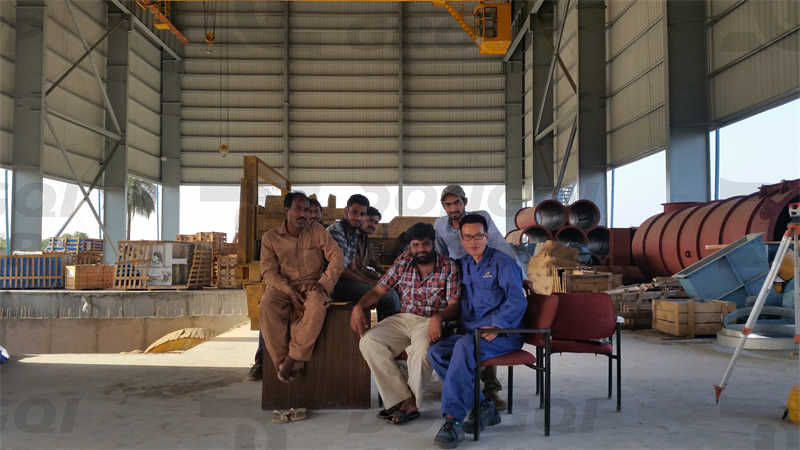
- On-Demand Technical Dispatch:We deploy experienced engineers directly from our headquarters to client sites in Vietnam to provide supervision during critical installation phases, conduct commissioning tests, and deliver hands-on operator and maintenance training. This ensures correct setup and knowledge transfer.
- Structured Remote and Logistics Support:
- Dedicated Project Coordination:Each project is assigned a main point of contact to manage planning, communication, and documentation.
- Efficient Parts Supply:We maintain a streamlined supply chain for genuine spare parts, with clear logistics planning to support maintenance needs.
- Lifecycle Performance Consultation:We offer ongoing technical consultation to support optimal crane operation, troubleshooting, and long-term performance optimization.
Conclusion:
Dongqi Crane’s advantage is a commitment to delivering reliable, high-performance equipment backed by direct access to specialized engineering expertise. This combined approach ensures our partners in Vietnam receive a solution that not only meets their immediate lifting needs but is also supported for sustained productivity and a lower total cost of ownership over the long term.
4. Dongqi Crane vs. Generic Products: A Clear Comparison
When selecting equipment for Vietnam’s demanding and growing industrial sector, the choice between a custom-engineered solution and a generic product has significant long-term implications for productivity, safety, and total cost. The table below provides a clear, point-by-point comparison.
| Feature / Aspect | Generic / Standard Cranes | Dongqi Crane Solutions |
|---|---|---|
| 1. Engineering & Design Philosophy | Catalog-Based, Standardized: Often offers limited, fixed models. Design modifications for specific site conditions (e.g., low headroom, unique span) are costly or unavailable. | Application-Engineered: Each crane is designed based on a detailed analysis of your specific facility layout, duty cycle (FEM class), and operational goals. We optimize the design to fit your space and process, not the reverse. |
| 2. Key Components & Manufacturing | Cost-Optimized Sourcing: Components are often sourced based on lowest bid to meet a price point, which can compromise consistency and longevity. | Premium, Branded Components: We use internationally recognized brands for critical parts like hoists, motors, drives, and electrical systems (e.g., Siemens, Schneider, ABB grade). This ensures reliability, interchangeability, and easier maintenance. |
| 3. Structural Integrity & Build | Minimal Compliance Focus: Designs often meet only minimum required safety factors. Weight optimization for cost can lead to higher deflection and reduced long-term durability under heavy use. | Robust, Performance-Oriented Build: We employ advanced FEA (Finite Element Analysis) for structural design, ensuring optimal strength-to-weight ratio and minimal long-term deflection. Welding and fabrication follow strict internal quality protocols beyond basic standards. |
| 4. Performance & Control Systems | Basic Functionality: Typically equipped with conventional contactor controls, leading to abrupt starts/stops, less precise load positioning, and higher mechanical wear. | Advanced, Efficient Control: Standard or optional integration of Variable Frequency Drives (VFDs) across all motions. This enables smooth speed control, pinpoint accuracy, reduced load swing, and up to 30-40% energy savings. |
| 5. Safety & Smart Features | Reactive & Basic: Safety features are often limited to legally mandated minimums (limit switches, emergency stop). | Proactive & Integrated: Safety is a system. We offer integrated anti-sway systems, overload protection, collision avoidance, and real-time diagnostics as core options, enabling predictive maintenance and preventing accidents. |
| 6. Support & Service Model | Transactional or Limited: Support is often remote, with slow response times for complex issues. Spare parts may be non-standard or have long lead times. Local agents may lack deep technical expertise. | Direct Expert Partnership: We provide dedicated project management and dispatch senior engineers from China for key phases (installation supervision, commissioning, training). This ensures correct setup and deep knowledge transfer. We guarantee a clear supply chain for genuine spare parts. |
| 7. Long-Term Value (TCO) | Lower Initial Cost, Higher Lifetime Cost: Potential for more frequent breakdowns, higher energy consumption, shorter equipment life, and unplanned downtime, leading to a higher Total Cost of Ownership. | Higher Initial Investment, Superior Lifetime Value: Greater reliability, energy efficiency, lower maintenance costs, and longer operational life maximize productivity and minimize downtime, delivering a lower Total Cost of Ownership over the crane’s lifespan. |
Summary:
The choice fundamentally hinges on transaction versus partnership. A generic crane is a commodity purchase that fulfills a basic lifting need. A Dongqi Crane is a capital investment in productivity, backed by engineering rigor and a commitment to your operational success in Vietnam. For industries where uptime, safety, and efficiency are critical to profitability and growth, the value proposition of a purpose-engineered solution is clear.
5. Conclusion: Partner with a Leader
The data confirms it: Vietnam is building its future at an extraordinary pace, and reliable lifting equipment is fundamental to this progress. Dongqi Crane is more than a supplier; we are a strategic partner invested in your success. By choosing Dongqi, you invest in engineered reliability, operational safety, and long-term productivity.
Let’s build Vietnam’s future together. Contact Dongqi Crane today to discuss your project needs and discover the difference of a true lifting partner.
