
2025 Bridge Crane Sales Analysis & Practical Buyer’s Guide for Industrial Applications
Understanding the performance and application trends of different crane types can provide valuable insights for your investment decision. Below is a summary of Dongqi Crane’s bridge crane product line activity from the past year, presented to help you identify which model best aligns with your operational needs.
Annual Product Mix Overview
Our data indicates that customer needs are primarily focused on two main categories of overhead bridge cranes, with several specialized models serving distinct niches.
The European-style single girder bridge crane accounted for the largest share of units, representing just over half of all shipments. This design is favored for its efficient use of space and energy. Its compact structure results in a lighter self-weight, reducing the load on your building’s support structure. It often provides better hook height and headroom, making it suitable for facilities where maximizing vertical space is critical. With lower wheel loads and energy consumption, it is a cost-effective solution for many applications. This model is typically recommended for workshops or warehouses with duty classes up to A5, lifting capacities under 32 tons, and spans within 35 meters. It is frequently selected for modern manufacturing plants, logistics centers, and facility upgrade projects focused on space utilization and operational efficiency.
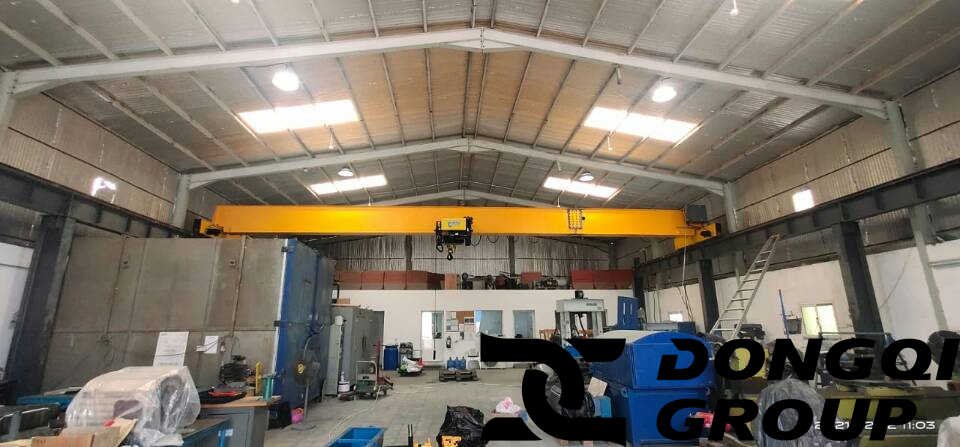
The general purpose double girder bridge crane maintained a strong, steady demand, comprising roughly one-third of total applications. This is a classic, robust workhorse known for its durability and stability. It can be configured with various trolley and hoist combinations to handle diverse lifting tasks. It excels in applications requiring longer spans, higher lifting capacities, and more intensive, frequent duty cycles (A6 and above). Its inherent strength makes it the default choice for heavy fabrication, steel service, milling, and other demanding industrial environments where reliability under constant load is paramount.
Specialized Crane Solutions
Beyond these two primary types, several other models address specific requirements.
The light-duty electric single girder crane represented a notable portion of sales. It is an economical and practical choice for standard workshop material handling with lower frequency. Compliant with common industry standards (like JB/T1306), it works seamlessly with standard hoists. Ideal for capacities from 1 to 16 tons and spans up to 22.5 meters, it serves well in maintenance areas, assembly lines, and storage facilities where high-intensity cycling is not required.
LH double girder and LX underslung single girder cranes each fulfilled specific roles. The LH model offers a straightforward, capable design for general heavy lifting. The LX underslung crane solves a unique challenge: it is installed by suspending the beam from existing roof structures, making it ideal for facilities where installing traditional runway rails on support columns is not feasible or cost-effective. It is perfect for lighter loads in buildings with spatial constraints.
The QB explosion-proof double girder crane, while representing a smaller segment, serves the critical and highly specialized needs of hazardous environments. Engineered for safe operation in areas with flammable gases, vapors, or combustible dusts (such as chemical plants, paint shops, or grain elevators), its design incorporates protected electrical and mechanical components. Selecting this crane is a necessity driven by specific safety regulations and site classification.
Your Guide to Selecting the Right Bridge Crane
Choosing the correct crane involves a clear assessment of your requirements. We recommend focusing on these key parameters:
- Capacity and Duty: Determine the maximum single weight you need to lift and estimate how many lifts per hour/day the crane will perform. This is the most critical factor in choosing between light-duty (A3-A5) and heavy-duty (A6-A8) models.
- Span and Coverage: Measure the required bridge span (distance between runway rails) and the necessary hook travel area (length, width, and lift height). This defines the crane’s physical dimensions.
- Facility Constraints: Evaluate your building. Does it have the structural support for runway rails? What are the height limitations? This will guide the choice between top-running, under-running, or underslung cranes.
- Operating Environment: Is it a standard indoor workshop, an outdoor yard, or a classified hazardous area? The environment dictates needs for special coatings, protection levels (IP ratings), or explosion-proof certification.
- Control Preference: Decide between pendant control, remote radio control, or an operator’s cabin based on required visibility, precision, and ergonomics.
Matching Your Needs to Our Products:
- For efficient, medium-duty material handling in modern factories (automotive, logistics, general assembly), start with the European-style single girder series.
- For heavy, high-cycle applications in primary industry (steel, heavy machining, foundries), the general purpose double girder series is the proven choice.
- For cost-effective, low-frequency lifts in workshops or maintenance bays, the light-duty single girder model is often sufficient.
- For installations in buildings with ceiling-height or structural limitations, consider the LX underslung design.
- For any operation in a potentially explosive atmosphere, the QB explosion-proof series is the mandatory starting point for discussion.
We encourage you to use this overview as a starting point. Our technical team is ready to help you analyze your specific application in detail, ensuring you select a bridge crane that offers optimal safety, productivity, and long-term value for your operation. Contact Dongqi Crane for a personalized consultation.
