
Customized Type 25t Double Beam EOT Overhead Crane
Introduction
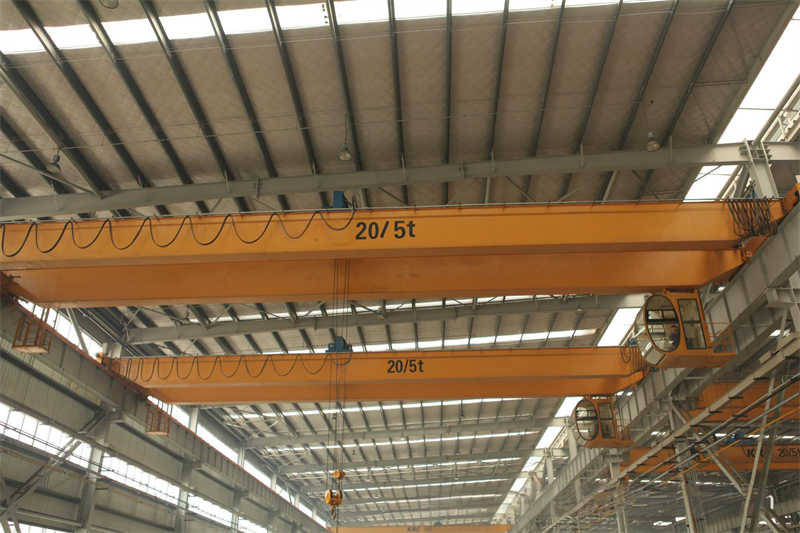
When material handling requirements consistently reach the 25-ton threshold, operations enter a domain where efficiency is measured not just in cycles per hour, but in the reliable movement of high-value capital assets and production-critical components. At this capacity, the crane is no longer a supporting tool; it becomes the central nervous system of the workshop, dictating workflow pace and directly impacting overall plant output. A generic 25-ton crane risks becoming a bottleneck, whereas a Customized Type 25t Double Beam EOT Overhead Crane is engineered as a high-performance production asset. This guide explores how a fully tailored solution at this critical tonnage delivers the perfect synthesis of formidable strength, unwavering precision, and robust reliability required for the most demanding industrial applications.
The Engineering Imperative: Balancing Massive Force with Surgical Control
The physics of managing a 25-ton load impose unique constraints: immense wheel loads on runways, significant structural deflection forces, and high inertial energies that demand expert management. Standardization fails here, as it cannot optimize for the specific interplay of span, duty cycle, and control fidelity that defines each unique application.
The imperative for a 25-ton crane is to achieve a state of engineered equilibrium. It must possess the structural overcapacity to handle not just the static load but the dynamic stresses of acceleration, deceleration, and potential side-loading with a generous safety margin. Concurrently, its drive and control systems must be sophisticated enough to translate operator command into smooth, predictable, and precise motion, ensuring that this substantial force can be applied with the delicacy needed for final assembly or placement tasks. Customization is the process of calculating and constructing this equilibrium point for your facility.
Strategic Pillars of Custom Engineering
1. Next-Level Structural Analysis and Fabrication
The double girder structure is the result of advanced engineering, not just heavy fabrication.
- Deflection-Optimized Girders: We employ sophisticated Finite Element Analysis (FEA) modeling to design girders that combat deflection through intelligent geometry and material use. For very long spans, a hybrid box-truss design or patented high-stiffness profile may be utilized to achieve the required rigidity without prohibitive weight, thereby reducing demands on the building structure.
- High-Integrity End Truck Design: End trucks are engineered as integrated, weld-fabricated assemblies. They house extra-wide tread, forged steel wheels on pre-lubricated, heavy-duty roller bearings. Forced-steering or anti-skew systems are often integrated at this capacity to ensure perfectly parallel travel of the bridge over long distances, eliminating binding and uneven wheel wear.
2. Redundant and High-Fidelity Motion Systems
Power delivery must be both potent and impeccably controlled.
- Dual-Path Hoisting Systems: The hoist mechanism is designed with redundancy and control in mind. Options include dual-motor drives for critical uptime applications or main hoist with auxiliary hoist configurations for handling varying loads. High-grade alloy steel wire rope and machined drums ensure longevity and perfect rope lay.
- Regenerative AC Vector Drive Systems: State-of-the-art vector drives on all motions provide full torque across the speed range. The regenerative capability is crucial at 25 tons, as it electrically absorbs the massive kinetic energy during braking, dissipating it as heat through resistors or feeding it back to the grid. This eliminates reliance on mechanical brakes alone for stopping, reducing wear and providing smoother, more controlled deceleration.
3. Enterprise-Level Control and Diagnostic Systems
The control system evolves into a comprehensive management and diagnostic hub.
- Industrial PLC with Dedicated Safety PLC: A primary PLC manages all operational logic and sequencing, while a separate, certified Safety PLC independently monitors all safety-critical functions (e.g., overload, limits, emergency stops), ensuring fail-safe operation per SIL or PLd standards.
- Advanced Telemetry and IoT Readiness: The crane can be equipped with sensors and gateways for real-time telemetry, transmitting data on load history, motor performance, error codes, and maintenance alerts to a central dashboard. This enables predictive maintenance and integration into wider Smart Factory ecosystems.
4. Systemic Safety and Predictive Health Management
Safety is designed as an inherent, multi-layered system property.
- Integrated Load Management System: Beyond a simple overload limiter, this system can include load moment indication, anti-two-block protection for telescopic attachments, and automatic safe load configuration based on the lifting attachment in use.
- Proactive Health Monitoring Network: A network of vibration analyzers, thermal sensors on bearings and gears, and lubrication monitors provides continuous health data. This network feeds into the predictive maintenance platform, allowing for intervention before a minor issue escalates into a major failure, maximizing uptime.
Technical Specifications: The Framework for 25-Ton Excellence
The table below details the engineered parameters for a Customized Type 25t Double Beam EOT Crane. These are the levers we adjust to create your optimal performance profile.
| Parameter | Engineering Baseline | Customization Imperative for 25t |
|---|---|---|
| Capacity | 25 Tons (50,000 lbs) | Design and certification to stringent global standards (FEM, ISO, CMAA Class E/F). Documentation of all design calculations and test reports is paramount. |
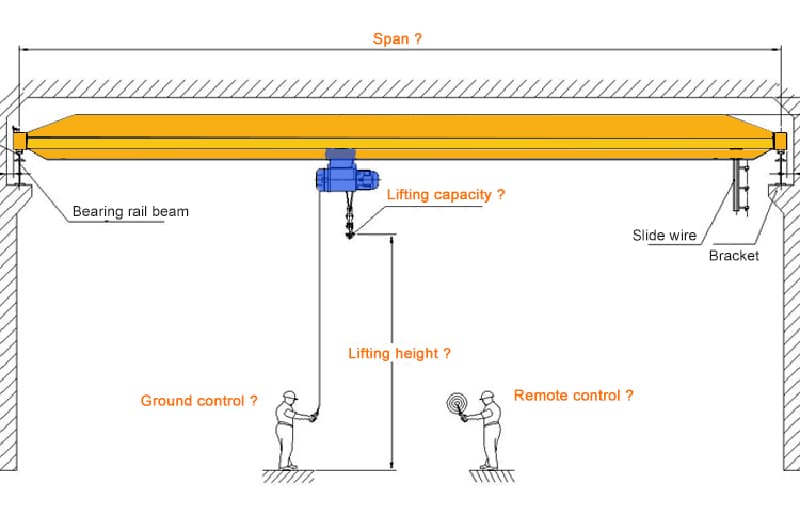
| Span | Fully Custom (Up to 55m+) | Structural optimization is non-negotiable. Requires detailed analysis of girder type (reinforced box, truss, etc.) to meet both stiffness and weight targets for the specific span. |
| Lifting Height | Fully Custom | Often requires multi-speed hoist (e.g., 2 or 3 speed ranges) for coarse and fine positioning. Reeving systems are engineered for optimal rope life and headroom. |
| Duty Class | A6 (Continuous Severe Duty) | Standard for metal processing, heavy assembly. Components are selected for maximum thermal and mechanical endurance under near-continuous operation. |
| Control Power | 480V / 690V, 3 Phase, 50/60Hz | Electrical system design includes harmonic filters, line reactors, and may require a dedicated transformer. Emphasis on power quality and stability. |
| Control System | Dual PLC (Operational + Safety) + Full Regenerative Vector Drives | Enables complex automation, advanced safety functions, and detailed performance data logging. |
| Speeds (Engineered Range) | Optimized for overall productivity with a premium on controllability and stability of the significant mass. | |
| – Hoisting | 2.0 ~ 6.0 m/min | |
| – Trolley Traverse | 12 ~ 18 m/min | |
| – Bridge Travel | 15 ~ 25 m/min | |
| Girder Configuration | Optimized Heavy-Duty Double Girder (Box, Truss, or Hybrid) | Selection is a critical early-stage decision based on a detailed cost/performance/deflection analysis. |
| Safety & Monitoring | SIL2 / PLd Compliant Architecture with Health Monitoring | Focus on functional safety standards, redundant critical paths, and condition-based maintenance capabilities. |
| Environmental Specification | Up to IP56, Corrosion Class C4/C5 | Comprehensive protection packages available for extreme environments (foundries, chemical plants, offshore, salt-spray). |
| Protective Coating | Long-Life Coating System (e.g., thermal spray + sealant + topcoat) | Designed for decades of service in aggressive environments, minimizing lifetime maintenance costs. |
Ideal Applications: The Heart of Heavy Industry
This crane is the definitive solution for core industrial processes where its capacity and reliability are non-negotiable pillars of production.
- Primary Metal Processing (Mini-Mills, Aluminum Smelters): Handling 25-ton ladles of molten metal, anodes, and large ingots. Customization focuses on extreme heat protection (refractory lined girders), A7/A8 duty cycles, and failsafe safety systems to manage the catastrophic risk of a spill.
- Heavy Machinery & Mining Equipment Assembly: Building and moving large excavators, haul trucks, and tunnel boring machine segments. Requires exceptional precision for component mating, high lifting heights, and often integration with turntables or assembly jigs.
- Large-Diameter Pipe & Pressure Vessel Fabrication: Manipulating and positioning massive welded sections for pipelines, reactors, and storage tanks. The crane must provide stable, slow, and precise control for welding operations, often with custom rotating hook assemblies.
- Major Infrastructure Project Yards (Bridge, Dam): Prefabricating and handling giant rebar cages, formwork, and concrete segments. Demands outdoor durability, high wind resistance ratings, and the ability to work over large, open areas.
- Aerospace & Defense: Large Component Integration: Moving and positioning major airframe sections, missile bodies, or armored vehicle hulls within secure, high-clearance facilities. Emphasizes vibration control, cleanliness (low particulate), and pinpoint positioning accuracy.
Your Project Foundation: The Specification Dialogue
To commence the engineering of your 25-ton solution, we require a comprehensive dataset:
- Complete Load & Duty Analysis: Detailed profiles of all lifted items (weight, CG, dimensions, frequency). A clear definition of the annual duty cycle (hours, starts, average load spectrum).
- Facility Structural & Power Audit: Certified drawings of the building structure and existing runway system (with load capacity ratings). Details of the available electrical supply (voltage, amperage, location).
- Process Integration Blueprint: A map of how the crane integrates into the production line. This includes interaction points with other machinery, required automation interfaces (I/O points, communication protocols), and desired workflow logic.
- Performance & Environmental KPI’s: Defined targets for positioning accuracy, cycle times, availability (uptime %), and a full description of the operating environment (temperature range, airborne contaminants, humidity).
- Regulatory & Certification Mandates: All applicable local, national, and industry-specific safety regulations and required certification marks.
Conclusion: The Strategic Linchpin of Industrial Capacity
Selecting a Customized Type 25t Double Beam EOT Overhead Crane is a capital investment in the fundamental capability and resilience of your operation. It is the procurement of a high-availability, intelligent production partner engineered to handle your most critical and heaviest assets with a blend of power and precision that off-the-shelf equipment cannot match. This crane becomes the reliable force that unlocks production potential, safeguards valuable inventory, and provides a tangible competitive advantage in heavy industry.
Commence Your Heavy-Engineering Collaboration
The journey to your definitive 25-ton solution begins with a technical deep dive. Contact our project engineering team to arrange a comprehensive facility review and a dedicated specification workshop. Let us demonstrate how a purpose-built 25-ton crane can be engineered to be the most dependable and productive asset on your factory floor.
Navigate Our Heavy-Lifting Portfolio:
- For applications requiring robust mid-heavy capacity, explore the engineered performance of our [Customized Type 20t Double Beam EOT Crane].
- To step into the domain of mega-heavy lifting and material processing, investigate the capabilities of our [Customized Type 30t Double Beam EOT Cranes].
