
20 Ton Indoor Double Beam Gantry Crane: Ultimate Solution for Tube Lifting Operations
Table of Contents
- Introduction
- Understanding the 20 Ton Indoor Double Beam Gantry Crane
- Key Features and Technical Specifications
- Advantages for Tube Lifting Applications
- Safety Features and Considerations
- Customization Options for Specific Needs
- Comparison with Alternative Lifting Solutions
- Selection and Implementation Guide
- Conclusion
Introduction
In industrial environments where efficient material handling is crucial for productivity, the 20 ton indoor double beam gantry crane represents a sophisticated lifting solution specifically valuable for tube lifting operations. This robust overhead lifting system combines exceptional load capacity with precision control, making it an indispensable asset for factories, warehouses, and manufacturing facilities handling lengthy, bulky, or heavy tubular materials. Unlike standard lifting equipment, these specialized gantry cranes offer customized functionality for tube-specific applications, ensuring safe and efficient movement of materials that often present unique handling challenges due to their dimensions, weight distribution, and surface characteristics.
The integration of a double beam design provides enhanced stability and weight distribution capabilities that are particularly advantageous when lifting tubes, where unbalanced loads can create safety hazards and operational inefficiencies. For businesses seeking to optimize their material flow, reduce manual handling risks, and improve overall operational efficiency, understanding the specific benefits and technical considerations of implementing a 20 ton indoor double beam gantry crane is an essential step in making informed equipment decisions that impact both productivity and workplace safety.
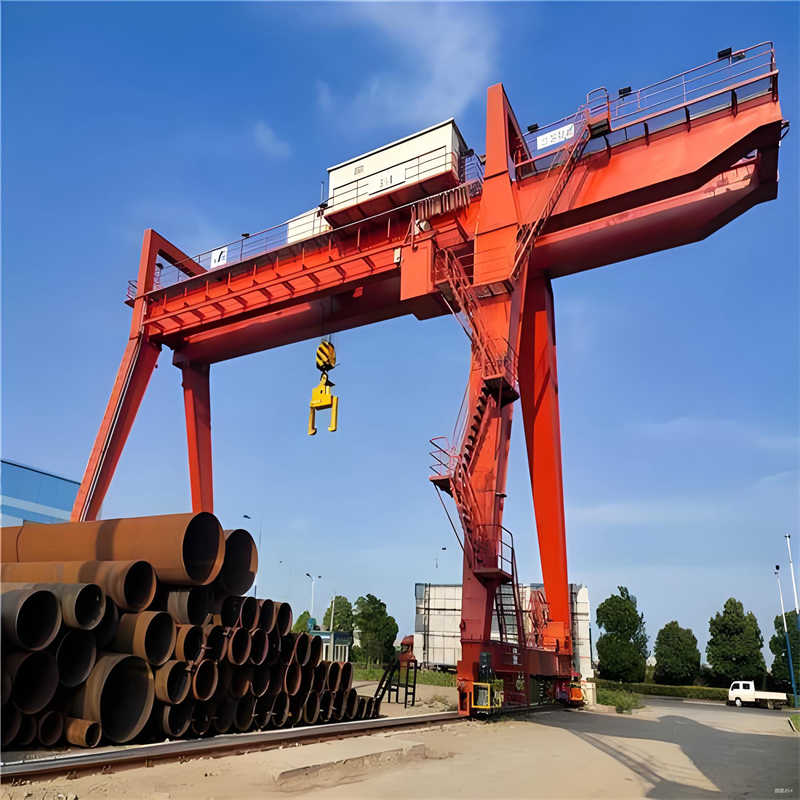
Understanding the 20 Ton Indoor Double Beam Gantry Crane
A 20 ton indoor double beam gantry crane represents a heavy-duty lifting system characterized by two parallel girders supported by legs that move on wheels or along a track system. This structural configuration creates a stable lifting platform capable of handling substantial loads while spanning wide areas without overhead support structures. Unlike single girder designs, the double beam construction provides superior load distribution and reduced deflection under heavy loads, making it particularly suitable for lifting long tubes where balance and control are critical operational considerations.
These cranes typically consist of several key components: the main bridge assembly with dual girders, support legs with end trucks and wheels, a hoisting mechanism with trolley, and various control systems. The double girder design enables the incorporation of more robust hoisting equipment and often provides greater hook height compared to single girder alternatives—a significant advantage when handling lengthy tubes that require vertical clearance. The structural integrity offered by this configuration allows for smooth load manipulation even when dealing with awkwardly shaped tubular materials that may create challenging center-of-gravity situations.
For indoor applications, these gantry cranes are engineered with specific considerations for facility constraints, including adaptable span configurations to fit existing building layouts and height adjustments to optimize headroom utilization. The indoor designation also implies certain environmental protections not necessarily found in outdoor models, such as finishes appropriate for indoor air quality considerations and operational sound levels compatible with indoor work environments where noise may be a concern for personnel.
Key Features and Technical Specifications
The 20 ton indoor double beam gantry crane incorporates numerous engineering enhancements specifically designed to handle demanding lifting applications such as tube manipulation. Understanding the core technical specifications helps in selecting the appropriate configuration for specific operational requirements and facility constraints.
- Lifting Capacity: As the designation suggests, these cranes feature a 20-ton maximum capacity,–sufficient for handling heavy tubular materials, machinery, and other substantial loads encountered in industrial settings. This capacity typically represents the safe working load (SWL) and includes an appropriate safety factor beyond the rated capacity.
- Span and Height Considerations: These cranes offer adaptable span capabilities generally ranging from 18 to 35 meters, with customizable options to suit specific facility layouts. The lifting height typically ranges from 6 to 18 meters, providing adequate clearance for maneuvering lengthy tubes vertically. The double beam design often allows for greater hook height compared to single girder configurations, a significant advantage when handling long tubes.
- Structural Composition: The double girder configuration consists of robust box girders or truss designs that provide exceptional rigidity and resistance to bending under full load conditions. This structural integrity is particularly important when lifting long tubes, where the load may be distributed across a wide area but concentrated at the lifting points.
- Mobility and Speed Controls: Travel speeds for the crane typically range from 16 to 50 meters per minute, with variable frequency drives often available to ensure smooth acceleration and deceleration—critical when handling unstable loads like lengthy tubes that might swing or shift during movement.
- Power Systems: These indoor cranes typically operate on standard industrial power supplies (380V, 50Hz, 3P), with options for cable reels, conductor bars, or other electrification systems appropriate for indoor applications where environmental protection from weather elements is not a primary concern.
Table: Technical Specifications of 20 Ton Double Beam Gantry Cranes
| Parameter | Specification Range | Application Consideration for Tube Lifting |
|---|---|---|
| Lifting Capacity | 20 tons | Sufficient for heavy wall tubes or multiple smaller tubes |
| Span | 18-35 meters | Accommodates wide work areas for long tube handling |
| Lifting Height | 6-18 meters | Provides clearance for vertical manipulation of long tubes |
| Lifting Speed | 1.5-11.5 m/min | Controlled movement suitable for precise tube positioning |
| Crane Travel Speed | 16-50 m/min | Efficient transit between pickup and placement locations |
| Work Duty | A3-A7 | Matches operational intensity requirements |
Advantages for Tube Lifting Applications
The implementation of a 20 ton indoor double beam gantry crane for tube lifting operations delivers multiple operational benefits that directly impact productivity, safety, and cost-efficiency. These advantages make this equipment category particularly suitable for handling the unique challenges presented by tubular materials in industrial environments.
- Superior Load Stability: The dual girder configuration provides exceptional rigidity that minimizes deflection under load. This structural advantage is particularly valuable when handling long tubes, where even minimal bending of the crane structure can cause significant sway at the load ends, creating safety hazards and positioning difficulties.
- Enhanced Positioning Precision: With options for variable frequency drives and precision controls, these cranes enable exact load placement—critical when maneuvering tubes into tight spaces or when performing delicate assembly operations where clearance is limited. The double beam design offers a more stable platform for the hoisting trolley, resulting in less side-to-side movement during travel.
- Adaptability to Tube Characteristics: Whether handling slippery, uneven, or easily damaged tubes, these cranes can be equipped with specialized lifting attachments such as spreader beams, multiple lifting points, or custom grapples designed specifically for tubular materials. This customization capability ensures proper load security while preventing damage to the tube surface or structure.
- Optimized Space Utilization: Gantry cranes inherently offer better space efficiency compared to overhead bridge cranes in certain applications because they don’t require building structural support. This feature is particularly beneficial for tube handling operations that often require clear access to storage racks, processing equipment, or loading areas without obstructions from support columns.
- Improved Safety for Challenging Loads: Tubes present unique handling challenges due to their variable center of gravity and potential for swinging. The double beam gantry crane’s inherent stability, combined with available anti-sway technology and precise control systems, significantly reduces these risks, creating a safer work environment for personnel and reducing potential damage to materials and equipment.
The operational flexibility of these cranes extends to their ability to service multiple workstations within their coverage area, making them ideal for production lines where tubes move through various processing stages such as cutting, bending, welding, or finishing operations. This versatility translates to reduced handling time and minimized intermediate transfers between different material handling systems, creating a more streamlined workflow for tube-based manufacturing or processing operations.
Safety Features and Considerations
When implementing a 20 ton indoor double beam gantry crane for tube lifting applications, comprehensive safety systems are paramount to protect both personnel and assets. These cranes incorporate multiple built-in safety features alongside configurable options that address the specific risks associated with handling heavy, lengthy, or awkward tubular loads.
- Overload Protection: Modern 20 ton double beam gantry cranes incorporate sophisticated load monitoring systems that prevent operation beyond rated capacity. This feature is particularly important when handling tubes of uncertain weight or when multiple tubes might be lifted simultaneously, where accurate weight estimation can be challenging.
- Limit Switches: Both hoisting and travel motions include precision limit switches that prevent overtravel at the extremes of operation. These critical safety devices ensure the hoist doesn’t collide with the trolley or that the crane doesn’t approach the end of its runway at unsafe speeds, situations that could be especially hazardous when managing suspended tubes that may swing or shift.
- Emergency Stop Systems: Strategically located emergency stop controls allow immediate cessation of all crane functions during unexpected situations. For tube lifting applications where load stability can change rapidly, having multiple access points to emergency stops—including ground-based pendant stations and remote controls—provides crucial response options for operators and spotters.
- Structural Integrity: The double beam design inherently provides redundant load paths that enhance overall safety compared to single girder configurations. This construction approach, combined with high-quality materials and manufacturing techniques such as radiographic testing (RT) and ultrasonic testing (UT), ensures the crane structure can withstand the dynamic stresses encountered during tube lifting operations.
- Power Failure Protections: These systems include automatic braking and backup safety mechanisms that engage in the event of power interruption. This feature prevents uncontrolled movement of suspended tubes, which could create particularly dangerous situations due to their length and potential for pendulum motion.
For tube-specific applications, additional safety considerations often include specialized rigging attachments that securely grip tubular loads without slipping or damaging the material surface. The implementation of anti-sway technology is another valuable feature that automatically compensates for pendulum motions that can develop when moving lengthy tubes, significantly enhancing control and reducing impact risks at the destination point.
Operator safety is further enhanced through multiple control options, including pendant stations, cabin operations, and wireless remote controls that allow positioning in safe viewing locations with optimal visibility of the entire lifting operation. This flexibility is particularly valuable when handling long tubes where the operator needs perspective on both ends of the load simultaneously to avoid obstructions.
Customization Options for Specific Needs
The 20 ton indoor double beam gantry crane platform offers extensive customization capabilities to address the specific requirements of various tube lifting applications across different industries. This flexibility ensures that the crane system can be optimally configured for the unique challenges presented by specific types of tubular materials, facility constraints, and operational workflows.
- Span and Height Adjustments: While standard spans typically range from 18 to 35 meters, custom configurations can be engineered to meet specific facility dimensions or operational requirements. Similarly, lifting heights can be tailored to accommodate building constraints and specific material handling needs, with double girder designs often providing greater hook height than comparable single girder models.
- Specialized Lifting Attachments: For tube handling applications, cranes can be equipped with purpose-designed attachments such as lifting beams with multiple pickup points, C-hooks for coil handling, vacuum lifters for finished surface protection, or custom-designed grapples for specific tube diameters and weights. These specialized attachments significantly enhance both safety and efficiency when handling tubular materials.
- Control System Configurations: Operators can select from various control options including pendant stations, operator cabins, and wireless remote controls. For tube lifting applications where visibility of both ends of the load is crucial, wireless remote controls offer particular advantages by allowing operators to position themselves optimally during lifting, transport, and placement operations.
- Mobility and Maneuverability Features: Options such as variable frequency drives, precision positioning systems, and enhanced steering controls can be specified to address the specific challenges of maneuvering lengthy tubes through crowded facilities or positioning them with exacting tolerances.
- Environmental Adaptations: While designed for indoor use, specific environmental factors such as temperature extremes, humidity, corrosive atmospheres, or explosive environments can be addressed through specialized components, coatings, and system designs. These adaptations ensure reliable performance even in challenging industrial environments where tubes might be processed or stored.
The customization process typically begins with a detailed application assessment that considers factors such as tube dimensions and weights, facility layout, production volumes, and integration with other material handling systems. This comprehensive approach ensures the final crane solution delivers optimal performance for the specific application rather than representing a compromise with standard, off-the-shelf configurations.
Table: Customization Options for Specific Tube Lifting Applications
| Application Requirement | Customization Solution | Benefit for Tube Lifting |
|---|---|---|
| Long tube handling | Extended span configurations up to 35 meters | Accommodates full tube length with proper support |
| Fragile surface protection | Specialized lifting attachments | Prevents damage to coated or finished tube surfaces |
| Precise positioning needs | Variable frequency drives | Enables exact placement for machining or assembly |
| High-volume operations | A5-A7 work class components | Supports intensive use with minimal downtime |
| Limited headroom | Low-profile double girder design | Maximizes lifting height in constrained facilities |
Comparison with Alternative Lifting Solutions
When considering a 20 ton indoor double beam gantry crane for tube lifting applications, it’s valuable to understand how this solution compares with alternative material handling approaches. This comparative analysis helps in making an informed investment decision that aligns with specific operational requirements and constraints.
- Versus Single Girder Gantry Cranes: While single girder gantry cranes offer a more economical initial investment, double girder configurations provide superior performance characteristics for demanding tube lifting applications. The double beam design supports higher duty cycles, allows for greater hook height, and offers enhanced stability that is particularly valuable when handling long, unbalanced tubular loads. For operations requiring frequent lifting of tubes approaching the 20-ton capacity, the double girder crane represents the more durable and appropriate solution.
- Versus Overhead Bridge Cranes: Unlike overhead bridge cranes that require building structural support, gantry cranes are freestanding systems that don’t transfer loads to the building structure. This distinction makes gantry cranes particularly advantageous for tube handling applications in facilities where existing building structures cannot support heavy loads or where flexibility in facility layout is prioritized. Gantry cranes also offer greater reconfigurability if production layouts need to change.
- Versus Mobile Cranes: While mobile cranes offer exceptional mobility, indoor double beam gantry cranes provide superior operational efficiency for repetitive lifting tasks in a defined area. For tube handling operations within a specific production cell or storage area, the gantry crane eliminates the positioning and setup time required for mobile cranes, resulting in significantly faster cycle times for repeated lifts.
- Versus Monorail Systems: Monorail systems offer fixed-path material movement, while gantry cranes provide area coverage within their operating span. For tube processing operations that require flexible routing to multiple workstations or storage locations, gantry cranes offer substantially more operational flexibility without the fixed infrastructure constraints of monorail systems.
The operational economics of each solution also merit consideration. While the initial investment in a 20 ton indoor double beam gantry crane may be higher than some alternatives, the long-term benefits of increased productivity, reduced labor requirements, enhanced safety, and lower product damage often deliver a compelling return on investment, particularly for tube handling applications where alternative methods may be slower, less precise, or present greater safety risks.
Selection and Implementation Guide
Choosing and implementing the appropriate 20 ton indoor double beam gantry crane for tube lifting applications requires systematic evaluation of multiple factors to ensure optimal performance, safety, and return on investment. This structured approach helps in specifying a crane system that precisely matches application requirements while accommodating facility constraints.
- Load Analysis: Begin with a comprehensive assessment of the tubes to be handled, including maximum weights, dimensions, center of gravity characteristics, lifting points, and any special handling requirements. Consider not only current needs but also anticipated future requirements to ensure the selected crane system accommodates potential business growth or product changes.
- Facility Assessment: Conduct a detailed survey of the operating environment, including available space, floor conditions, obstructions, and required coverage area. For tube lifting applications, particular attention should be paid to clearance requirements when maneuvering lengthy materials and potential interference with existing equipment, structures, or traffic aisles.
- Duty Cycle Evaluation: Determine the expected operational intensity by analyzing factors such as lifts per hour, average load factors, and daily operating hours. This assessment guides the selection of appropriate work duty classification (A3-A7) to ensure component specifications match operational demands.
- Control System Selection: Choose control interfaces that optimize operator efficiency and safety for specific tube handling tasks. Wireless remote controls often provide advantages for tube lifting applications by allowing operators to maintain optimal viewing angles of both ends of long tubes during lifting and positioning maneuvers.
- Integration Planning: Consider how the crane system will interface with existing processes and equipment, including lifting attachment compatibility, material flow patterns, and potential integration with other material handling systems. For tube-specific applications, this might include coordination with storage racks, processing machinery, or transportation equipment.
The implementation process typically follows a structured path from initial concept through commissioning:
- Requirements Definition: Document detailed operational requirements, technical specifications, and performance expectations.
- Design and Engineering: Develop crane specifications and layout drawings that address all identified needs and constraints.
- Manufacturing and Quality Assurance: Ensure proper construction with appropriate quality controls, including non-destructive testing of critical components.
- Installation and Commissioning: Professional installation followed by thorough testing and operator training.
- Ongoing Maintenance: Implementation of a preventive maintenance program to ensure long-term reliability and safety.
Following this structured approach to selection and implementation helps ensure that the 20 ton indoor double beam gantry crane delivers optimal performance for tube lifting applications while maximizing return on investment through reliable, efficient operation.
Conclusion
The 20 ton indoor double beam gantry crane represents a sophisticated material handling solution that offers distinct advantages for tube lifting applications in industrial environments. With its robust dual girder construction, flexible configurability, and comprehensive safety systems, this crane category provides the stability, precision, and reliability required to handle challenging tubular loads efficiently and safely.
For businesses seeking to enhance their tube handling capabilities, investing in a properly specified double beam gantry crane can yield substantial operational benefits, including increased productivity, reduced labor requirements, minimized product damage, and enhanced workplace safety. The customization capabilities of these systems allow for tailored solutions that address specific application requirements, facility constraints, and operational workflows.
As with any significant capital equipment investment, success depends on thorough upfront analysis, professional implementation, and consistent maintenance. By following a structured selection process and partnering with an experienced crane provider, organizations can implement a 20 ton indoor double beam gantry crane solution that delivers long-term value while addressing the unique challenges associated with tube lifting operations.
Whether supporting manufacturing processes, storage operations, or distribution activities, these versatile crane systems continue to prove their worth as efficient material handling solutions for tubular products across diverse industrial sectors.
