
Lightweight 5-20 Ton Electric Overhead Cranes: The Ultimate Guide for Industrial Efficiency
In today’s competitive industrial landscape, optimizing material handling while controlling operational costs is paramount for businesses worldwide. Lightweight electric overhead cranes, particularly in the 5-20 ton capacity range, have emerged as game-changing solutions that combine impressive lifting power with unprecedented flexibility. These advanced lifting systems represent a significant evolution from traditional bulky cranes, offering enhanced energy efficiency, space optimization, and adaptability across diverse industrial settings.
For manufacturing facilities, warehouses, assembly plants, and construction sites, the strategic implementation of these cranes translates to improved workflow efficiency, reduced labor costs, and enhanced workplace safety. This comprehensive guide explores the technical specifications, applications, and selection criteria for lightweight electric overhead cranes, providing valuable insights to help you make an informed decision for your operational needs.
Why Choose Lightweight 5-20 Ton Cranes?
The 5-20 ton capacity range represents what many industry experts consider the “sweet spot” for general industrial material handling needs. But what exactly makes these cranes such a practical choice for diverse applications?
Versatility Across Industries
Lightweight electric overhead cranes in this capacity range demonstrate remarkable versatility. From manufacturing plants requiring precise positioning of machinery components to warehousing operations moving heavy inventory, these cranes handle an extensive variety of tasks. The 20-ton capacity specifically serves as an ideal balance point between cost-effectiveness and functional capability, making it suitable for most medium to heavy material handling scenarios without the expense of over-specification.
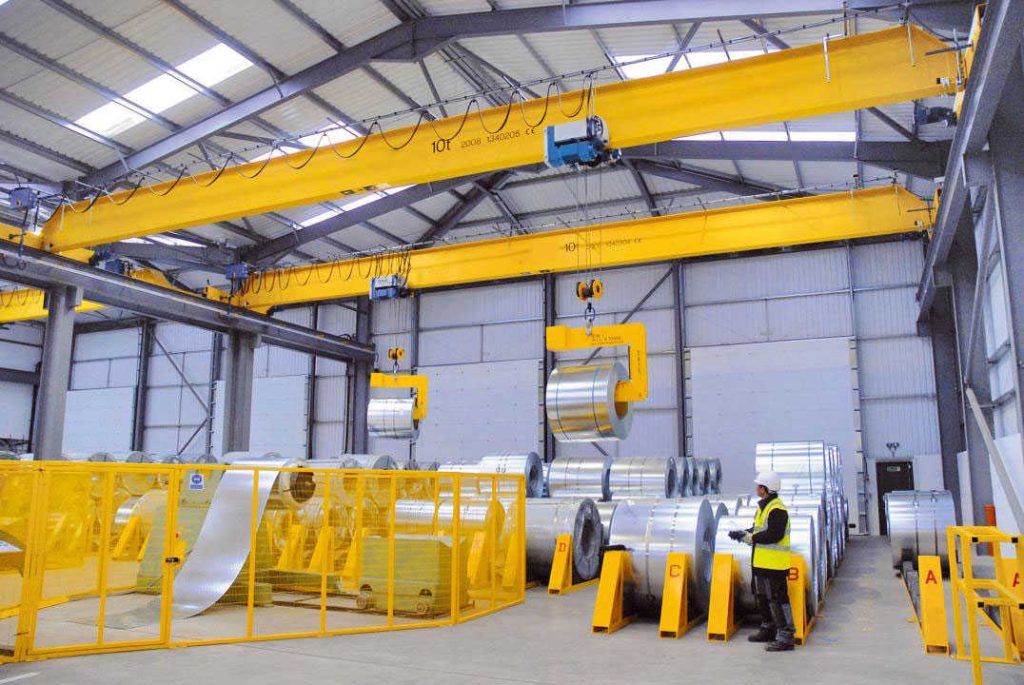
Economic Advantages
When compared to higher-tonnage alternatives, lightweight 5-20 ton cranes offer significant economic benefits beyond just the initial purchase price. Their reduced structural requirements translate to lower installation costs, as existing building structures often require minimal reinforcement. Additionally, their energy-efficient operation—often featuring high-efficiency motors and variable frequency drives (VFDs)—contributes to substantially lower operating costs over the equipment’s lifespan.
Space Optimization
The compact design of modern lightweight cranes allows for better utilization of facility space. Unlike their bulkier counterparts, these cranes maximize overhead lifting capabilities without encroaching on valuable floor space. This is particularly beneficial for facilities with limited square footage or those requiring multiple crane systems to operate simultaneously in close proximity.
Table: Load Capacity vs. Common Industrial Applications
| Load Capacity | Typical Applications | Industry Examples |
|---|---|---|
| 5-10 tons | Light assembly, machinery maintenance, warehouse material handling | Automotive parts manufacturing, food processing, small parts warehouses |
| 10-15 tons | Medium-duty production lines, steel processing, equipment installation | Metal fabrication, machinery workshops, medium-scale manufacturing |
| 15-20 tons | Heavy equipment handling, mold changing, large component assembly | Heavy machinery manufacturing, injection molding facilities, steel mills |
Key Applications Across Industries
Lightweight electric overhead cranes have found widespread adoption across numerous sectors due to their adaptable nature and reliable performance. Understanding their specific applications in different industries highlights their transformative impact on operational efficiency.
Manufacturing and Assembly Operations
In manufacturing environments, these cranes facilitate efficient equipment assembly with high alignment accuracy, significantly enhancing production line automation levels. The precise control systems available on modern electric overhead cranes enable exact positioning of components, reducing installation time and improving overall product quality. For mold manufacturing and injection molding operations, these cranes simplify what would otherwise be complex and dangerous mold changes, reducing associated risks while improving changeover efficiency.
Steel and Metal Processing
The iron and steel metallurgical industry relies heavily on 20-ton overhead cranes for handling heavy metal materials including steel coils, plates, profiles, and billets. In these demanding environments, cranes equipped with specialized attachments like electromagnetic suction cups or clamp slings enable fast, efficient transfer of materials, dramatically improving workshop logistics efficiency. For high-temperature applications, custom configurations with heat protection designs ensure reliable operation even in challenging conditions.
Logistics and Warehousing
Modern logistics facilities utilize 5-20 ton electric overhead cranes for loading and unloading operations that would be impractical or inefficient with floor-based equipment. These cranes work faster than other land-based devices while operating in overhead space that doesn’t interfere with simultaneous ground-level activities. This parallel processing capability significantly enhances overall facility throughput.
Automotive and Aerospace Sectors
These precision-oriented industries benefit from the exact positioning capabilities of modern electric overhead cranes. In automotive plants, cranes handle everything from press line operations to engine installation with millimeter precision. The aerospace sector employs these cranes for aircraft component assembly, where the careful handling of expensive, delicate parts is critical to maintaining quality standards.
How to Select the Right Lightweight Electric Overhead Crane
Choosing the appropriate crane system requires careful consideration of several technical and operational factors. A well-informed selection process ensures optimal performance while avoiding unnecessary costs or functional limitations.
Assessing Capacity Requirements
When determining the appropriate crane capacity, consider both current maximum lifting needs and potential future requirements. While the obvious approach is to match the crane’s rated capacity to your heaviest anticipated load, wise operators incorporate a reasonable safety margin. For businesses with fluctuating needs, selecting a crane with some built-in capacity reserve can prevent the need for premature upgrades as requirements evolve.
Understanding Span and Height Considerations
The span (horizontal distance between runways) and lifting height (distance from the floor to the highest hook position) are critical dimensions that directly impact both functionality and cost. The span typically ranges from 7.5m to 35.5m, while lifting height generally falls between 6m and 30m, though both parameters can be customized to specific requirements.
Table: Technical Specifications Based on Crane Type
| Crane Type | Typical Capacity Range | Span Range | Lifting Height | Best For |
|---|---|---|---|---|
| Single Girder | 5-20 tons | 7.5-28.5m | 6-18m (customizable) | Light to medium-duty tasks, cost-sensitive projects |
| Double Girder | 5-20+ tons | 10.5-35.5m | 6-30m (customizable) | Heavy-duty applications, higher frequency use |
| European Design | 0.25-20 tons (single girder) | 6-31.5m | Customizable | Applications requiring premium performance, easy installation |
Control and Operation Preferences
Modern electric overhead cranes offer multiple control options to suit different operational needs and preferences:
- Pendant Control: Traditional wired pendant stations offer reliable, direct control at a lower cost point.
- Radio Remote Control: Wireless systems allow operators to control the crane from the most advantageous position, improving visibility and safety.
- Cab Operation: For certain intensive applications, operator cabs provide a dedicated control environment.
- Fully Automated Systems: Increasingly, cranes incorporate automation technologies that enable unmanned operation following pre-programmed paths, particularly valuable in repetitive material handling scenarios.
Special Features and Safety Considerations
When selecting your crane, consider which advanced features align with your operational requirements and safety protocols:
- Variable Frequency Drives (VFDs): Enable smooth acceleration and deceration, reducing load swing and mechanical stress.
- Overload Protection: Critical safety systems that prevent the crane from lifting loads beyond its rated capacity.
- Limit Switches: Automatically stop hook movement at maximum/minimum heights and prevent trolley or bridge collisions with end stops.
- Anti-Sway Systems: Advanced control algorithms that reduce load swing, increasing precision in load handling.
- Smart Monitoring: IoT-enabled systems that provide real-time performance data and facilitate predictive maintenance.
Safety and Maintenance Tips for Optimal Crane Performance
Implementing robust safety protocols and maintenance routines is essential for ensuring the long-term reliability and safe operation of your electric overhead crane system.
Regular Inspection Routines
Comprehensive inspection programs form the foundation of crane safety and performance:
- Daily Visual Checks: Before each shift, operators should conduct visual inspections for any unusual signs, wear, or potential damage. Key components to examine include wire ropes, hooks, brakes, and safety devices.
- Periodic Detailed Inspections: Scheduled monthly or quarterly examinations by qualified technicians should assess structural components, electrical systems, and mechanical assemblies for fatigue, misalignment, or deterioration.
- Load Testing: Regular verification of crane performance under load conditions ensures continued operational reliability and safety compliance.
Proactive Maintenance Practices
- Lubrication Regimen: Implement a scheduled lubrication program for all moving parts, focusing on wire ropes, bearings, and gears using manufacturer-recommended lubricants.
- Electrical System Maintenance: Periodically inspect electrical components for loose connections, frayed wires, or corrosion. Test all control functions to ensure proper operation.
- Component Alignment: Regularly verify the proper alignment of runway tracks, bridge girders, and trolley paths to prevent uneven wear and premature component failure.
Operator Training and Safety Culture
Even the most advanced safety features cannot compensate for inadequate operator training. Comprehensive training programs should cover:
- Proper Load Handling Techniques: Including secure attachment, balanced lifting, and smooth movement.
- Emergency Procedures: Clear protocols for responding to malfunction scenarios or unexpected situations.
- Daily Pre-Use Checklists: Systematic verification that all systems are functioning correctly before operation.
- Load Limit Awareness: Reinforcing the importance of never exceeding the crane’s rated capacity.
Customized Solutions for Specific Applications
One of the significant advantages of modern electric overhead cranes is their adaptability to specific operational requirements through customized configurations and specialized features.
Industry-Specific Configurations
- Insulated Cranes: For environments where protection against electrical currents is necessary, insulated crane systems prevent current flow between the crane and the load.
- Explosion-Proof Designs: Applications involving flammable gases or dust require specially engineered cranes that eliminate ignition risks.
- High-Temperature Configurations: Steel mills and foundries utilize cranes with heat protection features that maintain operational integrity in elevated temperature environments.
- Low Headroom Designs: Facilities with height limitations benefit from compact crane profiles that maximize lifting height in constrained spaces.
Specialized Lifting Attachments
Beyond standard hook arrangements, cranes can be equipped with various specialized attachments to handle specific materials:
- Electromagnetic Lifting Systems: For efficient handling of ferrous materials without physical slings or chains.
- Vacuum Lifters: Ideal for handling non-porous materials with delicate surfaces that could be damaged by mechanical grips.
- Specialized Grabs: Custom-designed for specific materials like coils, drums, or scrap metal.
- Rotating Spreaders: Provide additional maneuverability for precise positioning of awkwardly shaped loads.
Automation and Integration
Modern cranes increasingly incorporate advanced control systems that enhance functionality and enable integration with broader operational frameworks:
- Programmed Movement Patterns: For repetitive tasks, cranes can memorize and replicate optimal movement paths.
- Inventory Management Integration: Crane systems can communicate with warehouse management software to automate material placement and retrieval.
- Predictive Maintenance Systems: IoT sensors monitor component condition, enabling maintenance before failures occur.
- Data Collection and Analysis: Operational data can be collected to identify efficiency improvements and optimize workflow patterns.
Conclusion: Making the Right Investment for Your Operations
Lightweight 5-20 ton electric overhead cranes represent a strategic investment in operational efficiency, workplace safety, and long-term cost reduction. Their versatile nature, coupled with advanced features and customization options, makes them suitable for an extensive range of industrial applications.
When selecting a crane system, carefully consider your specific requirements regarding capacity, span, control preferences, and special features. Remember that the most expensive option isn’t necessarily the best for your needs, nor is the cheapest likely to provide the best long-term value. A balanced approach that considers initial investment, operational costs, maintenance requirements, and potential future needs will yield the most satisfactory results.
At Dongqi Crane, we leverage decades of engineering expertise to provide tailored lifting solutions that precisely match our clients’ operational requirements. Our comprehensive approach encompasses everything from initial design consultation through installation and ongoing maintenance support, ensuring optimal performance throughout your equipment’s service life.
To explore how a lightweight 5-20 ton electric overhead crane can transform your material handling operations, contact our technical specialists for a detailed assessment of your specific needs and a customized solution designed to enhance your productivity and bottom line.
