
The Ultimate Guide to Crane Control: Cab, Floor, or Radio Remote?
Introduction: Your Choice Dictates the Height of Efficiency and Safety
In any project involving overhead cranes, one of the most critical decisions you’ll make is the choice of control system. Should you opt for the traditional cab, the economical floor-operated pendant, or the modern radio remote? This choice fundamentally impacts your operational productivity, total cost of ownership, and, most importantly, workplace safety.
At Dongqi Crane, we understand that there is no one-size-fits-all solution. The best control method is the one that aligns perfectly with your specific application, environment, and budget. This comprehensive guide will dissect the advantages and limitations of all three primary control methods. Our goal is to empower you with the knowledge to make an informed decision, and to show you how Dongqi Crane’s expertise and reliable products can support your choice, no matter which one it is.
Part 1: A Deep Dive into the Three Control Methods
1.1 Cab-Operated Control: Command from the Top
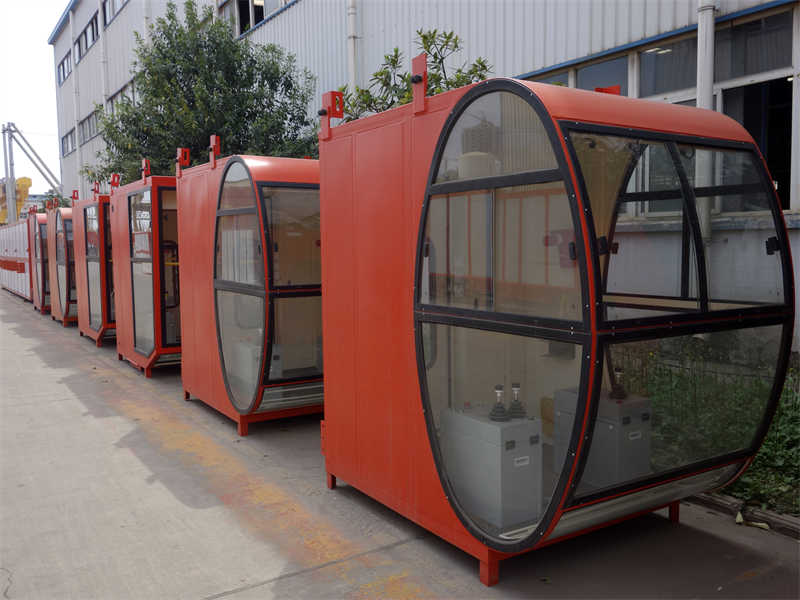
Definition: The operator controls the crane from a cabin (cab) mounted on the crane bridge itself.
Advantages:
- Superior Visibility: The elevated position provides an unparalleled, panoramic view of the entire work area, ideal for navigating complex or long-distance load paths.
- Enhanced Comfort: Modern cabs are ergonomic sanctuaries, equipped with air conditioning, heating, and shock absorption systems. This protects the operator from harsh environments (extreme heat, cold, dust, fumes) and reduces fatigue, leading to better focus and higher productivity during long shifts.
- Direct Sensation: Operators often report a more intuitive “feel” for the crane’s movement when operating from within the structure.
Disadvantages:
- Higher Initial Cost: The crane structure must support the cab, and the installation of environmental controls increases both initial equipment and installation costs.
- Accessibility and Efficiency: Valuable time can be lost as operators ascend and descend to the cab. This makes it less suitable for applications requiring frequent, short-cycle operations.
- Limited Flexibility: The operator is fixed to the crane’s path and cannot easily switch between different cranes or work areas.
The Dongqi Advantage: Our cab-operated cranes feature spacious, climate-controlled cabins with full-glass panels for maximum visibility. The intuitive control interfaces and reduced noise levels are designed to minimize operator fatigue and maximize precision.
1.2 Floor-Operated Control (Pendant Station): Simplicity and Economy on the Ground
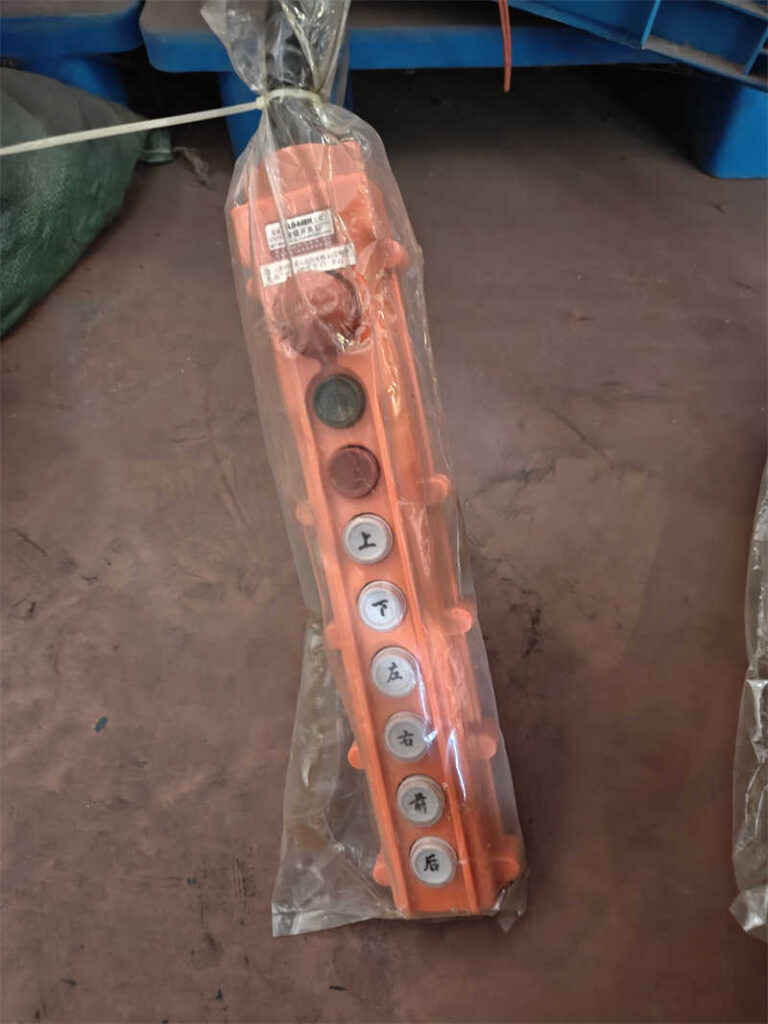
Definition: The operator controls the crane using a wired pendant station (push-button box) that hangs from the crane, allowing them to walk along with the load on the floor.
Advantages:
- Cost-Effectiveness: This is the most economical option, with lower initial purchase and maintenance costs.
- Excellent for Precision Work: Being directly under the load allows for extremely precise spotting and positioning, making it ideal for assembly tasks and short-distance moves.
- Simplicity and Ease of Use: The controls are straightforward, requiring minimal training for an operator to become proficient.
Disadvantages:
- Limited and Obstructed View: The operator’s line of sight can easily be blocked by the load itself, creating dangerous blind spots.
- Potential Safety Risks: The operator must work on the floor, often in the path of the moving load, which introduces significant safety hazards that require strict procedural controls and marked safety zones.
- Physically Demanding: The job requires the operator to walk the entire length of the crane’s travel path, which can be taxing over a full shift.
The Dongqi Advantage: Our pendant stations are built for durability and safety. They feature ergonomic designs, rugged and strain-relieved cables, and are available with emergency stop buttons and enhanced safety features to protect both the operator and the equipment.
1.3 Radio Remote Control: Unleashing Freedom and Safety
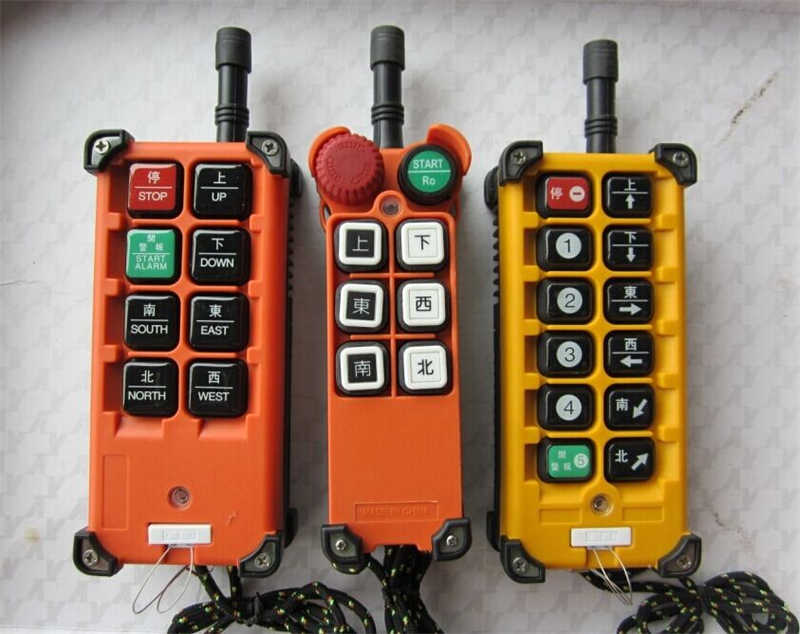
Definition: The operator uses a portable, wireless handheld transmitter to control the crane from a distance within a defined radius.
Advantages:
- Revolutionized Safety: This is the standout benefit. The operator can position themselves in the safest possible location with the clearest view, completely away from falling loads, pinch points, and hazardous floor conditions.
- Maximized Productivity: It combines the broad vision of cab operation with the mobility of floor operation. There is no time wasted climbing up or down, leading to smoother, faster, and more efficient workflow cycles.
- Unmatched Flexibility: A single operator can efficiently manage multiple cranes from a central location, optimizing workforce allocation.
Disadvantages:
- Higher Initial Investment: The system requires a radio transmitter, receiver, and integration, which adds cost compared to a basic pendant station.
- Signal Dependency: Operation relies on a clear and stable radio signal. The system must be robust enough to resist interference from other equipment in the facility.
- Training Adaptation: Operators must be trained to operate without the tactile feedback of a wired pendant and to always maintain a clear visual of the load.
The Dongqi Advantage: Dongqi’s radio remote systems are engineered for absolute reliability and security. We utilize advanced frequency-hopping spread spectrum (FHSS) technology to eliminate interference, employ encrypted signals to prevent cross-talk, and incorporate fail-safe mechanisms that automatically halt the crane if the signal is lost or interrupted. Our transmitters are also designed for comfort and long battery life.
Part 2: The Decision Matrix: How to Choose with Dongqi
The optimal choice depends on your specific operational parameters. Use the table and guide below to identify the best fit for your project.
| Dimension | Cab-Operated | Floor-Operated | Radio Remote |
|---|---|---|---|
| Initial Cost | High | Low | Medium |
| Operational Safety | High (for operator) | Medium (inherent risk) | Very High |
| Operational Efficiency | High (long-distance) | Medium (short-distance) | Very High |
| Field of Vision | Excellent (panoramic) | Restricted (local/obstructed) | Excellent (operator-selectable) |
| Flexibility | Low | Medium | High |
| Ideal Application | Hot, dusty, toxic environments; long, complex load paths | Light-duty, low-budget, short-distance, precision assembly | Safety-critical areas; high-throughput logistics; foundries; multi-crane cells |
Your Decision Guide:
- Choose CAB OPERATION if: Your primary work environment is harsh (e.g., foundries, chemical plants), loads must travel long and complex paths, and your budget allows for the higher investment in operator comfort and global visibility.
- Choose FLOOR OPERATION if: Strict budget constraints are a key driver, your applications are primarily light-duty, short-distance, and require precise load positioning, and you have robust safety protocols and marked zones on the shop floor.
- Choose RADIO REMOTE CONTROL if: Safety and efficiency are your top priorities. It is the superior choice for most modern applications, especially in warehouses, steel mills, logistics hubs, and waste treatment plants where the operator needs the freedom to choose the safest and most effective vantage point.
Part 3: Beyond the Choice: Dongqi’s Customized and Smart Solutions
The choice isn’t always binary. Dongqi Crane excels at providing hybrid and customizable solutions. Many of our cranes can be equipped with dual-control systems (e.g., Cab + Remote or Pendant + Remote), allowing for unparalleled operational flexibility to handle diverse tasks.
Furthermore, regardless of your chosen control method, Dongqi cranes can be integrated with intelligent features that elevate performance:
- Anti-Sway Systems: For pinpoint load positioning and reduced swing.
- Precise Positioning: Automated inch-mode for accurate landing.
- Collision Avoidance: Sensors to prevent interference with other cranes or infrastructure.
- Data Logging: Collect operational data for predictive maintenance and efficiency analysis.
Our partnership doesn’t end at the sale. Dongqi provides end-to-end support, including professional consultation, installation, commissioning, comprehensive operator training, and a global after-sales service network to ensure your chosen control system delivers maximum value throughout its lifecycle.
Conclusion: Partner with Dongqi to Elevate Your Lifting Operations
Selecting the right crane control system is a strategic investment in your operation’s future. By carefully weighing factors like environment, task frequency, budget, and safety goals, you can identify the perfect solution.
Still unsure which control method is ideal for your unique project?
Contact the Dongqi Crane experts today. Our engineering team is ready to analyze your specific requirements and provide a free, no-obligation consultation and customized solution recommendation.
Visit our website to explore case studies and technical specifications, or request a quote to start the conversation. Let Dongqi Crane be your partner in building a safer, smarter, and more efficient lifting operation.
