
Explosion-Proof Classification: ATEX vs. GB – Compliance Guide for Double-Girder Overhead Cranes in Chemical Plants
By Dongqi Crane – Your Trusted Partner for Explosion-Proof Lifting Solutions
1. Introduction: The Necessity of Explosion-Proof Cranes in Chemical Environments
1.1 Hazardous Conditions in Chemical Plants
Chemical manufacturing and processing facilities often contain explosive atmospheres due to flammable gases, vapors, or combustible dust. Common ignition sources include:
- Electrical sparks (from motors, switches, or wiring).
- Mechanical friction (brakes, wheels, or moving parts).
- Surface overheating (exceeding the auto-ignition temperature of surrounding substances).
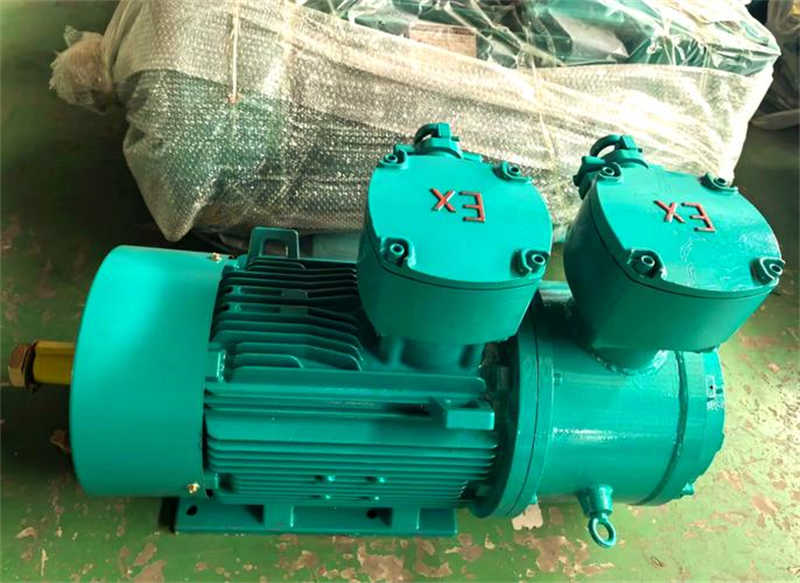
1.2 Regulatory Requirements for Explosion-Proof Equipment
To mitigate risks, ATEX (EU) and GB (China) standards mandate strict compliance for equipment operating in hazardous areas. Non-compliant cranes may lead to:
- Catastrophic explosions and safety incidents.
- Legal penalties and operational shutdowns.
1.3 Objective of This Guide
This guide compares ATEX and GB explosion-proof classifications, helping chemical plant operators:
- Select compliant double-girder overhead cranes.
- Understand certification processes for different markets.
- Implement safe operation and maintenance practices.
2. Core Standards: ATEX vs. GB Explosion-Proof Classifications
2.1 ATEX Directive (2014/34/EU) – European Compliance
The ATEX Directive governs equipment used in explosive atmospheres, covering design, manufacturing, and certification.
Key Elements of ATEX Classification:
- Zones for Gas/Vapor (G) Environments:
- Zone 0 (Continuous hazard) → Category 1G equipment.
- Zone 1 (Likely hazard) → Category 2G equipment.
- Zone 2 (Occasional hazard) → Category 3G equipment.
- Zones for Dust (D) Environments:
- Zone 20 (Continuous dust cloud) → Category 1D.
- Zone 21 (Occasional dust cloud) → Category 2D.
- Zone 22 (Unlikely but possible dust) → Category 3D.
- Example ATEX Marking:
II 2G Ex eb mb IIB T4 Gb- II (Equipment group for gases)
- 2G (Zone 1 gas hazard)
- Ex eb mb (Explosion protection methods)
- IIB (Gas group, e.g., ethylene)
- T4 (Max surface temperature ≤ 135°C)
2.2 GB Standards (China National Compliance)
China’s explosion-proof regulations are based on GB 3836 (equivalent to IECEx standards) and additional crane-specific requirements.
Key Elements of GB Classification:
- Zones for Gas/Vapor (G) Environments:
- 0 Zone (Continuous hazard) → “ia” level equipment.
- 1 Zone (Likely hazard) → “ib” level equipment.
- 2 Zone (Occasional hazard) → “ic” level equipment.
- Zones for Dust (D) Environments:
- 20 Zone (Continuous dust) → “iaD” level.
- 21 Zone (Occasional dust) → “ibD” level.
- 22 Zone (Unlikely dust) → “icD” level.
- Additional Crane-Specific Standards:
- GB/T 3811 (Crane design rules).
- GB/T 14405 (General bridge crane specifications).
2.3 ATEX vs. GB Comparison Table
| Parameter | ATEX (EU) | GB (China) |
|---|---|---|
| Applicability | EU & recognized markets | Mandatory in China |
| Zone Naming | Zone 0/1/2 (Gas) | 0/1/2 Zone (Gas) |
| Equipment Level | Category 1/2/3 | ia/ib/ic |
| Temperature Class | T1-T6 (T6 safest) | Same (T1-T6) |
| Certification Body | Notified Body (e.g., TÜV) | NEPSI (National agency) |
3. Explosion-Proof Design for Double-Girder Overhead Cranes
3.1 Electrical System Protection
- Motors & Control Panels:
- Flameproof (Ex d) – Contains explosions within enclosures.
- Increased Safety (Ex e) – Prevents sparks in normal operation.
- Intrinsic Safety (Ex i) – Low-energy circuits to prevent ignition.
3.2 Mechanical Safety Measures
- Braking System: Non-sparking disc brakes (anti-friction design).
- Limit Switches: Explosion-proof housings (e.g., stainless steel).
- Surface Temperature Control: Must stay below 80% of ignition temperature (e.g., T4 ≤ 135°C).
3.3 Material & Structural Considerations
- Low-static materials (e.g., conductive coatings).
- IP66-rated enclosures (dust/water resistance).
- Grounding system (static dissipation).
4. Certification Process & Compliance Strategy
4.1 ATEX Certification Steps
- Risk Assessment & Technical Documentation.
- Type Testing by Notified Body (e.g., TÜV).
- EC-Type Examination Certificate Issuance.
- Factory Audit & Quality Control Review.
- ATEX Marking & Declaration of Conformity (DoC).
4.2 GB Certification Steps
- Testing by NEPSI (National Center).
- Explosion-Proof Certification (GB 3836).
- Crane Safety Certification (GB/T 3811 & 14405).
- Special Equipment Manufacturing License (China).
4.3 Dual Certification (ATEX + GB) for Global Projects
- Recommended for:
- Chemical plants exporting to the EU.
- Multinational companies with China-based operations.
- Dongqi Solution: ATEX + GB dual-certified cranes with IECEx recognition.
5. Selection & Installation Guidelines
5.1 Matching Crane to Hazard Level
| Environment | Recommended Explosion-Proof Level |
|---|---|
| Gas Zone 1 (e.g., refinery) | ATEX Cat 2G / GB ib (T4) |
| Dust Zone 21 (e.g., flour mill) | ATEX Cat 2D / GB ibD |
5.2 Installation Best Practices
- Grounding: Dedicated earth grid (resistance ≤4Ω).
- Cabling: Armored flame-retardant cables + explosion-proof conduits.
- Safety Distance: ≥3m from potential leak sources (per GB 50058).
6. Operation & Maintenance Safety
6.1 Daily Inspection Checklist
✔ Electrical: Check for damaged cables, loose connections.
✔ Mechanical: Inspect brakes, lubrication (non-sparking grease).
✔ Temperature: Monitor motor/gear overheating.
6.2 Mandatory Periodic Testing
- ATEX: Annual inspection (thermal imaging, insulation tests).
- GB: Follow TSG Q7015 (crane safety inspection rules).
6.3 Worker Training Essentials
- No non-explosion-proof tools in hazardous zones.
- Emergency stop procedures (fail-safe power cutoff).
7. Why Choose Dongqi Crane?
✅ Custom Explosion-Proof Designs (Zone 1/21, gas+dust hybrid).
✅ Full Compliance Support (ATEX, GB, IECEx).
✅ Lifetime Technical Service (spare parts, training, audits).
8. Conclusion
- ATEX & GB standards align technically but differ in certification paths.
- Dual certification ensures global market access.
- Proper selection, installation, and maintenance are critical for long-term safety.
Appendix
- Glossary (Ex eb, T4, Zone 21 explained).
- Reference Standards (EN 60079, GB 3836, GB/T 14405).
- Dongqi Crane Technical Specifications (sample models).
Dongqi Crane – Your Reliable Partner for Safe & Compliant Explosion-Proof Cranes.
📞 Contact us today for a customized solution!
