
Explosion-Proof Double-Girder Overhead Crane Selection Guide for Chemical Plants
Introduction
In high-risk industrial environments such as chemical processing plants, oil refineries, pharmaceutical facilities, and petrochemical storage zones, the selection of an explosion-proof double-girder overhead crane is not just a matter of efficiency—it’s a critical safety requirement.
Why Explosion-Proof Cranes Are Essential
Chemical plants often handle flammable gases, combustible dust, and corrosive substances, creating environments where even a single spark could trigger catastrophic explosions. Unlike standard cranes, explosion-proof (Ex-proof) overhead cranes are engineered with specialized materials, electrical protections, and mechanical safeguards to eliminate ignition risks.
Key Challenges in Chemical Plant Crane Selection
- Hazardous Area Classification
- Zone 1 & Zone 2 (ATEX/IECEx): Equipment must comply with strict explosion-proof ratings (e.g., Ex d IIB T4 for gases like propane, Ex d IIC T4 for hydrogen).
- Temperature & Corrosion Resistance: Cranes must withstand high humidity, acidic/alkaline vapors, and extreme temperatures (-25°C to +40°C).
- Operational Demands
- Precision Handling: Many chemical processes require smooth, vibration-free lifting to avoid spills.
- Heavy-Duty Cycles: Frequent operation (A4/A5 duty class) demands robust construction and minimal downtime.
How This Guide Helps
This guide provides a step-by-step framework for selecting the right explosion-proof double-girder crane, covering:
✔ Technical specifications (load capacity, span, lifting height)
✔ Certification requirements (ATEX, IECEx, GB standards)
✔ Customization options (smart controls, corrosion-resistant coatings)
✔ Cost optimization strategies (energy efficiency, modular upgrades)
By the end, you’ll understand how Dongqi Crane’s certified Ex-proof solutions ensure compliance, safety, and long-term reliability in the most demanding chemical environments.
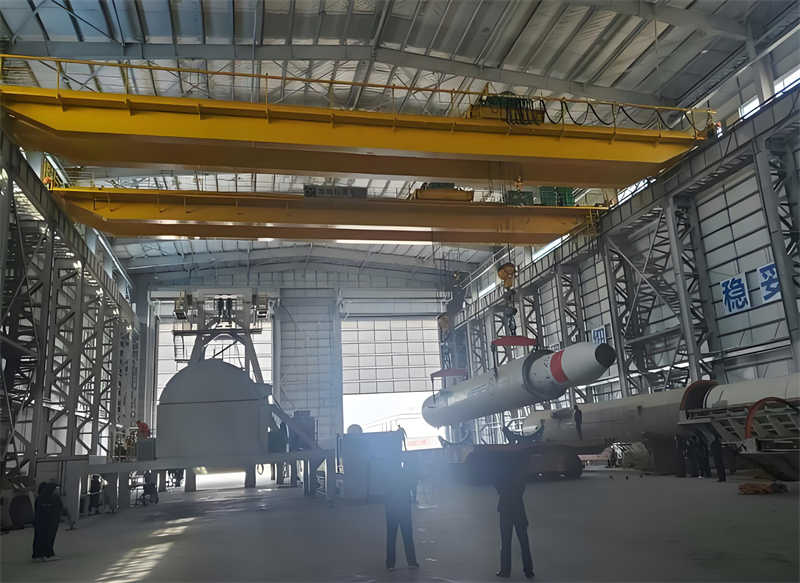
1. Hazard Analysis in Chemical Environments
Selecting an explosion-proof double-girder overhead crane for chemical plants requires a thorough understanding of the potential hazards present in these high-risk environments. Unlike standard industrial settings, chemical facilities deal with flammable substances, volatile gases, and corrosive materials, making safety and compliance the top priorities in crane selection.
1.1 Common Explosive Risks in Chemical Plants
1.1.1 Gas & Dust Explosion Risks
Chemical plants often process or store:
- Flammable gases (e.g., methane, hydrogen, ethylene)
- Combustible vapors (e.g., from solvents, alcohols, or petroleum products)
- Explosive dust (e.g., powdered chemicals, metal dust, or grain particles)
These substances are classified under ATEX/IECEx gas groups (T1-T6) and dust groups (III A/B/C), with T1-T4 being the most common in chemical applications.
1.1.2 Hazardous Area Classification (ATEX/IECEx Zones)
To assess explosion risks, facilities are divided into hazardous zones:
| Zone | Definition | Typical Crane Requirements |
|---|---|---|
| Zone 0 / 20 | Explosive atmosphere present continuously or for long periods | Rare for cranes; specialized equipment needed |
| Zone 1 / 21 | Explosive atmosphere likely to occur during normal operations | Mandatory explosion-proof (Ex d/e/n/p) cranes |
| Zone 2 / 22 | Explosive atmosphere unlikely but possible (short-term exposure) | Ex nA or enhanced safety cranes |
Most chemical plants require Zone 1 (gases) or Zone 21 (dust) compliant cranes, meaning all electrical and mechanical components must prevent ignition.
1.2 Environmental & Operational Hazards
1.2.1 Corrosive Chemical Exposure
- Acidic/alkaline spills can degrade crane components.
- Saltwater or chemical fumes accelerate corrosion.
- Solution: Stainless steel (304/316) or epoxy-coated structural parts.
1.2.2 Extreme Temperatures & Humidity
- High-temperature zones (e.g., near reactors) require heat-resistant motors (Class H insulation).
- Sub-zero environments (e.g., LNG facilities) need low-temperature lubricants & cold-proof materials.
- Humidity (>85%) demands IP66-rated electrical enclosures to prevent moisture ingress.
1.2.3 Mechanical Ignition Risks
- Friction sparks from steel wheels/brakes → Require non-sparking materials (aluminum bronze, stainless steel).
- Static electricity buildup → Grounding systems & conductive wheels are mandatory.
- Impact sparks (e.g., collisions) → Anti-collision sensors & buffered bumpers.
1.3 Safety Priorities for Crane Selection
To mitigate these risks, explosion-proof cranes must incorporate:
✔ Non-sparking mechanical components (wheels, gears, hooks)
✔ Flameproof/explosion-proof electrical systems (Ex d/e motors, sealed control panels)
✔ Corrosion-resistant construction (stainless steel or coated structural parts)
✔ Redundant safety systems (dual brakes, emergency stop, overload protection)
Next Step: With hazard analysis complete, the next section covers key technical specifications to match your plant’s requirements.
2. Key Technical Specifications for Selection
Choosing the right explosion-proof double-girder overhead crane requires careful evaluation of performance parameters, safety features, and environmental adaptability. Below is a detailed breakdown of the essential technical specifications to consider for chemical plant applications.
2.1 Core Performance Parameters
2.1.1 Lifting Capacity (Tonnage)
- Standard Range: 5–100 tons (typical for most chemical plants).
- Heavy-Duty Options: Up to 350 tons (for large reactors, storage tanks).
- Critical Factor: Always select a crane with 20% higher capacity than the max intended load for safety margins.
2.1.2 Span & Coverage
- Standard Span: ≤31.5m (adjustable based on workshop width).
- Customization:
- Wider spans (up to 50m) require reinforced girders.
- Underhung cranes for low-clearance facilities.
2.1.3 Lifting Height
- Standard: 12–22m (adjustable via drum hoist or chain hoist).
- Deep Lift Applications: Up to 50m (e.g., vertical reactor maintenance).
2.1.4 Duty Class (FEM/ISO Standards)
| Duty Class | Usage Frequency | Typical Applications |
|---|---|---|
| A4 (Medium Duty) | 150–300 cycles/day | Batch chemical processing |
| A5 (Heavy Duty) | 300–600 cycles/day | High-throughput refineries |
| A6/A7 (Very Heavy Duty) | 600+ cycles/day | Continuous production lines |
2.2 Explosion-Proof Component Specifications
2.2.1 Mechanical Safety Features
- Wheels & Trolleys:
- Non-sparking materials: Stainless steel, nickel-aluminum bronze.
- Anti-derailment guards: Prevent accidental disengagement.
- Braking Systems:
- Fail-safe dual brakes (mechanical + electromagnetic).
- Emergency stop (instantaneous braking under fault conditions).
2.2.2 Electrical & Control Safety
- Motors & Drives:
- Ex d (Flameproof) or Ex e (Increased Safety) motors.
- Variable Frequency Drives (VFDs) for smooth acceleration/deceleration.
- Control Systems:
- Explosion-proof pendant control (IP65) or radio remote (ATEX-certified).
- Overload protection (mechanical + electronic sensors).
2.2.3 Structural Integrity
- Corrosion Resistance:
- 316L stainless steel for highly corrosive areas.
- Epoxy-coated carbon steel for moderate environments.
- Sealed Wiring:
- Conduit-sealed cables to prevent gas/dust ingress.
2.3 Specialized Features for Chemical Plants
2.3.1 Smart Monitoring Systems
- Real-time load monitoring (digital display + remote logging).
- Anti-sway technology (for precise positioning of hazardous materials).
- Predictive maintenance alerts (vibration/temperature sensors).
2.3.2 Customized Attachments
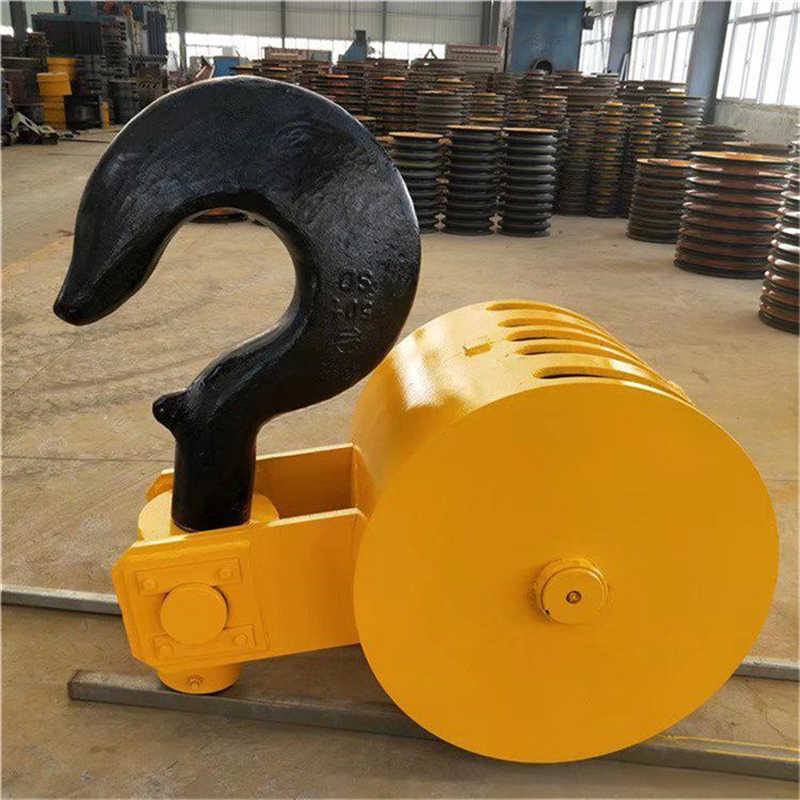
- Explosion-proof hooks (non-sparking alloy).
- Chemical-resistant slings (PTFE-coated wire ropes).
- Drip trays (for containing leaks during transport).
2.4 Compliance Checklist
Ensure the crane meets:
✔ ATEX 2014/34/EU (EU) / IECEx (Global) certifications.
✔ GB 3836.2-2010 (China) / OSHA 1910.179 (USA).
✔ Third-party testing reports (e.g., TÜV, DNV).
Dongqi’s Custom Solutions
We tailor cranes based on:
- Process layout (3D modeling for interference checks).
- Material compatibility (e.g., acid-resistant coatings).
- Future scalability (modular design for capacity upgrades).
3. Compliance & Certifications for Explosion-Proof Cranes in Chemical Plants
Selecting an ATEX/IECEx-compliant explosion-proof crane is not optional—it’s a legal and operational necessity for chemical facilities. This section details the mandatory certifications, testing standards, and regional requirements to ensure your crane meets global safety regulations.
3.1 International & Regional Certification Standards
3.1.1 ATEX Directive (EU) 2014/34/EU
- Applies To: All equipment operating in potentially explosive atmospheres (EU member states).
- Key Requirements:
- Equipment Categories:
- Category 1 (Zone 0/20) – Highest protection (rare for cranes).
- Category 2 (Zone 1/21) – Mandatory for most chemical plant cranes.
- Category 3 (Zone 2/22) – Lower-risk areas.
- Marking: CE + Ex logo with gas group (e.g., II 2G Ex db IIC T4).
3.1.2 IECEx System (Global)
- Recognized In: 50+ countries (Australia, Middle East, Asia).
- Certification Process:
- Rigorous testing of mechanical + electrical components.
- Annual audits to maintain validity.
- Labeling: IECEx Ex db IIC T4 Gb.
3.1.3 North American Standards (NEC/OSHA)
- NEC (NFPA 70) Hazardous Locations:
- Class I, Division 1 (Zone 1 equivalent).
- Class II, Division 2 (combustible dust).
- OSHA 1910.179: Overhead crane safety (load testing, inspections).
3.1.4 China Compulsory Certifications
- GB 3836.2-2010: Equivalent to IECEx, required for all Ex equipment.
- CCC (China Compulsory Certification): Mandatory for electrical components.
3.2 Crane-Specific Testing & Documentation
3.2.1 Third-Party Verification
- TÜV Rheinland/SGS/DNV: Independent explosion-proof validation.
- Test Reports Must Cover:
- Temperature rise tests (ensure no overheating).
- Impact/spark resistance (non-incendive verification).
- Sealing efficacy (IP66 for dust/gas ingress protection).
3.2.2 Required Documentation
- Declaration of Conformity (DoC) – Lists applied standards.
- Ex Certificate – Details gas groups, temperature class, protection type.
- Technical File – Design specs, test data, risk assessments.
3.3 Dongqi’s Compliance Assurance
3.3.1 Certifications Held
- Full ATEX/IECEx/GB 3836 compliance for all Ex cranes.
- ISO 9001:2015 (Quality Management) + ISO 45001 (Occupational Safety).
3.3.2 Project Support
- Hazardous Area Classification – Free zone assessment.
- Certification Procurement – Handles IECEx/ATEX paperwork for clients.
3.4 Non-Compliance Risks
⚠️ Legal Penalties: Fines up to 5% of annual turnover (EU ATEX violations).
⚠️ Insurance Voidance: Most policies exclude uncertified equipment.
⚠️ Operational Shutdowns: Authorities can halt production pending recertification.
Key Takeaways
✔ ATEX & IECEx are non-negotiable for Zone 1/21.
✔ NEC/OSHA governs North American projects.
✔ Third-party testing prevents costly retrofits.
4. Custom Solutions for Chemical Plants
4.1 Scenario-Based Configurations
- Small Workshops: 5–20 ton LH hoist cranes (compact design, radio remote control).
- Tank Farms: 50+ ton QD wire rope cranes (dual-hoist synchronization).
- High-Temperature Zones: Copper-steel conductor bars (heat-resistant up to 150°C).
4.2 Smart Safety Features
- Real-time load monitoring (wireless data transmission).
- Anti-sway systems (precision positioning for corrosive materials).
- Insulated operator cabins (for acid/alkali environments).
5. Total Cost of Ownership (TCO) Optimization
5.1 Upfront Cost Control
- Entry-level 5-ton crane: $15,600 (modular design for future upgrades).
- Energy-efficient motors: 18% lower power consumption vs. standard models.
5.2 Long-Term Savings
- Interchangeable parts: Reduced downtime.
- Remote diagnostics: 24/7 troubleshooting via Dongqi’s IoT platform.
6. Why Choose Dongqi Crane?
6.1 End-to-End Support
- Design Phase: Free 3D load simulation & plant layout analysis.
- Installation: On-site engineers or step-by-step digital manuals.
- Maintenance: Lifetime spare parts availability.
6.2 Global Case Studies
- Netherlands: 80-ton Ex d IIC T4 crane for a petrochemical refinery.
- Philippines: Custom 60-ton crane with anti-corrosion epoxy coating.
Conclusion
Dongqi Crane delivers ATEX/IECEx-certified, modular, and smart-ready overhead cranes for chemical plants—ensuring zero sparks, zero compromises.
📞 Contact our engineers today for a FREE hazard zone assessment.
