
Crane Motor Protection Level Selection Guide for Humid Environments in Paper Mills: Dongqi Crane Professional Solutions
Environmental Characteristics of Paper Mills and Challenges for Cranes
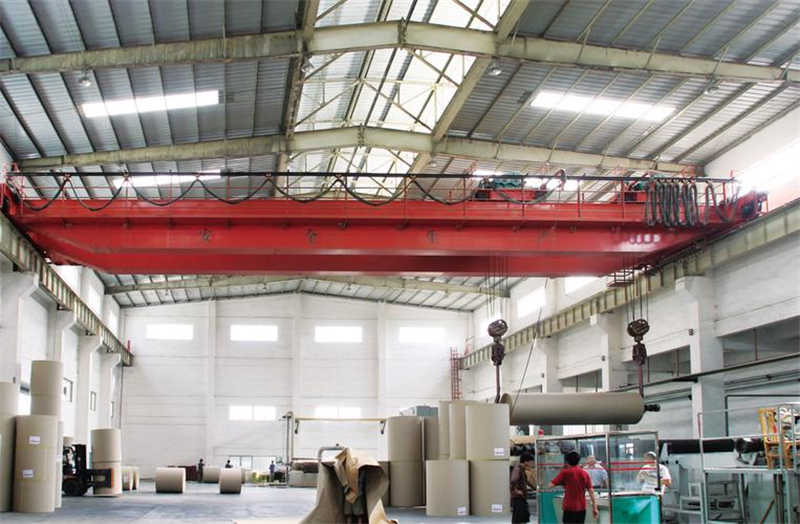
Paper mill production environments impose extremely demanding requirements on crane equipment, particularly in key areas such as the wet section, dry section, and rewinding sections. These areas typically feature high-temperature and high-humidity extreme conditions, with ambient temperatures reaching 40-45°C and relative humidity levels as high as 90% or more, approaching saturation (100% RH). In steam-filled operating conditions, equipment surface temperatures can vary between 30°C and 100°C, creating persistent condensation risks. Such high-humidity environments accelerate motor insulation aging, cause metal component corrosion, and may lead to electrical short circuits and other safety hazards.
Beyond humid conditions, paper mills contain various corrosive substances. Acidic gases, chloride ions, sulfides, and other corrosive agents generated during pulp and paper production can erode motor housings and internal components. Particularly in the dry section of paper machines, airborne paper dust particles are hygroscopic and conductive. Once they enter motor interiors, they can cause winding short circuits, bearing seizures, and other failures. Additionally, large equipment in paper mills (such as continuously operating paper machines) generates strong electromagnetic interference, potentially affecting the stable operation of crane control systems.
In terms of functional requirements, paper mill cranes (such as parent roll handling cranes) need to perform high-precision lifting operations. Paper roll handling demands cranes with exceptional smoothness and positioning accuracy at low speeds, avoiding damage to roll surfaces while ensuring precise alignment with rewinding machines, slitters, and other equipment. Dry-end cranes typically employ double or triple trolley designs, equipped with specialized lifting tools below hooks for precision operations like roll handling and roller replacement. This complex operation mode requires drive motors with precise speed regulation capabilities and reliable braking performance, while maintaining long-term stable operation in harsh environments.
In-Depth Interpretation of IP Protection Level System
2.1 IP Code Meaning and Rating Standards
The IP protection rating system is an international standard (IEC 60529) established by the International Electrotechnical Commission (IEC) to evaluate electrical equipment enclosure protection against solid foreign objects and liquid ingress. The code consists of the letters “IP” followed by two characteristic digits:
- First Digit (Solid Protection): Indicates protection against foreign solid particles (e.g., dust, tools, body parts), ranging from 0 (no protection) to 6 (completely dust-tight). In paper mill environments with abundant paper dust and floating fibers, crane motors require at least IP5X dust protection (preventing harmful dust accumulation), ideally reaching IP6X level (totally dust-tight, no dust ingress).
- Second Digit (Liquid Protection): Indicates protection against liquid penetration, ranging from 0 (no protection) to 9K (protection against high-temperature, high-pressure water jets). For high-humidity paper mill environments, crane motors must meet at least IPX4 protection (splash-proof), but for washdown cleaning and condensation environments, IPX5 or higher is recommended. Especially for cranes near paper machine wet sections, motors with IPX6 or higher ratings should be selected.
Table: Recommended IP Protection Levels for Paper Mill Crane Motors
| Environmental Zone | Minimum IP Requirement | Recommended IP Rating | Liquid Protection Capability |
|---|---|---|---|
| Dry Storage Area | IP54 | IP55 | Protected against water jets (any direction) |
| Paper Machine Dry Section | IP55 | IP56 | Protected against powerful water jets |
| Paper Machine Wet Section | IP56 | IP65/IP66 | Protected against powerful water jets/watertight |
| High-Pressure Cleaning Area | IP66 | IP67/IP69K | Protected against immersion/high-temperature high-pressure washdown |
2.2 Critical Protection Level Analysis for Paper Mill Cranes
- IP55 (Dust and Water Jet Protected): Allows limited dust ingress (not fully dust-tight) but prevents low-pressure water jets from any direction. Suitable for light-duty cranes in relatively dry areas (e.g., finished product warehouses) of paper mills, though long-term use in high-humidity environments still carries risks.
- IP65 (Fully Dust-tight and Water Jet Protected): Provides complete dust protection and resists low-pressure water jets from any direction. This rating applies to cranes in paper machine dry sections, effectively blocking paper dust and fibers from entering motors while resisting environmental moisture and splashes.
- IP66 (Fully Dust-tight and Powerful Water Jet Protected): Offers complete dust protection and resists powerful water jets (e.g., high-pressure washdown) from any direction. Particularly suitable for cranes in paper machine wet sections, ensuring safe motor operation even in high-temperature, high-humidity and regular cleaning environments.
- IP67 (Fully Dust-tight and Short-term Immersion Protected): Builds on IP66 by adding protection against temporary immersion (1m depth for 30 minutes). Appropriate for cranes in potential water accumulation areas, such as paper mill pits or poorly drained zones.
- IP69K (High-Temperature High-Pressure Washdown Protected): This highest protection level is fully dust-tight and withstands close-range (10-15cm) washdown with 80°C water at 80-100bar pressure. Especially suitable for areas requiring strict hygiene standards (e.g., specialty paper production) or paper mills with regular high-pressure cleaning.
Key Technical Requirements for Motor Selection
3.1 Insulation System and Heat Resistance Class
In paper mill humid environments, motor insulation material selection directly impacts equipment service life and reliability. We recommend Class F or H insulation systems, which maintain stable electrical and mechanical properties in high-temperature, high-humidity conditions. Class F insulation permits 155°C temperature rise, while Class H can operate long-term at 180°C, providing ample thermal margin that extends service life in humid environments.
For variable frequency drive motors, harmonic heating effects cause additional temperature rise, requiring dedicated inverter-duty motors with independent forced cooling systems. Inverter-duty motor insulation systems need reinforced winding insulation to withstand high-frequency pulse voltage impacts. We advise embedding PTC thermistors or PT100 temperature sensors in stator windings for real-time temperature monitoring and protection. When temperatures approach safety thresholds, control systems automatically reduce load or shut down, preventing insulation failure from overheating.
3.2 Materials and Surface Protection Technologies
- Housing Material: Prioritize gray cast iron housings (e.g., SIMOTICS SD series heavy-duty motors), whose dense structure offers excellent corrosion resistance. Cast iron surfaces should receive special treatments like epoxy resin coatings or C5-M grade (marine-grade) anti-corrosion coating systems to resist corrosive gases in paper mills.
- Bearing Seals: Employ triple-protection bearing systems combining labyrinth seals, V-ring seals, and high-quality grease seals. This design effectively prevents moisture and corrosive media from entering bearing chambers, significantly extending bearing life in humid environments.
- Surface Treatment: Exposed metal components should undergo multi-layer protection, including phosphating primer, epoxy intermediate coat, and polyurethane topcoat. For high-corrosion areas, use stainless steel fasteners and chrome plating to prevent rust-induced seizure.
- Terminal Box Sealing: Use double-sealed terminal boxes filled with waterproof gel, completely isolating power terminals from external moisture. Terminal boxes should match the motor’s IP rating, being the most vulnerable electrical connection point.
3.3 Thermal Management and Cooling Design
In paper mill high-temperature environments, motor cooling capacity directly affects output power and service life. Heavy-duty crane motors should feature optimized cooling fin designs that increase surface area and optimize airflow channels to enhance natural convection cooling. For frequently started/stopped or low-speed crane motors, we recommend independent forced-air cooling systems (IC416 cooling), maintaining effective cooling even at low speeds.
For variable frequency drive motors, pay special attention to low-speed cooling issues. Since self-cooling fans provide insufficient airflow at low speeds, equip separately powered cooling fans to ensure adequate airflow at all crane operating speeds. Cooling fans should match the main motor’s protection rating (minimum IP55) and include dust filters to prevent paper dust from blocking air channels.
Table: Key Technical Parameters for Paper Mill Crane Motor Selection
| Technical Aspect | Basic Requirement | Recommended Configuration | Extreme Environment Enhancement |
|---|---|---|---|
| Insulation Class | Class F (155°C) | Class H (180°C) | Class H + real-time temp monitoring |
| Enclosure Protection | IP55 | IP56/IP66 | IP67/IP69K |
| Bearing System | Double-sealed bearings | Labyrinth + lip seals | Triple seals + ceramic coating |
| Surface Treatment | Epoxy primer + polyurethane topcoat | Dual epoxy + fluorocarbon topcoat | C5-M anti-corrosion system |
| Cooling Method | Self-ventilated (IC411) | Independent forced air (IC416) | Forced air + winding temp monitoring |
| Operating Temperature | -20℃~+40℃ | -25℃~+60℃ | -50℃~+60℃ |
Comprehensive Crane System Configuration Recommendations
4.1 Hoisting Mechanism and Drive System
Paper mill crane hoisting mechanisms should employ full variable frequency speed control systems for smooth stepless speed regulation, meeting paper roll handling’s precise positioning and gentle operation requirements. We recommend dual-speed or multi-speed configurations—using high speed for unloaded efficiency and low speed for loaded safety. For large parent roll handling cranes (e.g., double or triple trolley systems), each hoisting mechanism requires synchronous control to prevent roll deformation or damage from unsynchronized movement.
Connect motors and reducers via direct flange coupling to minimize transmission components, improving system rigidity and precision. Reducers should use hardened gears with grinding processes to ensure durability under frequent start-stop conditions. To prevent reducer oil leaks contaminating paper equipment below, install stainless steel drip pans under reducers and regularly inspect seals.
Braking systems should adopt dual-brake redundancy, with each hoisting motor equipped with two independent brakes (main brake and safety brake) ensuring safe stopping even if one fails. Brakes should be IP65-rated enclosed types with moisture-resistant non-asbestos friction materials, preventing performance degradation or failure in humid environments.
4.2 Electrical Control System Protection
Paper mill crane electrical control systems face triple challenges—humidity, corrosion, and EMI—requiring comprehensive protection measures:
- Control Panel Protection: Electrical cabinets should achieve IP55 or higher, using stainless steel or specially treated surfaces. Equip cabinets with industrial AC units maintaining internal temperatures 5-8°C above ambient to prevent condensation. Set AC temperature above 26°C, with humidity controllers and heaters activating anti-condensation heating during shutdowns.
- Harmonic and EMC Protection: Install three-phase input reactors on inverter inputs, and dv/dt filters or sine-wave filters on outputs to suppress harmonic interference. Power all sensitive electronics (PLCs, encoders, etc.) through isolation transformers, using double-shielded cables with proper grounding.
- Grounding System: Establish independent grounding buses ensuring reliable grounding for all electrical equipment (motors, control panels, limit switches, etc.). For crane trolleys with unreliable rail contact, add dedicated grounding collectors or include ground conductors in trolley cables.
- Operator Interface: Prefer industrial wireless remote controls (minimum IP65) over cab operation in high-temperature, high-humidity environments. Remotes should feature multi-speed control, emergency stops, and system status indicators.
4.3 Structural Protection and Maintenance Design
Crane metal structures should use heavy-duty coating systems combining blasting (Sa2.5 grade), epoxy zinc-rich primer (75μm), epoxy mica iron intermediate coat (100μm), and polyurethane topcoat (50μm), with total dry film thickness ≥225μm. Increase coating thickness or apply sealant at vulnerable areas like welds and edges.
Select galvanized or stainless steel wire ropes for enhanced corrosion resistance in humid environments. Avoid excessive lubricant application that attracts dust abrasives, instead using specialized wire rope lubricants that protect without dust accumulation.
Avoid standard polyurethane buffers that harden and brittle in humid conditions. Choose humidity-resistant polyurethane buffers or hydraulic buffers, regularly inspecting their performance.
Dongqi Crane Solutions and Technical Advantages
5.1 Corporate Qualifications and Technical Capabilities
Dongqi Crane (东起机械), a leading Chinese crane manufacturer, possesses extensive industry experience and strong R&D capabilities. Certified to GJB9001C, ISO9001, and ISO45001 standards, the company holds honors including “Specialized and Sophisticated SME”, “National Intellectual Property Advantage Enterprise”, and “High-Tech Enterprise”. With 240,000m² facilities and 560+ employees (including 80+ technical staff and 20+ engineers), annual production exceeds 10,000 cranes.
Innovatively, Dongqi Crane developed core technologies like “Embedded Planetary Gear Mechanism” and “Embedded Planetary Speed-Regulated Crane Wheel”, earning multiple national patents and provincial scientific achievements. Partnering with universities (e.g., Taiyuan University of Science and Technology) and international firms (e.g., Germany’s SZW, NORD, SIEMENS; France’s Schneider Electric), Dongqi maintains cutting-edge technology.
5.2 Paper Mill Dedicated Product Lines
Dongqi Crane offers specialized crane solutions for paper industry, each optimized for paper mill environments:
- Low-Headroom Single-Girder Cranes (LDC): Compact design maximizes building height utilization, providing greater lifting height. Equipped with IP66-rated humidity-resistant motors and corrosion-proof electrical components for medium-light paper mill duty.
- Double-Trolley Paper Roll Cranes: Designed for parent roll handling, featuring dual hoists for precise roll rotation and positioning. Main hoist uses heavy-duty A6-class design for frequent operation, with specialized roll grippers and anti-sway control.
- Explosion-Proof Single-Girder Cranes (LB): Suitable for paper mills with explosive atmospheres, achieving ExdIIBT4 or higher ratings. All electrical components (motors, controls, limit switches) meet explosion-proof requirements for hazardous areas.
- Metallurgical Electric Single-Girder Cranes (LDY): Rated A6 duty class, operating in ≤60°C and ≤85% RH environments. Motors and controls feature heat insulation layers for high-temperature zones near paper equipment.
5.3 Global Service and Technical Support
Dongqi Crane established a comprehensive global service network, completing crane projects in 108 countries with full lifecycle services from design to maintenance. The company provides 24/7 technical support, ensuring immediate professional assistance.
For project implementation, Dongqi offers custom design services tailored to each paper mill’s environmental and process requirements. Examples include customized gantry cranes for Philippines clients and heavy-duty double-girder solutions for Mongolia.
After-sales services include remote guidance, field commissioning, and lifetime maintenance. Dongqi supplies genuine spare parts to maintain optimal performance throughout equipment lifecycles. For critical paper mill equipment, Dongqi provides scheduled preventive maintenance to minimize unplanned downtime and improve overall utilization.
Conclusions and Implementation Recommendations
Given paper mills’ high-temperature, high-humidity, and corrosive challenges, crane motor selection should adhere to three principles: high protection rating, robust insulation system, and superior cooling design. Prioritize IP66+ motors with minimum Class H insulation and independent forced cooling. For extreme environments like paper machine wet sections, choose IP67/IP69K heavy-duty motors ensuring reliability under high-pressure washdown and saturated humidity.
Implementation should follow phased strategies:
- Environmental Assessment Phase: Document temperature, humidity, and corrosive concentrations by area, mapping environmental risks. Focus on core high-humidity zones (e.g., wet sections), corrosion-prone areas (chemical processing), and high-pressure cleaning zones.
- Graded Selection Phase: Implement differentiated motor selection based on environmental assessments:
- Dry storage: IP55 + Class F insulation
- Paper machine dry section: IP56 + Class F insulation
- Paper machine wet section: IP66/IP67 + Class H insulation
- High-pressure cleaning: IP69K + Class H insulation
- System Integration Phase: Ensure matched protection levels across motors, inverters, and brakes, avoiding system weak links. Emphasize electrical cabinet climate control and full-system EMC protection.
- Maintenance Monitoring Phase: Establish regular testing including insulation resistance (monthly), bearing condition (quarterly), and seal inspections (semiannually). Integrate temperature monitoring for predictive maintenance.
With technical expertise in specialty environment cranes (e.g., high-humidity solutions for Southeast Asian paper mills), Dongqi Crane provides professional environmental assessments, customized product selection, and full lifecycle technical services. The company commits to end-to-end support from design consultation to commissioning, ensuring paper mill crane systems operate safely, reliably, and efficiently in humid conditions.
