
Logistics warehouse upgrade: comprehensive solution of single beam crane system replacing manual forklift
Introduction: The wave of automated transformation in logistics and warehousing
Driven by the continuous optimization of the global supply chain and the explosive growth of e-commerce, the logistics and warehousing industry is facing unprecedented efficiency challenges. The traditional manual forklift operation mode is increasingly unable to cope with the needs of modern high-density warehousing and high-frequency in and out of the warehouse. With the rising land costs and labor costs, more and more warehousing operators are beginning to seek automated material handling solutions. In this wave of transformation, the single-beam crane system has become an ideal choice to replace manual forklifts with its advantages such as flexibility and efficiency, high space utilization and fast return on investment.
As a key equipment for logistics and warehousing upgrades, single-beam cranes are redefining the operation mode of modern warehouses. This article will explore in depth how single-beam cranes can systematically solve the operation bottleneck of manual forklifts, analyze their technical advantages and implementation paths, and provide a comprehensive upgrade solution reference for warehousing and logistics managers.
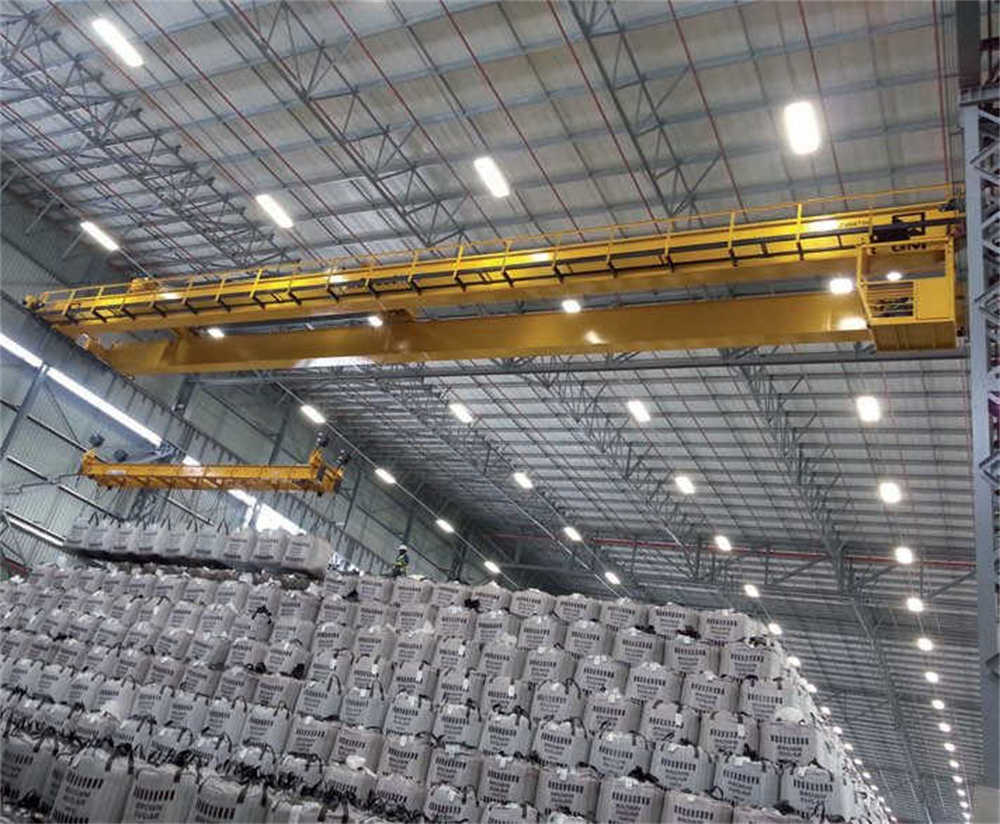
Challenges faced by logistics warehouses and limitations of manual forklifts
1.1 Efficiency bottlenecks and rising operating costs
Modern logistics warehouses are facing multiple efficiency challenges, and manual forklift operation methods can no longer meet current needs:
- Operation efficiency ceiling: Traditional manual forklifts are efficient in horizontal handling, but have natural limitations in vertical handling. Operators need to complete multiple action links such as finding goods, positioning, lifting, and transportation, and the average operation time is as long as 8-12 minutes per trip. In a high-frequency operation environment, the efficiency reduction caused by operator fatigue can reach more than 30%.
- Low space utilization: Manual forklift operations require spacious channel space (usually 3-3.5 meters of channel width), resulting in less than 60% utilization of the actual storage area of the warehouse. In today’s high land costs, this waste of space directly translates into rising storage costs.
- Labor costs continue to rise: A medium-sized warehouse usually needs to be equipped with 8-12 forklift operators, plus indirect costs such as training, insurance, and management. Labor costs have accounted for more than 45% of the total cost of warehouse operations. What is more serious is that the shortage of skilled operators is becoming increasingly prominent, which directly affects the stability of warehouse operations.
1.2 Safety and precision challenges
Manual forklift operations have insurmountable defects in terms of safety and operational precision:
- Safety hazards remain high: According to industry statistics, more than 65% of warehouse accidents are related to forklift operations, including cargo falling, collision accidents and operator injuries. Especially when operating high-rise shelves (more than 6 meters), safety risks increase exponentially.
- Operational errors are costly: When manual forklifts operate in narrow aisles or store at high positions, the positioning error rate can reach 5%-8%, resulting in damage to goods, damage to shelves and even safety accidents. The loss rate of high-end products such as electronic products and precision instruments during transportation is particularly prominent.
- Management and supervision blind spots: The operation process of manual forklifts is difficult to monitor in real time, and there are pain points such as difficulty in quantifying operating efficiency, unreasonable operation routes, and difficulty in managing idleness, resulting in a loss of 15%-25% in overall operating efficiency.
Table: Comparison of operating efficiency between manual forklift and single beam crane
| Target | Manual forklift | Single beam crane | Improvement |
|---|---|---|---|
| Average time per operation | 8-12 minutes | 3-5 minutes | 60%-70% |
| Channel width requirements | 3-3.5m | No dedicated channel | 100% space saving |
| Vertical handling efficiency | Limited (≤8 meters) | High (up to 30 meters) | More than 300% |
| Positioning accuracy error | 5-8cm | 0.5-1cm | 80%-90% improvement |
| Unit energy cost | $1.2-1.5/ton | $0.3-0.5/ton | 60%-75% reduction |
Technical advantages and alternatives of single-beam cranes
2.1 Space reconstruction and vertical utilization revolution
The single-beam crane system fundamentally changes the space utilization mode of warehouses and creatively improves storage capacity:
- Low clearance design breaks through height restrictions: European low clearance single-beam cranes adopt a compact design, embedding the hoist trolley inside the main beam, saving 30%-40% of vertical space compared to traditional cranes. This feature allows 1-2 layers of storage shelves to be added without changing the height of the existing warehouse, increasing storage capacity by 25%-35%. This is especially critical for the renovation of old warehouses with limited height.
- Zero channel occupation releases storage space: The single-beam crane system operates in the top space of the warehouse, and does not require ground channels at all, releasing a large amount of storage area. Practical application has proved that this solution can increase the warehouse plane utilization rate from 60% of traditional forklift warehouses to more than 85%, which is equivalent to increasing storage capacity by nearly 30% under the same floor area.
- Three-dimensional space operation flexibility: The single-beam crane system can move freely in three dimensions of X/Y/Z, without being restricted by ground obstacles. With special lifting equipment (such as vacuum suction cups, C-shaped hooks, etc.), it can efficiently handle various special-shaped goods, solving the pain point that manual forklifts are difficult to carry irregular goods.
2.2 Intelligent control and precise operation system
Modern single-beam cranes have developed into highly intelligent material handling systems:
- Precise positioning and anti-sway control: The advanced variable frequency drive system combined with intelligent anti-sway technology (Anti-Sway) can achieve millimeter-level precise positioning of goods. In the handling of precision instruments and electronic products, the damage rate of goods can be reduced to less than 0.1%, far exceeding the operating accuracy of manual forklifts.
- Seamless docking with warehouse management system: Single-beam cranes can integrate RFID readers, barcode scanners and other equipment, and interact with WMS (warehouse management system) in real-time data. Automatic addressing and positioning, real-time inventory updates and intelligent task scheduling are achieved, greatly reducing manual intervention.
- Flexible switching of multiple operation modes: Supports three modes: ground remote control, cab operation and fully automatic operation, which can be flexibly selected according to the complexity of the operation. In routine handling tasks, an operator can monitor and manage 3-5 cranes at the same time, significantly improving human resource efficiency.
2.3 Cost-effectiveness and sustainable advantages
Single-beam crane systems offer significant advantages in terms of operating costs and sustainability:
- Cost advantage throughout the life cycle: Although the initial investment is higher than that of traditional forklifts, the service life of single-beam cranes is as long as 25-30 years, which is much longer than the 8-10 years of forklifts. From a 5-year operating cycle, the total cost can be reduced by 40%-50%; from a 10-year cycle, the reduction can reach more than 60%.
- Revolutionary improvement in energy efficiency: The unit energy consumption of electric single-beam cranes is only 1/3-1/4 of that of forklifts. Based on the scale of 10 equipment in a medium-sized warehouse, the annual electricity consumption cost can be saved by $35,000-$50,000. In the context of the “dual carbon” policy, this advantage is more strategically valuable.
- Structural reduction in maintenance costs: Single-beam cranes adopt modular design and maintenance-free three-in-one drive system (hardened gear reducer, variable frequency brake motor), and daily maintenance requirements are extremely low. Compared with the monthly maintenance requirements of forklifts and frequent tire and hydraulic system replacement, maintenance costs can be reduced by 60%-70%.
Table: Main types and applicable scenarios of single beam cranes
| Type | Applicable scenarios | Maximum lifting capacity | Features and advantages | Payback period |
|---|---|---|---|---|
| Low headroom single beam | Height restricted warehouse renovation | 20 ton | Lifting height increased by 30% | 1.5-2 years |
| Under-hung | Column-free roof load-bearing warehouse | 10 ton | No support structure required | 2-2.5 years |
| FEM/DIN Standards | High-precision working environment | 20 ton | Stepless speed regulation, ultra-quiet | 2-3 years |
| Offset trolley type | Narrow Aisle Warehouse | 16 ton | Minimize lateral space | 1.8-2.3 years |
| Electric hoist | Light cargo warehouse | 5 ton | Cost-effective | 1-1.5 years |
Implementation path for replacing manual forklifts
3.1 Systematic alternatives and phased implementation
Replacing manual forklifts with single-beam cranes is a systematic project that requires scientific planning and phased implementation:
3.1.1 Evaluation and planning phase
- Precise three-dimensional spatial mapping: Use 3D laser scanning technology to conduct all-round mapping of the warehouse, recording key data including roof bearing points, column grid structure, existing shelf height, etc. Focus on identifying the location and load-bearing capacity of available lifting points to provide a basis for the layout of crane tracks.
- In-depth analysis of operation processes: Collect existing forklift operation data through IoT sensors, analyze operation hot spots, high-frequency paths and peak loads, and provide a scientific basis for the number of cranes and workstation configuration. Pay special attention to bottlenecks and safety hazards.
- Comprehensive decision-making on equipment selection: Based on business needs (cargo characteristics, turnover rate, storage density) and building conditions (clear height, column spacing, load-bearing), select the most suitable single-beam crane type:
- For height-restricted warehouses (clear height <8m): low clearance design is a must
- For large spaces without columns: underslung single-beam cranes can avoid adding new support structures
- High requirements for precision handling: FEM standard cranes are equipped with anti-sway systems
3.1.2 System Integration Phase
- Seamless connection of intelligent warehousing system: Crane control system is deeply integrated with WMS to realize automatic task allocation, optimal path planning and real-time inventory update. Key interfaces include:
- Data interface of warehouse management system
- Automatic identification (RFID/barcode) system
- Order data of enterprise ERP system
- Innovation of human-machine collaborative operation mode: Design semi-automatic operation process to realize human-machine collaboration in the transition period:
- Crane is responsible for high-level storage and horizontal handling
- Manual operation retains special cargo handling and quality inspection links
- Develop intuitive human-machine interface to reduce the operation learning curve
3.1.3 Personnel transformation stage
- Skill improvement system training: Develop a step-by-step training system, including:
- Basic operation certification (1-2 weeks)
- Specialized training for emergency response to faults
- Basic system maintenance courses
- Quarterly skill review mechanism
- Job function redesign: Transform forklift operators into equipment management specialists, with responsibilities expanded to:
- Multi-machine monitoring
- Exception handling
- Preventive maintenance inspection
- Operation data analysis
Table: Roadmap for the transformation from manual forklift to single beam crane
| Stage | Core Mission | Duration | Key Performance Indicators | Risk Control |
|---|---|---|---|---|
| Prepare for Assessment | Demand analysis and solution design | 4-8 weeks | Data collection completeness ≥ 95% | Introducing third-party technical audits |
| Pilot implementation | Local area transformation, system testing | 6-10 weeks | Operation efficiency increased by ≥40% | Keep a backup forklift plan |
| Comprehensive promotion | Equipment installation, system integration | 8-12 weeks | Installation progress compliance rate is 90% | Gradually switch by region |
| Optimization and improvement | Personnel training and process optimization | Ongoing | Human-machine collaboration efficiency ≥85% | Establish a continuous improvement mechanism |
Industry application cases and benefit analysis
4.1 E-commerce logistics center upgrade case
XYZ e-commerce logistics center completed a comprehensive upgrade of the single-beam crane system in 2024 and achieved significant benefits:
- Integration of automated picking system: The center introduced 10 low-headroom European single-beam cranes, which are seamlessly integrated with the automated picking system. Each crane is equipped with a barcode scanning system and a vacuum suction cup sling to achieve fully automated operations from receiving to storage. After receiving the WMS instruction, the system automatically identifies the cargo information and accurately transports it to the designated storage location without manual intervention throughout the process.
- Revolutionary improvement in space utilization: Through the single-beam crane system, the height of the warehouse shelves has been increased from the original 6.5 meters to 10.2 meters, adding two layers of storage space. At the same time, the traditional forklift channel has been eliminated, increasing the flat storage density of the warehouse by 35%. Without expanding the warehouse area, the total storage capacity has increased from 32,000 standard pallet positions to 48,000 positions.
- Significant comprehensive benefits: After the project was implemented, the order processing capacity increased from an average of 18,000 orders per day to 32,000 orders, with a growth rate of 78%. Labor costs were reduced by 45%, including an 80% reduction in high-level operators. The cargo damage rate dropped from 1.2% to 0.15%, saving approximately $420,000 in cargo damage costs annually. The payback period was only 22 months.
4.2 Application in auto parts warehouses
An auto parts supplier uses a single-beam crane system to solve the problem of heavy parts handling:
- Efficient handling of heavy parts: For heavy parts (0.5-8 tons) such as engines and gearboxes, FEM standard single-beam cranes are configured, equipped with special C-hook slings and precise positioning systems. The single handling time is shortened from 15 minutes for manual forklifts to 4 minutes, and the efficiency is improved by 73%.
- Safety transformation of manual operations: The original forklift operation team is transformed into crane system administrators. After 200 hours of professional training, they master multi-machine monitoring and exception handling skills. The operation accident rate has dropped by 90%, and employee satisfaction has increased by 35%.
- Lean logistics and JIT production: The crane system and the production planning system are linked in real time to achieve accurate just-in-time delivery (JIT). The on-time rate of parts delivery has increased from 85% to 99.5%, the production line downtime has been reduced by 70%, and the work-in-process inventory has been reduced by 45%.
Implementation recommendations and supplier selection guide
5.1 Scientific selection and configuration optimization
The implementation of single-beam crane systems requires scientific selection methods and configuration strategies:
- Accurate capacity and span planning:
- Determine the number of cranes based on peak operation demand rather than average demand
- Reserve 20%-30% capacity margin considering business growth in the next 3-5 years
- Span design needs to be combined with the building column grid structure, and non-standard customized solutions should be used to optimize space utilization
- Smart function strategic configuration:
- Basic configuration: frequency conversion control + anti-sway system + safety monitoring
- Advanced options: automatic positioning + barcode recognition + remote diagnosis
- Future upgrade space: reserve AI optimization interface and digital twin system access point
- Professional factory inspection and technical evaluation:
- Audit the supplier’s factory production process (welding robot application, testing equipment)
- Investigate existing customer cases, especially similar working conditions
- Verify design qualifications and industry certifications (FEM/DIN standards, ISO certification)
5.2 System Integration and Process Reengineering
The efficient operation of the single-beam crane system requires deep integration with the warehouse management system:
- Key points of deep docking with WMS:
- Task instruction automatic transmission interface
- Real-time synchronization mechanism for inventory status
- Automatic feedback process for abnormal operation
- Performance data collection and analysis module
- Operation process reconstruction strategy:
- Establish cargo unitization standards (size, weight, lifting point)
- Design dual-zone operation mode (crane zone + manual processing zone)
- Establish priority rules to handle task conflicts
5.3 Comprehensive evaluation of supplier selection
Selecting a single-beam crane supplier requires a comprehensive evaluation of its technical strength and service capabilities:
- Full life cycle service capabilities:
- Design phase: Provide 3D simulation solutions and dynamic load analysis
- Implementation phase: Modular pre-assembly to reduce on-site construction time
- Operation and maintenance phase: Remote diagnosis system + rapid response mechanism
- Industry experience and customization capabilities:
- Investigate the experience of similar warehouse projects
- Evaluate non-standard design capabilities (special-shaped warehouse transformation case)
- Verify intelligent system integration implementation capabilities
Conclusion: The strategic value of intelligent upgrade
The replacement of manual forklifts with single-beam crane systems is not only an upgrade of equipment, but also a revolutionary change in logistics and warehousing operation mode. Against the backdrop of continued growth in e-commerce and increasingly fierce competition in supply chain efficiency, this transformation has strategic significance:
- Short-term benefits: Solve the current pain points of labor shortage, operation safety and insufficient space, and directly reduce operating costs;
- Medium-term value: Improve the response speed and reliability of the supply chain through automation and digitalization, and enhance corporate competitiveness;
- Long-term strategy: Build intelligent logistics infrastructure to lay the foundation for the in-depth application of artificial intelligence, big data analysis and Internet of Things technologies.
Dongqi Crane recommends that warehouse operators adopt a phased implementation strategy: start with the most prominent pain points in the pilot area, verify the technical solution and investment return model, and then gradually promote it to the entire warehouse. During the implementation process, special attention should be paid to personnel transformation training and operation process reengineering to ensure that the technological advantages are transformed into actual operational benefits.
Revelation of warehouse transformation: When inspecting the case of upgrading an auto parts warehouse, project manager Li Gong pointed out: “The most surprising benefit is not the cost savings, but the fundamental change in the operating model. The single-beam crane system allows us to rethink what is possible – now we can handle overweight cargo that we dared not accept before, achieve inventory accuracy that was not possible before, and provide delivery speed that could not be promised before.”
The intelligent upgrade of logistics warehouses is no longer a choice, but a necessity. As the core equipment of this transformation, single-beam cranes are helping leading companies build competitive advantages for the future. How to plan your upgrade path? Dongqi Crane’s professional team is ready to provide you with customized solutions.
