
Heavy Plate Handling Solutions for Stamping Plants: Single Girder Bridge Crane vs. Jib Crane
1. Introduction
In stamping plants, the efficient handling of heavy steel plates is crucial for maintaining productivity, ensuring worker safety, and minimizing downtime. Manual lifting of thick metal sheets is impractical and hazardous, making industrial cranes an essential investment. Two of the most common solutions for plate handling are single girder bridge cranes and jib cranes, each offering distinct advantages depending on the application.
Dongqi Crane, a leading manufacturer of material handling equipment, provides reliable and cost-effective lifting solutions tailored for stamping operations. This article compares single girder bridge cranes and jib cranes, helping you determine the best option for your facility.
2. Understanding the Needs of Stamping Plants
Stamping plants process large, heavy steel plates that require precise positioning for cutting, bending, and punching. Key challenges include:
- Weight & Size: Plates can weigh several tons, requiring robust lifting equipment.
- Safety Concerns: Improper handling can lead to accidents, damaged materials, or machine downtime.
- Workspace Constraints: Limited floor space may affect crane selection.
- Efficiency Needs: Fast, repetitive lifting cycles improve throughput.
Choosing the right crane depends on load capacity, workspace layout, and workflow demands.
3. Single Girder Bridge Crane for Heavy Plate Handling
Key Features
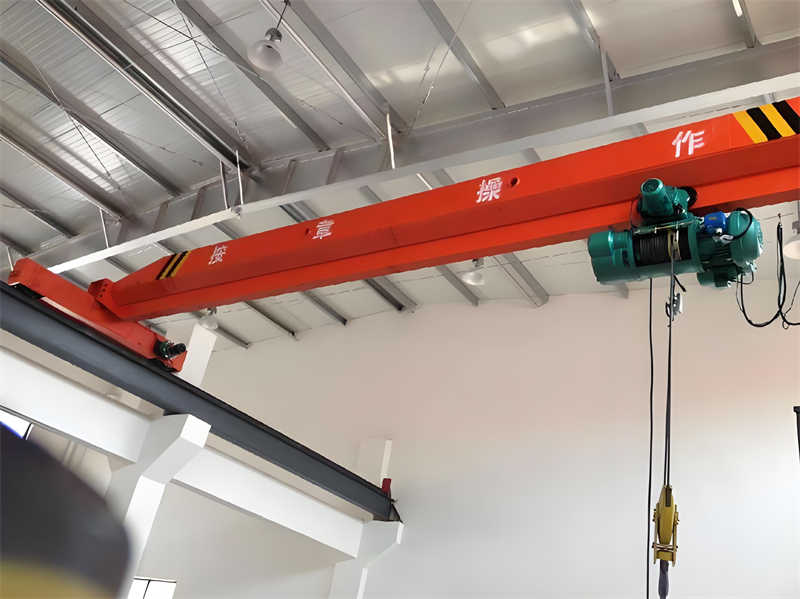
- Load Capacity: 1-20 tons (suitable for most stamping applications).
- Span Coverage: Adaptable to wide workshops (up to 30+ meters).
- Movement: Smooth travel along runway beams with electric hoist control.
- Customization Options: Can be equipped with remote control, anti-sway systems, and automation.
Advantages
✔ High Efficiency – Ideal for repetitive lifting across long distances.
✔ Cost-Effective – More affordable than double girder cranes while maintaining strength.
✔ Workshop-Wide Coverage – Can service multiple workstations in large facilities.
✔ Durability – Designed for heavy-duty cycles with minimal maintenance.
Best Applications
- Large stamping plants with high-volume plate transfers.
- Facilities requiring movement of plates across long spans.
- Operations needing precise, controlled lifting for machining processes.
4. Jib Crane for Heavy Plate Handling
Key Features
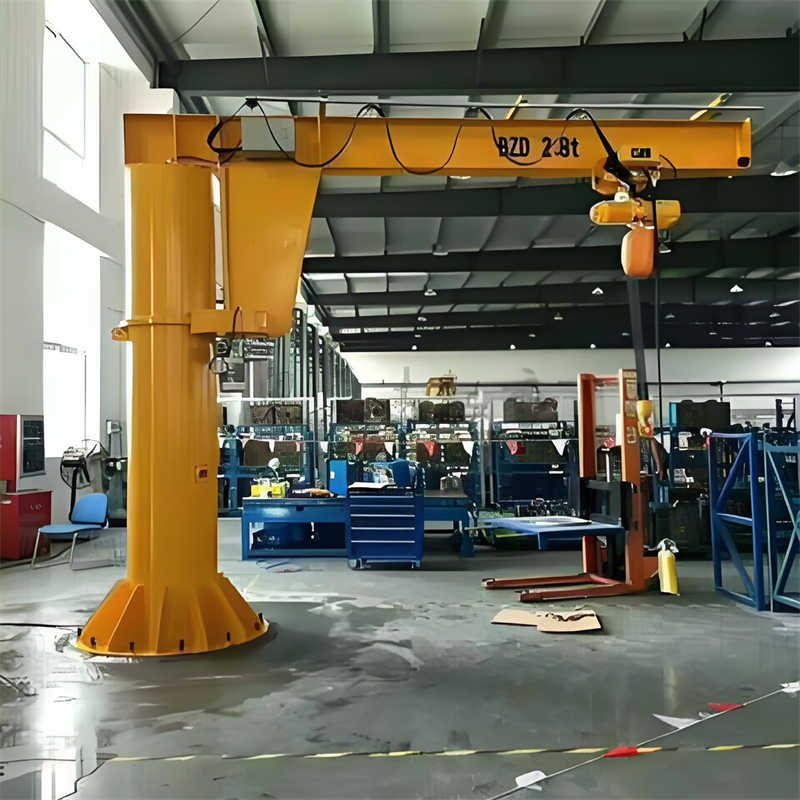
- Load Capacity: 0.5-10 tons (sufficient for medium-duty lifting).
- Rotation: 180° (wall-mounted) or 360° (floor-standing) movement.
- Compact Design: Occupies minimal floor space.
- Installation Flexibility: Can be mounted on walls, columns, or freestanding.
Advantages
✔ Space-Saving – Ideal for tight workspaces near bending/punching machines.
✔ Quick Operation – Faster loading/unloading for localized tasks.
✔ Lower Initial Cost – More affordable than bridge cranes for small-scale needs.
✔ Precision Handling – Better for precise positioning in confined areas.
Best Applications
- Small to medium stamping operations.
- Workstations requiring frequent, localized lifting.
- Plants with limited overhead space for a bridge crane.
5. Single Girder Bridge Crane vs. Jib Crane: Key Comparison
| Factor | Single Girder Bridge Crane | Jib Crane |
|---|---|---|
| Load Capacity | 1-20 tons | 0.5-10 tons |
| Coverage Area | Full workshop span | Localized |
| Installation Cost | Higher | Lower |
| Mobility | Linear movement along beams | Rotational |
| Best For | Large-scale, heavy-duty lifting | Small-scale, precise lifting |
Which One Should You Choose?
- For large plants with high-capacity needs: A single girder bridge crane is the best choice.
- For small workshops with space constraints: A jib crane offers better flexibility.
- Hybrid Solution: Some plants use both—jib cranes for workstation handling and bridge cranes for long-distance transport.
6. Why Choose Dongqi Crane?
Dongqi Crane provides high-quality, customized lifting solutions for stamping plants, including:
- CE & ISO Certified – Ensures safety and reliability.
- Tailored Designs – Custom spans, capacities, and automation options.
- After-Sales Support – Maintenance, inspections, and spare parts availability.
7. Conclusion & Recommendation
Selecting the right crane depends on your plant’s size, workflow, and budget.
- For large-scale stamping operations → Single girder bridge crane (best for heavy loads and wide coverage).
- For small to medium plants → Jib crane (ideal for space efficiency and quick handling).
- For maximum flexibility → Combine both cranes for optimized material flow.
Need expert advice? Contact Dongqi Crane for a customized solution based on your stamping plant’s requirements!
