
Boost Warehouse Efficiency with Dongqi’s Single Girder Cranes: Space-Saving & Cost-Effective Solutions
1. Introduction: The Warehouse Efficiency Challenge
Modern warehouses and manufacturing facilities face increasing pressure to optimize space, reduce operational costs, and improve workflow efficiency. Manual material handling is slow, labor-intensive, and prone to errors, while inefficient equipment can lead to bottlenecks in production lines.
This is where Dongqi’s Single Girder Overhead Cranes come in—a smart, space-saving solution designed to enhance lifting operations with higher precision, lower energy consumption, and better cost efficiency compared to traditional double girder cranes or forklifts.
Why Single Girder Cranes?
✔ Space-saving design – Ideal for low-clearance facilities.
✔ Lower upfront & maintenance costs – More affordable than double girder alternatives.
✔ Flexible load handling – Supports weights from 1 to 20 tons, perfect for light to medium-duty applications.
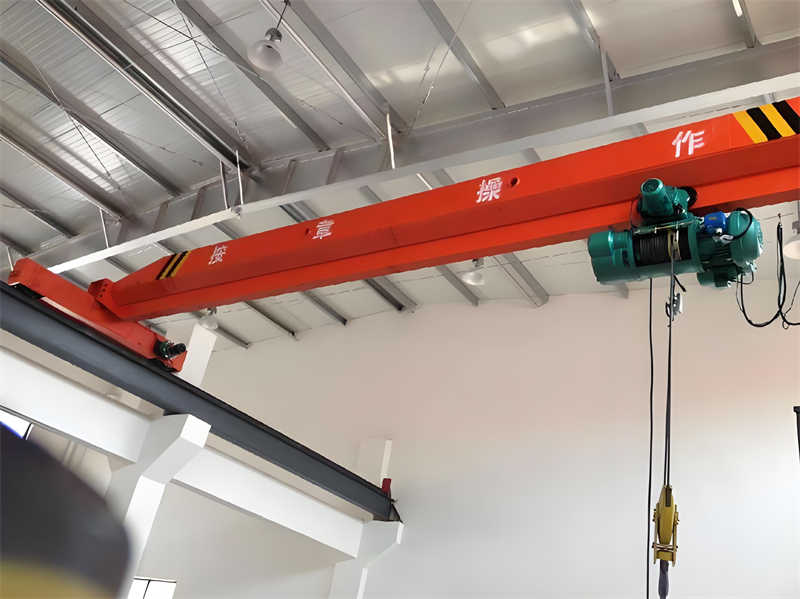
2. Key Benefits of Single Girder Crane Systems
2.1 Space Efficiency – Maximize Your Warehouse Layout
Unlike bulkier double girder cranes, Dongqi’s single girder cranes feature a compact, lightweight design, making them ideal for facilities with:
- Low headroom
- Narrow aisles
- Limited floor space
Applications:
✔ Small to medium-sized warehouses
✔ Assembly lines
✔ Workshops with height restrictions
Keywords: Compact overhead crane for small warehouses, low headroom crane solutions
2.2 Cost Savings – Lower Investment, Higher ROI
Single girder cranes are more economical than double girder models due to:
✔ Simpler structure – Fewer components mean lower installation & maintenance costs.
✔ Reduced energy consumption – Efficient motors cut operational expenses.
✔ Longer lifespan – High-quality steel construction ensures durability.
Comparison Table:
| Feature | Single Girder Crane | Double Girder Crane |
|---|---|---|
| Cost | Lower initial & maintenance costs | Higher upfront investment |
| Space | Compact, ideal for tight spaces | Requires more headroom |
| Capacity | 1-20 tons | 5-500+ tons |
| Best For | Light to medium-duty lifting | Heavy industrial use |
2.3 Flexibility & Load Handling – Adaptable to Your Needs
Dongqi’s cranes support custom configurations, including:
- Variable speed controls for precise load positioning
- Remote control & automation for safer operation
- Different hoist options (chain hoist, wire rope hoist)
Typical Load Capacities:
- 1-10 tons – Ideal for workshops, logistics centers
- 10-20 tons – Suitable for manufacturing, assembly lines
2.4 Energy Efficiency & Smart Features
Modern warehouses demand sustainable, automated solutions. Dongqi’s cranes offer:
✔ Regenerative braking – Recovers energy during lowering motions.
✔ Variable Frequency Drives (VFD) – Smooth acceleration reduces power spikes.
✔ Integration with ASRS/AGV systems – Enables fully automated workflows.
3. Why Choose Dongqi’s Single Girder Cranes?
3.1 Quality & Compliance
Dongqi cranes meet international safety & performance standards, including:
- ISO 9001 – Quality management certification
- CE Marking – Compliance with EU safety regulations
- FEM & DIN Standards – Ensures structural reliability
3.2 Real-World Case Studies
Case Study: Automotive Parts Manufacturer
- Challenge: Needed faster, safer material handling in a tight workspace.
- Solution: Installed Dongqi’s 5-ton single girder crane with wireless remote control.
- Result: 30% faster loading/unloading, reduced labor costs, and improved safety.
3.3 Global Support & Service
Dongqi provides:
✔ 24/7 technical support
✔ Fast spare parts delivery
✔ On-site installation & training
4. How to Choose the Right Single Girder Crane? (Buyer’s Guide)
Selecting the right single girder overhead crane requires careful consideration of your facility’s needs, load requirements, and operational environment. Here’s a detailed breakdown to help you make an informed decision:
4.1 Key Selection Factors
1. Load Capacity (Lifting Weight)
- Typical Range: 1 ton to 20 tons (for single girder cranes).
- Considerations:
- Maximum load weight: Include future growth (e.g., if you expect heavier loads later).
- Safety factor: Industry standards recommend a minimum 25% safety margin over the rated capacity.
- Load distribution: Ensure even weight distribution to prevent crane strain.
Example:
- If your heaviest load is 5 tons, choose a 6.3-ton crane for safety.
2. Span (Bridge Length)
- Definition: The horizontal distance between the crane’s runways (parallel rails).
- Standard Spans: 5m to 30m (custom spans available).
- How to Measure:
- Measure the width of your working area (e.g., between two support columns).
- Ensure clearance for trolley movement (typically +0.5m on each side).
Pro Tip:
- If your facility has obstructions (e.g., pillars), consider a modular runway system.
3. Lifting Height (Hook Travel Distance)
- Definition: The vertical distance from the floor to the highest hook position.
- Key Factors:
- Building height (minimum headroom required).
- Obstacles (e.g., mezzanines, ductwork).
- Hoist type (chain hoist vs. wire rope hoist).
Example:
- For a 6m-high warehouse, a 5m lifting height ensures safe clearance.
4. Duty Cycle (Usage Frequency & Intensity)
- Classification (CMAA Standards):
- Class A (Standby): Rare use (e.g., maintenance).
- Class B (Light): Occasional use (e.g., 2-5 lifts/hour).
- Class C (Moderate): Regular use (e.g., assembly lines).
- Class D (Heavy): Intensive use (e.g., steel mills).
Recommendation:
- Most warehouses need Class B or C cranes.
5. Power Supply & Control Options
- Voltage: 220V/380V/415V/480V (varies by region).
- Control Methods:
- Pendant control (wired handheld).
- Radio remote control (wireless, safer for large facilities).
- Automated operation (PLC integration).
Safety Tip:
- For hazardous environments (e.g., chemical plants), opt for explosion-proof cranes.
4.2 Optional Features & Upgrades
| Feature | Best For | Benefits |
|---|---|---|
| Variable Frequency Drive (VFD) | Precise load handling | Smoother starts/stops, less sway |
| Anti-Sway Technology | High-precision lifting | Reduces load swing, improves safety |
| Intelligent Braking | Energy savings | Recovers power during lowering |
| Collision Avoidance | Multi-crane facilities | Prevents accidents with sensors |
| IoT Monitoring | Predictive maintenance | Tracks wear & performance in real-time |
4.3 Installation & Structural Considerations
1. Runway System Requirements
- Existing Support Structures:
- Check if columns/beams can handle crane loads.
- May require reinforcement for heavier cranes.
- Freestanding Runways:
- Used when no overhead support is available.
- Requires foundation work.
2. Clearance & Safety Zones
- Side Clearance: ≥200mm from walls/obstacles.
- End Stops: Prevents trolley over-travel.
Pro Tip:
- Conduct a site survey before finalizing the design.
4.4 Budget & ROI Analysis
| Cost Factor | Single Girder Crane | Double Girder Crane | Forklifts |
|---|---|---|---|
| Initial Cost | $5,000 – $30,000 | $20,000 – $100,000+ | $15,000 – $50,000 |
| Maintenance | Low (simple structure) | High (complex parts) | Very High (tires, hydraulics) |
| Lifespan | 20-30 years | 25-35 years | 5-10 years |
| Best For | Light/medium-duty | Heavy-duty | Short-distance moves |
Conclusion: Single girder cranes offer the best cost-efficiency for most warehouses.
5. Frequently Asked Questions (FAQ) – Single Girder Overhead Cranes
Q1: What’s the main difference between single girder and double girder cranes?
A: The key differences lie in structure, capacity, and application:
| Feature | Single Girder Crane | Double Girder Crane |
|---|---|---|
| Structure | One main beam (simpler design) | Two parallel beams (heavier-duty) |
| Capacity | 1-20 tons | 5-500+ tons |
| Headroom | Requires less vertical space | Needs more clearance |
| Cost | 30-50% cheaper | Higher initial investment |
| Best For | Light/medium-duty (warehouses, workshops) | Heavy industrial (steel mills, shipyards) |
Why choose single girder?
✔ Cost-effective for loads ≤20 tons
✔ Easier installation in low-clearance facilities
✔ Lower maintenance (fewer components)
Q2: How much space do I need to install a single girder crane?
A: The required space depends on:
- Span (distance between runways) – Typically 5m to 30m
- Lifting Height – Minimum 1m clearance above the highest load
- Side Clearance – At least 200mm from walls/obstructions
Example Calculation:
- For a 10m span crane lifting 5-ton loads:
- Runway length = Span + 0.5m buffer = 10.5m
- Vertical clearance = Lifting height + hoist height (~1.5m)
Pro Tip:
- If space is tight, consider a modular runway system or underslung crane design.
Q3: What maintenance does a single girder crane need?
A: Regular maintenance ensures safety and longevity:
| Maintenance Task | Frequency | Key Checks |
|---|---|---|
| Daily Inspection | Before each shift | Hook, wire rope, brakes, limit switches |
| Lubrication | Monthly | Gears, bearings, wheels |
| Load Testing | Annually | Verify rated capacity (per OSHA/ISO) |
| Structural Audit | Every 3-5 years | Welds, bolts, runway alignment |
Critical Components to Monitor:
- Wire rope/chain (replace if frayed)
- Brakes (ensure immediate stopping)
- Electrical systems (check for wear)
Cost Estimate:
- Annual maintenance ≈ 1-3% of crane cost (far cheaper than forklifts).
Q4: Can I automate a single girder crane?
A: Yes, modern single girder cranes support full automation with:
✔ Programmable Logic Controllers (PLC) – For precise movement sequences
✔ RFID/Bar Code Integration – Auto-identifies loads
✔ Collision Avoidance Sensors – Prevents accidents in multi-crane zones
✔ IoT Connectivity – Remote monitoring & predictive maintenance
Real-World Example:
A e-commerce warehouse automated their 3-ton crane with:
- Auto-picking from conveyor lines
- Inventory tracking via cloud software
Result: 40% faster order processing.
Q5: How long does installation take?
A: Typically 3-10 days, depending on:
- Crane Size – Small cranes (1-5 tons): 3-5 days
- Runway Complexity – Freestanding vs. existing support
- Site Prep – Electrical work, foundation (if needed)
Installation Steps:
- Runway Assembly (1-2 days)
- Crane Beam Mounting (1 day)
- Hoist & Electrical Setup (1-2 days)
- Load Testing & Training (1 day)
Note: Dongqi offers turnkey installation with certified engineers.
