
Underhung Cranes vs. Forklifts: Which Saves More Floor Space?
Introduction
In today’s fast-paced industrial and warehouse environments, maximizing floor space is crucial for efficiency, productivity, and cost savings. Two common material handling solutions—underhung cranes and forklifts—offer different advantages, but when it comes to space optimization, underhung cranes have a clear edge.
While forklifts are widely used for their mobility, they require significant floor space for operation, maneuvering, and storage. In contrast, underhung cranes—overhead lifting systems mounted to the ceiling structure—eliminate floor obstructions entirely, freeing up valuable space for storage, production, or other machinery.
At Dongqi Crane, we specialize in high-efficiency underhung crane systems designed to maximize workspace utilization. In this article, we’ll compare underhung cranes and forklifts in terms of space efficiency, operational benefits, and long-term cost savings—helping you determine the best solution for your facility.
What Is an Underhung Crane?
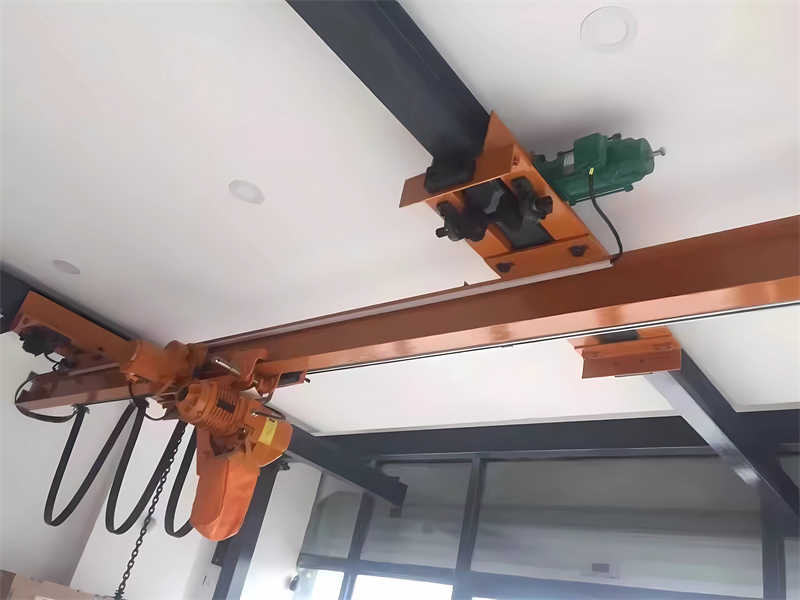
An underhung crane is a type of overhead crane that runs on a ceiling-mounted runway system instead of floor-supported rails. Unlike traditional overhead cranes, underhung cranes are lightweight, modular, and ideal for facilities with limited floor space.
Key Features of Underhung Cranes:
- Ceiling-mounted design – No floor columns or supports needed.
- Modular & customizable – Adaptable to different spans and lifting capacities.
- Precision handling – Ideal for repetitive lifting tasks in manufacturing and assembly lines.
- Space-saving – Operates overhead, leaving the floor completely clear.
At Dongqi Crane, we provide high-quality underhung bridge cranes and monorail systems tailored to optimize space in warehouses, workshops, and production facilities.
What Is a Forklift?
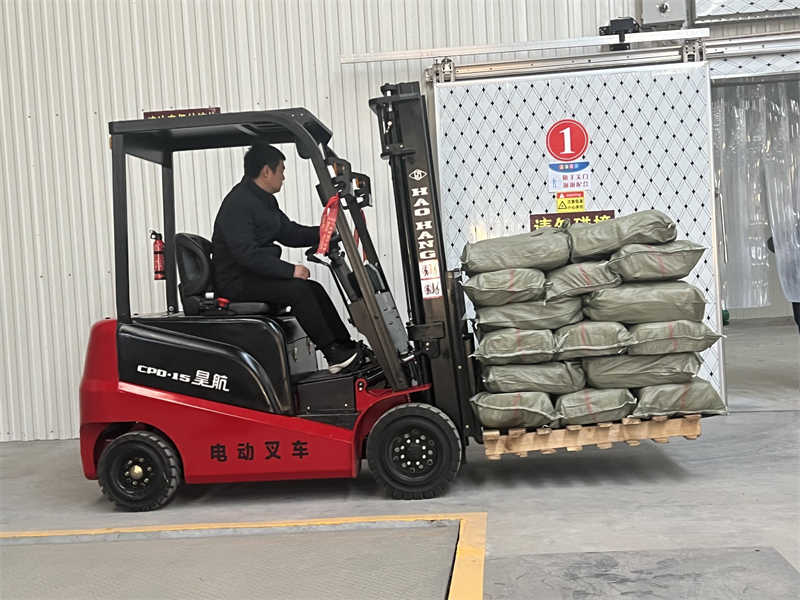
A forklift is a ground-based, mobile lifting vehicle commonly used for transporting pallets, containers, and heavy loads. While versatile, forklifts require dedicated floor space for operation, including:
- Wide aisles (typically 10-12 feet for counterbalance forklifts).
- Maneuvering and turning areas.
- Parking and charging stations.
Limitations of Forklifts in Space Efficiency:
- Consume valuable floor space that could be used for storage or production.
- Restricted vertical lifting capacity compared to overhead cranes.
- Higher risk of collisions and accidents in congested areas.
For businesses looking to maximize space, forklifts may not be the most efficient solution.
Floor Space Comparison: Underhung Cranes vs. Forklifts
1. Underhung Cranes – Zero Floor Footprint
✅ No floor obstructions – The entire workspace remains open.
✅ No aisle requirements – Unlike forklifts, no extra space is needed for movement.
✅ Full vertical utilization – Lifts and moves loads overhead without blocking pathways.
✅ Ideal for tight spaces – Perfect for facilities with narrow layouts.
2. Forklifts – High Space Consumption
❌ Wide aisles required – Typically 10-12 feet for safe operation.
❌ Maneuvering space needed – Turning radius and reversing areas take up additional room.
❌ Parking & charging stations – Forklifts must be stored when not in use, occupying floor space.
❌ Traffic congestion – Multiple forklifts can create bottlenecks in busy facilities.
Which One Saves More Space?
The answer is clear: Underhung cranes outperform forklifts in space efficiency by eliminating ground-level obstructions and allowing full use of vertical space.
Additional Benefits of Underhung Cranes
Beyond space savings, underhung cranes offer several advantages:
1. Enhanced Safety
- No ground traffic – Reduces collision risks with workers and equipment.
- Stable load handling – Minimizes accidents caused by unbalanced forklift loads.
2. Higher Productivity
- Faster load movement – Smooth overhead transportation reduces delays.
- No aisle congestion – Unlike forklifts, cranes don’t compete for floor space.
3. Long-Term Cost Savings
- Lower maintenance – Fewer moving parts than forklifts.
- Durability – Longer lifespan with proper upkeep.
- Increased storage capacity – More usable space means higher ROI.
When Are Forklifts Still Useful?
While underhung cranes are superior for indoor space optimization, forklifts may still be necessary for:
- Outdoor operations (underhung cranes are indoor-only).
- Highly variable load paths (if loads need to move unpredictably).
- Low-frequency lifting needs (if crane investment isn’t justified).
However, for most manufacturing plants, warehouses, and workshops, underhung cranes provide a more efficient, space-saving solution.
Case Study: How Underhung Cranes Improved Space Utilization
A Dongqi Crane client, a mid-sized automotive parts manufacturer, replaced their forklifts with custom underhung bridge cranes. The results:
- 30% increase in floor space (previously used for forklift aisles).
- 20% faster workflow due to reduced congestion.
- Lower operational costs with minimal maintenance.
This demonstrates how underhung cranes can transform workspace efficiency.
Conclusion: Underhung Cranes Are the Best Space-Saving Solution
For businesses looking to maximize floor space, improve safety, and boost productivity, underhung cranes are the superior choice over forklifts.
At Dongqi Crane, we specialize in custom underhung crane systems designed to optimize your facility’s layout.
Ready to Free Up Your Floor Space?
📞 Contact Dongqi Crane today for a free consultation and discover how our underhung cranes can enhance your workspace efficiency!
