
Underhung vs. Bridge Cranes: Which is Better for Auto Parts Plants?
Introduction
In the fast-paced world of auto parts manufacturing, choosing the right overhead crane system is critical for operational efficiency, worker safety, and cost-effectiveness. Two primary options dominate the industry: underhung overhead cranes and top-running bridge cranes. Each offers distinct advantages depending on facility requirements and production needs.
At Dongqi Crane, we understand that selecting the optimal crane system can significantly impact your manufacturing output. This comprehensive guide compares underhung and bridge cranes, helping auto parts manufacturers make informed decisions about their material handling solutions.
Key Differences Between Underhung and Bridge Cranes
1. Structural Design & Installation
Underhung Cranes:
- Mounting System: Suspended from roof/ceiling structures using specially designed hangers
- Support Requirements: Requires robust roof structure capable of bearing dynamic loads
- Installation Process:
- No floor obstructions – ideal for retrofitting existing facilities
- Minimal foundation work required
- Typically 30-40% faster installation than bridge cranes
- Clearance Needs:
- Requires only 6-8 meters of headroom
- Maintains completely clear floor space
- Allows for maximum utilization of vertical space
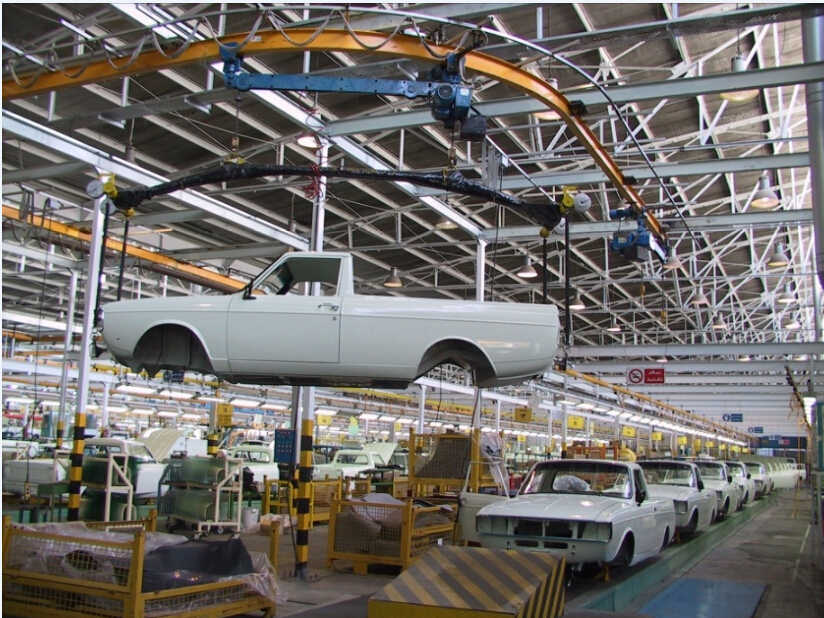
Bridge Cranes:
- Mounting System: Supported by freestanding columns or building structure
- Support Requirements: Needs substantial floor foundations for columns
- Installation Process:
- Requires significant civil work for foundations
- Longer installation timeline (weeks vs. days)
- More disruptive to ongoing operations
- Clearance Needs:
- Typically requires 9+ meters of headroom
- Columns occupy valuable floor space
- May interfere with facility layouts
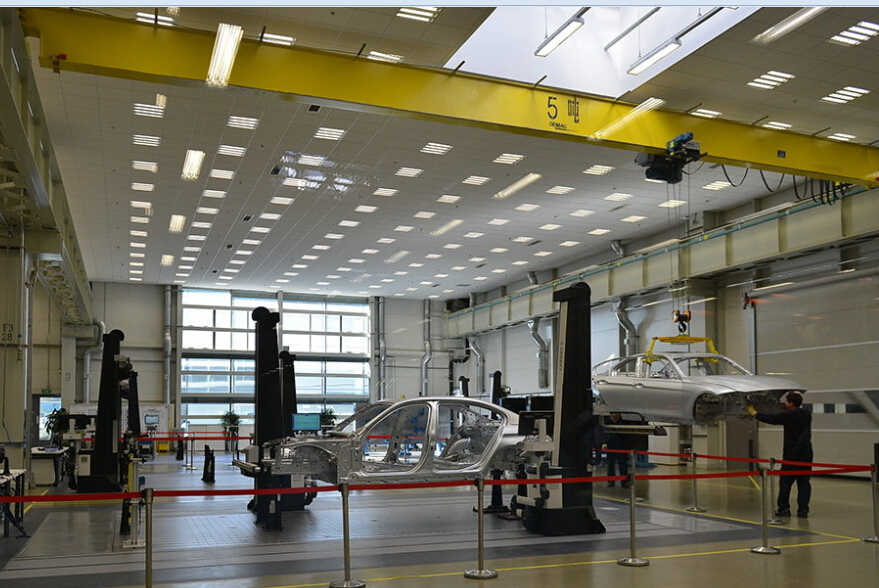
2. Load Capacity & Performance
Underhung Cranes:
- Capacity Range: 0.5-20 tons (standard models)
- Specialty Models: Up to 32 tons available
- Performance Characteristics:
- Maximum span: ~30 meters
- Speeds: 5-20 m/min (adjustable)
- Precision: ±1mm positioning available
- Duty Cycle: FEM 1Am-2m (light to medium)
Bridge Cranes:
- Capacity Range: 5-500+ tons
- Special Applications: Some models exceed 1000 tons
- Performance Characteristics:
- Maximum span: 50+ meters
- Speeds: 10-32 m/min
- Precision: ±5mm standard
- Duty Cycle: FEM 3m-4m (heavy to continuous)
3. Operational Characteristics
Underhung Cranes:
- Movement Precision:
- Lower hook height provides better stability
- Less load swing during movement
- Ideal for precision assembly tasks
- Maneuverability:
- Better for tight spaces
- Easier to implement multiple crane systems
- Simpler to reconfigure for layout changes
- Noise Levels:
- Typically quieter operation
- Less vibration transmission
Bridge Cranes:
- Movement Characteristics:
- More noticeable load swing
- Requires more space for acceleration/deceleration
- Flexibility:
- More difficult to modify after installation
- Limited by column placement
- Environmental Impact:
- More noticeable vibration
- Higher noise levels in some configurations
4. Cost Considerations
Underhung Cranes:
- Initial Costs:
- Equipment: $10,000-$50,000 (standard models)
- Installation: 30-50% less than bridge cranes
- Foundation: Minimal requirements
- Ongoing Costs:
- Energy consumption: 15-30% less
- Maintenance: Easier access reduces costs
- Lifecycle: 20-25 years with proper maintenance
Bridge Cranes:
- Initial Costs:
- Equipment: $25,000-$500,000+
- Installation: Significant civil work required
- Foundation: Major cost factor
- Ongoing Costs:
- Energy: Higher consumption
- Maintenance: More complex access
- Lifecycle: 25-30 years for heavy-duty models
5. Safety Features
Underhung Cranes:
- Built-in Protections:
- Overload limit switches
- Emergency stop systems
- Anti-collision devices
- Operational Safety:
- Lower hook height reduces risk
- Better visibility for operators
- Less exposed moving parts
Bridge Cranes:
- Safety Systems:
- Redundant braking systems
- Load moment indicators
- Storm securing devices
- Operational Considerations:
- Requires more operator training
- Higher potential energy in system
- More stringent inspection requirements
6. Maintenance & Serviceability
Underhung Cranes:
- Accessibility:
- Components easily reached from floor
- Simplified inspection process
- Maintenance Needs:
- Fewer wear components
- Longer service intervals
- Repairability:
- Modular design simplifies repairs
- Minimal downtime for servicing
Bridge Cranes:
- Access Challenges:
- Often requires lifts or platforms
- More difficult to inspect all components
- Maintenance Intensity:
- More complex drive systems
- More frequent bearing inspections
- Repair Considerations:
- May require production shutdowns
- Higher cost for major repairs
7. Special Application Considerations
Underhung Cranes Excel When:
- Working with delicate components (e.g., EV batteries)
- Frequent layout changes are needed
- Integrating with automated systems
- Operating in clean room environments
Bridge Cranes Excel When:
- Handling extremely heavy loads
- Operating in high-temperature areas
- Requiring maximum hook height
- Working with large, bulky items
This detailed comparison provides manufacturers with the technical insights needed to make informed decisions about their crane systems. Each factor should be carefully evaluated against specific operational requirements to determine the optimal solution.
Which Crane is Best for Auto Parts Manufacturing?
When to Choose an Underhung Crane
Underhung cranes excel in these scenarios:
- Space-Constrained Facilities
- Low ceiling heights (as little as 6 meters)
- Compact production areas
- Facilities needing maximum floor space
- Precision Handling Requirements
- Engine component assembly
- Transmission production lines
- Suspension system manufacturing
- Budget-Conscious Operations
- Lower total cost of ownership
- Reduced installation expenses
- Minimal facility modifications required
- Flexible Production Layouts
- Frequent line reconfigurations
- Multi-crane systems
- Modular manufacturing approaches
When to Choose a Bridge Crane
Bridge cranes are preferable when:
- Heavy Lifting Demands
- Vehicle frame handling
- Large stamping operations
- Casting and forging applications
- Large Facility Footprints
- High-bay warehouses
- Wide-span production areas
- New construction projects
- Extreme Duty Cycles
- Continuous heavy load handling
- Harsh industrial environments
- High-temperature applications
Hybrid Solutions
Many modern auto parts plants implement hybrid systems:
- Underhung cranes for precision assembly work
- Bridge cranes for heavy component transfer
- Integrated systems sharing common runways
Dongqi Crane’s Custom Solutions for Auto Parts Plants
Underhung Crane Offerings
- Compact Design Series
- Capacities from 1-10 tons
- Ideal for small component handling
- Low headroom configurations
- Precision Handling Systems
- Variable frequency drives
- Anti-sway technology
- Millimeter-level positioning
- Automation-Ready Options
- Remote control systems
- Integration with AGVs
- Smart monitoring capabilities
Bridge Crane Solutions
- Heavy-Duty Models
- Capacities to 100+ tons
- Reinforced girder designs
- Robust drive systems
- Specialized Configurations
- Explosion-proof variants
- High-temperature adaptations
- Corrosion-resistant finishes
- Custom Engineering
- Extended span designs
- Multi-crane systems
- Special end truck configurations
Case Study: Efficiency Improvement
Client: Major European auto parts supplier
Challenge: Needed to optimize powertrain component handling
Solution: Dongqi supplied a system of 5 underhung cranes with:
- 3-ton capacity each
- 18-meter spans
- Precision positioning controls
Results:
- 22% improvement in line efficiency
- 15% reduction in handling damage
- 30% faster changeovers
Future Trends in Auto Manufacturing Cranes
Automation Integration
- Increased adoption of smart crane systems
- Seamless interface with robotics
- Automated storage and retrieval
Energy Efficiency
- Regenerative drive systems
- LED lighting packages
- Eco-friendly designs
Digitalization
- IoT-enabled condition monitoring
- Predictive maintenance capabilities
- Data-driven performance optimization
Lightweighting
- Advanced materials for crane components
- Compact designs for EV production
- Improved power-to-weight ratios
Conclusion and Next Steps
Choosing between underhung and bridge cranes depends on your specific:
- Facility constraints
- Production requirements
- Budget considerations
- Future expansion plans
Underhung cranes typically offer the best solution for:
✓ Space-constrained facilities
✓ Light-to-medium duty applications
✓ Budget-conscious operations
Bridge cranes excel in:
✓ Heavy load handling
✓ Large facility footprints
✓ Extreme duty cycles
At Dongqi Crane, we provide:
✔ Custom-engineered solutions
✔ Comprehensive support services
✔ Future-ready technologies
Ready to optimize your auto parts plant’s material handling?
Contact our experts today for a free facility assessment and crane system recommendation.
