
Top Running Cranes in Heavy Manufacturing: 5 Critical Applications (Steel, Shipbuilding & Power Plants)
Introduction
Top running overhead cranes are the backbone of heavy industries, offering unmatched capacity (5-500+ tons), precision, and durability. Unlike underhung cranes, these systems run on elevated rails, making them ideal for handling extreme loads in harsh environments. From molten steel to aircraft wings, here are 5 transformative applications of top running cranes in heavy manufacturing.
Did You Know?
The global overhead crane market will reach $5.7 billion by 2027, driven by demand from steel, energy, and shipbuilding sectors (Statista, 2023).
1. Steel Mills – Handling Molten Metal & Coils
The Challenge
Steel production requires moving 20-300-ton ladles of molten metal and heavy coils (up to 50 tons) in high-temperature environments.
Why Top Running Cranes?
- Heat Resistance: Class F insulation and refractory-coated hooks withstand 1,800°F+ temperatures.
- Stability: Double girder designs prevent sway during ladle transfers.
- Safety: Fail-safe brakes and overload sensors (meeting CMAA Class D standards).
Example:
A German steel plant reduced downtime by 30% after installing a 250-ton top running crane with automated ladle positioning.

Keywords: steel mill overhead crane, high temperature crane solutions, ladle crane safety features
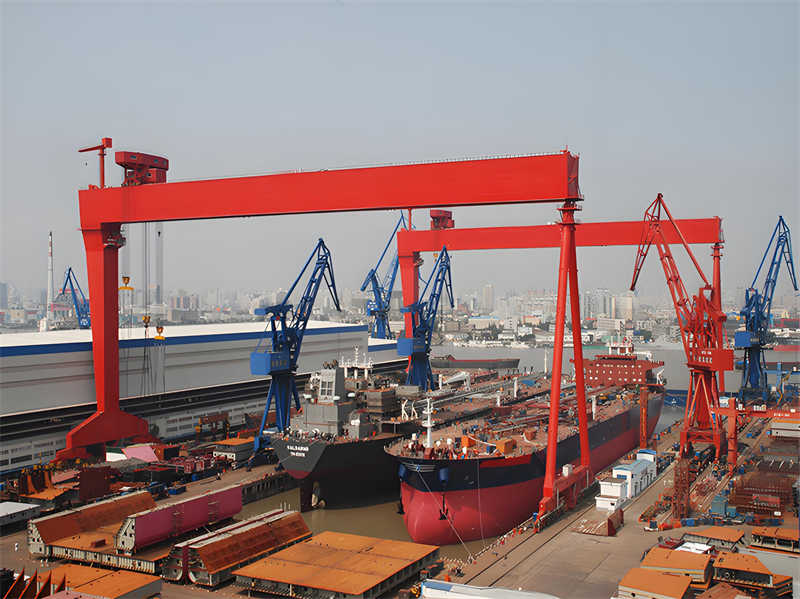
2. Shipbuilding – Hull Section Assembly
The Challenge
Modern shipyards assemble hull sections weighing 50-1,000+ tons, requiring millimeter-level precision.
Why Top Running Cranes?
- Capacity: Custom cranes handle mega-blocks (e.g., 1,200-ton shipyard gantry cranes).
- Corrosion Resistance: Marine-grade epoxy coatings protect against saltwater.
- Control: Micro-speed modes (<1 ft/min) enable perfect welding alignment.
Case Study:
Hyundai Heavy Industries uses tandem top running cranes to lift 800-ton hull sections with ±2mm accuracy.
Keywords: shipyard gantry crane, heavy lift crane for shipbuilding, offshore construction cranes
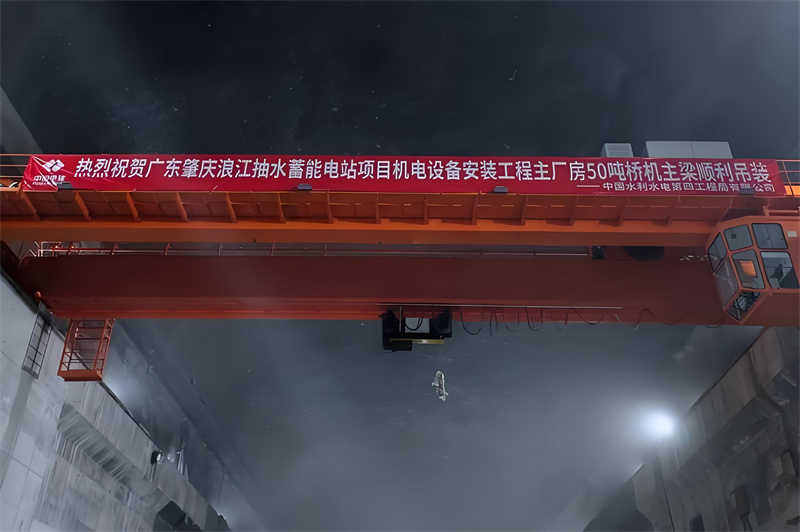
3. Power Plants – Turbine & Generator Installation
The Challenge
Turbine rotors (100-400 tons) and confined plant layouts demand explosion-proof and space-efficient solutions.
Why Top Running Cranes?
- Hazardous Areas: ATEX-certified cranes for coal/gas plants.
- Modularity: Adjustable spans fit around piping and reactors.
- Precision: PLC-controlled movements for rotor alignment (<0.5mm tolerance).
Industry Standard:
IEEE 841 mandates explosion-proof cranes for power generation facilities.
Keywords: power plant lifting equipment, turbine installation crane, explosion-proof overhead crane
4. Mining & Heavy Machinery Manufacturing
The Challenge
Mining equipment (e.g., 200-ton dragline buckets) requires high-cycle lifting in dusty environments.
Why Top Running Cranes?
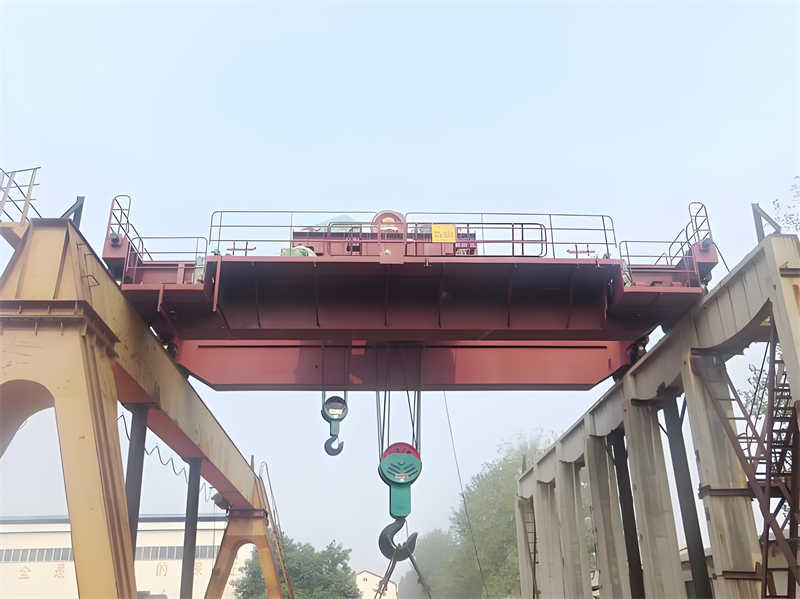
- Durability: Reinforced girders withstand 500,000+ cycles (per FEM 1.001).
- Remote Operation: Wireless controls protect operators in hazardous zones.
- Custom Attachments: Grabs for ore buckets or magnet lifts for scrap.
Stat:
A Chilean copper mine boosted productivity by 22% with automated top running cranes.
Keywords: mining crane manufacturers, heavy machinery lifting solutions, high duty cycle cranes
5. Aerospace – Aircraft Component Handling
The Challenge
Wing/fuselage assembly requires vibration-free movement and cleanroom compatibility.
Why Top Running Cranes?
- Precision: Servo motors achieve ±1mm positioning (critical for wing joints).
- Cleanroom Options: Stainless steel construction with low-particle emission.
- Safety: Redundant brakes for engine hoisting (e.g., GE9X engines at 10 tons).
Example:
Boeing’s South Carolina plant uses cleanroom-compatible top running cranes for 787 Dreamliner assembly.
Keywords: aerospace lifting equipment, precision overhead crane, aircraft assembly crane
Comparison: Top Running vs. Underhung Cranes
| Feature | Top Running Crane | Underhung Crane |
|---|---|---|
| Capacity | 5-500+ tons | 1-15 tons |
| Cost | Higher upfront | Lower initial cost |
| Space | Requires headroom | Fits low ceilings |
| Maintenance | Longer lifespan | More frequent repairs |
Pro Tip:
Choose top running cranes for heavy loads (>15 tons) and underhung for light-duty, space-constrained areas.
Keywords: top running crane advantages, how to choose an overhead crane
Conclusion
From 1,000-ton ship blocks to red-hot steel ladles, top running cranes deliver the strength and precision heavy manufacturing demands. As industries push for heavier lifts and automation, these cranes remain indispensable.
Need a Custom Solution?
Contact our engineers for heavy-duty crane designs tailored to your facility’s needs.
